


The Machine Everyone Wants and Only A Few People Can Fix
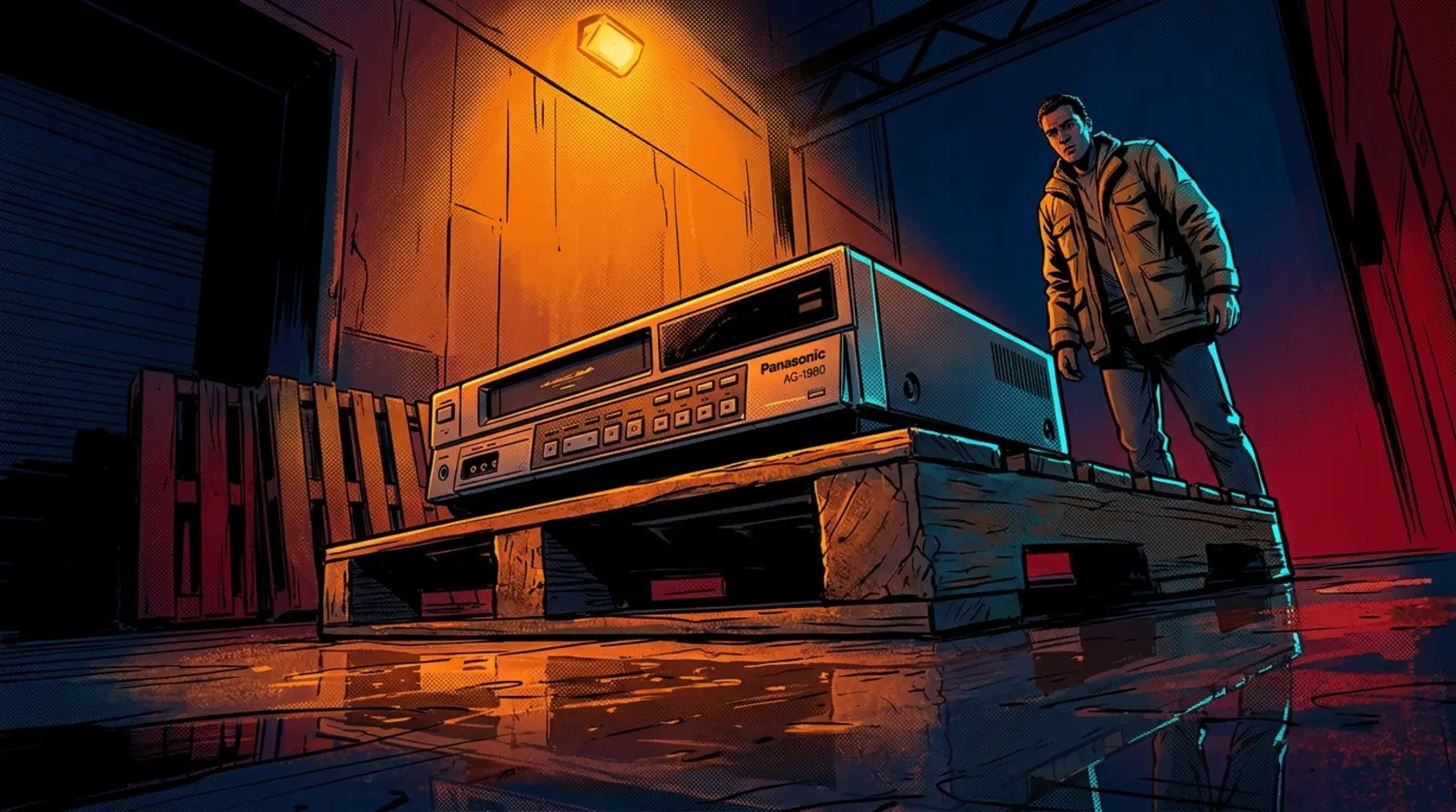
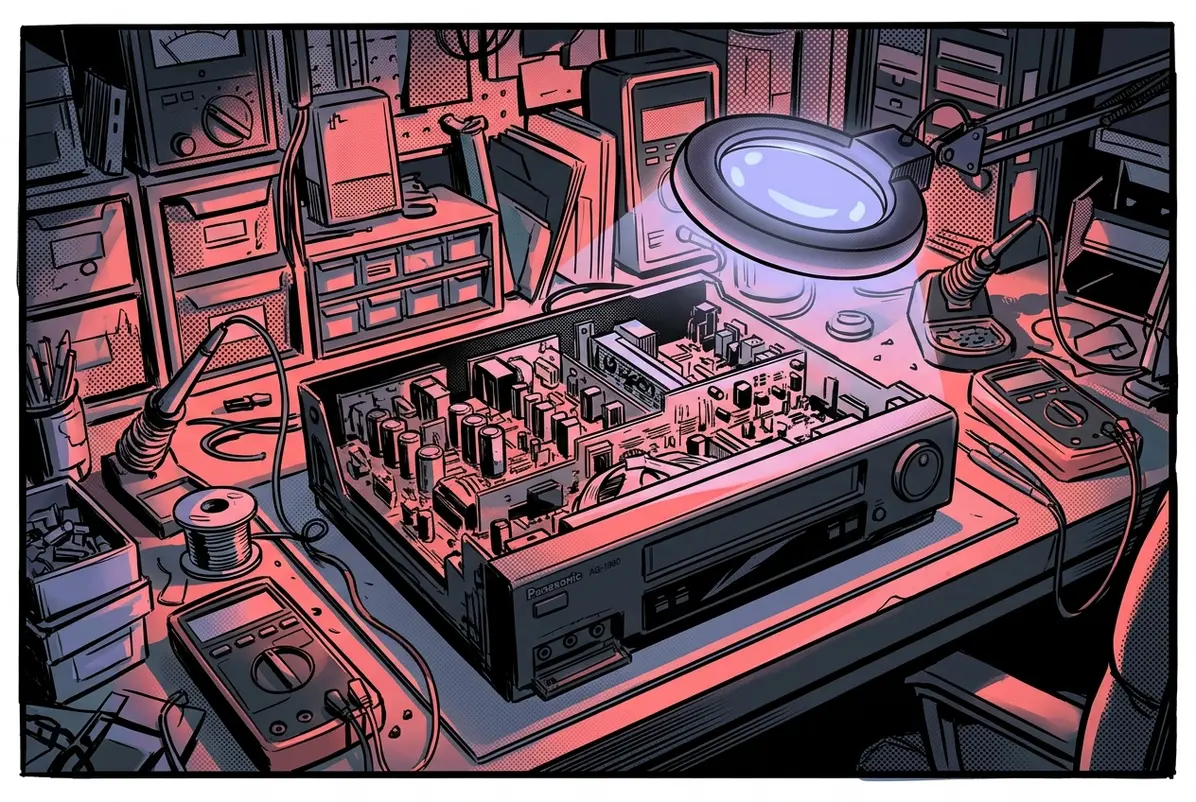
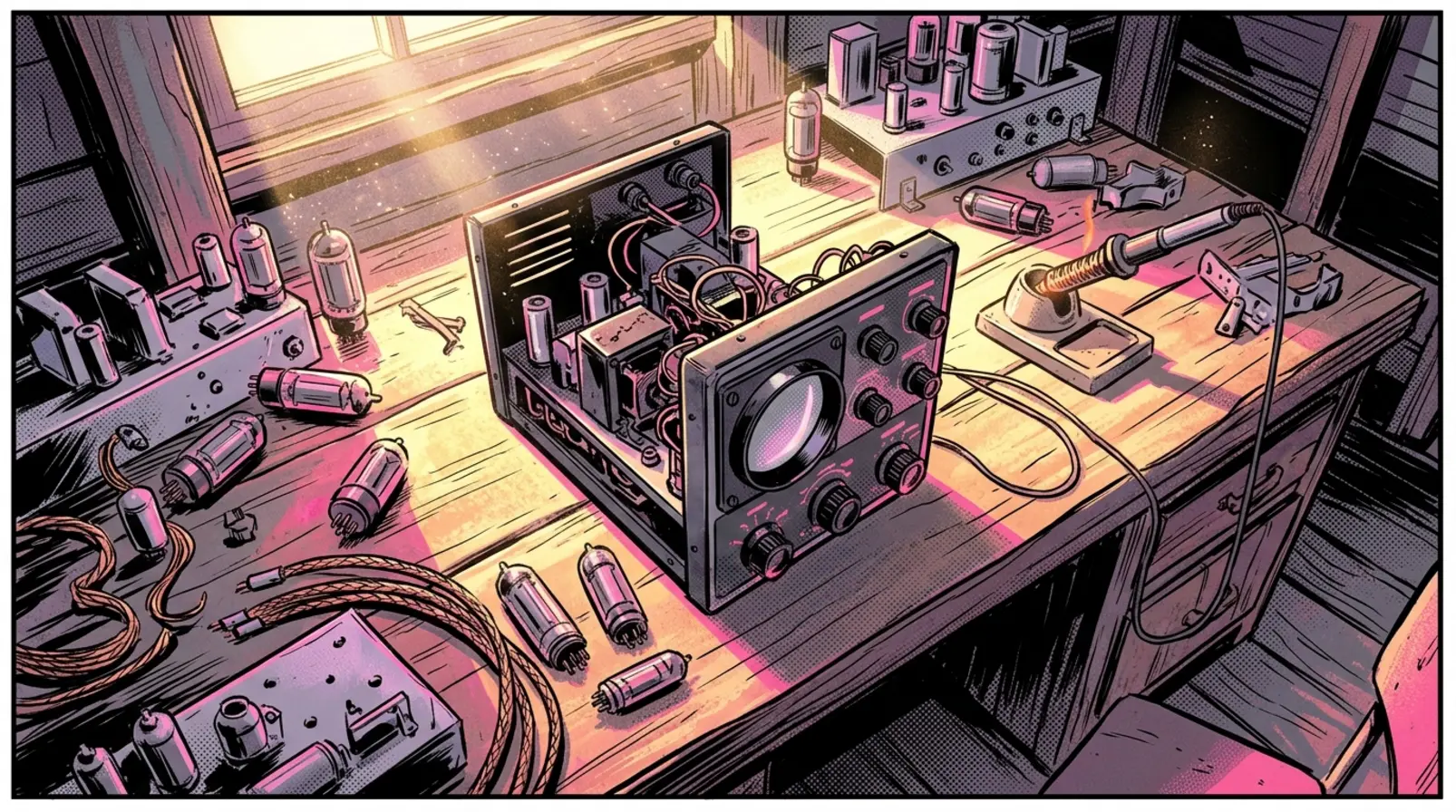
Somewhere right now, a Panasonic AG-1980 is sitting on a workbench with its cover removed. Capacitors are tired. The front-panel display has gone dim. A board needs work, a transport needs adjustment, and the person leaning over it with a soldering iron belongs to a shrinking class of people who still know what they are looking at.
In VHS preservation circles, that person is sometimes named directly and sometimes invoked as a type: the last technician. Not literally the last, not yet, but close enough to make the phrase feel less like melodrama than weather. These are the people who can look at a professional S-VHS deck from the 1990s and understand not just what failed, but why the machine was worth saving in the first place.
The Panasonic AG-1980P sits at the center of that anxiety. It is a professional-grade S-VHS editing VCR widely respected among video-transfer hobbyists, archivists, and preservation obsessives for its playback stability, built-in time base correction, digital noise reduction, and serious signal handling. Panasonic’s own literature described the deck as delivering unusually sharp image quality for its class, and repair communities still discuss it as one of the most desirable machines for difficult VHS transfers.
To me, the AG-1980 is not interesting because it is perfect. It is interesting because it has become a symbol of a larger problem. The tapes are aging. The machines are aging. The people who know how to repair the machines are aging too. Preservation is not just a race against chemistry. It is a race against memory.
A Deck Built for a World That Moved On
The AG-1980P was built for serious analog video work. It supported VHS and S-VHS playback and recording, offered S-Video connections, included a built-in TBC switch to help stabilize unstable tape playback, and was designed for editing environments where signal quality mattered. In a modern digitization chain, those features are exactly what make the machine attractive. A damaged or unstable VHS tape can look worse when captured through a cheap consumer deck. A stronger deck can sometimes pull a more usable image out of the noise.
That is why the AG-1980 developed its reputation. It is not the only serious VHS-transfer deck, and it is not magic. JVC prosumer S-VHS decks, external TBCs, broadcast gear, and newer RF-capture workflows all have their defenders. But the AG-1980 became one of the machines people talk about when the goal is not simply to play a tape, but to rescue one.
The problem is that the world that built these machines is gone. Funai Electric, widely reported as the last remaining VCR manufacturer, stopped production in 2016 as demand collapsed and key components became harder to source. Wired reported that the decision came after the market shrank dramatically and the company struggled to procure necessary parts. That was not the death of the AG-1980 specifically; Panasonic had stopped making it long before. But it marked the end of the production ecosystem around VCRs.
No new AG-1980s are coming. No new golden-age prosumer S-VHS decks are waiting in a warehouse to save the day. Every good unit left is a survivor. Every broken unit is a question: is there still someone who can bring it back?
The Real Scarcity Is Not the Deck
It is tempting to frame this as a collector-market story. Prices rise. Working units get harder to find. Refurbished decks become more expensive. Parts machines become valuable because even their failures contain usable fragments. All of that is true enough, but it misses the more interesting scarcity.
The scarce thing is not only the machine. It is competence.
The AG-1980 is notorious for age-related failures, especially capacitor issues that can affect power, video boards, and the front display. Anyone can buy a dead deck online and call it “untested.” Far fewer people can diagnose it, recap it properly, align it, clean it without damaging it, and return it to the kind of stability that made the machine desirable in the first place. Repair is not just parts replacement. It is embodied knowledge.
That knowledge does not scale. You can stockpile machines. You can stockpile donor boards. You can print service manuals and mirror forum posts. But you cannot easily stockpile the hand memory of someone who has spent decades listening to transports, reading video noise, and knowing which failure smells like a power supply and which one feels like a board-level problem.
That is the technician gap. It is the part of preservation that does not fit neatly into a gear list.
The Last Technician Problem
VCR repair has become a strange kind of folk infrastructure. The official support networks are mostly gone, so communities build their own. People trade names of trusted repair techs. They share shipping advice. They warn each other about decks damaged in transit. They post before-and-after captures, ask whether a wobble is tape damage or machine damage, and debate whether a specific unit is worth saving.
In those conversations, certain technicians become almost mythic. Not celebrities, exactly. More like lighthouse keepers. They are the people you hope are still answering email when your deck fails.
That should worry anyone who cares about analog video. A preservation workflow that depends on rare machines is fragile. A preservation workflow that depends on rare machines and rare humans is even more fragile. The deck can be photographed, listed, shipped, repaired, and resold. The expertise behind the repair is harder to preserve.
This is the part of the debate that keeps me up at night. The loss of VHS playback is not happening in one dramatic collapse. It is happening one retired technician, one unobtainable part, one cracked gear, one leaking capacitor, and one moldy box of tapes at a time.
The AG-1980 Camp and the RF-Capture Camp
The preservation community broadly splits into two practical instincts. One instinct says: keep the best traditional decks alive for as long as possible. Recap the AG-1980s. Maintain the JVCs. Find external TBCs that still work. Build the cleanest conventional signal chain you can, because there are tapes that need saving now and this is the toolset that exists.
The other instinct says: the old deck-centered workflow is already a dead platform walking. The future belongs to lower-level capture methods that preserve more of the signal before the VCR’s own processing bakes in its decisions. Projects like vhs-decode explore FM RF capture, storing signals from the tape earlier in the playback chain rather than relying only on standard composite or S-Video output.
Both instincts are right, which is why the argument is painful.
The conventional-deck people are right because the present still matters. Families, libraries, local stations, artists, and archivists have tapes that need to be transferred now. A well-maintained prosumer S-VHS deck with stabilization tools can still be the difference between a usable transfer and a mess of tearing, jitter, and dropouts. The AG-1980 remains valuable because it solves real problems in the real world.
The RF-capture people are right because the future needs a path that does not depend entirely on aging integrated VCR processing. RF capture is not magic, and it is not easy. It requires hardware modification, specialized capture devices, software decoding, and patience. But the idea is powerful: preserve more of what is on the tape before the old machine has the final say.
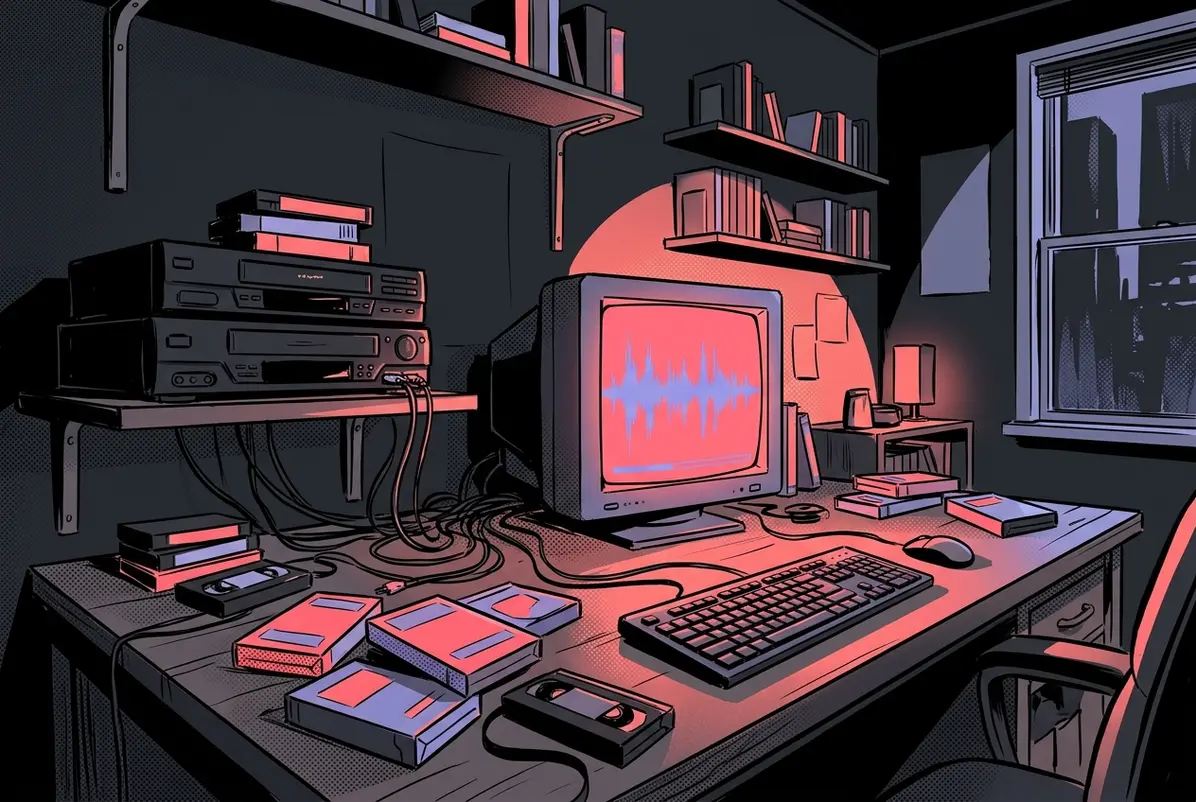
This is not a clean old-versus-new fight. It is triage. The AG-1980 is one answer to the crisis. RF capture may be another. External TBCs, alternate decks, careful cleaning, better storage, and boring capture discipline are all part of the same emergency. The mistake is pretending any single tool can carry the whole archive alone.
The Tapes Are Not Waiting
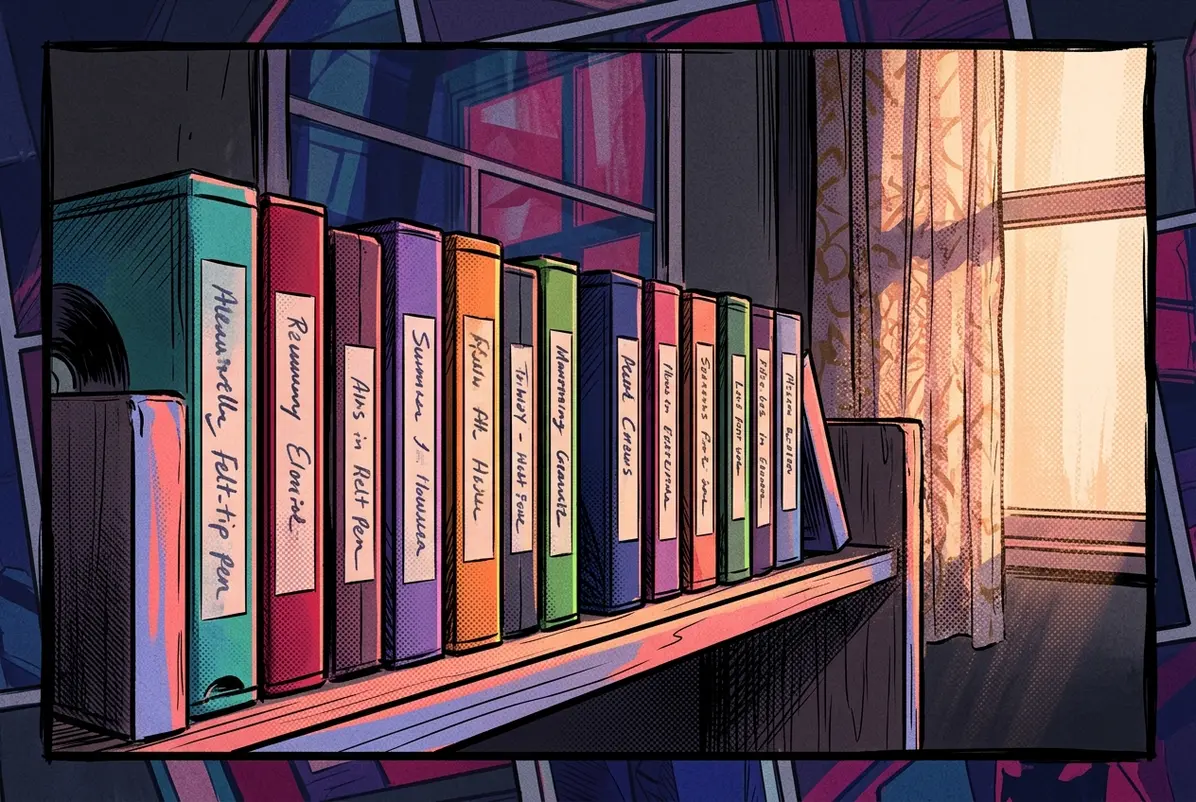
The real crisis is not the extinction of one machine. It is the clock running on the tapes themselves. Magnetic tape does not hold a memory forever just because someone put it in a closet. Binder breakdown, mold, shedding, poor storage, heat, humidity, and repeated playback can all turn a tape from a recording into a liability.
The National Archives notes that magnetic tapes stored under archival conditions generally have a lifespan of about 10 to 50 years before difficult-to-handle decay, with poorer storage likely shortening that window. That range matters. Some tapes from the 1980s still play. Some newer tapes are already trouble. The danger is not a single expiration date. The danger is uncertainty.
That uncertainty is what makes the AG-1980 debate urgent. A tape in a shoebox is not patiently waiting for the perfect preservation workflow. A family archive is not improved by another decade of gear discourse. At some point, the best machine is the one that is working, available, and in the hands of someone careful enough to use it well.
What Remains
I think about the last technicians every time I see a box of unlabeled VHS tapes at a thrift store. Someone’s birthday party may be on one of those tapes. Someone’s wedding. Someone’s kid taking first steps in a living room where the couch pattern is now more historically specific than the people realized when they bought it.
That is what analog video preservation is really about. Not format nostalgia. Not gear worship. Not the romance of obsolete plastic. It is about the terrifying fact that an enormous portion of late-20th-century memory was entrusted to magnetic tape and machines nobody makes anymore.
The last VCR rolled off a production line years ago. The AG-1980 was already old by then. What we are living through now is not ordinary decline. It is the final maintenance window. The tapes are still here. The machines are still here. Some of the technicians are still here. But none of those facts are permanent.
The people who keep these decks alive deserve more than forum mentions and shipping labels. They are not just repair techs. They are the last interpreters of a physical medium, working against entropy with solder, patience, and an understanding of magnetic tape that may not be fully passed down.
By our reckoning, the Panasonic AG-1980 is not just a VCR. It is one of the last bridges between a billion hours of recorded life and the digital future those hours need to reach. The bridge will not stand forever. The question is how much memory can cross before it falls.
'%3e%3cg id='Final-Copy-2_2_' transform='translate(1275.000000, 200.000000)'%3e%3cpath class='st0' d='M7.4,12.8h6.8l3.1-11.6H7.4C4.2,1.2,1.6,3.8,1.6,7S4.2,12.8,7.4,12.8z'/%3e%3c/g%3e%3c/g%3e%3c/g%3e%3cg id='final---dec.11-2020'%3e%3cg id='_x30_208-our-toggle' transform='translate(-1275.000000, -200.000000)'%3e%3cg id='Final-Copy-2' transform='translate(1275.000000, 200.000000)'%3e%3cpath class='st1' d='M22.6,0H7.4c-3.9,0-7,3.1-7,7s3.1,7,7,7h15.2c3.9,0,7-3.1,7-7S26.4,0,22.6,0z M1.6,7c0-3.2,2.6-5.8,5.8-5.8 h9.9l-3.1,11.6H7.4C4.2,12.8,1.6,10.2,1.6,7z'/%3e%3cpath id='x' class='st2' d='M24.6,4c0.2,0.2,0.2,0.6,0,0.8l0,0L22.5,7l2.2,2.2c0.2,0.2,0.2,0.6,0,0.8c-0.2,0.2-0.6,0.2-0.8,0 l0,0l-2.2-2.2L19.5,10c-0.2,0.2-0.6,0.2-0.8,0c-0.2-0.2-0.2-0.6,0-0.8l0,0L20.8,7l-2.2-2.2c-0.2-0.2-0.2-0.6,0-0.8 c0.2-0.2,0.6-0.2,0.8,0l0,0l2.2,2.2L23.8,4C24,3.8,24.4,3.8,24.6,4z'/%3e%3cpath id='y' class='st3' d='M12.7,4.1c0.2,0.2,0.3,0.6,0.1,0.8l0,0L8.6,9.8C8.5,9.9,8.4,10,8.3,10c-0.2,0.1-0.5,0.1-0.7-0.1l0,0 L5.4,7.7c-0.2-0.2-0.2-0.6,0-0.8c0.2-0.2,0.6-0.2,0.8,0l0,0L8,8.6l3.8-4.5C12,3.9,12.4,3.9,12.7,4.1z'/%3e%3c/g%3e%3c/g%3e%3c/g%3e%3c/g%3e%3c/svg%3e) Your Privacy Choices
Your Privacy Choices