

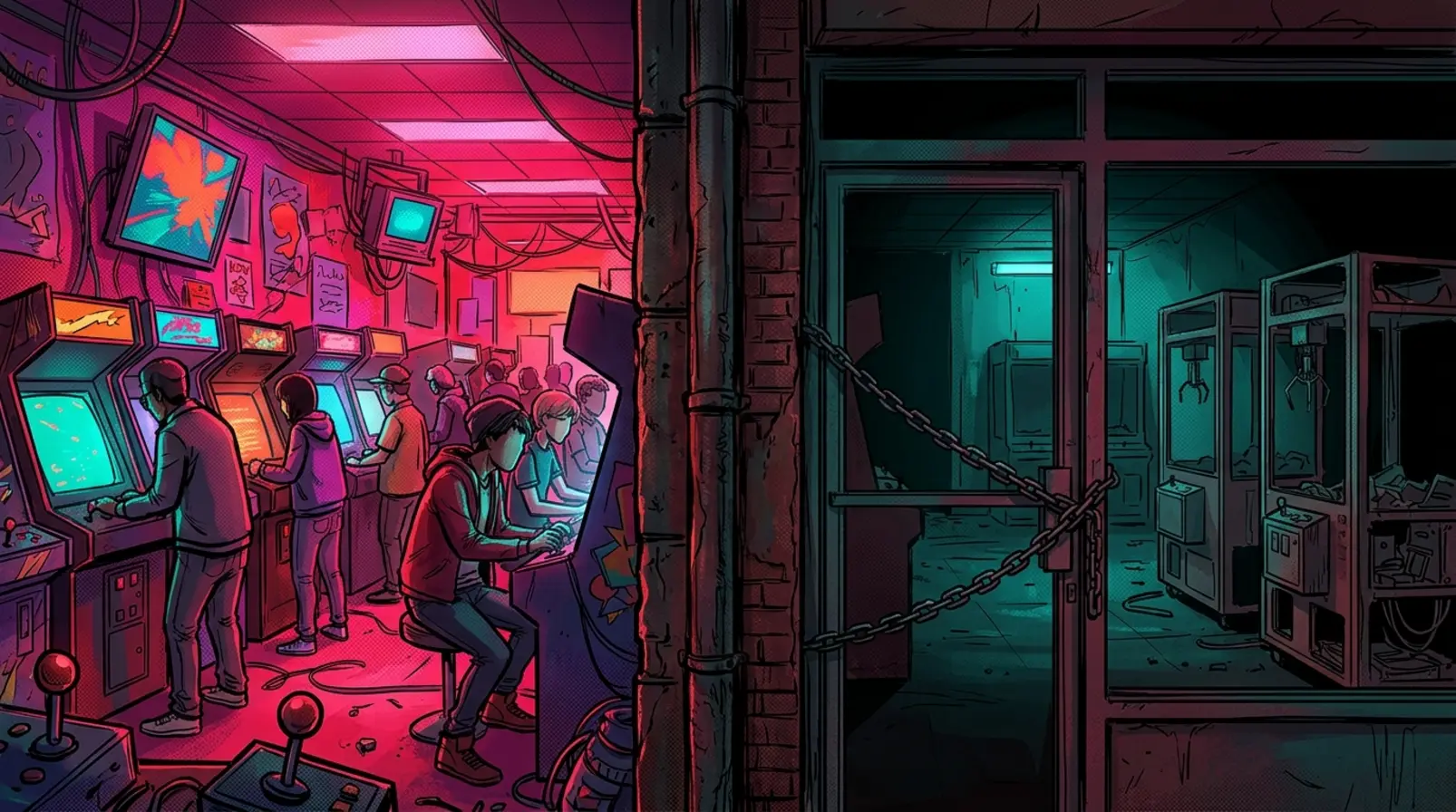

Two Tokyo arcades closed less than five months apart. From a distance, they looked like versions of the same story: another long-running game center gone. At street level, the outcomes were almost opposites. GiGO Akihabara Building 1 closed on August 31, 2025, when its fixed-term building lease expired, and another arcade opened at the same address less than three months later. Adores Sunshine closed on January 18, 2026, after forty years of operation. The entertainment facility occupying the rest of its building closed the same day, and the building subsequently entered demolition.
The distinction matters. A locked arcade door can look like evidence of a dying format even when the thing that actually ended was a lease, a tenancy or the building itself.
The Building Sega Left
GiGO Akihabara Building 1 had been operating since October 1992, when it opened under Sega as High-Tech Land Sega Shintoku. Its path away from Sega was gradual. GENDA acquired an 85.1 percent stake in Sega Entertainment in December 2020. In January 2022, it acquired the remaining 14.9 percent from Sega, bringing the operator under full GENDA ownership and beginning the change from Sega-branded domestic arcades to GiGO.
The Akihabara location kept running for another three and a half years. When GENDA announced its closure, the company gave a specific reason: the expiration of the arcade’s fixed-term building lease. The announcement did not blame falling attendance, profitability or the economics of arcade gaming. More importantly, it said Matahari Entertainment was already planning another amusement facility at the address.
One Address, Another Arcade
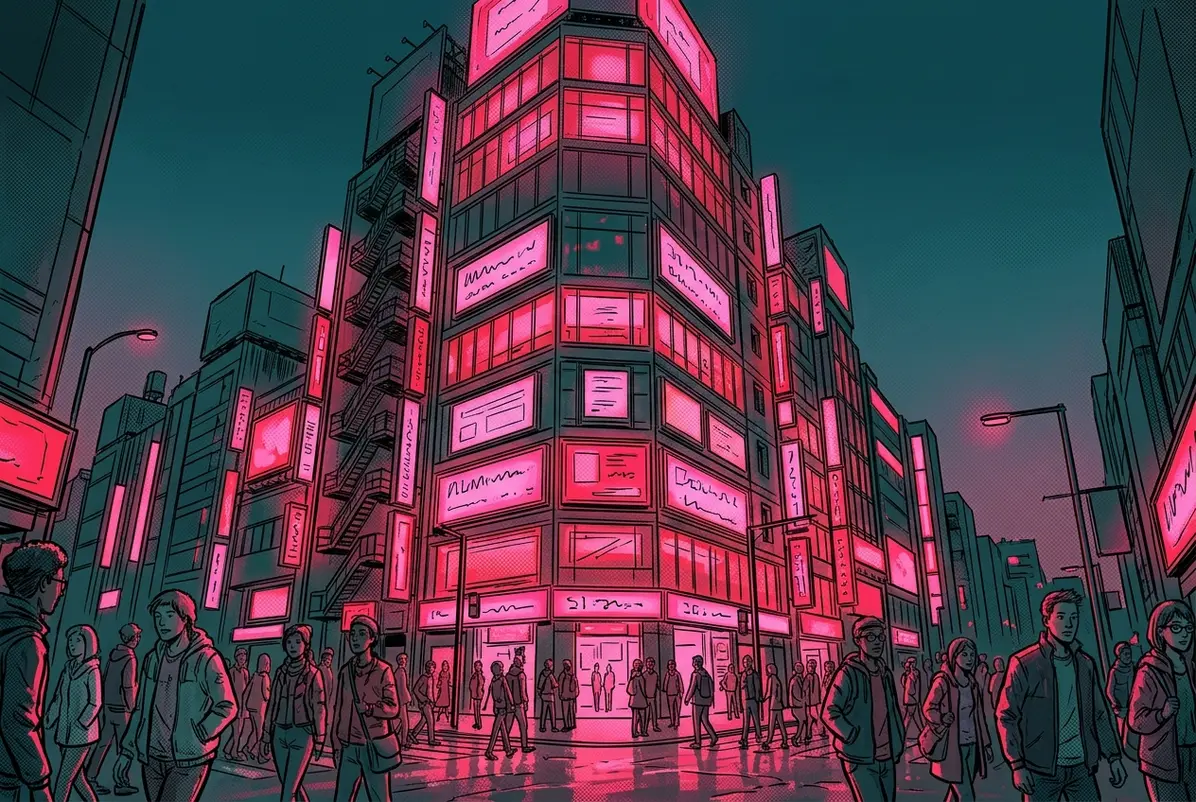
The replacement arrived quickly. Matahari Entertainment opened Silk Hat Akihabara on November 22, 2025, at the same 1-10-9 Sotokanda address. Its announced configuration stretched across nine floors from the basement through the eighth floor, with crane games occupying floors one through four, rhythm games higher up and 58 Mobile Suit Gundam Extreme Vs. 2 Infinite Boost cabinets in the basement.
That makes the GiGO closure difficult to use as evidence that an arcade could no longer work there. One operator’s tenancy ended. Another operator considered the same building suitable for essentially the same category of business and reopened it within weeks.
The Building That Left With Adores
Adores Sunshine presents a different kind of disappearance. The Ikebukuro arcade closed on January 18, 2026, after forty years. Its operator publicly described the reason only as “various circumstances,” leaving questions about the store’s individual economics unanswered. Adores’ own retrospective commemorated the end of its forty-year run and the customers who gathered for the final closing.
But the arcade was not the only operation leaving. Mixalive TOKYO, the live-entertainment complex occupying other floors of the same building, also closed on January 18. That made the event larger than the loss of one game center.
What happened afterward sharpens the difference further. A demolition notice posted at the Ikebukuro Sasaki Building listed work beginning on February 2, 2026, and by spring, construction-industry reporting described demolition as underway. Public reporting around the closure said redevelopment was expected, although the detailed replacement project had not yet been announced.
The Same Headline Hid Two Different Events
Arcades are visible businesses nested inside less visible systems: leases, landlords, buildings, redevelopment plans and property values. When the machines disappear, those layers disappear from the photograph. What remains is a shuttered entrance, which makes radically different events look deceptively similar.
Akihabara shows why that can matter. GENDA’s lease ended, but the address did not reject arcade use. Another amusement operator was already waiting, and Silk Hat reopened the building as a game center in November. Ikebukuro moved in the opposite direction. Adores left alongside another major tenant, and demolition followed.
None of this establishes either arcade’s profitability, the rent GENDA faced, comparative pedestrian traffic or the health of Tokyo’s arcade market as a whole. Two addresses cannot carry that argument, and the available records do not reveal enough to make it responsibly.
What they can show is simpler and more useful. An arcade can vanish without arcade use vanishing from the property, just as a beloved arcade can close because the property around it is disappearing too. From the sidewalk, both stories end with the same metal shutter. The shutter is not the explanation. It is where the explanation starts.

'%3e%3cg id='Final-Copy-2_2_' transform='translate(1275.000000, 200.000000)'%3e%3cpath class='st0' d='M7.4,12.8h6.8l3.1-11.6H7.4C4.2,1.2,1.6,3.8,1.6,7S4.2,12.8,7.4,12.8z'/%3e%3c/g%3e%3c/g%3e%3c/g%3e%3cg id='final---dec.11-2020'%3e%3cg id='_x30_208-our-toggle' transform='translate(-1275.000000, -200.000000)'%3e%3cg id='Final-Copy-2' transform='translate(1275.000000, 200.000000)'%3e%3cpath class='st1' d='M22.6,0H7.4c-3.9,0-7,3.1-7,7s3.1,7,7,7h15.2c3.9,0,7-3.1,7-7S26.4,0,22.6,0z M1.6,7c0-3.2,2.6-5.8,5.8-5.8 h9.9l-3.1,11.6H7.4C4.2,12.8,1.6,10.2,1.6,7z'/%3e%3cpath id='x' class='st2' d='M24.6,4c0.2,0.2,0.2,0.6,0,0.8l0,0L22.5,7l2.2,2.2c0.2,0.2,0.2,0.6,0,0.8c-0.2,0.2-0.6,0.2-0.8,0 l0,0l-2.2-2.2L19.5,10c-0.2,0.2-0.6,0.2-0.8,0c-0.2-0.2-0.2-0.6,0-0.8l0,0L20.8,7l-2.2-2.2c-0.2-0.2-0.2-0.6,0-0.8 c0.2-0.2,0.6-0.2,0.8,0l0,0l2.2,2.2L23.8,4C24,3.8,24.4,3.8,24.6,4z'/%3e%3cpath id='y' class='st3' d='M12.7,4.1c0.2,0.2,0.3,0.6,0.1,0.8l0,0L8.6,9.8C8.5,9.9,8.4,10,8.3,10c-0.2,0.1-0.5,0.1-0.7-0.1l0,0 L5.4,7.7c-0.2-0.2-0.2-0.6,0-0.8c0.2-0.2,0.6-0.2,0.8,0l0,0L8,8.6l3.8-4.5C12,3.9,12.4,3.9,12.7,4.1z'/%3e%3c/g%3e%3c/g%3e%3c/g%3e%3c/g%3e%3c/svg%3e) Your Privacy Choices
Your Privacy Choices