



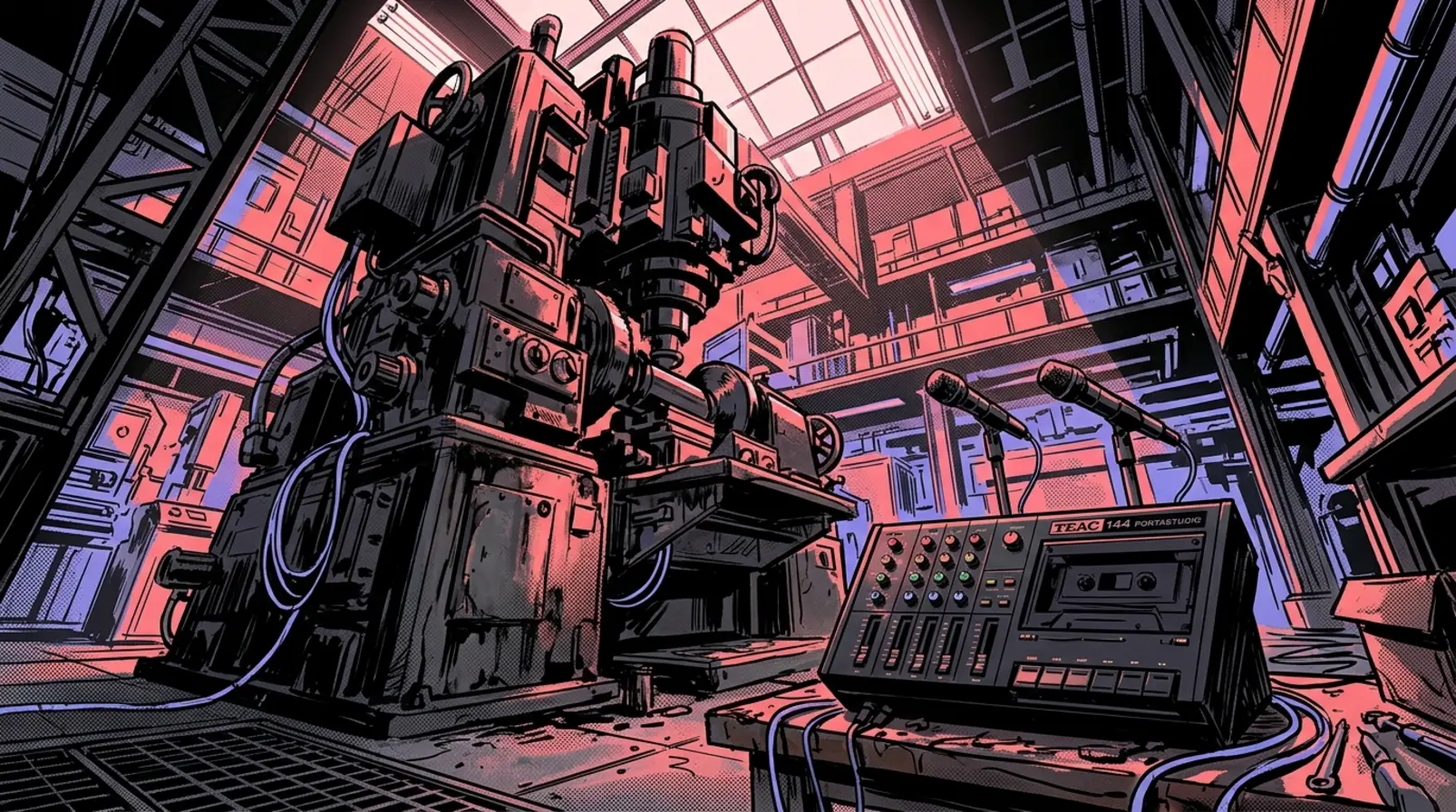
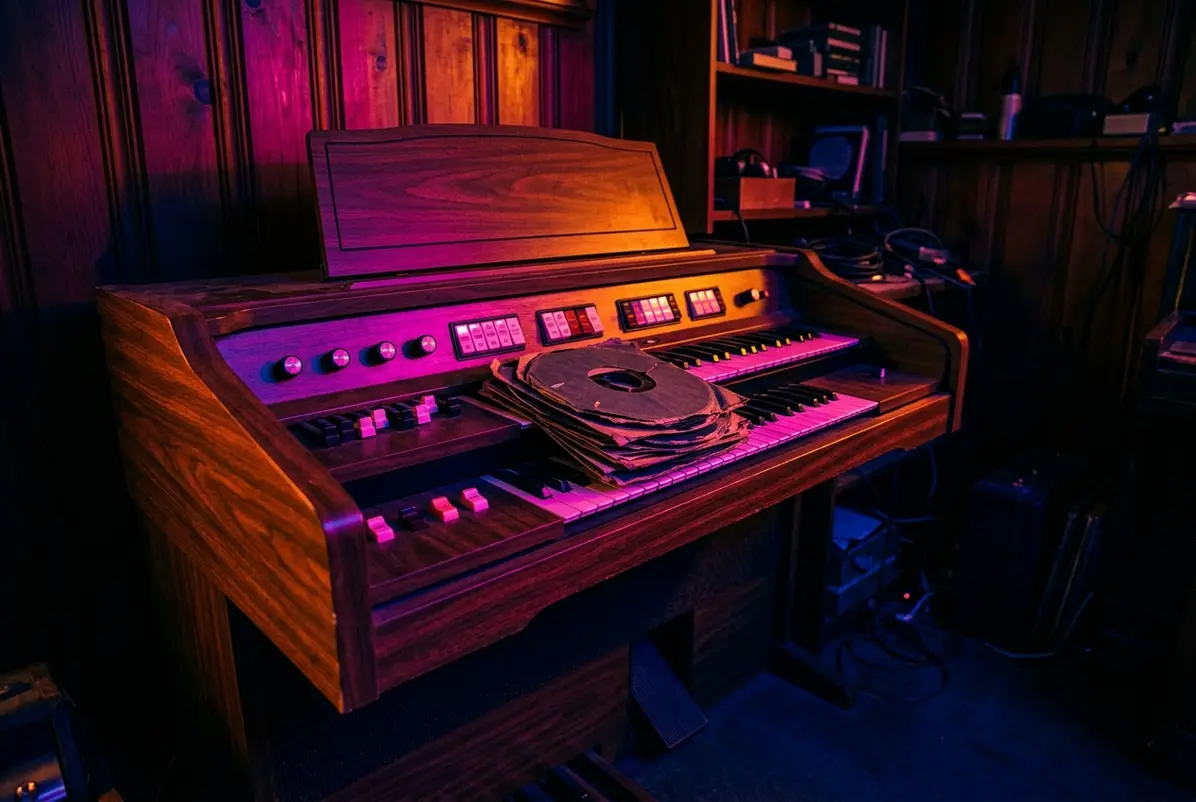
Mattel’s Optigan Corporation sold the Optigan as a home organ, but the mechanism inside was closer to a record player with a keyboard attached. Every note, chord, rhythm, and effect came from an interchangeable optical disc rather than a conventional electronic tone generator. More than 50 years later, Optigan.com is still introducing newly manufactured titles for vintage Optigans and Orchestrons as well as the modern Panoptigon. The original instrument disappeared from stores decades ago. Its record library kept going.
How the Optigan Turned Keys Into Recordings
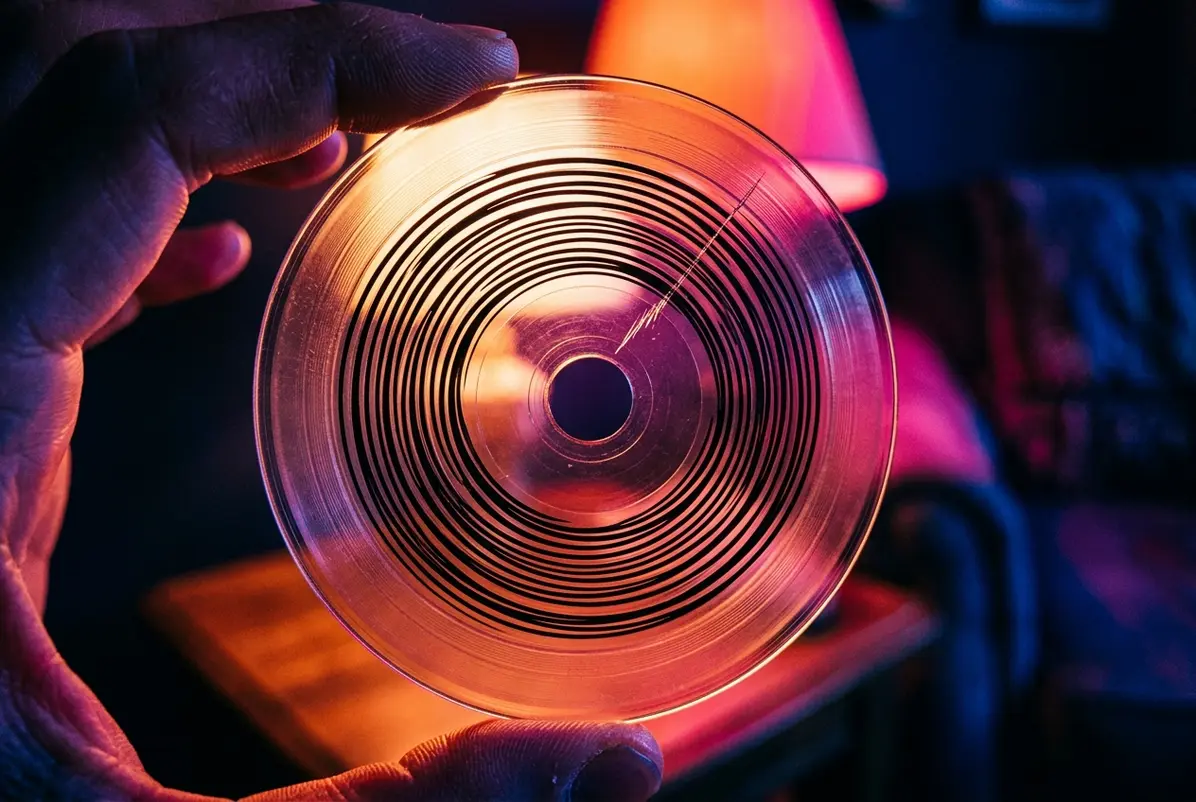
The Optigan used clear, LP-sized celluloid discs carrying concentric optical soundtracks. According to Optigan.com, the instrument spun the disc while light passed through its encoded tracks and photoreceptors read the changing pattern. Each disc contained 57 loops: 37 corresponded to the keyboard, while the remaining 20 supplied chords, rhythms, and other accompaniment.
That distinction matters. The keys were not playing an electronic organ while a record supplied the backing band. Optigan archivist Pea Hicks explained to Tape Op that every sound the instrument made lived on the disc. Pressing a key effectively opened one recorded loop; pressing an accompaniment button opened another. Changing discs replaced the instrument’s sonic vocabulary almost as directly as changing records replaced an album.
Optigan Corporation was a Mattel subsidiary aimed at the consumer market rather than professional studios. In his retrospective history, Hicks writes that Optigans sold mostly through retailers such as Sears and J.C. Penney for roughly $200 to $400 depending on the model. Extra discs were sold much like records. The organ was the player; the catalog was the product that could keep changing.
Who Was Actually Playing on Those Discs?
The recordings behind that catalog were more elaborate than the instrument’s reputation as a consumer novelty suggests. Optigan.com’s reconstructed disc archive says the earliest sessions were recorded at EMI Studios in Cologne, Germany, in an effort to lower costs. Those musicians were generally credited as the “Mattel Special Projects Band,” and the archive estimates that roughly half of the released Optigan discs contain material from the German sessions.
The paperwork is not complete. The archive notes that much of its information comes from annotations on surviving mixdown reels, which do not always make clear whether a date refers to recording or mixing, or whether a listed studio handled the original session or later work. What does survive identifies a much wider production network than the brown living-room cabinet suggests, including Western Recorders, Golden West Sound, Wally Heider Recording, Quantum Recording Studio, and Whitney Recording Studio in California.
Why the Optigan Catalog Stopped
The format’s original run was short. Optigan.com’s timeline records Mattel announcing plans to dispose of the subsidiary on February 5, 1973, citing “disappointing operating results.” Mattel sold the operation to Miner Industries on June 8, 1973, and Miner created a subsidiary called Opsonar to continue it.
The discs survived the handoff for a while. By August 27, 1975, however, the archive says all existing Optigan disc titles had been produced and software development had effectively stopped. The disc-production facility moved out of its California location in March 1976. A musical instrument whose central trick depended on a growing library had stopped getting new software.
How a Dead Format Started Getting New Releases
More than three decades later, the unusual part of the Optigan revival was not merely restoring old machines. It was restarting the format. Optigan.com says Pea Hicks and Robert Becker of Quilter Labs began developing newly mastered optical discs in 2008, producing the first new Optigan and Orchestron titles since the original era. Their system turns digital audio into the high-resolution imagery needed to manufacture physical optical discs readable by the old hardware.
Eventually they built a new player too. Becker’s company Quilter Labs developed the Panoptigon, a tabletop machine capable of playing vintage Optigan and Orchestron discs as well as a new 60-track Panoptigon format. When production units were shown at NAMM in 2019, the initial U.S. run was limited to 25 units with a $3,999 advertised minimum price. The machine added MIDI control and modern speed and pitch handling without replacing the optical disc at the center of the system.
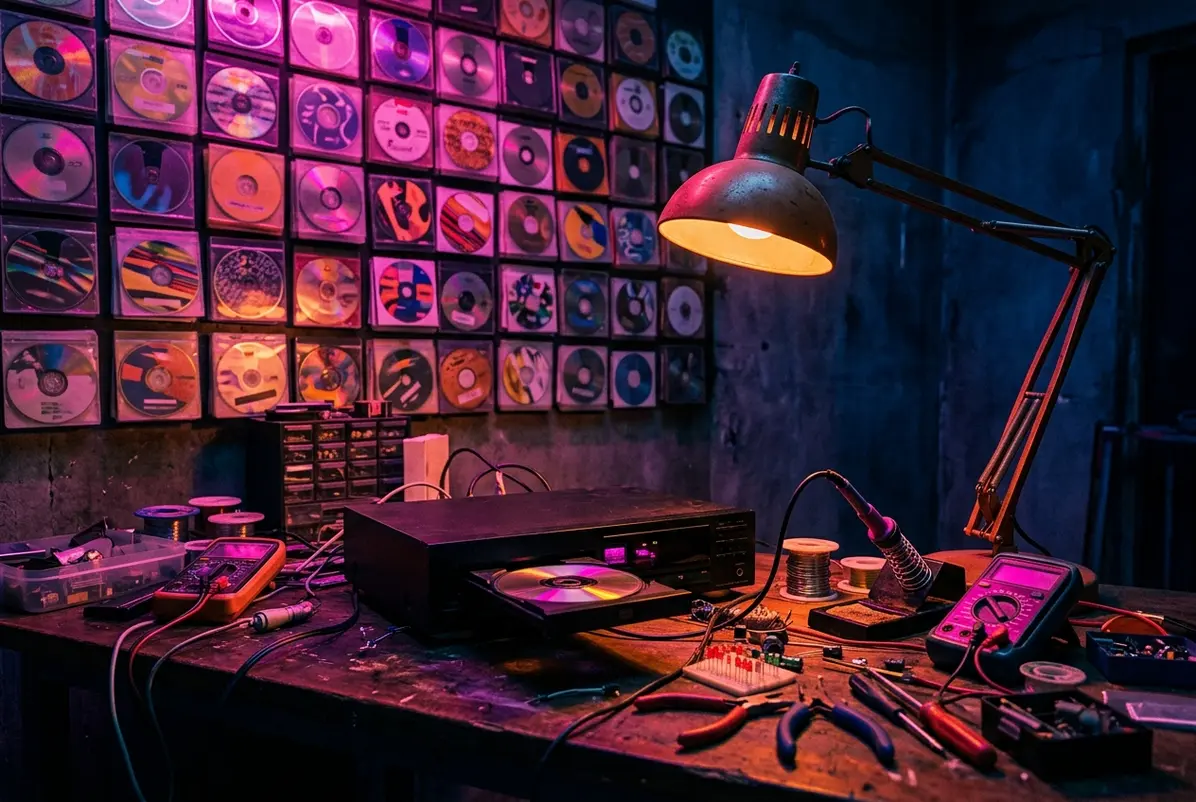
The hardware revival has already had its own ending. As of September 30, 2026, Quilter Labs lists the Panoptigon Disc Player among its discontinued gear. The discs did not follow it. Quilter’s current catalog contains dozens of Optigan, Orchestron, and Panoptigon titles, including new 2026 releases, with many currently listed at $89.
That price produces an appropriately strange comparison. Hicks recalled finding his first Optigan at a Salvation Army in 1995 for $50. Different decades, different markets, and hardly an inflation study—but a newly manufactured disc can now list for more than one documented thrift-store purchase of the entire machine.
That may be the Optigan’s best trick. Mattel’s home organ became obsolete. The supposedly disposable software that gave it something to play is still getting sequels.
'%3e%3cg id='Final-Copy-2_2_' transform='translate(1275.000000, 200.000000)'%3e%3cpath class='st0' d='M7.4,12.8h6.8l3.1-11.6H7.4C4.2,1.2,1.6,3.8,1.6,7S4.2,12.8,7.4,12.8z'/%3e%3c/g%3e%3c/g%3e%3c/g%3e%3cg id='final---dec.11-2020'%3e%3cg id='_x30_208-our-toggle' transform='translate(-1275.000000, -200.000000)'%3e%3cg id='Final-Copy-2' transform='translate(1275.000000, 200.000000)'%3e%3cpath class='st1' d='M22.6,0H7.4c-3.9,0-7,3.1-7,7s3.1,7,7,7h15.2c3.9,0,7-3.1,7-7S26.4,0,22.6,0z M1.6,7c0-3.2,2.6-5.8,5.8-5.8 h9.9l-3.1,11.6H7.4C4.2,12.8,1.6,10.2,1.6,7z'/%3e%3cpath id='x' class='st2' d='M24.6,4c0.2,0.2,0.2,0.6,0,0.8l0,0L22.5,7l2.2,2.2c0.2,0.2,0.2,0.6,0,0.8c-0.2,0.2-0.6,0.2-0.8,0 l0,0l-2.2-2.2L19.5,10c-0.2,0.2-0.6,0.2-0.8,0c-0.2-0.2-0.2-0.6,0-0.8l0,0L20.8,7l-2.2-2.2c-0.2-0.2-0.2-0.6,0-0.8 c0.2-0.2,0.6-0.2,0.8,0l0,0l2.2,2.2L23.8,4C24,3.8,24.4,3.8,24.6,4z'/%3e%3cpath id='y' class='st3' d='M12.7,4.1c0.2,0.2,0.3,0.6,0.1,0.8l0,0L8.6,9.8C8.5,9.9,8.4,10,8.3,10c-0.2,0.1-0.5,0.1-0.7-0.1l0,0 L5.4,7.7c-0.2-0.2-0.2-0.6,0-0.8c0.2-0.2,0.6-0.2,0.8,0l0,0L8,8.6l3.8-4.5C12,3.9,12.4,3.9,12.7,4.1z'/%3e%3c/g%3e%3c/g%3e%3c/g%3e%3c/g%3e%3c/svg%3e) Your Privacy Choices
Your Privacy Choices