

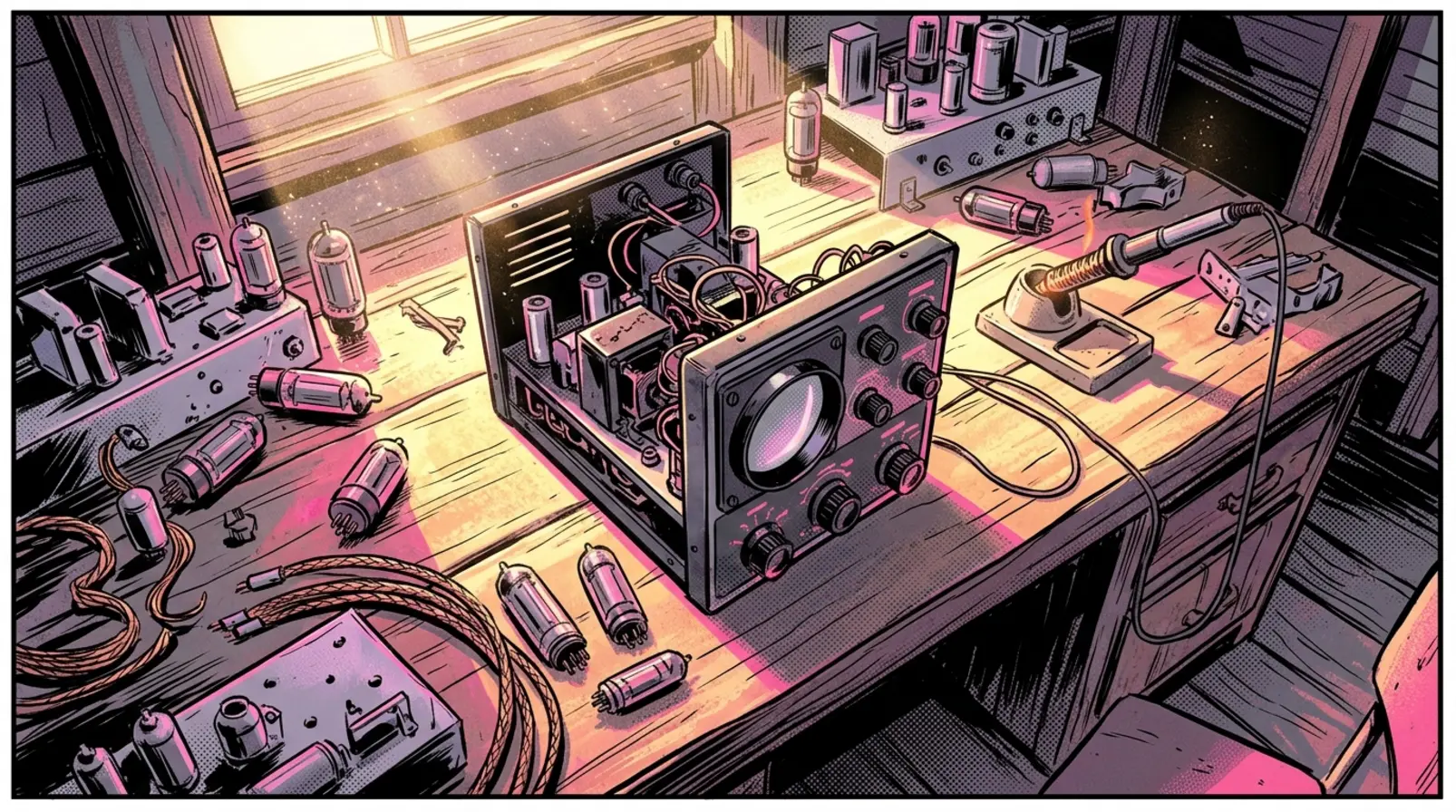


In 1947, Heath Company introduced its five-inch O-1 oscilloscope kit for $39.50. The price was not merely cheap for an oscilloscope assembled at home. A history published in the AWA Review describes it as roughly half the price of a comparable factory-built instrument. Heath had found a simple bargain in postwar electronics: the company supplied the parts and instructions, the customer supplied the assembly labor, and the missing factory labor showed up as a lower price.
Heathkit’s Bargain Was Labor in Exchange for a Lower Price
The first oscilloscope was built around war-surplus components, including cathode-ray tubes that had become plentiful after World War II. At $39.50, the kit turned a pile of parts and hours at the bench into access to equipment that could otherwise cost substantially more. Building it was educational, but the economics mattered too.
That model eventually spread far beyond test equipment. In a 1982 interview published in Sextant, Heath/Zenith executive William E. Johnson said the company offered more than 400 kits and operated more than 70 retail centers across the United States, Canada, and Europe. Heathkit had turned customer labor into the basis of a sprawling electronics business.
The Heathkit Discount Vanished Before the Kits Did
By December 1984, that bargain had broken down in one especially revealing comparison. BYTE reported that Heath’s H-150 computer kit could cost $100 more than an assembled Zenith Z-150 from some dealers. Building the kit also demanded roughly 20 hours and soldering skills. The customer was no longer trading labor for a discount. In that comparison, the customer could pay more for the privilege of doing the assembly.
The problem was larger than one computer. Factory electronics had become cheaper to manufacture while increasing integration left less useful assembly work for a person at a home bench. On March 30, 1992, The New York Times reported that Heath was ending production of its electronic kits after sales had fallen to nearly nothing. The old economic proposition had been overtaken by mass production.
What Today’s Heathkit Charges For
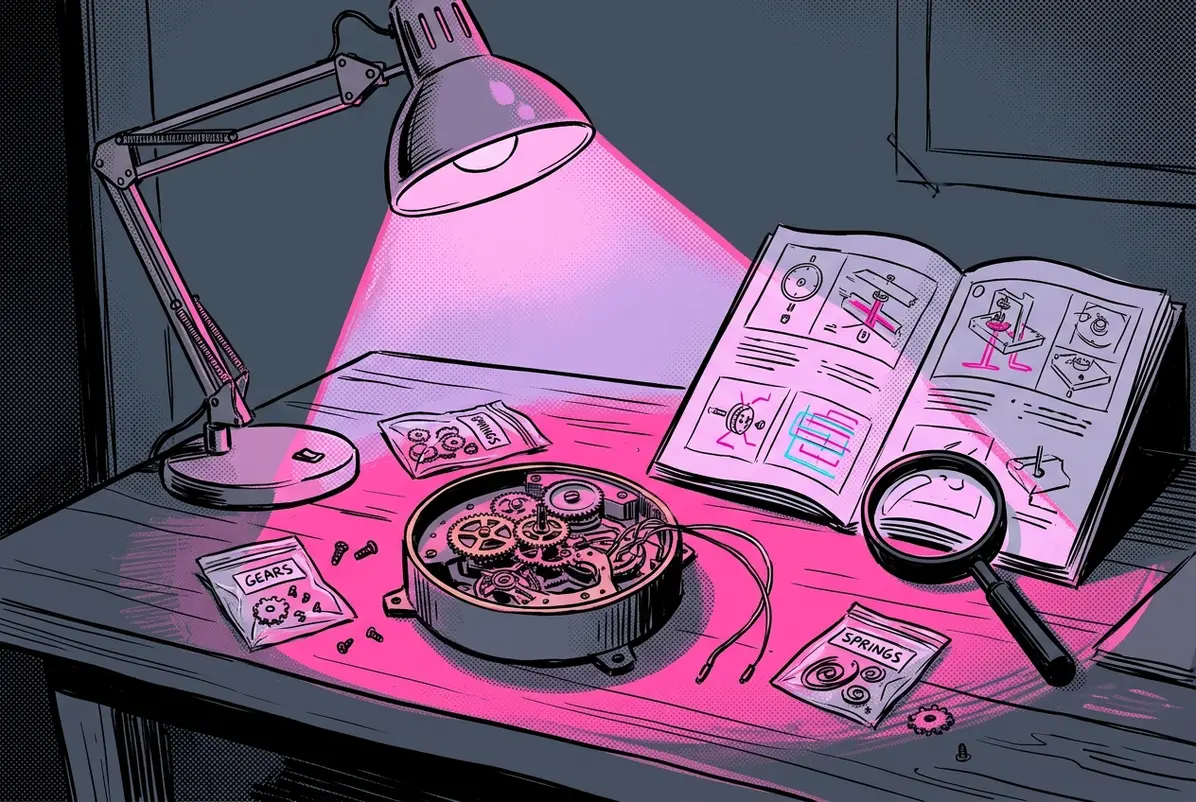
The revived Heathkit sells a different proposition. As of October 3, 2026, the company’s online shop lists its GC-1006 clock at $229.95, its Explorer AM radio at $249.95, a surface-mount soldering toolkit at $49.95, and a Heathkit-edition CubeSatSim educator pack at $995.
The company’s own description makes the change unusually explicit. Heathkit says its goal is to help customers build complex products, learn how they work, and gain the ability to repair and modify them. Assembly is no longer merely the labor removed from the factory invoice. It is part of what the company is selling.
When the Work Became the Product
The strange thing about Heathkit’s survival is that the soldering iron never changed sides. The customer still does the work. What changed was the economic meaning of that work.
In 1947, Heath could sell an oscilloscope for roughly half the price of a comparable factory-built instrument because the buyer supplied something the factory normally had to pay for: assembly. By 1984, at least one Heath computer kit could cost more than its assembled counterpart. Today’s Heathkit does not need to pretend that the hours at the bench are a manufacturing shortcut. Its sales pitch treats those hours as education, repairability, understanding, and satisfaction.
Heathkit once removed labor from the price of electronics. Now the labor is part of the price.



'%3e%3cg id='Final-Copy-2_2_' transform='translate(1275.000000, 200.000000)'%3e%3cpath class='st0' d='M7.4,12.8h6.8l3.1-11.6H7.4C4.2,1.2,1.6,3.8,1.6,7S4.2,12.8,7.4,12.8z'/%3e%3c/g%3e%3c/g%3e%3c/g%3e%3cg id='final---dec.11-2020'%3e%3cg id='_x30_208-our-toggle' transform='translate(-1275.000000, -200.000000)'%3e%3cg id='Final-Copy-2' transform='translate(1275.000000, 200.000000)'%3e%3cpath class='st1' d='M22.6,0H7.4c-3.9,0-7,3.1-7,7s3.1,7,7,7h15.2c3.9,0,7-3.1,7-7S26.4,0,22.6,0z M1.6,7c0-3.2,2.6-5.8,5.8-5.8 h9.9l-3.1,11.6H7.4C4.2,12.8,1.6,10.2,1.6,7z'/%3e%3cpath id='x' class='st2' d='M24.6,4c0.2,0.2,0.2,0.6,0,0.8l0,0L22.5,7l2.2,2.2c0.2,0.2,0.2,0.6,0,0.8c-0.2,0.2-0.6,0.2-0.8,0 l0,0l-2.2-2.2L19.5,10c-0.2,0.2-0.6,0.2-0.8,0c-0.2-0.2-0.2-0.6,0-0.8l0,0L20.8,7l-2.2-2.2c-0.2-0.2-0.2-0.6,0-0.8 c0.2-0.2,0.6-0.2,0.8,0l0,0l2.2,2.2L23.8,4C24,3.8,24.4,3.8,24.6,4z'/%3e%3cpath id='y' class='st3' d='M12.7,4.1c0.2,0.2,0.3,0.6,0.1,0.8l0,0L8.6,9.8C8.5,9.9,8.4,10,8.3,10c-0.2,0.1-0.5,0.1-0.7-0.1l0,0 L5.4,7.7c-0.2-0.2-0.2-0.6,0-0.8c0.2-0.2,0.6-0.2,0.8,0l0,0L8,8.6l3.8-4.5C12,3.9,12.4,3.9,12.7,4.1z'/%3e%3c/g%3e%3c/g%3e%3c/g%3e%3c/g%3e%3c/svg%3e) Your Privacy Choices
Your Privacy Choices