

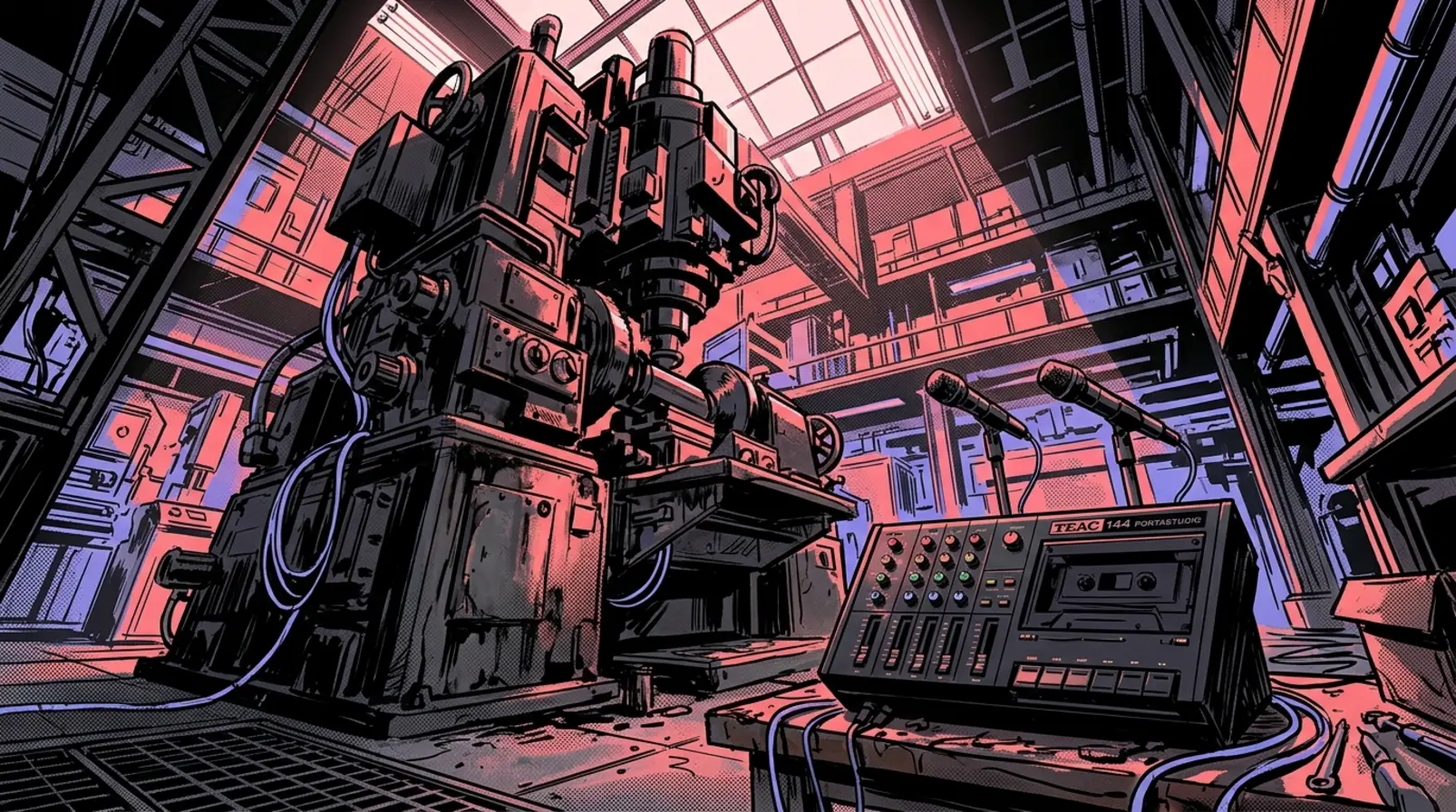

The TEAC 144 Portastudio was built to make demos. Bruce Springsteen used one to make a demo that became the album.
Introduced in 1979, the 144 put four-track recording and a mixer into a machine built around an ordinary compact cassette. TASCAM’s retrospective lists its original price as $899, while contemporary Billboard reporting gave a $1,100 suggested retail price as shipments began. It was home-recording equipment, not a replacement for the professional studio. Nebraska became the awkward exception.
A Demo Refused to Become a Studio Record
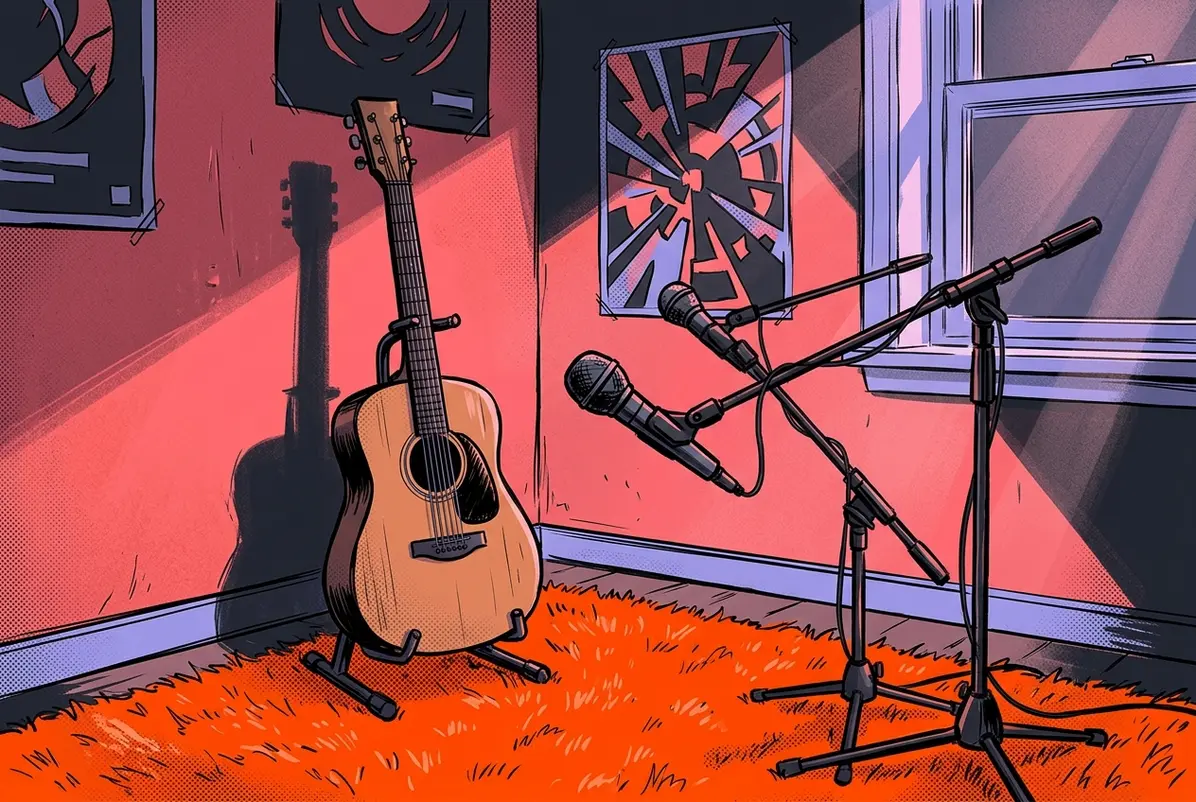
Springsteen and guitar technician Mike Batlan set up a 144 in a bedroom at Springsteen’s Colts Neck, New Jersey home, using two Shure SM57 microphones. The point was practical: get the songs down before taking them to the E Street Band.
That happened. Springsteen brought the songs into New York studios and tried them with the band. The problem was not that the professional recordings sounded bad. They sounded professional. Springsteen later described the difference more precisely: the studio versions were “more hi-fi, but not nearly as atmospheric.”
That distinction changed the job. Instead of replacing the cassette demo with a technically superior recording, the production team had to figure out how to release the cassette.
The Cassette Wasn’t Ready to Become an LP
Keeping the home recording created another problem: getting it onto vinyl. Longtime Springsteen engineer Toby Scott later recalled taking the material to four or five mastering facilities. According to Scott’s account published by TASCAM, the recording had so much phasing and other sonic irregularity that attempts to cut a usable lacquer failed, with the needle jumping from the grooves.
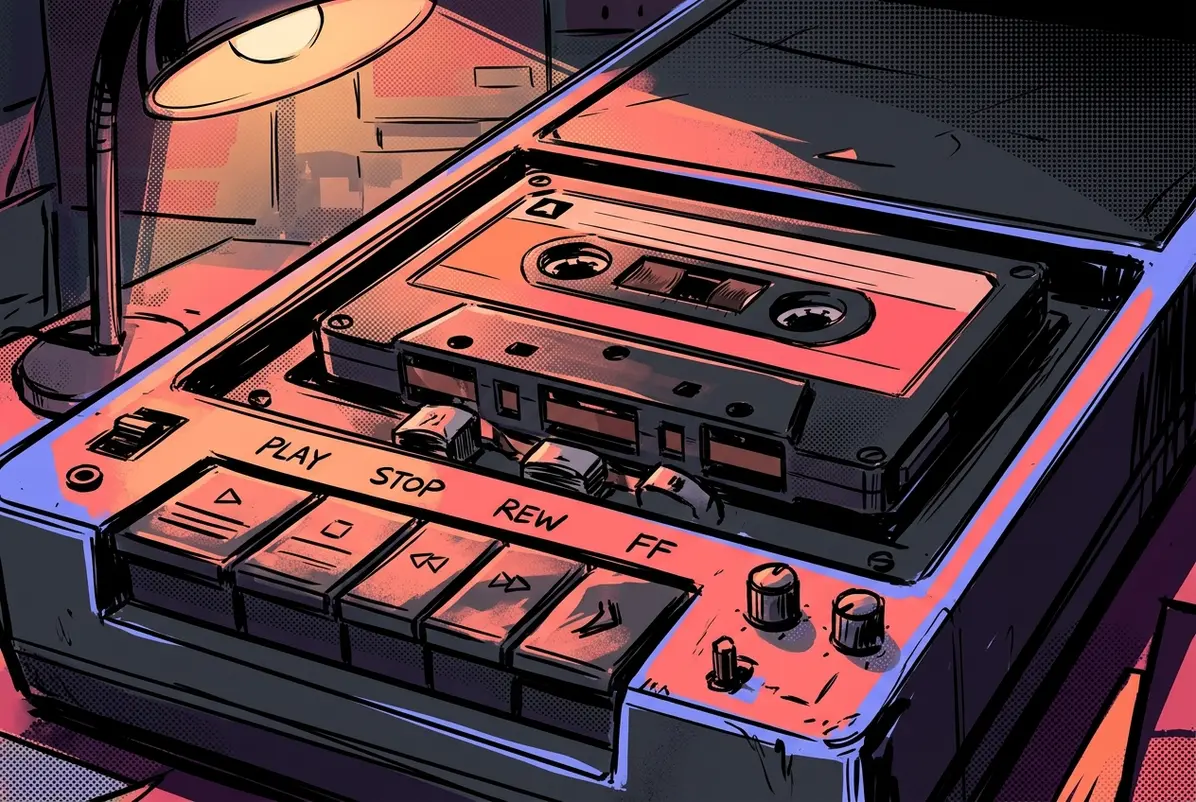
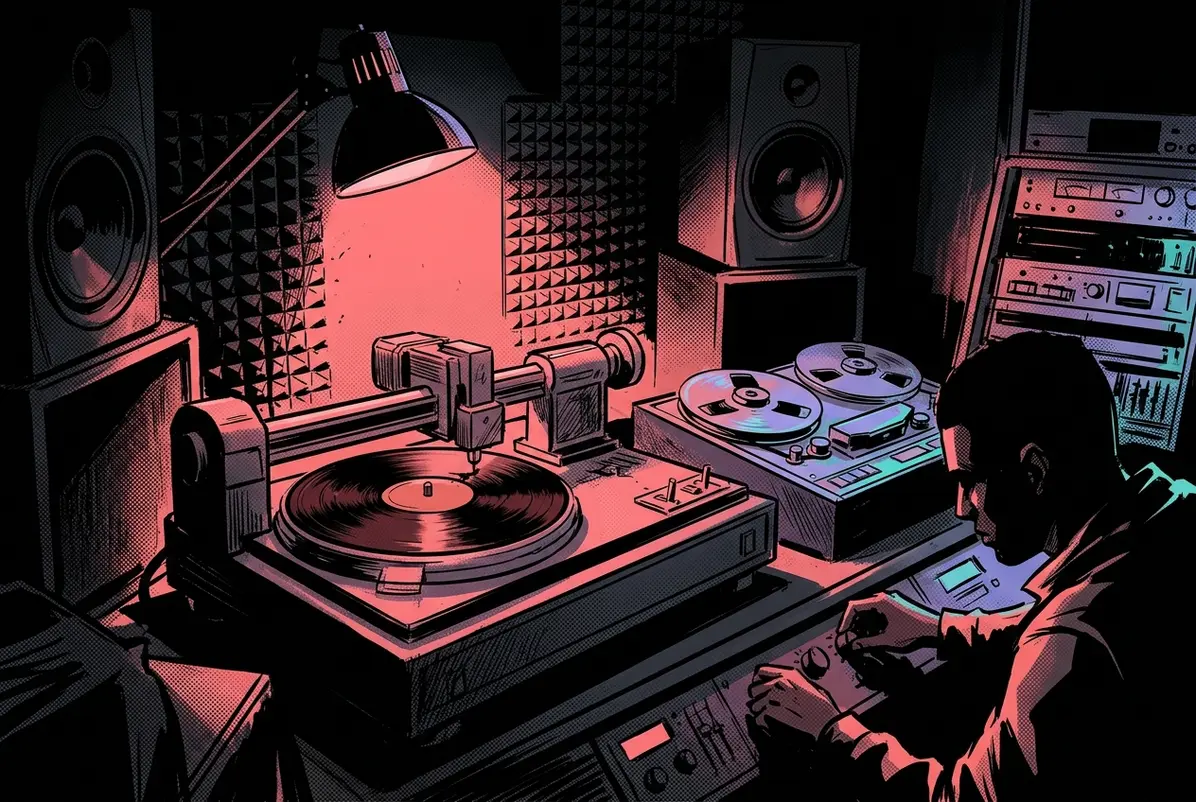
The list of people who tried reads nothing like a bedroom-recording operation. Scott named Bob Ludwig, Steve Marcussen, Sterling Sound, CBS and eventually Dennis King at Atlantic. King also failed on his first attempt. Then, Scott recalled, they tried cutting the record at a much lower level. That worked.
The final solution was a hybrid of expertise rather than a miraculous piece of equipment: Scott said the finished master used Ludwig’s EQ and mastering facility with King’s mastering parameters. The expensive part of making Nebraska was no longer capturing the performances. It was figuring out how not to lose them.
The Defects Became Part of the Record
Scott’s explanation of the sound is unusually useful because it strips away some of the romance around lo-fi recording. He attributed the result not simply to the Portastudio but to the entire compromised chain: multiple tapes, dirty heads, speed variation and the way the material had been handled. Those were problems by normal engineering standards. Once Springsteen preferred what they had produced, however, correcting them too thoroughly risked correcting the record out of existence.
The result was released September 30, 1982. Nebraska reached No. 3 on the Billboard 200. The machine intended to help Springsteen prepare for the studio had captured something the studio sessions could not reproduce to his satisfaction.
Forty-Three Years Later, the Rejected Version Came Out
That comparison is no longer confined to stories about lost sessions. Nebraska ’82: Expanded Edition was released October 24, 2025, after a one-week production delay. Its Electric Nebraska disc contains eight E Street Band recordings, including six songs that appeared on Nebraska, alongside “Downbound Train” and “Born in the U.S.A.”
They make the old decision audible. The cassette was not released because nobody had access to something better. Springsteen had the E Street Band, major New York studios and professional engineers available to him. The polished alternative was attempted.
The harder job was getting the supposedly temporary version onto a record without destroying the reason anyone wanted to keep it.
'%3e%3cg id='Final-Copy-2_2_' transform='translate(1275.000000, 200.000000)'%3e%3cpath class='st0' d='M7.4,12.8h6.8l3.1-11.6H7.4C4.2,1.2,1.6,3.8,1.6,7S4.2,12.8,7.4,12.8z'/%3e%3c/g%3e%3c/g%3e%3c/g%3e%3cg id='final---dec.11-2020'%3e%3cg id='_x30_208-our-toggle' transform='translate(-1275.000000, -200.000000)'%3e%3cg id='Final-Copy-2' transform='translate(1275.000000, 200.000000)'%3e%3cpath class='st1' d='M22.6,0H7.4c-3.9,0-7,3.1-7,7s3.1,7,7,7h15.2c3.9,0,7-3.1,7-7S26.4,0,22.6,0z M1.6,7c0-3.2,2.6-5.8,5.8-5.8 h9.9l-3.1,11.6H7.4C4.2,12.8,1.6,10.2,1.6,7z'/%3e%3cpath id='x' class='st2' d='M24.6,4c0.2,0.2,0.2,0.6,0,0.8l0,0L22.5,7l2.2,2.2c0.2,0.2,0.2,0.6,0,0.8c-0.2,0.2-0.6,0.2-0.8,0 l0,0l-2.2-2.2L19.5,10c-0.2,0.2-0.6,0.2-0.8,0c-0.2-0.2-0.2-0.6,0-0.8l0,0L20.8,7l-2.2-2.2c-0.2-0.2-0.2-0.6,0-0.8 c0.2-0.2,0.6-0.2,0.8,0l0,0l2.2,2.2L23.8,4C24,3.8,24.4,3.8,24.6,4z'/%3e%3cpath id='y' class='st3' d='M12.7,4.1c0.2,0.2,0.3,0.6,0.1,0.8l0,0L8.6,9.8C8.5,9.9,8.4,10,8.3,10c-0.2,0.1-0.5,0.1-0.7-0.1l0,0 L5.4,7.7c-0.2-0.2-0.2-0.6,0-0.8c0.2-0.2,0.6-0.2,0.8,0l0,0L8,8.6l3.8-4.5C12,3.9,12.4,3.9,12.7,4.1z'/%3e%3c/g%3e%3c/g%3e%3c/g%3e%3c/g%3e%3c/svg%3e) Your Privacy Choices
Your Privacy Choices