

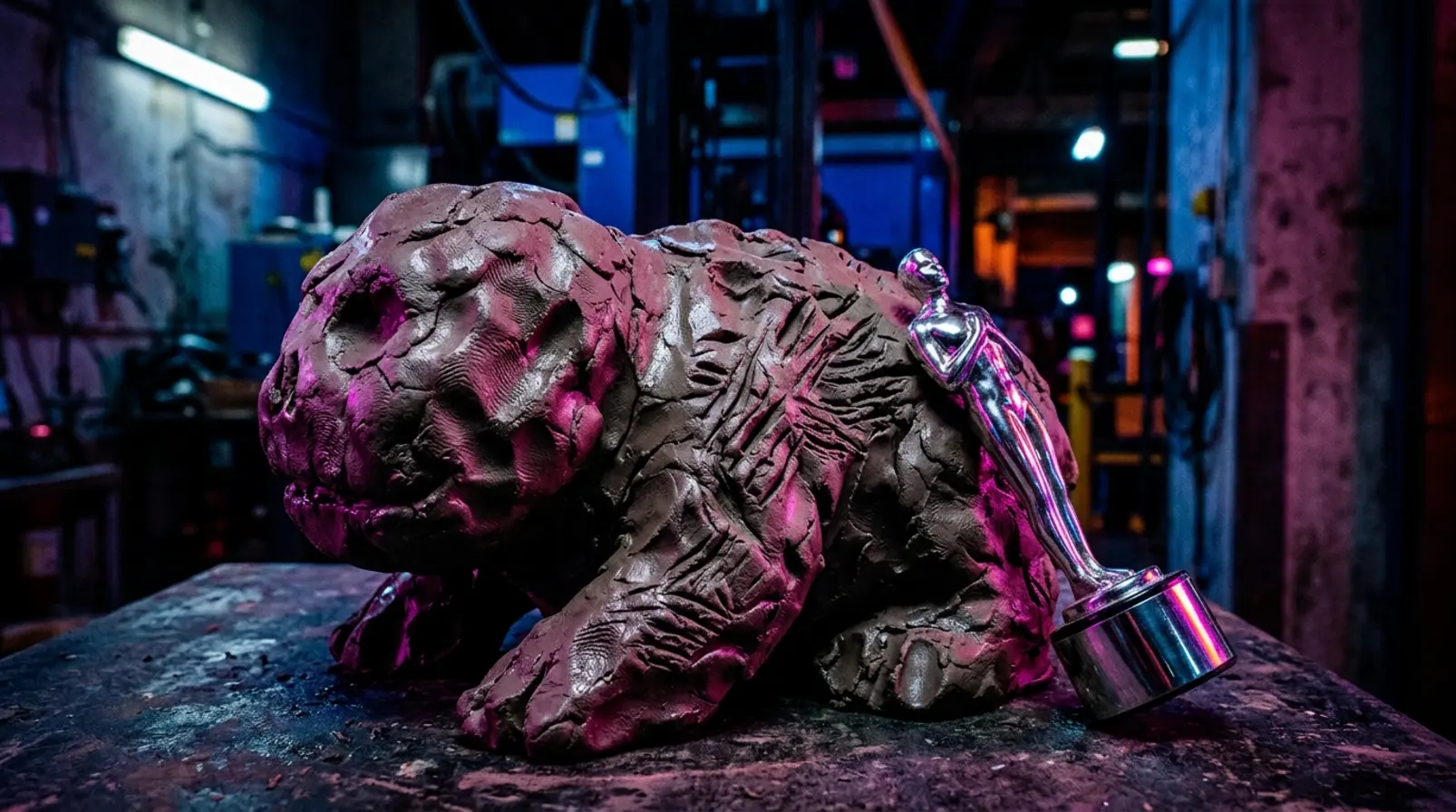

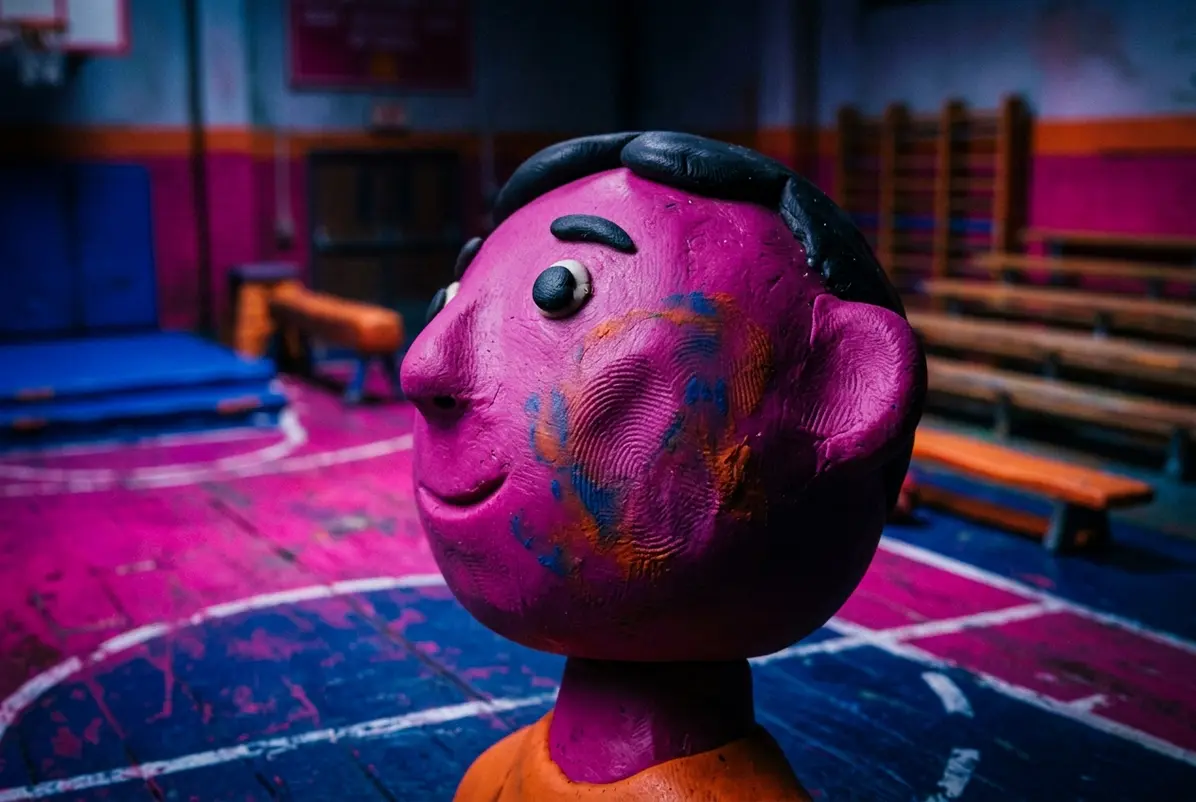
At an animation festival celebrating 50 years, the most decorated film lasted just four minutes and 32 seconds. Laurence Thérien’s Royal College of Art graduation short Ball Face follows a schoolgirl repeatedly struck by a ball during gym class. At the 2026 Ottawa International Animation Festival, held September 23 to 27, it collected four awards. According to Animation World Network, no film in the festival’s history had won four in a single year.
Neither of the festival’s two Grand Prizes went to Ball Face. But the film, which Annecy lists at exactly 4 minutes and 32 seconds, managed to win over audiences and several judging categories with a gag about a child taking punishment and gradually losing her original shape.
Four Awards for Getting Hit in the Face
Ball Face won the Public Prize, the Hélène Tanguay Award for Humour, the Bento Box Award for Best Student Animation and the Canadian Student Award. Ottawa’s published award results show how the same film connected with different juries. The humour judges praised its escalating absurdity, saying “few films made us laugh quite as much” while describing a child repeatedly taking a ball to the face.
The Canadian Student Award jury found something more uncomfortable beneath the joke: a character continually changing herself to fit in. Thérien had already won the Cristal for a Graduation Film at Annecy earlier in 2026. Ottawa added a record-setting sweep.
The festival received 3,026 entries from 107 countries. Its official competition figures included seven features and 74 shorts, counting animated series, with 15 Canadian student films selected separately. In that enormous field, a young animator’s deliberately ridiculous school-gym nightmare became the festival’s most decorated work.
Why Ball Face Had to Be Shot in Order
The central trick in Ball Face is also its production problem. Each impact reshapes the girl’s clay face, and the changes accumulate as the film progresses. In a July 2026 interview with Directors Notes, Thérien explained that she combined character replacement with clay morphing and had to photograph the animation chronologically because the character’s face was gradually changing.
That meant the material itself carried the story. Clay could be pushed, compressed and reshaped, allowing the girl’s appearance to change as she struggled to survive the game. Thérien even studied slow-motion footage of people being hit by balls to understand how faces deform under impact. She described the underlying subject as masking: adapting so aggressively to an environment that the original identity begins to disappear.
The production was less spontaneous than the finished film looks. Thérien described six months of creation and production, with a schedule she characterized as 14-hour days, six days a week. She also acknowledged taking days off. The Royal College of Art’s studio had strict closing hours, and other school projects competed for her time. By the RCA graduate showcase, she said, only a little more than half the film was complete.
Scenes had to be removed. Editing proved particularly difficult after months spent sculpting the material that might have to go. Those discarded scenes are a more revealing measure of the production than an estimated total of working hours. Every cut meant throwing away something that had taken substantial physical effort to make.
Ottawa’s 50-Year History Wasn’t a Straight Line
The 2026 event marked the festival’s 50th anniversary, dating back to its first gathering in 1976. According to the festival’s official history, the Canadian Film Institute founded the event in 1975. It began in Ottawa, moved to Toronto and then Hamilton during the 1980s, and returned to Ottawa in 1988.
In August 1999, a fire destroyed the festival’s Arts Court office. The event continued despite the damage. Over the following decades, its programming expanded beyond competition screenings to include professional events, workshops and industry discussions.
For the 2026 anniversary, screenings and events spread across venues including ByTowne Cinema, Arts Court Theatre, the Ottawa Art Gallery and the National Arts Centre. The festival also revisited its own history with anniversary programs of Canadian animated shorts.
The Other Winners Took Different Routes
The festival’s two biggest individual distinctions went elsewhere. Kohei Kadowaki’s We Are Aliens received the Grand Prize for Animated Feature, while Joe Hsieh’s Praying Mantis took the Grand Prize for Short Animation.
The contrast in technique was considerable. We Are Aliens combines rotoscoping with traditional animation, mixing traced live-action movement with drawn imagery. Praying Mantis uses drawing on paper and 2D animation for its violent psychological horror story.
An honorable mention in the feature competition went to Sun Xun’s Magic Atlas, a project developed over roughly a decade. Its imagery draws from woodcuts, ink painting, contemporary painting and Persian miniatures, techniques documented in material from Sun Xun’s representing gallery.
Ottawa’s winners offered no single technical prescription for animation. The selected works ranged from Thérien’s deformable clay to hybrid rotoscoping, pencil-based horror and an elaborate feature built around multiple traditional visual languages. The awards recognized different ways of making images move.
Four Awards Don’t Solve the Problem of Making the Next Film
While Ottawa celebrated the work of emerging animators, its industry conference confronted a less cheerful question about their prospects. At The Animation Conference, Canadian professionals discussed AI, artistic control and the possible disappearance of entry-level animation jobs.
Université Laval professor and animator Marie-Josée Saint-Pierre warned that junior positions are where artists learn the skills needed to become senior professionals. She also distinguished between AI used to assist an artist’s intentions and systems that begin making creative decisions themselves.
The discussion did not establish that AI would eliminate those jobs, or that any single production technique offered the solution. But it exposed a problem that sits behind awards for student work. An emerging animator needs more than a finished film worth celebrating. There must also be time, access to equipment, practical experience and opportunities to develop the craft.
Thérien’s film had required restricted studio access, months of sculpture, chronological shooting and painful editing decisions. Ottawa found four different ways to reward the result. At its industry conference, the animation business was still arguing over how the next generation would get the chance to learn that kind of work.
'%3e%3cg id='Final-Copy-2_2_' transform='translate(1275.000000, 200.000000)'%3e%3cpath class='st0' d='M7.4,12.8h6.8l3.1-11.6H7.4C4.2,1.2,1.6,3.8,1.6,7S4.2,12.8,7.4,12.8z'/%3e%3c/g%3e%3c/g%3e%3c/g%3e%3cg id='final---dec.11-2020'%3e%3cg id='_x30_208-our-toggle' transform='translate(-1275.000000, -200.000000)'%3e%3cg id='Final-Copy-2' transform='translate(1275.000000, 200.000000)'%3e%3cpath class='st1' d='M22.6,0H7.4c-3.9,0-7,3.1-7,7s3.1,7,7,7h15.2c3.9,0,7-3.1,7-7S26.4,0,22.6,0z M1.6,7c0-3.2,2.6-5.8,5.8-5.8 h9.9l-3.1,11.6H7.4C4.2,12.8,1.6,10.2,1.6,7z'/%3e%3cpath id='x' class='st2' d='M24.6,4c0.2,0.2,0.2,0.6,0,0.8l0,0L22.5,7l2.2,2.2c0.2,0.2,0.2,0.6,0,0.8c-0.2,0.2-0.6,0.2-0.8,0 l0,0l-2.2-2.2L19.5,10c-0.2,0.2-0.6,0.2-0.8,0c-0.2-0.2-0.2-0.6,0-0.8l0,0L20.8,7l-2.2-2.2c-0.2-0.2-0.2-0.6,0-0.8 c0.2-0.2,0.6-0.2,0.8,0l0,0l2.2,2.2L23.8,4C24,3.8,24.4,3.8,24.6,4z'/%3e%3cpath id='y' class='st3' d='M12.7,4.1c0.2,0.2,0.3,0.6,0.1,0.8l0,0L8.6,9.8C8.5,9.9,8.4,10,8.3,10c-0.2,0.1-0.5,0.1-0.7-0.1l0,0 L5.4,7.7c-0.2-0.2-0.2-0.6,0-0.8c0.2-0.2,0.6-0.2,0.8,0l0,0L8,8.6l3.8-4.5C12,3.9,12.4,3.9,12.7,4.1z'/%3e%3c/g%3e%3c/g%3e%3c/g%3e%3c/g%3e%3c/svg%3e) Your Privacy Choices