



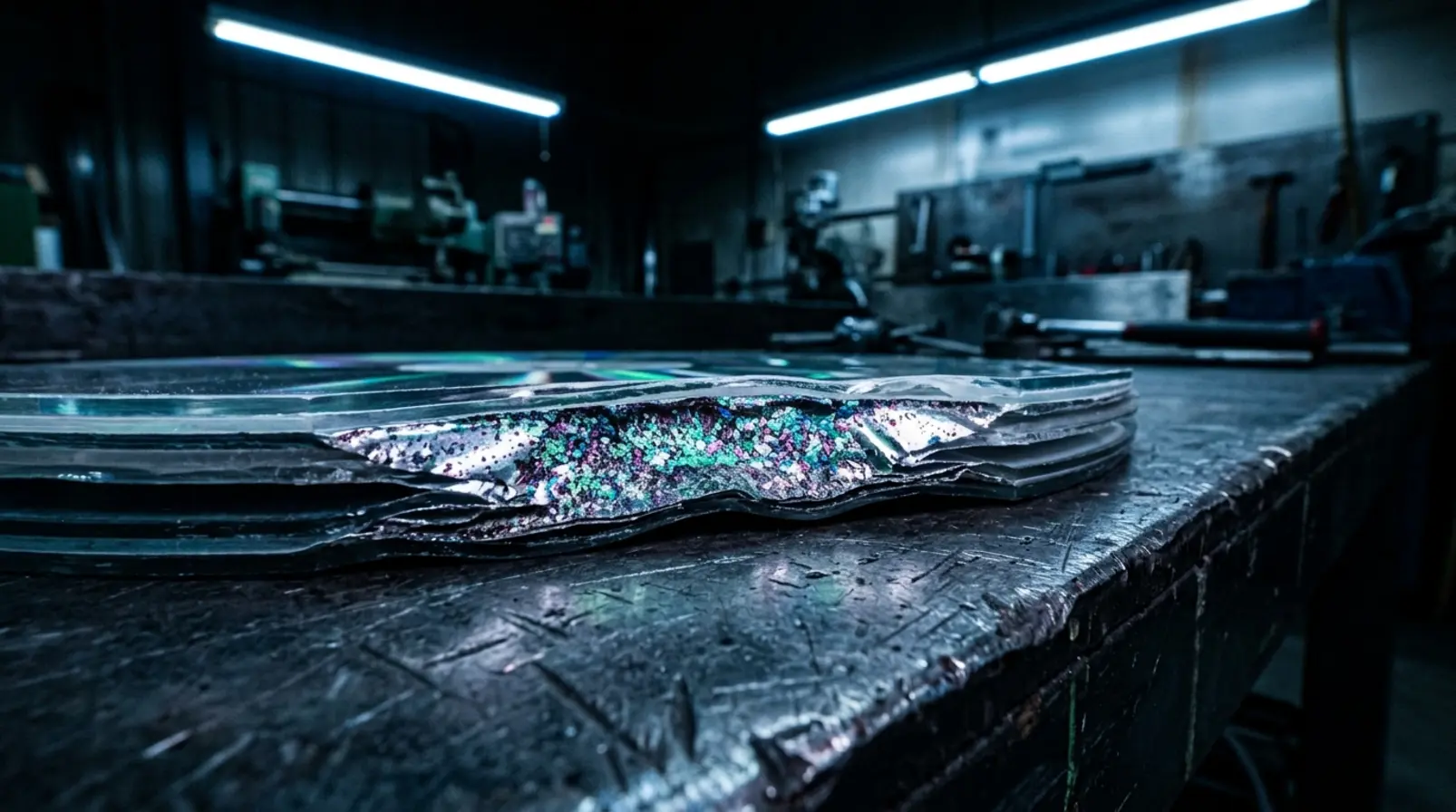
Smooth-On Dragon Skin 15 is a high-performance, platinum-cure (addition-cure) silicone rubber compound manufactured by Smooth-On, Inc., a Macungie, Pennsylvania-based materials company founded in 1895. Mixed at a 1A:1B ratio by weight or volume, Dragon Skin 15 cures to a Shore 15A hardness with a 40-minute pot life and a 7-hour cure time at room temperature. It is used by indie and professional SFX artists for mold making, creature effects, prosthetics, and a growing range of applications from cosplay to medical device prototyping.
Dragon Skin 15 Specifications and Where It Fits in the Lineup
If you’ve been scrolling through Smooth-On’s product catalog looking for a “Dragon Skin 15 Fast,” stop. It doesn’t exist. Unlike the Dragon Skin 10 line, which ships in Very Fast, Fast, Medium, and Slow cure speeds, Dragon Skin 15 is a single-speed product: a translucent, Shore A 15 hardness platinum-cure silicone rubber with a 40-minute pot life and 7-hour cure time. That’s it. One speed. No variants. If someone is telling you otherwise, they’re conflating product lines.
The distinction matters for indie artists planning a shoot day or a haunt season build. Dragon Skin 10 Fast offers an 8-minute pot life and a 75-minute cure time at Shore 10A hardness with a mixed viscosity of 23,000 cps. That’s a sprint. Dragon Skin 15 is a marathon by comparison: you get 40 minutes of working time before the material starts to set, and you’re waiting seven hours before demolding. The tradeoff? Cured Dragon Skin is “very strong and very ‘stretchy’” and “will stretch many times its original size without tearing and will rebound to its original form without distortion.” The higher Shore hardness of 15A means a firmer, more structurally rigid rubber than the 10A formulas, which is exactly what you want for production molds that need to survive dozens or hundreds of pours.
Dragon Skin 15 Technical Properties at a Glance
- Chemistry: Platinum-cure (addition-cure) silicone
- Mix Ratio: 1A:1B by weight or volume
- Shore Hardness: 15A
- Pot Life: 40 minutes
- Cure Time: 7 hours (at 73°F / 23°C)
- Mixed Viscosity: 21,000 cps
- Color: Water white translucent
- Shrinkage: Negligible
- Service Temperature: -65°F to +450°F (-53°C to +232°C)
Dragon Skin silicones are mixed 1A:1B by weight or volume, and liquid rubber can be thinned with Silicone Thinner or thickened with THI-VEX. The rubber cures at room temperature (73°F/23°C) with negligible shrinkage. Available sizes run from a 2-lb Pint Kit up through a 16-lb Gallon Kit and an 80-lb Five Gallon Kit. In my view, the Pint Kit is the right entry point for any first-time user who wants to test compatibility with their sculpting materials before committing real money.
Mixing, Degassing, and the Mistakes That Will Cost You a Mold
Smooth-On’s technical bulletin instructs users to stir Part A and Part B thoroughly before dispensing, then mix both parts together for 3 minutes, making sure to scrape the sides and bottom of the mixing container several times. Three minutes feels long when you’re standing over a cup of translucent goo. It is not optional.
After mixing, vacuum degassing is recommended to eliminate entrapped air. Your vacuum pump must pull a minimum of 29 inches of mercury (or 1 Bar / 100 KPa). Leave enough room in the container for material expansion. Vacuum the material until it rises, breaks and falls, then vacuum for 1 minute after the material falls. If you skip this step, expect bubbles. Bubbles in a mold surface translate directly to pockmarks on your castings. For indie artists without a vacuum chamber, Dragon Skin’s NV (No Vacuum) series is worth investigating, though it currently tops out at Shore 20A and doesn’t include a 15A option.
One critical safety note that trips up beginners constantly: wear vinyl gloves only. Latex gloves will inhibit the cure of the rubber. This is not a suggestion. Latex contamination from a single glove can turn an entire batch into uncured slime. I’ve seen it happen to experienced makers who grabbed the wrong box off the shelf.
Cure Inhibition: The Silent Killer of Indie SFX Projects
Addition-cure silicone rubber may be inhibited by certain contaminants in or on the pattern to be molded, resulting in tackiness at the pattern interface or a total lack of cure throughout the mold. Latex, tin-cure silicone, sulfur clays, certain wood surfaces, newly cast polyester, epoxy or urethane rubber may cause inhibition. That list should be tattooed on every indie artist’s forearm. Sulfur-based sculpting clays (many popular oil-based clays contain sulfur) are the most common culprit. Even with a sealer, platinum silicones will not work with modeling clays containing heavy amounts of sulfur.
To prevent inhibition, one or more coatings of a clear acrylic lacquer applied to the model surface is usually effective. Allow any sealer to thoroughly dry before applying rubber. But the real advice is simpler: test first. If compatibility between the rubber and the surface is a concern, a small-scale test is recommended. Apply a small amount of rubber onto a non-critical area of the pattern. Inhibition has occurred if the rubber is gummy or uncured after the recommended cure time has passed. A $5 test patch today beats a $50 ruined mold tomorrow.
Modifying Dragon Skin 15 for SFX Work
Dragon Skin 15 is a mold-making workhorse, but the broader Dragon Skin ecosystem is where things get interesting for SFX artists. The material accepts modification in two directions.
THI-VEX is made especially for thickening Smooth-On’s silicones for vertical surface application (making brush-on molds). Different viscosities can be attained by varying the amount of THI-VEX. This is how you turn a pourable silicone into something you can paint onto a complex sculpt without it running off before it cures.
Smooth-On’s Silicone Thinner will lower the viscosity of Dragon Skin for easier pouring and vacuum degassing. A disadvantage is that ultimate tear and tensile are reduced in proportion to the amount of Silicone Thinner added. It is not recommended to exceed 10% by weight of total system (A+B). In my view, the 10% ceiling is generous. Going past 5% starts to noticeably affect mold longevity, especially if you’re casting resin or concrete into the mold repeatedly.
For coloring, an infinite number of color effects can be achieved by adding Silc Pig silicone pigments or Cast Magic effects powders, and cured rubber can also be painted with the Psycho Paint system.
Dragon Skin 15 vs. Dragon Skin 10 Fast vs. FX-Pro: Choosing the Right Tool
Here’s how I’d frame the decision for an indie artist standing in a Reynolds Advanced Materials showroom:
Dragon Skin 10 Fast is your go-to for speed-critical SFX mold work and casting. It offers a pot life of 8 minutes and a demold time of 75 minutes at Shore 10A. It’s soft, it’s quick, and it’s what you reach for when you need a mold done the same afternoon. But that softness means it won’t hold up to aggressive casting materials or high-volume production runs the way a 15A rubber will.
Dragon Skin 15 sits in the middle. It’s a Shore A 15 hardness platinum-cure silicone with a 40-minute pot life and 7-hour cure time. In my view, it’s the right pick when you need a mold that’s still flexible enough to demold undercuts but firm enough to maintain dimensional accuracy over many castings. Think prop reproduction, small-run resin kits, or any project where you need the mold to last.
Dragon Skin FX-Pro is a different animal entirely. It is “specifically designed for creating silicone makeup appliances and skin effects” and has a Shore hardness of just 2A. FX-Pro can be combined with SLACKER deadening agent to create a very soft silicone gel for filling encapsulated silicone pieces. This is what you use to cast the prosthetic itself, not to make the mold.
Post-Cure, Storage, and Getting Maximum Mold Life
Post curing the mold will aid in quickly attaining maximum physical and performance properties. After curing at room temperature, expose the rubber to 176°F/80°C for 2 hours and 212°F/100°C for one hour. Allow the mold to cool to room temperature before using. Most indie artists skip this. In my experience, post-curing makes a measurable difference in tear resistance and mold longevity, especially for Dragon Skin 15 molds that will see heavy use.
Store and use material at room temperature (73°F/23°C). Warmer temperatures will drastically reduce working time and cure time. Storing material at warmer temperatures will also reduce the usable shelf life of unused material. These products have a limited shelf life and should be used as soon as possible. If your workshop is a garage in Texas or a un-air-conditioned basement in July, this matters. Heat is not your friend with platinum silicones.
The Company Behind the Compound
Smooth-On, Inc. was founded in 1895 by Vreeland Tompkins in Jersey City, New Jersey, originally as Smooth-On Manufacturing Company. Tompkins devised a powder compound that, when mixed with water, could be used to repair cracks and holes in iron. The company has moved three times since then. Its current production facility is located in Macungie, Pennsylvania, marking the third time the company has moved its operations.
Dragon Skin products are certified skin safe by an independent laboratory to the OECD TG 439 certification, with no animals used in testing. That certification matters if you’re selling prosthetics to performers or creating medical training devices. Dragon Skin silicones are used for applications ranging from creating skin effects and other movie special effects to making production molds, and are also used for medical prosthetics and cushioning applications.
Frequently Asked Questions About Dragon Skin 15
Does Smooth-On make a “Dragon Skin 15 Fast”?
No. As of April 2026, Dragon Skin Series silicone rubbers are available in Shore hardnesses of 2A, 10A, 15A, 20A and 30A, and the Dragon Skin 10 materials are available in Slow, Medium, Fast, and Very Fast versions. Dragon Skin 15 is sold as a single cure-speed formulation with a 40-minute pot life. If you need faster cure times at a similar hardness, look at Dragon Skin 20 (Shore 20A, 25-minute pot life, 4-hour cure) or consider using Smooth-On’s Plat-Cat cure accelerator with Dragon Skin 15.
Is Dragon Skin 15 skin safe?
Dragon Skin products are certified skin safe by an independent laboratory to the OECD TG 439 certification. However, Dragon Skin 15 is primarily designed for mold making. For prosthetic appliances worn on skin, Dragon Skin FX-Pro is specifically designed for creating silicone makeup appliances and skin effects.
Can I use latex gloves when working with Dragon Skin 15?
Absolutely not. Wear vinyl gloves only. Latex gloves will inhibit the cure of the rubber. Nitrile gloves are also generally safe, but Smooth-On explicitly specifies vinyl.
Do I need a vacuum chamber for Dragon Skin 15?
Vacuum degassing is recommended to minimize air bubbles in cured rubber. For critical mold work, my take is that a vacuum chamber is close to essential. If you can’t afford one, Smooth-On’s Dragon Skin NV series is formulated to not require degassing, though it’s available in different hardness options than the standard line.
What sculpting clays are safe to use with Dragon Skin 15?
Even with a sealer, platinum silicones will not work with modeling clays containing heavy amounts of sulfur. Sulfur-free clays like Chavant NSP, Monster Clay, or Smooth-On’s own Chavant products (Smooth-On acquired The Chavant Clay Company in 2021) are safe bets. Always do a small patch test before committing your sculpt.
Where can I buy Dragon Skin 15?
Dragon Skin 15 is available through Reynolds Advanced Materials (Smooth-On’s wholly owned distributor), directly from Smooth-On, and through third-party retailers. It ships in Pint (2 lb), Gallon (16 lb), and Five Gallon (80 lb) kits.



'%3e%3cg id='Final-Copy-2_2_' transform='translate(1275.000000, 200.000000)'%3e%3cpath class='st0' d='M7.4,12.8h6.8l3.1-11.6H7.4C4.2,1.2,1.6,3.8,1.6,7S4.2,12.8,7.4,12.8z'/%3e%3c/g%3e%3c/g%3e%3c/g%3e%3cg id='final---dec.11-2020'%3e%3cg id='_x30_208-our-toggle' transform='translate(-1275.000000, -200.000000)'%3e%3cg id='Final-Copy-2' transform='translate(1275.000000, 200.000000)'%3e%3cpath class='st1' d='M22.6,0H7.4c-3.9,0-7,3.1-7,7s3.1,7,7,7h15.2c3.9,0,7-3.1,7-7S26.4,0,22.6,0z M1.6,7c0-3.2,2.6-5.8,5.8-5.8 h9.9l-3.1,11.6H7.4C4.2,12.8,1.6,10.2,1.6,7z'/%3e%3cpath id='x' class='st2' d='M24.6,4c0.2,0.2,0.2,0.6,0,0.8l0,0L22.5,7l2.2,2.2c0.2,0.2,0.2,0.6,0,0.8c-0.2,0.2-0.6,0.2-0.8,0 l0,0l-2.2-2.2L19.5,10c-0.2,0.2-0.6,0.2-0.8,0c-0.2-0.2-0.2-0.6,0-0.8l0,0L20.8,7l-2.2-2.2c-0.2-0.2-0.2-0.6,0-0.8 c0.2-0.2,0.6-0.2,0.8,0l0,0l2.2,2.2L23.8,4C24,3.8,24.4,3.8,24.6,4z'/%3e%3cpath id='y' class='st3' d='M12.7,4.1c0.2,0.2,0.3,0.6,0.1,0.8l0,0L8.6,9.8C8.5,9.9,8.4,10,8.3,10c-0.2,0.1-0.5,0.1-0.7-0.1l0,0 L5.4,7.7c-0.2-0.2-0.2-0.6,0-0.8c0.2-0.2,0.6-0.2,0.8,0l0,0L8,8.6l3.8-4.5C12,3.9,12.4,3.9,12.7,4.1z'/%3e%3c/g%3e%3c/g%3e%3c/g%3e%3c/g%3e%3c/svg%3e) Your Privacy Choices
Your Privacy Choices