


The Toronto Comic Arts Festival (TCAF) is a free-admission, nonprofit comic arts festival held annually in Toronto, Ontario, Canada. Founded in 2003 and widely recognized as one of the world’s premier independent comics events, TCAF spotlights alternative and literary comics, graphic novels, zines, and sequential art through its curated exhibitor marketplace, panel programming, and professional development days.
TCAF 2026 and the Comics-First Exhibitor Philosophy
TCAF 2026 will be held June 6–7, 2026, at Toronto Metropolitan University’s Mattamy Athletic Centre, with Libraries and Education Day and Word Balloon Academy scheduled for Friday, June 5. The festival welcomes 28,000+ visitors and 315+ artists from across Canada and around the world. TCAF is returning to its new home for a second year, after moving from the Toronto Reference Library, where it had been held from 2009 to 2024, due to renovations. The Mattamy Athletic Centre allowed TCAF to offer more table space than any year in its history in 2025, with a 25% increase in total tables.
More tables, though, means a sharper question about what goes on them. And that question has become one of the most persistent debates in the indie comics world.
TCAF has long been explicit about its curatorial priorities. As far back as 2019, TCAF’s exhibitor application FAQ stated: “The priority for TCAF is that people have printed comics on their tables. Preference will be given to applicants with a significant amount of printed comics to sell.” The festival’s 2020 application made the same point differently, noting that TCAF “significantly privilege[s] comics creators over illustrators/animators/fine artists/other creative persons.”
In online discussions among indie comics creators, this philosophy is sometimes described informally as a “70/30 rule”: the idea that most of an exhibitor’s table should be dedicated to printed comics, zines, or graphic novels, with a smaller portion given over to merchandise like prints, stickers, enamel pins, or keychains. TCAF has not, to my knowledge, published that exact ratio as a formal policy. But the principle behind it is woven into the festival’s public language: comics come first.
How the Merch Economy Reshaped Artist Alley Culture
Walk through a large-scale convention Artist Alley in 2026 and you’ll see what the fuss is about. As The Comics Beat reported in March 2026, the situation at WonderCon had become a flashpoint. One commenter described the scene bluntly: “Walls of prints and mile-high shelves of stickers and tchotchkes manned by artists with no connection to comics or animation whatsoever.”

What’s different in 2026, as The Comics Beat noted, is that Artist Alley is facing the same problem as publishers: it’s simply too expensive to set up at shows between table costs, hotel costs, and flights. The economics can push exhibitors toward high-margin, low-weight merchandise. A $3 holographic sticker weighs almost nothing and can be produced in bulk. A 200-page graphic novel costs real money to print, real money to ship, and takes up half your table. To me, the math is cruel and obvious.
Among creators, this tension comes up again and again. Some see the merch economy as a survival strategy. Others see it as a slow erasure of the medium that comics festivals were built to celebrate. The divide is not hard to understand: creators who table heavily with prints, stickers, and keychains may have an easier path to covering weekend costs, while those hauling boxes of self-published comics can break even or lose money after travel. The question is not whether merch is legitimate. It is whether a comics festival should prioritize it.
TCAF’s Curatorial Stand in the Context of Indie Festivals
TCAF is not alone in drawing this line. Seattle’s Short Run Comix Festival has also emphasized comics-first tabling. As The Comics Beat reported, Short Run told exhibitors to “limit the amount of stickers, prints, cards, or apparel at your table and do not bring games, jewelry, or other crafts.” Short Run describes its mission as focusing on “the medium of comics as a coalescence of art and literature,” emphasizing “the intimate experience of holding a book in your hands.”
These festivals share a lineage. Unlike traditional comic book conventions, TCAF is modeled after independent comic festivals and art book fairs such as the Angoulême International Comics Festival and Small Press Expo. In 2003, Peter Birkemoe and Chris Butcher of The Beguiling first organized TCAF as a free-admission event focused on alternative and independent comics. It feels like that DNA matters here. These are not pop culture expos that happen to include comics. They are comics festivals that happen to allow some merch.
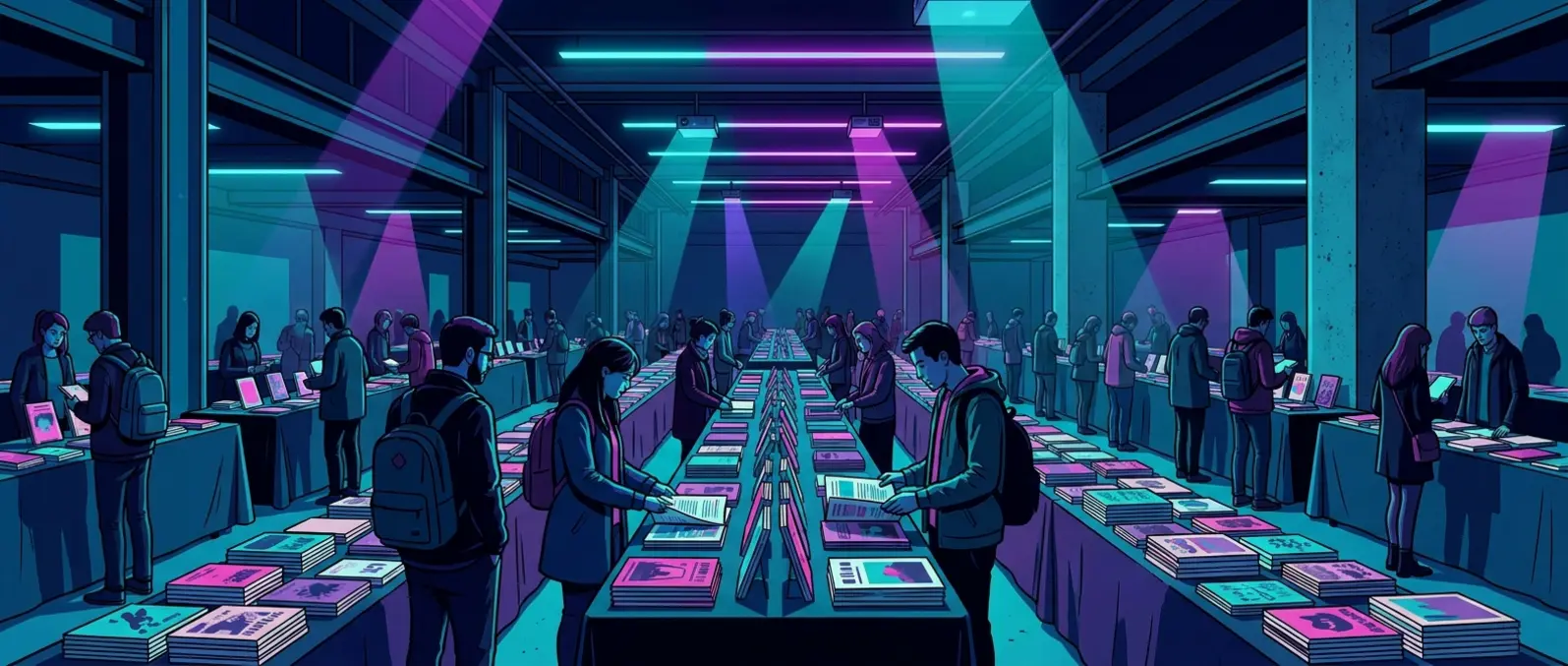
TCAF has been described as “well organized, thoughtfully curated, and brings in an excited crowd ready to try new things”, and survey data has ranked it the number one convention for indie comics exhibitors in North America in terms of overall sales and exhibitor satisfaction. What strikes me is that this reputation exists precisely because the curation is tight. The crowd comes to buy books because the tables are full of books.
The Financial Pressure on Comics Creators at TCAF 2026
None of this exists in a vacuum. In 2024, applications to TCAF’s Access TCAF table-fee waiver program were around 5% of total exhibitor applications; in 2025, that number jumped to 45%. TCAF responded by doubling the number of table waivers offered, but even then could approve only approximately 30% of all Access TCAF applications.
That surge in waiver requests tells a story that no policy document can fully address. Independent comics creators are under extraordinary financial pressure. TCAF’s 2025 table fees were CAD $225 for a half table and CAD $450 for a full table, plus HST. That’s before travel, accommodation, and the cost of printing inventory. For a creator flying in from the United States, the total outlay can easily exceed a thousand dollars.
In my view, this is exactly where the merch question gets painful. If a creator knows they can offset costs by filling a quarter of their table with $3 stickers and $12 keychains, telling them not to do that feels like telling them to lose money on principle. There is a case to be made that a strict comics-first policy, however noble, can function as an economic filter that favors creators who can afford to subsidize their own attendance.
That point comes up often in creator conversations. Some creators argue that the comics-first expectation can feel like a luxury position, one that works more easily for established cartoonists with publisher support or a deep backlist than for newer artists whose first zine run was 50 copies. Others counter that without some curatorial standard, a comics festival becomes indistinguishable from a general art market with a comics section.
What “Literary Comics” Means in 2026
The phrase “literary comics” has always been a little fraught. TCAF’s mission statement describes its purpose as promoting “the breadth and diversity of comics, and what is considered comics, as legitimate medium of literary and artistic worth.” That’s a big tent. It includes memoir, autobiography, experimental sequential art, translated manga, political cartooning, and children’s picture books. Over the years, TCAF has drawn prominent names such as Art Spiegelman, Alison Bechdel, Daniel Clowes, Junji Ito, Chris Ware, and Kate Beaton.
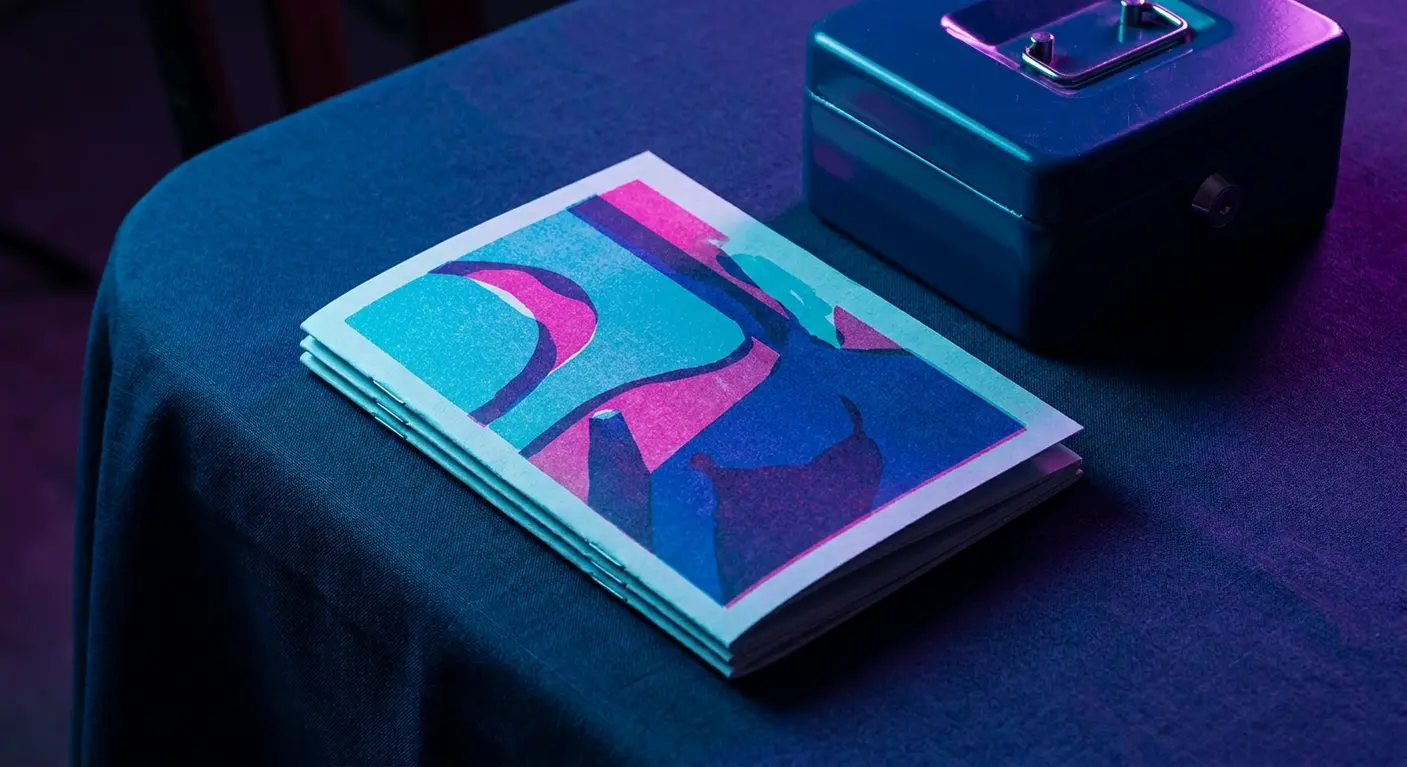
But “literary” can also read as a gatekeeping term, and reasonable people might disagree about where the boundary sits. A beautifully illustrated art print of an original character is not a comic. But is a risograph poster depicting a wordless four-panel narrative? Is a set of postcards that tell a sequential story? The edges blur. By our reckoning, the interesting work often lives right on those edges, and a rigid rule risks cutting it off.
TCAF 2026 is already signaling its commitment to the printed page, having announced manga creator Battan as its 2026 poster artist and featured guest alongside several artists from the Manga International Network Team (MINT) Project. The festival is also hosting academic conference programming connected to the Canadian Society for the Study of Comics / Société Canadienne pour l’Étude de la Bande Dessinée. These are not the moves of a festival that wants to become a merch bazaar.
Where the Line Should Be Drawn
I think TCAF’s instinct is correct, even if the execution is necessarily imperfect. A comics festival should be, first and last, about comics. Prints and pins and keychains are fine as supplements, but if they become the main event, the festival loses the thing that makes it worth attending. The crowd at TCAF is not the same crowd at Fan Expo. They came for the books.
But I also think festivals need to reckon honestly with the economics. TCAF itself has acknowledged that it wants the number of approved waiver applications to be higher for future festivals and is “actively looking at ways as an organization that we can increase our budget for Access TCAF.” That’s the right response. If you are going to hold the line on what goes on the table, you need to make it financially possible for creators to fill that table with books.
The merch economy is not going away. Print-on-demand for art prints and one-off collectibles is becoming a bigger play at art-oriented conventions and manga/anime shows, and the pressure will only increase. What festivals like TCAF and Short Run offer is a counterweight, a space where the book itself is still the point.
It reads like a small thing, keeping a table full of comics at a comics festival. It is not. It is a statement about what the medium is for.
FAQ: TCAF 2026, the 70/30 Rule, and Comics vs. Merch
What is TCAF’s 70/30 rule?
The “70/30 rule” is an informal term used in some creator communities to describe TCAF’s comics-first curatorial expectation: exhibitors should dedicate the majority of their table space to printed comics, zines, or graphic novels rather than non-book merchandise. TCAF does not appear to publish that exact ratio as a formal rule, but its exhibitor language has emphasized that “the priority for TCAF is that people have printed comics on their tables” and that preference is given to applicants with significant printed comics to sell.
When and where is TCAF 2026?
TCAF 2026 will be held June 6–7, 2026, at Toronto Metropolitan University’s Mattamy Athletic Centre, located at 50 Carlton Street in Toronto. Libraries and Education Day and Word Balloon Academy are scheduled for Friday, June 5. The festival is free to attend.
How much does it cost to exhibit at TCAF?
For 2025, a shared half table cost CAD $225 plus HST, and a full table cost CAD $450 plus HST. TCAF also offers the Access TCAF program, which waives table fees for exhibitors belonging to equity-deserving demographics.
Who founded TCAF?
In 2003, Peter Birkemoe and Chris Butcher of The Beguiling first organized the Toronto Comic Arts Festival. Unlike traditional comic book conventions, TCAF is modeled after independent comic festivals and art book fairs such as the Angoulême International Comics Festival and Small Press Expo.
Can I sell merchandise at TCAF?
Yes, but with caveats. TCAF expects exhibitors to prioritize printed comics on their tables. The festival has historically stated that it “significantly privilege[s] comics creators over illustrators/animators/fine artists/other creative persons” in its selection process. Non-book merchandise may be permitted, but it should not dominate your table.
Does TCAF allow AI-generated art?
No. TCAF’s policy states that “artificial intelligence (AI) generated art will not be permitted at TCAF” and that the festival “reserves the right to request immediate removal of any AI generated art exhibited at the festival.”

'%3e%3cg id='Final-Copy-2_2_' transform='translate(1275.000000, 200.000000)'%3e%3cpath class='st0' d='M7.4,12.8h6.8l3.1-11.6H7.4C4.2,1.2,1.6,3.8,1.6,7S4.2,12.8,7.4,12.8z'/%3e%3c/g%3e%3c/g%3e%3c/g%3e%3cg id='final---dec.11-2020'%3e%3cg id='_x30_208-our-toggle' transform='translate(-1275.000000, -200.000000)'%3e%3cg id='Final-Copy-2' transform='translate(1275.000000, 200.000000)'%3e%3cpath class='st1' d='M22.6,0H7.4c-3.9,0-7,3.1-7,7s3.1,7,7,7h15.2c3.9,0,7-3.1,7-7S26.4,0,22.6,0z M1.6,7c0-3.2,2.6-5.8,5.8-5.8 h9.9l-3.1,11.6H7.4C4.2,12.8,1.6,10.2,1.6,7z'/%3e%3cpath id='x' class='st2' d='M24.6,4c0.2,0.2,0.2,0.6,0,0.8l0,0L22.5,7l2.2,2.2c0.2,0.2,0.2,0.6,0,0.8c-0.2,0.2-0.6,0.2-0.8,0 l0,0l-2.2-2.2L19.5,10c-0.2,0.2-0.6,0.2-0.8,0c-0.2-0.2-0.2-0.6,0-0.8l0,0L20.8,7l-2.2-2.2c-0.2-0.2-0.2-0.6,0-0.8 c0.2-0.2,0.6-0.2,0.8,0l0,0l2.2,2.2L23.8,4C24,3.8,24.4,3.8,24.6,4z'/%3e%3cpath id='y' class='st3' d='M12.7,4.1c0.2,0.2,0.3,0.6,0.1,0.8l0,0L8.6,9.8C8.5,9.9,8.4,10,8.3,10c-0.2,0.1-0.5,0.1-0.7-0.1l0,0 L5.4,7.7c-0.2-0.2-0.2-0.6,0-0.8c0.2-0.2,0.6-0.2,0.8,0l0,0L8,8.6l3.8-4.5C12,3.9,12.4,3.9,12.7,4.1z'/%3e%3c/g%3e%3c/g%3e%3c/g%3e%3c/g%3e%3c/svg%3e) Your Privacy Choices
Your Privacy Choices