

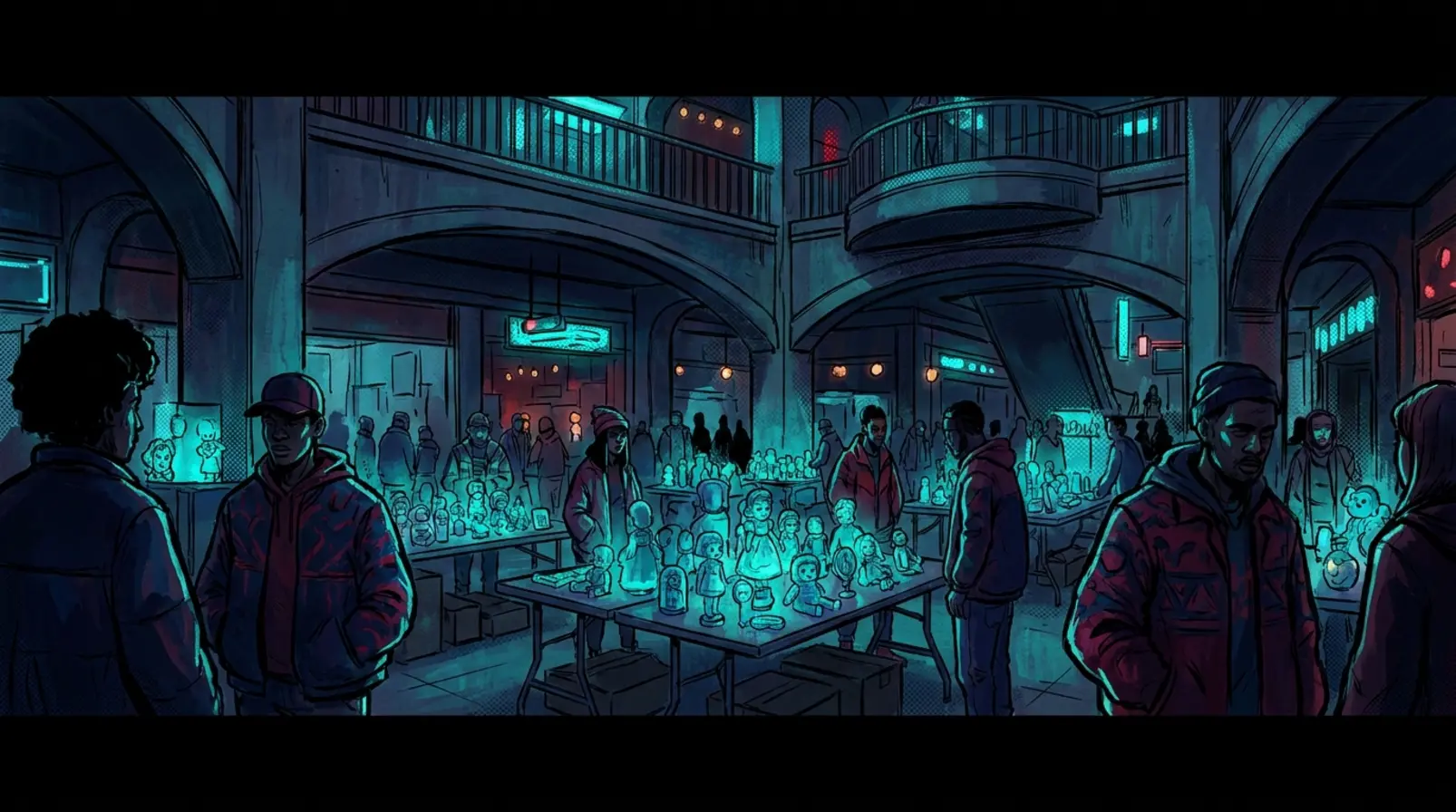

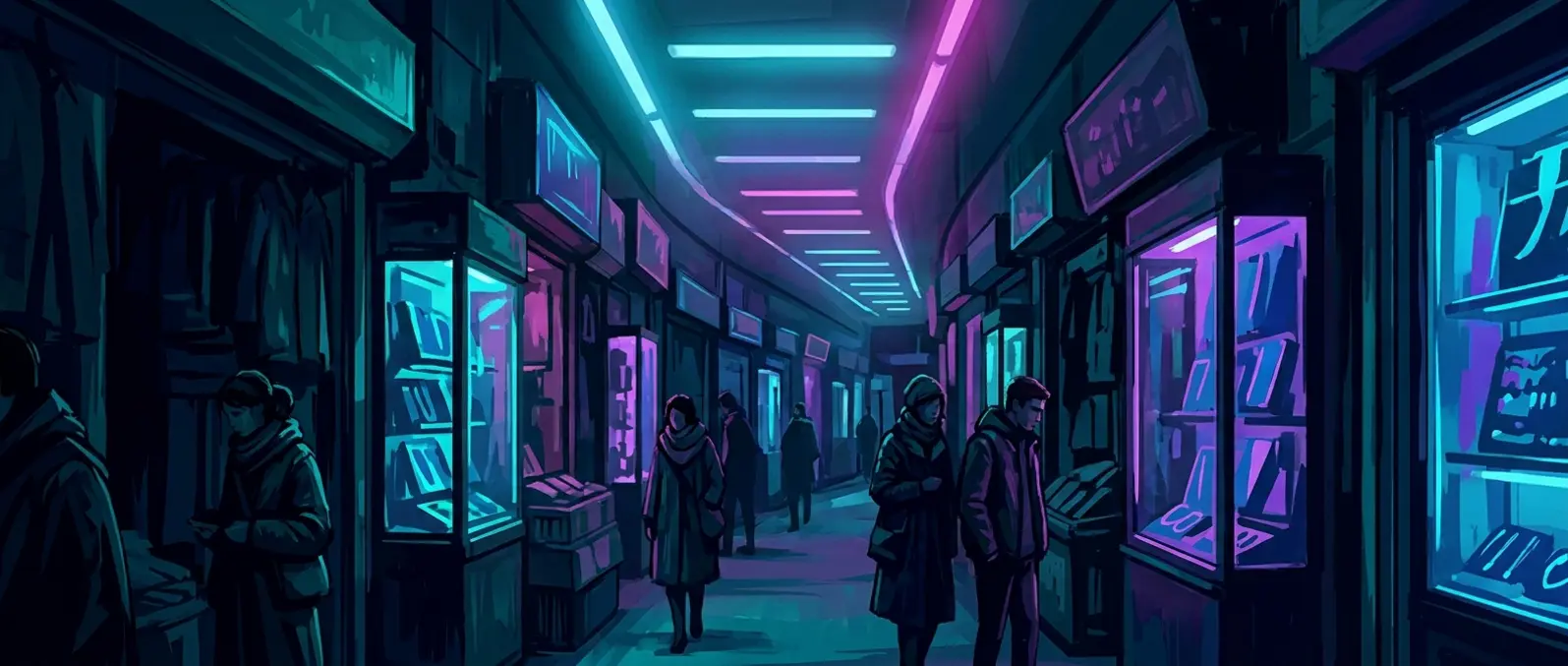
You walk through a 225-meter covered shopping arcade, past longtime shops that have anchored the street for decades, past a trendy café bankrolled by Takashi Murakami, past a floor that’s become almost entirely luxury watches. You take the stairs to the fourth floor. And there, behind a row of bright red torii gates that look like they were lifted from Fushimi Inari, you step into Mandarake Henya.
Inside: pre-war tin toys. Shōwa-era advertising novelties. Soft vinyl figures older than your parents. A silence that feels almost devotional. This is one of the last rooms in Tokyo where the 20th century hasn’t fully surrendered.
Henya is located on the fourth floor of the Nakano Broadway shopping complex , a building that opened in 1966 as a luxury residential and retail tower. When Nakano Broadway opened, it was touted as “the greatest building in Asia,” complete with a rooftop pool, a playground, and a garden plot for its residents. By the 1980s, many of its shops were empty , making it a “shuttered shopping street.” Then a manga artist named Masuzo Furukawa opened a seven-square-meter used manga shop on the second floor in 1980 and, in doing so, essentially invented the secondhand otaku market.
Mandarake is now the largest secondhand comics retailer in the world, selling and purchasing roughly ten thousand items per day . Nakano Broadway alone houses twenty-seven individual shops operating under the Mandarake brand. But it feels like something is shifting underfoot. To me, Henya sits at the exact fault line.
When the Building Became a Ghost
The arrival of COVID-19 changed everything. The nearly 32 million foreign visitors to Japan in 2019 dropped to roughly 4 million in 2020 and then to just 245,000 in 2021. Nakano Broadway became a virtual ghost town. For the first time, the age of the place was impossible to ignore.
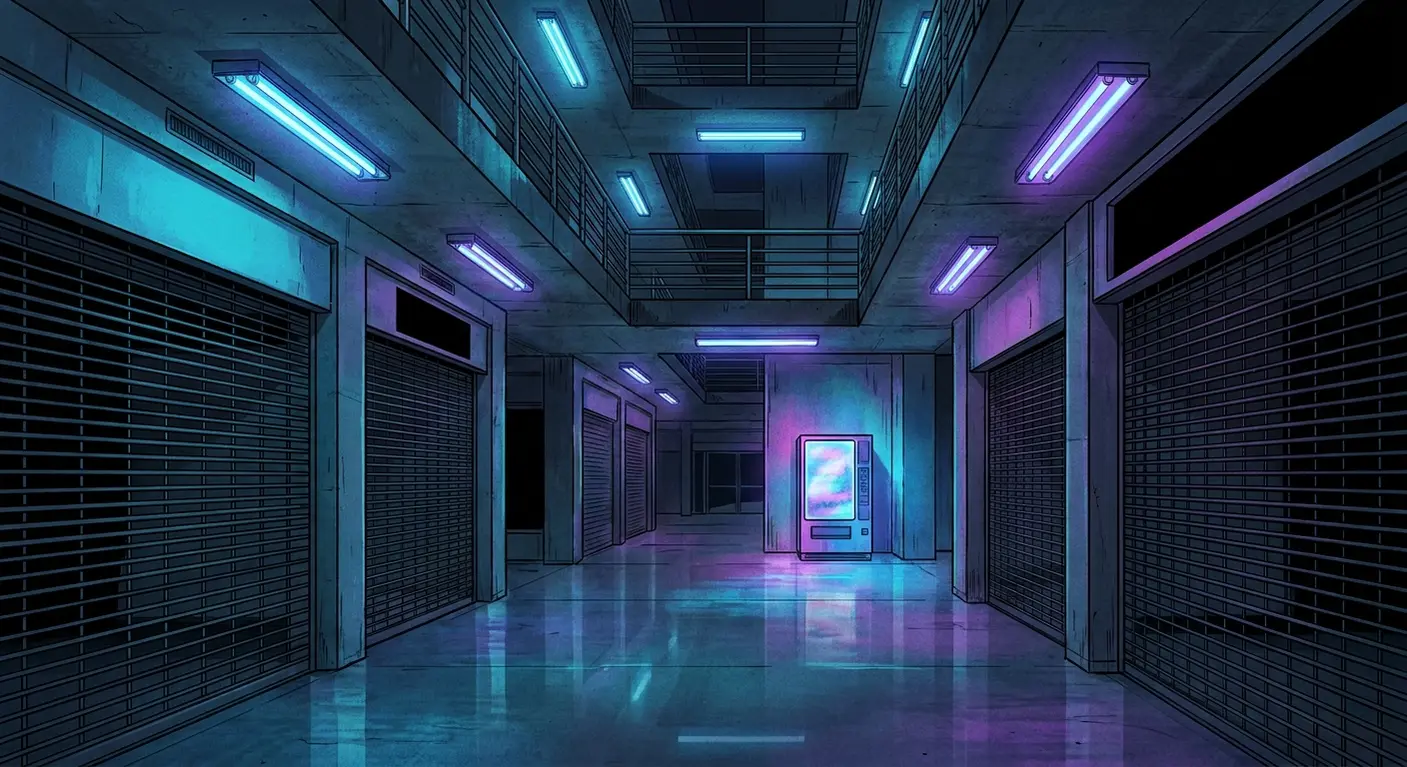
What strikes me is how the pandemic didn’t just empty the building. It revealed a deeper tension that had been building for years. The idea that anyone could launch a business in Nakano Broadway with little to no expectations promoted a retail environment where controlled chaos reigned , as Nippon.com reported. There is no consensus about how to renovate this now creaky old building, with plans proposed and postponed over and over again.
The building was designated an at-risk structure for earthquakes of magnitude 6.0 or greater by the Tokyo Metropolitan Government in March 2018 . It predates Japan’s 1981 seismic code. The plumbing is aging. The wiring is aging. The chaos that made it special is also what makes consensus impossible, because shops are owned by individual retailers and not leased by a central mall administration .
The Auction That Haunts the Shelves
Here’s where it gets strange and, in my view, genuinely poignant. Mandarake’s fourth-floor specialty shops, including Henya and the neighboring Anime-kan, stock some of the rarest animation cels and vintage toys on Earth. But a number of the rarest items are auctioned off through Mandarake’s online Everyday Auction, so the selection is constantly changing . You can see a hand-painted Evangelion cel behind glass, fall in love with it, and then discover you have to go online and fight it out with bidders from around the world.
The physical store becomes a showroom for things you can’t actually buy there. It reads like a gallery haunted by its own inventory. Mandarake’s Everyday Auction runs daily , with a bidding system that extends by five minutes if a bid lands in the final window . The Big Web Auction, called Zenbu, runs six times a year with a special hardcopy catalog . There’s even a live auction format that gives the thrill of a real auction room from your own computer .
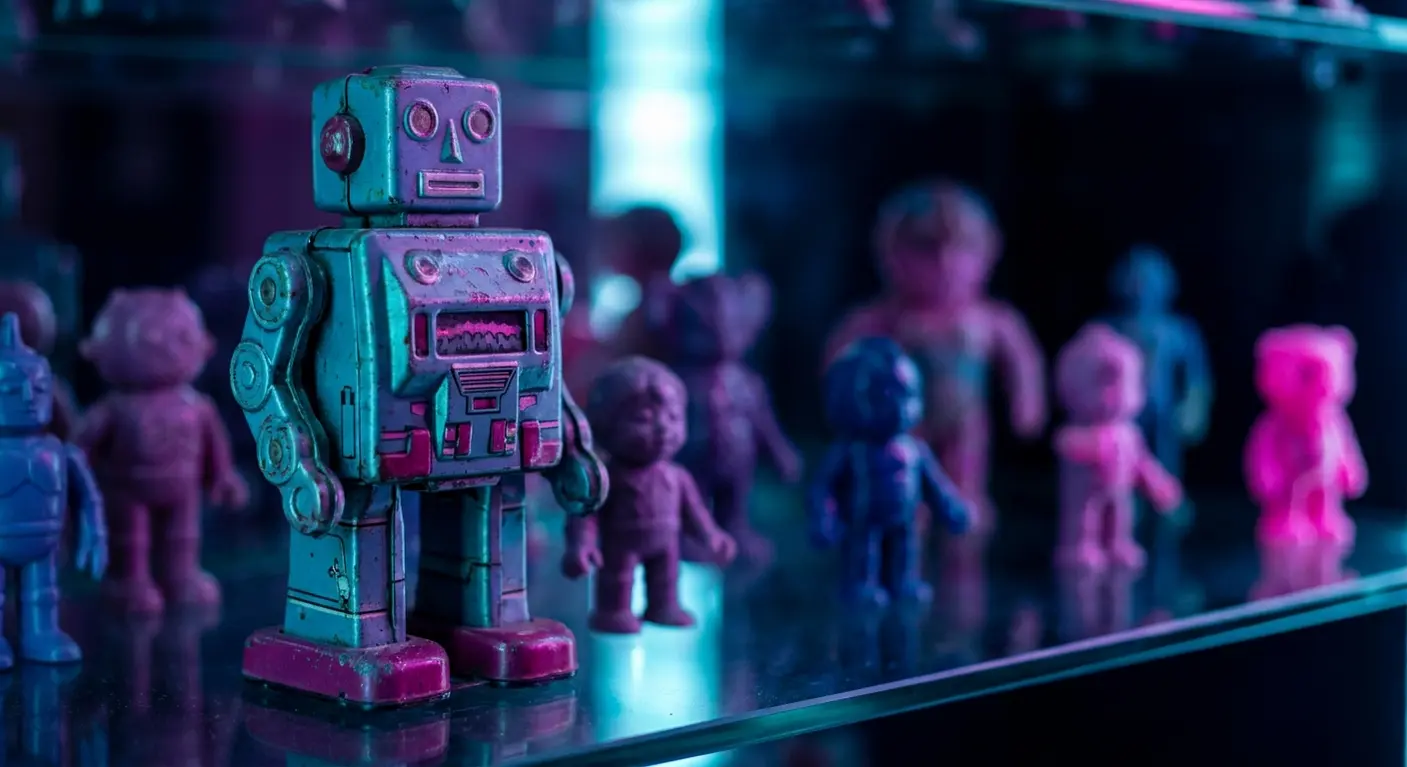
My take is that this is the ghost auction. Not a single dramatic event, but a slow, rolling displacement of presence. The best things leave the shelves for screens. The physical space becomes a memory palace for objects that already live somewhere else.
What Survives, and Why It Matters
And yet. Tourists are back. Mandarake’s trailing twelve-month revenue sits at roughly $102 million , per financial data from Yahoo Finance. Furukawa’s company, which started in a closet-sized storefront, is publicly traded and profitable. Henya still opens every day at noon.
There’s a case to be made that the real threat isn’t the internet or the auctions. It’s homogenization. Visitors increasingly note the proliferation of gashapon machines and luxury watch dealers crowding out the eccentric specialty shops. One floor is now almost entirely timepieces. The underground is being paved over, not by malice, but by rent economics.
Reasonable people might disagree, but I think Henya’s torii gates still mean something. When you pass through them, you encounter tin toys that date back before World War II, iconic toys and nostalgic goods from every decade of modern Japanese history. The store is a threshold. On one side, the relentless churn of online commerce. On the other, a room full of objects that someone held, played with, lost, found, and carried to a fourth-floor shop in Nakano.
Writer Watanabe Kōji, a Nakano area resident, captured the paradox perfectly when he told Nippon.com that the internet “transformed Broadway into a virtual mecca for otaku around the world,” noting that “the object of their passion existed as an actual physical building” and that made it all the more compelling. The building’s power was always its stubborn, crumbling physicality. It feels like that’s still true, even now. Especially now.
Nakano Broadway is sixty years old. It has survived economic collapse, earthquakes, a pandemic, and the complete digitization of its core market. Henya is still there on the fourth floor, behind those red gates, holding pre-war tin and Shōwa vinyl like offerings on an altar. The ghost auction continues. But the shrine, for the moment, endures.
'%3e%3cg id='Final-Copy-2_2_' transform='translate(1275.000000, 200.000000)'%3e%3cpath class='st0' d='M7.4,12.8h6.8l3.1-11.6H7.4C4.2,1.2,1.6,3.8,1.6,7S4.2,12.8,7.4,12.8z'/%3e%3c/g%3e%3c/g%3e%3c/g%3e%3cg id='final---dec.11-2020'%3e%3cg id='_x30_208-our-toggle' transform='translate(-1275.000000, -200.000000)'%3e%3cg id='Final-Copy-2' transform='translate(1275.000000, 200.000000)'%3e%3cpath class='st1' d='M22.6,0H7.4c-3.9,0-7,3.1-7,7s3.1,7,7,7h15.2c3.9,0,7-3.1,7-7S26.4,0,22.6,0z M1.6,7c0-3.2,2.6-5.8,5.8-5.8 h9.9l-3.1,11.6H7.4C4.2,12.8,1.6,10.2,1.6,7z'/%3e%3cpath id='x' class='st2' d='M24.6,4c0.2,0.2,0.2,0.6,0,0.8l0,0L22.5,7l2.2,2.2c0.2,0.2,0.2,0.6,0,0.8c-0.2,0.2-0.6,0.2-0.8,0 l0,0l-2.2-2.2L19.5,10c-0.2,0.2-0.6,0.2-0.8,0c-0.2-0.2-0.2-0.6,0-0.8l0,0L20.8,7l-2.2-2.2c-0.2-0.2-0.2-0.6,0-0.8 c0.2-0.2,0.6-0.2,0.8,0l0,0l2.2,2.2L23.8,4C24,3.8,24.4,3.8,24.6,4z'/%3e%3cpath id='y' class='st3' d='M12.7,4.1c0.2,0.2,0.3,0.6,0.1,0.8l0,0L8.6,9.8C8.5,9.9,8.4,10,8.3,10c-0.2,0.1-0.5,0.1-0.7-0.1l0,0 L5.4,7.7c-0.2-0.2-0.2-0.6,0-0.8c0.2-0.2,0.6-0.2,0.8,0l0,0L8,8.6l3.8-4.5C12,3.9,12.4,3.9,12.7,4.1z'/%3e%3c/g%3e%3c/g%3e%3c/g%3e%3c/g%3e%3c/svg%3e) Your Privacy Choices
Your Privacy Choices