


The Comic That Makes You Find a Mailbox
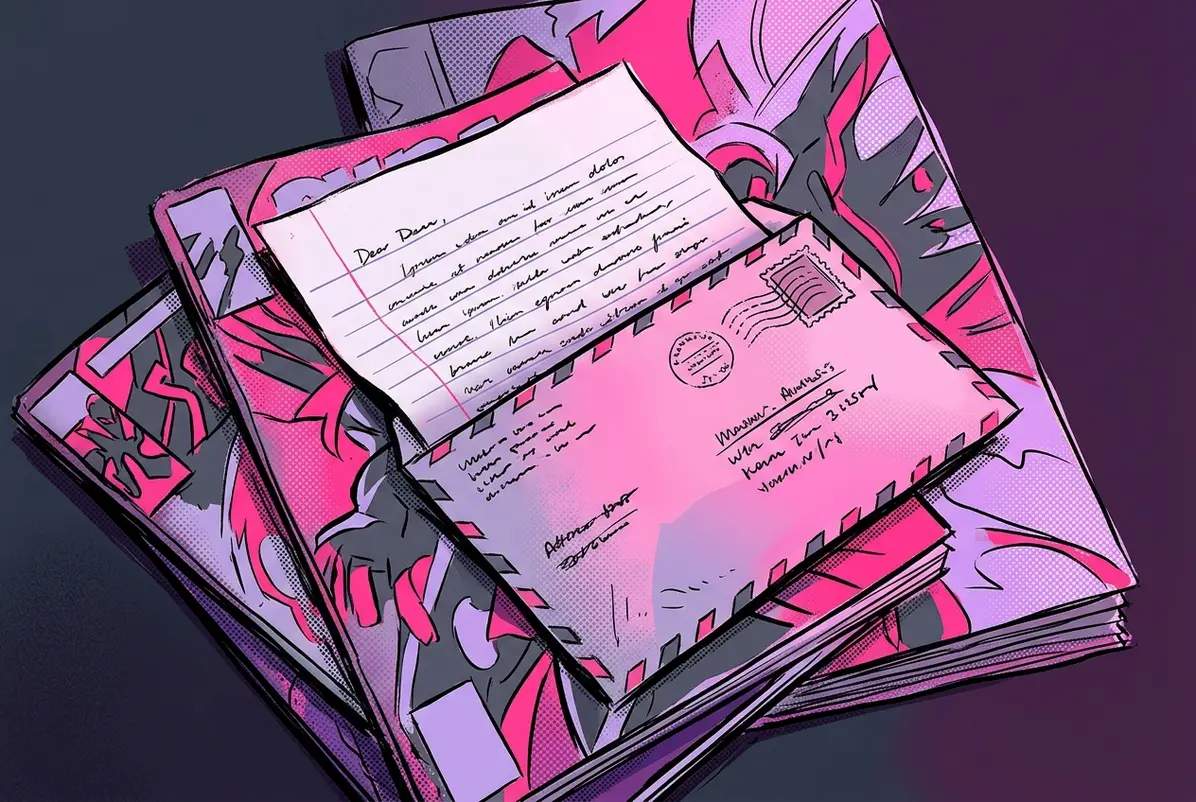
Here’s a thing that shouldn’t be remarkable in 2026 but somehow is: at the end of every chapter of Saga, Brian K. Vaughan runs a letters column called “To Be Continued” that accepts correspondence exclusively through postal mail. No email. No DMs. Readers who want to participate have to find an envelope, find a stamp, and find a mailbox. In the very first issue, Vaughan framed the constraint with characteristic humor, joking about spilling French onion soup in his wireless router and inviting readers to seek help from “an elderly person who can help walk you through the trials of physical post.”
It’s a small detail. It’s also the tip of something larger, and it’s the kind of creative choice that splits the Saga readership down the middle. On one side, you have people who see Vaughan’s physical-first instincts as a principled defense of the comic shop, the printed page, and the tactile relationship between reader and object. On the other side, you have people who see it as a gatekeeping flex from a creator who can afford to be precious about format because his name already moves seven million copies.
Both camps have a point. That’s what makes this interesting.
The Contracts, the Covers, and the Constraints
Saga is an epic space opera/fantasy comic book series created by writer Brian K. Vaughan and artist Fiona Staples, published monthly by Image Comics. Since its debut in March 2012, Vaughan has embedded a series of deliberate constraints into the book’s DNA. In an early interview with Comics Alliance, Vaughan explained that he chose Image because it was “the only publisher left that can still offer a contract I would consider ‘fully creator-owned,’” and that he needed “100% control and ownership of all non-publishing rights with the artist, including the right to never have our comic turned into a movie or television show or whatever.”
The book was priced at $2.99 for the majority of its run, a figure Vaughan arranged as part of his contract with Image, along with the stipulation that it never be less than 22 pages long. The series doesn’t do variant covers , a rarity in a direct market that runs on chase editions and retailer incentives. In 2023, the price increased to $3.99 beginning with Chapter 61. Even the trade paperbacks were priced aggressively low at launch. These are not accidental decisions. They’re a philosophy.
To me, what Vaughan has built with Saga is less a “digital blackout” and more a gravitational pull toward print. The series does remain available in digital formats, alongside single issue, standard trade paperback, deluxe hardcover, and compendium editions , per Image Comics’ own press materials. But the texture of the experience, the letters column, the no-variant-covers stance, the refusal to chase multimedia adaptations, all of it reads as a creator placing enormous weight on the physical object. It feels like a mandate, even if it isn’t technically one.
The ComiXology Incident and Its Long Shadow
The debate about Saga and digital access didn’t start in a vacuum. It started with a mess. In April 2013, media reported that Apple had prohibited the sale of Chapter 12 of Saga through iOS due to two panels depicting oral sex between men. This resulted in criticism from artists and writers, with William Gibson among those suggesting the restriction targeted the depiction of gay sex. A day later, digital distributor ComiXology announced that it had been their company, not Apple, who chose not to make the chapter available based on their interpretation of Apple’s rules.
The fallout was significant. Vaughan made a distressed public statement, and he, Fiona Staples, and Image Comics stood behind the book in the face of what initially looked like censorship. The vagueness of Apple’s content policy was ultimately what led to the real reason Saga #12 didn’t make it initially to the App Store: ComiXology’s mistaken belief that the book would not be allowed under a vaguely-worded and inconsistently enforced content policy. The Comic Book Legal Defense Fund’s case study frames the episode around a chilling question: to what extent does one need to self-censor to make books available on digital platforms?
That question never really went away. Saga also held the sixth spot on the ALA’s 2014 Top Ten List of Frequently Challenged Books. The book’s existence on digital shelves has been contested, debated, and temporarily revoked. My take is that if you lived through the ComiXology incident as a creator, you might develop a pretty strong instinct to make sure the print edition could never be pulled by a platform’s content policy team.
Access vs. Intention
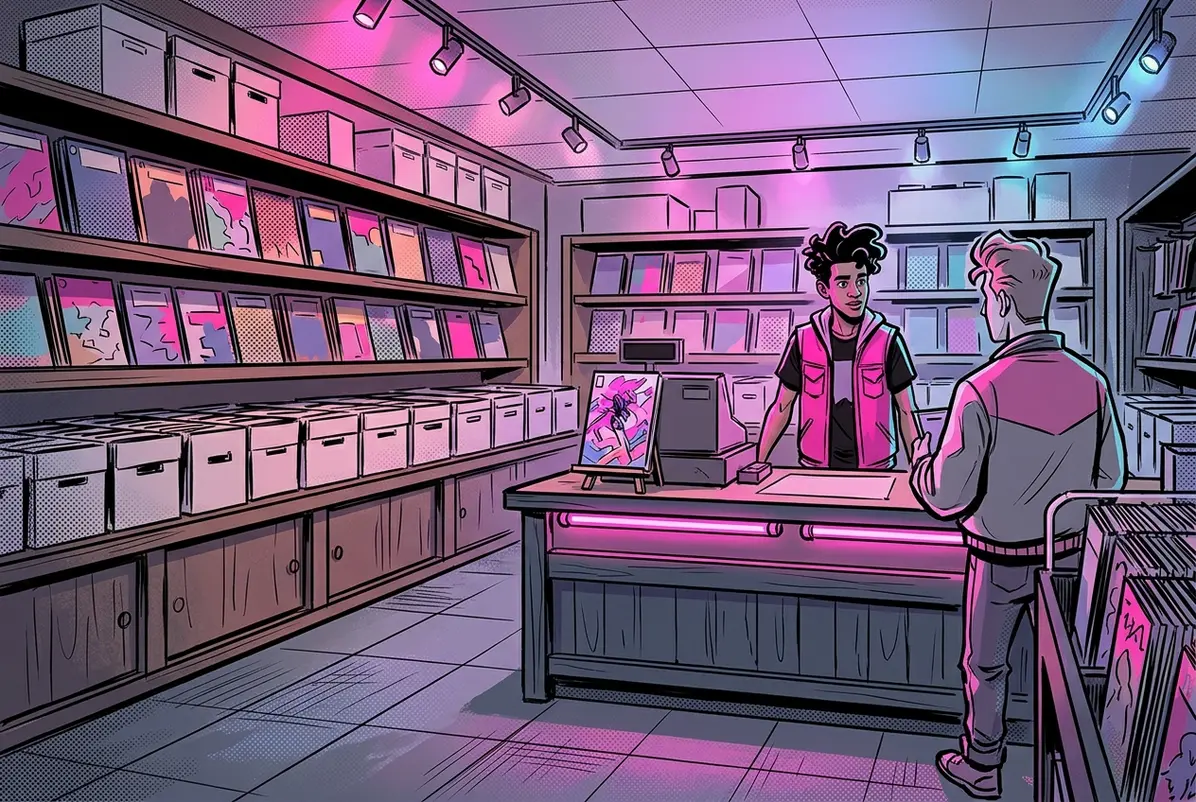
This is where the community really splits. The pro-print camp sees Vaughan’s approach as a gift to comic shops, the backbone of the direct market. In a 2018 interview, Vaughan said he’s “always loved serialized comic books, especially the act of picking them up each Wednesday from my local retailer.” That’s not performance. It reads like genuine affection from a guy who has described walking into his first comic book store as a kid as magical: “The moment I walked through that door, to just have an entire store dedicated to comic books, I was immediately smitten.”
The access camp sees it differently. They point out that not everyone lives near a comic shop. Not everyone can afford the hardcovers. Not everyone has the mobility to get to a store on Wednesday. The postal-only letters column, charming as it is, functionally excludes anyone who doesn’t have reliable mail service or the spare bandwidth to participate in an analog ritual. There’s a case to be made that when a creator with this much cultural gravity leans so hard into physical media, it sets an expectation that trickles down to smaller creators who can’t absorb the risk.
The Saga series has sold over 7 million copies across all formats and has been translated into 20 languages. Vaughan has reiterated that the planned endpoint for the series is issue #108. At that scale, the series is a market force. What strikes me is that Vaughan’s physical-first choices don’t just affect Saga. They model a set of values for the entire independent comics ecosystem. That’s power. And power invites scrutiny.
What the Fourth Deluxe Hardcover Tells Us
The fourth Saga hardcover collection, dropping in June 2026, will include extra material from artists like Niko Henrichon and Zoe Thorogood. As other artists have done for past Saga hardcovers, Henrichon and Thorogood will be drawing their takes on the book’s familiar characters. This was announced at NYCC 2025. Specifically, the fourth hardcover will collect three six-issue trades, Volumes 10 through 12, which is essentially all of the issues since the series’ mid-point hiatus.
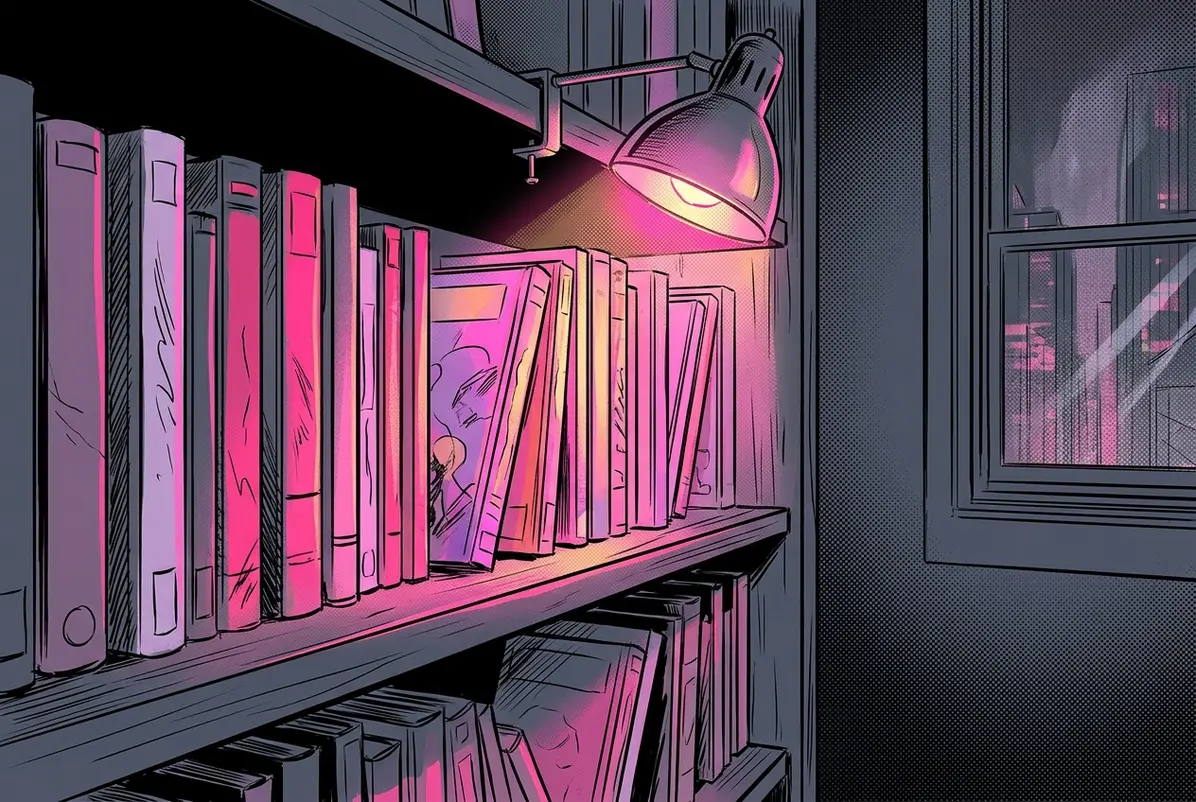
These deluxe editions are beautiful objects. They’re also expensive ones. And they’re the format where the print-first philosophy shines brightest and costs the most. Reasonable people might disagree, but I think the deluxe hardcover is Vaughan and Staples’ truest statement about how they want Saga to be experienced: as a thing you hold, a thing that takes up shelf space, a thing with weight.
Vaughan has said that “other than my own family, collaborating with Fiona Staples on Saga is the most important thing in my life.” That’s a statement from a creator working at the top of the medium. When someone at that level makes deliberate choices about format, distribution, and the rituals surrounding their work, those choices carry weight beyond personal preference. They become a position.
Where I Land
I think Vaughan’s instincts are right more often than they’re wrong. The mail-only letters column is a genuinely inventive piece of community design that rewards investment. The no-variant-covers policy keeps the collector market from cannibalizing the reading experience. The resistance to adaptation protects the comic as a comic. These are choices born from craft, not ego.
But I also think the access argument deserves more than a hand-wave. The direct market is shrinking. Comic shops close every month. Digital isn’t the enemy of print; it’s often the lifeline that keeps new readers discovering books they’ll eventually buy in hardcover. In my view, the strongest version of Saga’s physical mandate isn’t one that dismisses digital, but one that makes the print edition so irreplaceable, so rich with extras and texture and community, that readers choose it freely. And by that standard, Vaughan and Staples are winning.
The real tension isn’t print versus digital. It’s whether a creator’s vision for how their work should be encountered can coexist with the messy reality of who actually gets to encounter it. Saga, a book about fugitives trying to build a family while the universe tries to control them, lands as the perfect story to have this fight over. I don’t think that’s an accident.

'%3e%3cg id='Final-Copy-2_2_' transform='translate(1275.000000, 200.000000)'%3e%3cpath class='st0' d='M7.4,12.8h6.8l3.1-11.6H7.4C4.2,1.2,1.6,3.8,1.6,7S4.2,12.8,7.4,12.8z'/%3e%3c/g%3e%3c/g%3e%3c/g%3e%3cg id='final---dec.11-2020'%3e%3cg id='_x30_208-our-toggle' transform='translate(-1275.000000, -200.000000)'%3e%3cg id='Final-Copy-2' transform='translate(1275.000000, 200.000000)'%3e%3cpath class='st1' d='M22.6,0H7.4c-3.9,0-7,3.1-7,7s3.1,7,7,7h15.2c3.9,0,7-3.1,7-7S26.4,0,22.6,0z M1.6,7c0-3.2,2.6-5.8,5.8-5.8 h9.9l-3.1,11.6H7.4C4.2,12.8,1.6,10.2,1.6,7z'/%3e%3cpath id='x' class='st2' d='M24.6,4c0.2,0.2,0.2,0.6,0,0.8l0,0L22.5,7l2.2,2.2c0.2,0.2,0.2,0.6,0,0.8c-0.2,0.2-0.6,0.2-0.8,0 l0,0l-2.2-2.2L19.5,10c-0.2,0.2-0.6,0.2-0.8,0c-0.2-0.2-0.2-0.6,0-0.8l0,0L20.8,7l-2.2-2.2c-0.2-0.2-0.2-0.6,0-0.8 c0.2-0.2,0.6-0.2,0.8,0l0,0l2.2,2.2L23.8,4C24,3.8,24.4,3.8,24.6,4z'/%3e%3cpath id='y' class='st3' d='M12.7,4.1c0.2,0.2,0.3,0.6,0.1,0.8l0,0L8.6,9.8C8.5,9.9,8.4,10,8.3,10c-0.2,0.1-0.5,0.1-0.7-0.1l0,0 L5.4,7.7c-0.2-0.2-0.2-0.6,0-0.8c0.2-0.2,0.6-0.2,0.8,0l0,0L8,8.6l3.8-4.5C12,3.9,12.4,3.9,12.7,4.1z'/%3e%3c/g%3e%3c/g%3e%3c/g%3e%3c/g%3e%3c/svg%3e) Your Privacy Choices
Your Privacy Choices