



The “Flat Miku” controversy refers to the fan backlash that followed the opening of the Miku Expo 2024 North American tour, when attendees expecting Hatsune Miku’s familiar hologram-like stage presence instead saw her performed on a flat LED screen. The change first drew widespread attention after the April 4, 2024 show in Vancouver, Canada, and quickly became more than a complaint about concert technology. For many fans, it raised a deeper question: when the star is virtual, how much of the illusion is part of the product?
Hatsune Miku and the Illusion of Presence
To understand why the “Flat Miku” incident cut so deep, you have to understand what came before. Hatsune Miku is the virtual singer created by Crypton Future Media, built around Yamaha’s Vocaloid singing-synthesis technology. She was first released on August 31, 2007, and her voice is based on samples from Japanese voice actress Saki Fujita. From the beginning, Miku was not only a software product. She was also a character, an avatar, and eventually one of the most recognizable virtual performers in the world.
The design did a lot of the work. The turquoise twintails, futuristic outfit, and “01” marking on her shoulder made Miku instantly readable as both pop idol and singing machine. That dual identity became the foundation of her appeal. Miku was never a conventional celebrity. She was a vessel: a voicebank, a character, a fan canvas, and a stage presence all at once.
Her concerts made that contradiction feel physical. For years, many Hatsune Miku live shows were known for a hologram-like stage illusion: a computer-animated Miku appearing life-sized onstage, backed by a live band, moving as if she occupied the same room as the audience. Technically, these performances have been described in different ways depending on the event and setup: transparent screens, projection surfaces, Pepper’s Ghost-like principles, and other stage-illusion techniques. The important point for fans was simpler. Miku appeared to be there.
That illusion of presence became part of the concert contract. You were not just paying to hear songs. You were paying to participate in a collective act of belief. Thousands of people waved glow sticks at a singer who did not exist, and somehow the performance worked because everyone in the room agreed to treat light as presence.
The Miku Expo 2024 LED Screen Problem
On April 4, 2024, the Miku Expo 2024 North American tour opened at the Doug Mitchell Thunderbird Sports Centre in Vancouver. The official tour was part of Miku Expo’s 10th anniversary celebration, with the series itself marking a decade since its 2014 launch. But for many attendees, the anniversary show immediately felt different from what they expected.
Instead of the more familiar hologram-like projection effect, Miku appeared on a flat LED screen. Reporting from Kotaku and Business Insider documented the backlash that followed, with fans objecting to what they saw as a less immersive presentation than the concert experience they believed they were buying.
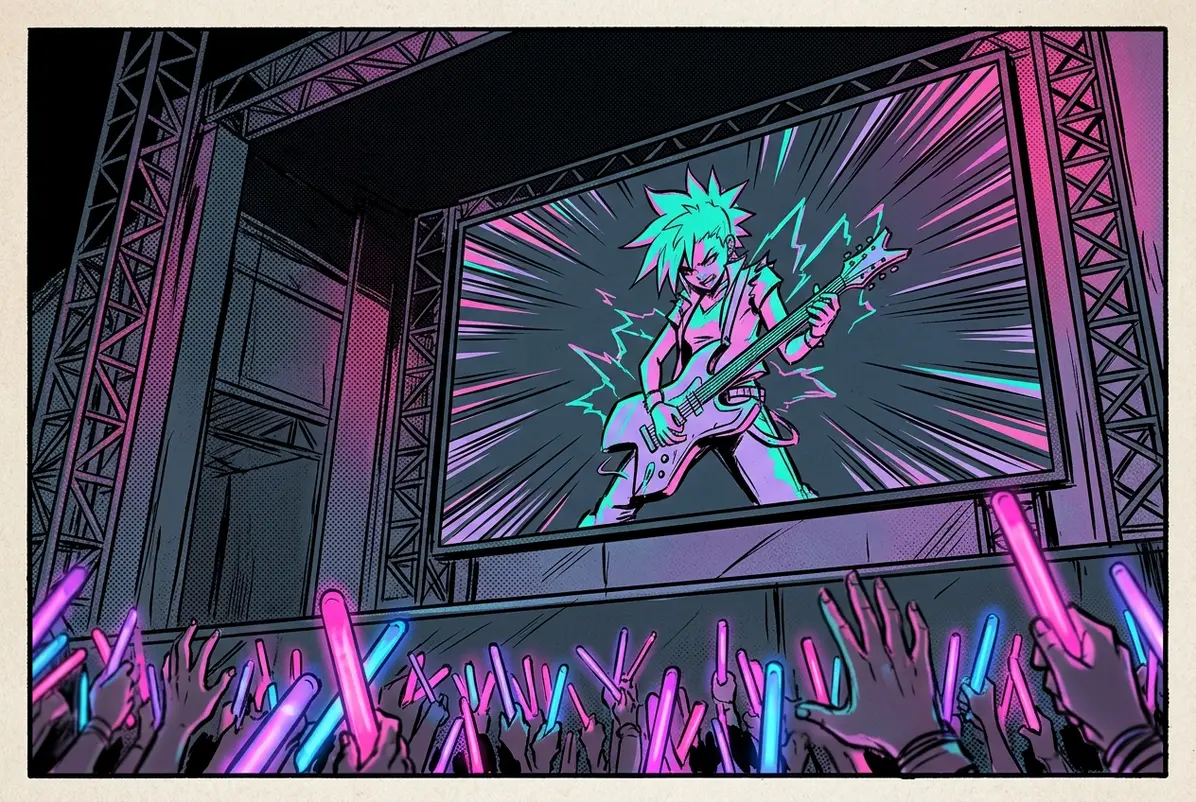
The phrase “Flat Miku” spread because it was cruelly efficient. It named the thing fans felt had happened. Miku had not vanished, exactly. She had been flattened. The virtual idol whose live appeal depended on a shared illusion of depth had been placed on a visibly rectangular surface, and the rectangle became impossible to ignore.
There is a version of this story where the LED screen itself is the villain. That version is too simple. LED screens can work in virtual concerts. They can be bright, sharp, reliable, and easier to tour with. The problem was not merely that Miku appeared on an LED screen. The problem was that many fans did not feel clearly prepared for that change before buying tickets.
That distinction matters. If an event is marketed around a beloved virtual performer with a long visual history, the staging technology is not just a technical detail. It shapes the identity of the show. For fans, the issue was not only “we saw a screen.” It was “we thought we were buying the illusion.”
The Petition, the Memes, and the Broken Expectation
After the Vancouver show, fan complaints spread quickly across social platforms. Some fans demanded refunds. A Change.org petition asked organizers for refunds and an explanation, arguing that buyers should have known in advance that the show would use an LED-screen presentation. AV Magazine reported that the petition attracted more than 5,000 signatures.
The strongest criticism centered on expectation. The official Miku Expo 2024 North America page promoted the anniversary tour, listed approved glow-stick rules, and leaned on the broader visual legacy of Miku Expo. But many fans argued that the site did not clearly disclose that the North American shows would use a flat LED display rather than the hologram-like staging they associated with Miku concerts.
That is why the backlash had such force. This was not only a gear complaint from people obsessed with projection technology. It was a trust complaint from a fandom that felt the most important part of the show had been changed without enough warning.
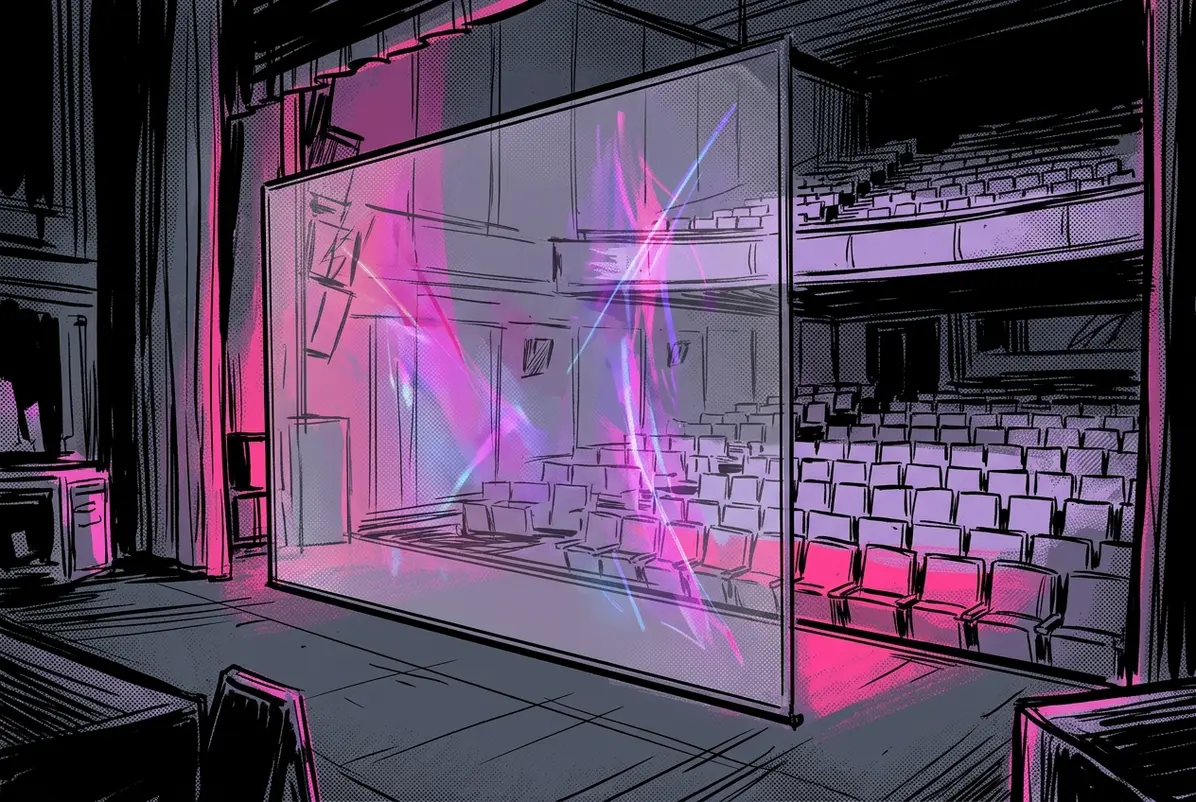
The memes came naturally because the situation was almost too perfect. Hatsune Miku is not a flesh-and-blood performer. Her concerts already depend on a negotiated fiction. Fans know she is software. They know the body onstage is animated. But the concert works because the technology helps everyone pretend together. Once the screen becomes too visible, the spell changes shape.
In that sense, “Flat Miku” was less about visual fidelity than theatrical consent. Fans were willing to believe in the ghost. They were less willing to be surprised by the television.
Coachella and the Salt in the Wound
Some fans initially wondered whether the North American setup might be a touring compromise, with a more elaborate presentation reserved for Coachella. That hope did not last. Reporting at the time noted that Miku’s Coachella performance also used an LED-screen setup, making it clear that the Vancouver presentation was not simply a one-night accident.
Then came the extra sting: Lana Del Rey’s Coachella set featured a hologram-like visual effect, which some fans interpreted as an almost absurd reversal. A living performer got the ghost treatment. The virtual performer did not.
That comparison was not entirely fair on a technical or budgetary level. Different artists, stages, production goals, and contracts produce different stage designs. But fandom is not a spreadsheet. The symbolism was too neat to ignore. Hatsune Miku, a character whose global concert mythology had long depended on making a virtual singer feel physically present, had become the flat one.
What made the moment sting was not that one production choice was objectively superior to another. It was that the old Miku illusion had trained fans to value presence, and the new presentation seemed to ask them to accept display instead.
Crypton’s Response and the New Touring Reality
Crypton Future Media responded to media questions by saying it would “continue to refine” the show experience with the audience in mind. The company also stated that fans in North America and Europe could continue to expect a high-energy concert experience using LED screen technology that had been used at other Miku-related events.
That statement was careful, but it also clarified something important. The LED screen was not merely a failed backup plan. It was part of the touring model.
There are practical reasons why that might be true. Touring a virtual performer across multiple cities is expensive and logistically complex. Projection setups, screen materials, sightlines, freight, venue compatibility, rehearsal time, and reliability all matter. LED systems can solve problems that older projection methods create. From an organizer’s perspective, the choice may be rational.
But rational is not the same thing as emotionally legible. Miku is not just a concert asset. She is a fan-built symbol of participation, projection, and shared belief. When the way she appears changes, the relationship changes too. That does not mean fans are owed a specific technology forever. It does mean the communication around that technology matters more than it might for an ordinary act.
Hatsune Miku V6 and the Future After the Screen
The Miku ecosystem has continued to move forward. Yamaha announced Hatsune Miku V6 for VOCALOID6, describing it as software compatible with the VOCALOID:AI singing synthesis engine. The product launched on April 14, 2026, with Japanese and English support, while Chinese support was planned for a future update.
Meanwhile, the official Miku Expo 2026 North America page shows the tour continuing across major North American cities from April to May 2026. The official Miku Expo site also lists Miku Expo 2026 Europe, making clear that the global touring machine has not slowed down.
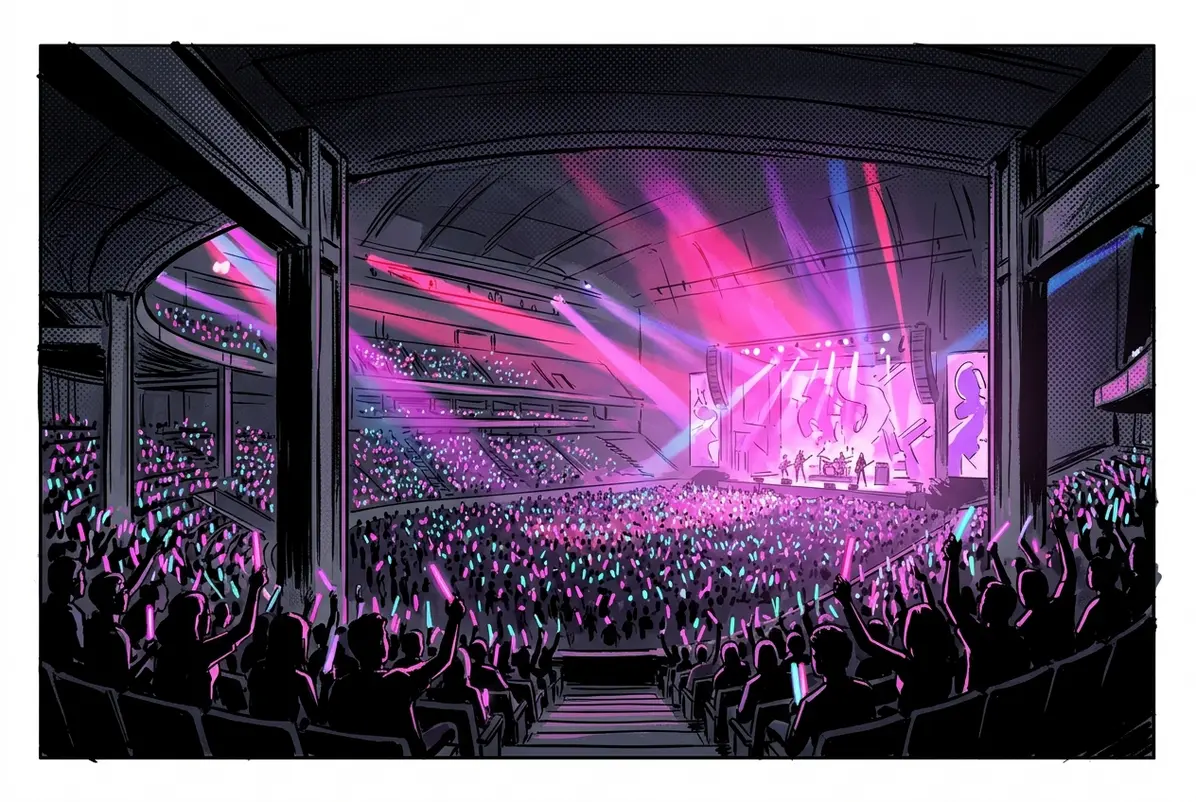
That is the strange thing about the Flat Miku saga. It did not destroy Miku Expo. It did not end the fandom. It did not make fans stop loving the character. If anything, the intensity of the reaction proved how much they still cared.
The controversy revealed that Hatsune Miku’s live appeal has never been only about songs, screens, or software. It is about a fragile agreement between company, character, technology, and crowd. The audience knows Miku is not real, but the concert is supposed to make that knowledge feel irrelevant for ninety minutes.
The Screen Was Never Just a Screen
My take is that the “Flat Miku” controversy was not really about whether LED screens are good or bad. It was about the failure to recognize that, for a virtual idol, staging is identity. The method of appearance is part of the character’s body. Change the body without warning, and fans will feel like the character has been changed too.
That is why the backlash felt larger than the equipment. Miku has always lived in the space between tool and idol, software and girl, projection and presence. Fans do not believe in her because they are confused about what she is. They believe in her because the entire culture around her makes belief feel collaborative.
When the illusion works, thousands of people can look at light and see a singer. When the illusion breaks, thousands of people can look at a singer and see a screen.
That is the lesson of Flat Miku. The ghost was never the technology alone. The ghost was the promise.
Frequently Asked Questions
What is the “Flat Miku” controversy?
The “Flat Miku” controversy refers to fan backlash after the Miku Expo 2024 North American tour used a flat LED screen presentation for Hatsune Miku instead of the hologram-like stage illusion many fans expected. The controversy gained momentum after the April 4, 2024 opening show in Vancouver, Canada.
Was Hatsune Miku actually a hologram at previous concerts?
Fans often describe Miku concerts as hologram shows, but the technical reality varies by event and production. Earlier concerts were known for hologram-like projection effects using transparent or semi-transparent stage surfaces, creating the illusion that Miku was physically present onstage.
Why were fans upset about the LED screen?
Many fans felt the LED screen made the performance look flatter and less immersive than the Miku concert experience they expected. The larger complaint was about disclosure: fans argued that they should have been told more clearly before buying tickets that the tour would use an LED-screen presentation.
Did Crypton Future Media respond?
Yes. Crypton Future Media told media outlets that it would continue to refine the show experience with the audience in mind and indicated that LED screen technology would continue to be used for Miku-related events.
Was the LED screen used at Coachella 2024?
Yes. Reports from the time noted that Miku’s Coachella 2024 performance also used an LED-screen setup, which disappointed fans who had hoped the festival appearance might use a more traditional hologram-like presentation.
What is Hatsune Miku V6?
Hatsune Miku V6 is a VOCALOID6-compatible voicebank product optimized for Yamaha’s VOCALOID:AI singing synthesis engine. It launched on April 14, 2026, with Japanese and English support, while Chinese support was planned for a future update.
Will future Miku Expo shows use LED screens?
Crypton Future Media’s public comments after the 2024 backlash indicated that LED screen technology would remain part of future Miku-related shows. The exact staging can vary by event, venue, and tour, so fans should check official event information before buying tickets.

'%3e%3cg id='Final-Copy-2_2_' transform='translate(1275.000000, 200.000000)'%3e%3cpath class='st0' d='M7.4,12.8h6.8l3.1-11.6H7.4C4.2,1.2,1.6,3.8,1.6,7S4.2,12.8,7.4,12.8z'/%3e%3c/g%3e%3c/g%3e%3c/g%3e%3cg id='final---dec.11-2020'%3e%3cg id='_x30_208-our-toggle' transform='translate(-1275.000000, -200.000000)'%3e%3cg id='Final-Copy-2' transform='translate(1275.000000, 200.000000)'%3e%3cpath class='st1' d='M22.6,0H7.4c-3.9,0-7,3.1-7,7s3.1,7,7,7h15.2c3.9,0,7-3.1,7-7S26.4,0,22.6,0z M1.6,7c0-3.2,2.6-5.8,5.8-5.8 h9.9l-3.1,11.6H7.4C4.2,12.8,1.6,10.2,1.6,7z'/%3e%3cpath id='x' class='st2' d='M24.6,4c0.2,0.2,0.2,0.6,0,0.8l0,0L22.5,7l2.2,2.2c0.2,0.2,0.2,0.6,0,0.8c-0.2,0.2-0.6,0.2-0.8,0 l0,0l-2.2-2.2L19.5,10c-0.2,0.2-0.6,0.2-0.8,0c-0.2-0.2-0.2-0.6,0-0.8l0,0L20.8,7l-2.2-2.2c-0.2-0.2-0.2-0.6,0-0.8 c0.2-0.2,0.6-0.2,0.8,0l0,0l2.2,2.2L23.8,4C24,3.8,24.4,3.8,24.6,4z'/%3e%3cpath id='y' class='st3' d='M12.7,4.1c0.2,0.2,0.3,0.6,0.1,0.8l0,0L8.6,9.8C8.5,9.9,8.4,10,8.3,10c-0.2,0.1-0.5,0.1-0.7-0.1l0,0 L5.4,7.7c-0.2-0.2-0.2-0.6,0-0.8c0.2-0.2,0.6-0.2,0.8,0l0,0L8,8.6l3.8-4.5C12,3.9,12.4,3.9,12.7,4.1z'/%3e%3c/g%3e%3c/g%3e%3c/g%3e%3c/g%3e%3c/svg%3e) Your Privacy Choices
Your Privacy Choices