


The Notch That Wasn’t a Mistake
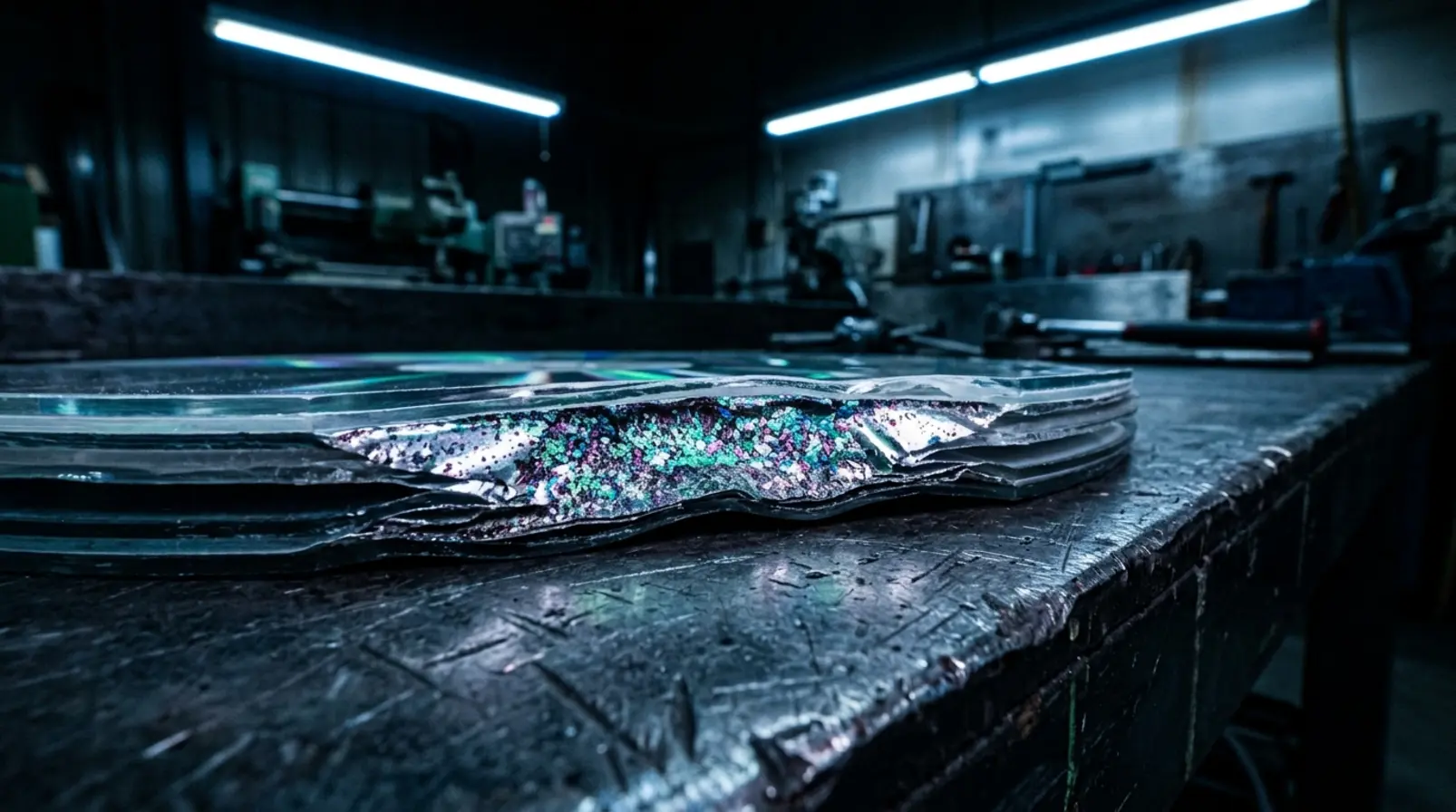
There’s a term from the world of typography that has been hard to shake lately: ink trap. An ink trap is a feature of certain typefaces designed for printing at small sizes, where tiny corners or details are deliberately cut away from the letterforms so that, once ink spreads during printing, the finished letter looks crisp instead of clogged. On its own, the design can look incomplete. In context, the imperfection is doing the work.
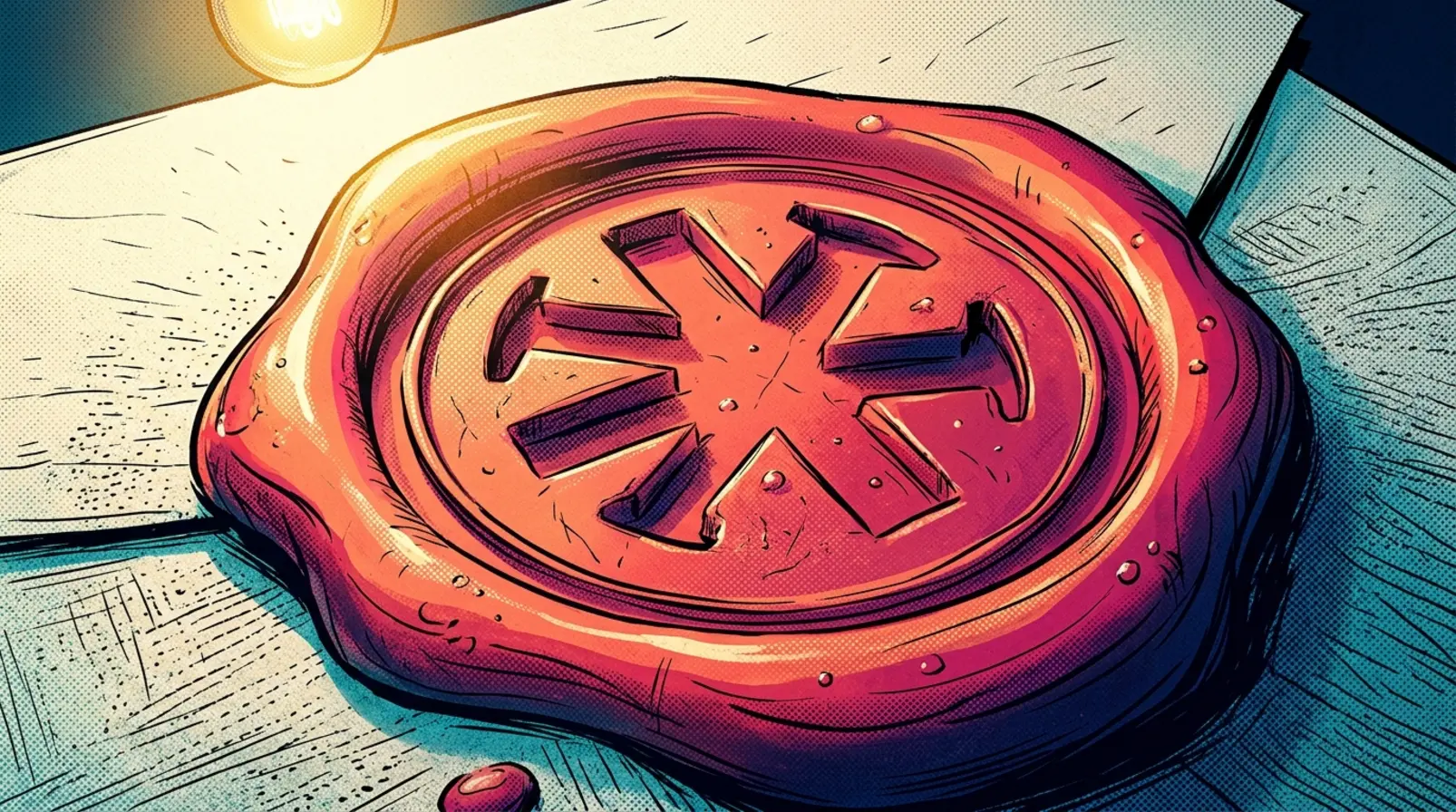
That idea feels useful when thinking about what is happening in the manga world right now. The conversation around AI and art often gets flattened into a simple opposition: machines on one side, artists on the other. But the more interesting story may be less about rejection and more about adaptation. It is quieter, more tactile, and, in some cases, sealed with wax.
The Seal and the Hand
Across fan communities and independent manga circles, a small but visible movement has taken shape. Artists are producing limited-run, handmade physical editions of their work, sometimes sealed with actual wax, sometimes printed on specialty paper with deliberate imperfections, as a way of emphasizing that a human made this, and you can feel it. The idea borrows naturally from doujinshi culture, where self-published physical comics have long carried a special kind of value. At events like Comiket, self-published physical comics can sell out within hours, showing that fans still place emotional weight on tangibility, scarcity, and the feeling of owning something made by a favorite artist.
What seems especially interesting is that this movement does not have to be read as anti-technology. It may be better understood as a quality signal, or even an authentication gesture, in a moment when AI-generated images have become increasingly convincing. Rather than saying AI has no place in creative culture, the handmade edition seems to say something narrower and more specific: this particular object carries evidence of a human process.
That distinction matters because the technology has become genuinely difficult to separate from human work in some cases. According to JoJo’s Bizarre Adventure creator Hirohiko Araki, AI-generated artwork is now so “sophisticated” that, at times, it can be virtually impossible to distinguish from work made by human artists. In his 2024 book New Manga Techniques: How to Create Villains, Araki commented on the rise of AI-generated illustrations and described AI as a “societal evil” that will “undoubtedly end up impacting manga down the line.” In one chapter, he recounts mistaking a piece of AI artwork for his own. Whether one shares Araki’s level of concern or not, the anecdote points to a real shift: style alone may no longer be enough to prove origin.
The Counter-Narrative Nobody Wants to Hear
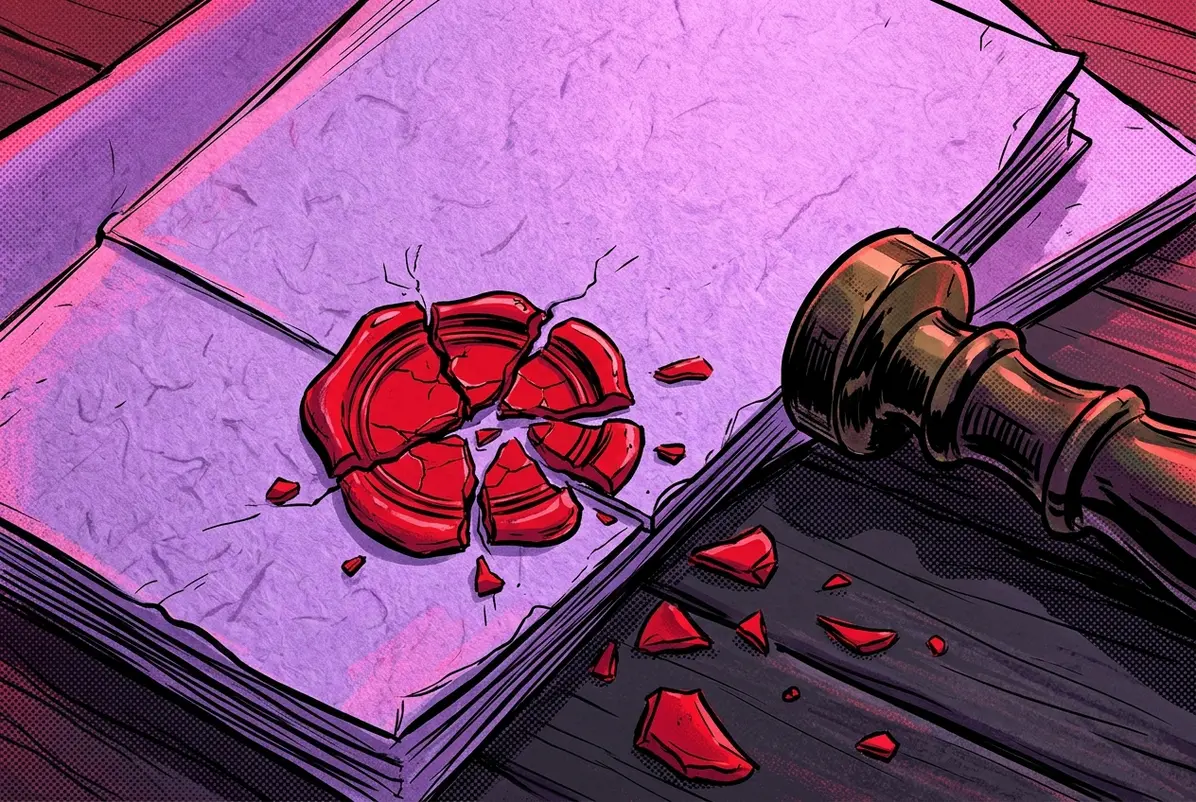
There is also a more complicated point here: the wax seal does not actually solve the problem. Not legally. Not commercially. Not at scale. And that may be precisely why it is interesting.
Japan has one of the more permissive copyright environments in the world when it comes to AI training. On January 1, 2019, Japan’s revised Copyright Act came into effect, with Article 30-4 allowing broad use of copyrighted works for information analysis, including AI training. An explanatory document published by the Japan Copyright Office stated that AI-generated material applying the “creator’s style” of a pre-existing copyrighted work does not infringe copyright if the style is treated as an idea rather than a protected expression.
So when an artist presses a wax seal onto a hand-stitched booklet, they are not building a legal firewall. The gesture seems more philosophical than procedural. It suggests that proof of human origin can live in the object itself: the thumbprint in the wax, the slight variation in the ink, the texture of the paper, the smell of the stock, the tiny inconsistencies that come from physical making. It feels adjacent to vinyl culture, where the crackle is not merely tolerated but folded into the experience.
In online discussions, fans have debated whether this type of physical authentication is meaningful or merely performative. Some see it as a beautiful and necessary act of creative self-definition. Others see it as a collector’s luxury that does little for working manga assistants, many of whom face difficult labor conditions regardless of whether AI is involved. Both views can be true at once. The wax seal may be emotionally powerful and structurally limited.
When the Machine Topped the Charts
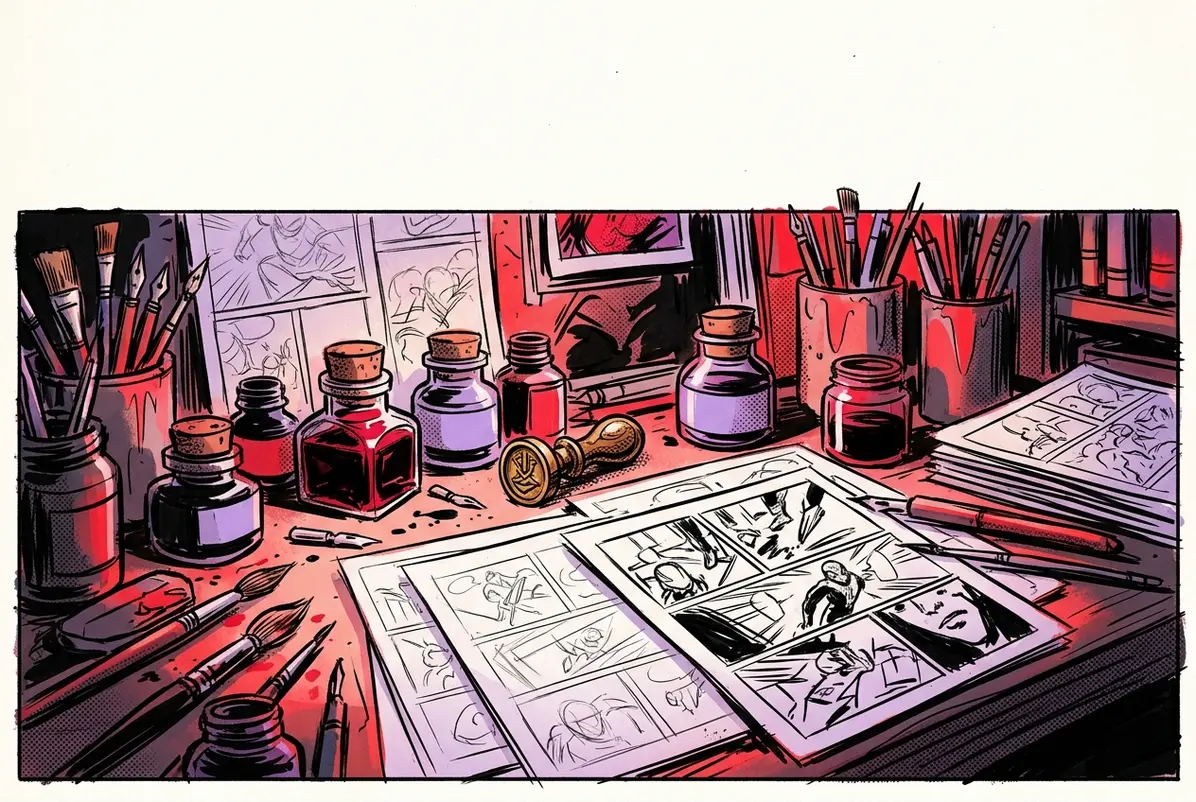
The urgency behind this conversation became more concrete in early 2026. In January 2026, a fully AI-generated manga titled My Dear Wife, Will You Be My Lover? claimed the #1 spot on Japan’s largest digital bookstore, Comic C’moA, outperforming established titles like Kingdom. Kazuaki Ishibashi, a manga editor who has worked on both Mob Psycho 100 and The World Only God Knows, observed that many readers did not seem especially concerned that the series was AI-generated, noting that “readers don’t seem to care whether the artist is AI or not.”
That may be the more revealing development. The issue is not simply that AI can generate images. It is that, in some contexts, audiences may be willing to accept those images without much concern for how they were made. For some readers, the finished experience may matter more than the production process. For others, authorship, labor, and origin remain central to the value of the work.
The law and public policy are still catching up to those tensions. Japan’s minister of state for IP and AI strategy, Minoru Kiuchi, has announced a formal request by the government for OpenAI to disallow the generation of videos that infringe on copyrighted Japanese content. Ken Akamatsu, a mangaka-turned-politician best known for Love Hina, has also pushed for stronger protections for artists. Meanwhile, the Japan Times has noted that Japan’s creative industries face pressure while the legal framework remains unsettled.
In that gap, the wax-seal movement can be read as artists creating their own layer of meaning. Not a replacement for policy, and not a rejection of every possible use of AI, but a way of marking human presence when digital production has made origin harder to read.
Ink Traps All the Way Down
This is where the metaphor of the ink trap comes back into focus. Bell Centennial, the typeface Matthew Carter designed for phone books, is intentionally imperfect at the outline stage. It accounts for messy printing conditions and lets the ink complete the form. It is a masterwork of pragmatic design because it does not imagine ideal conditions. It designs for the real ones.
The artists hand-sealing their manga may be doing something similar. They are not pretending the world is untouched by AI. They are not necessarily arguing that technology has no role in art. They are designing around the actual conditions they live in: a world where style can be replicated, images can be generated quickly, and the question of origin has become harder to answer from the image alone.
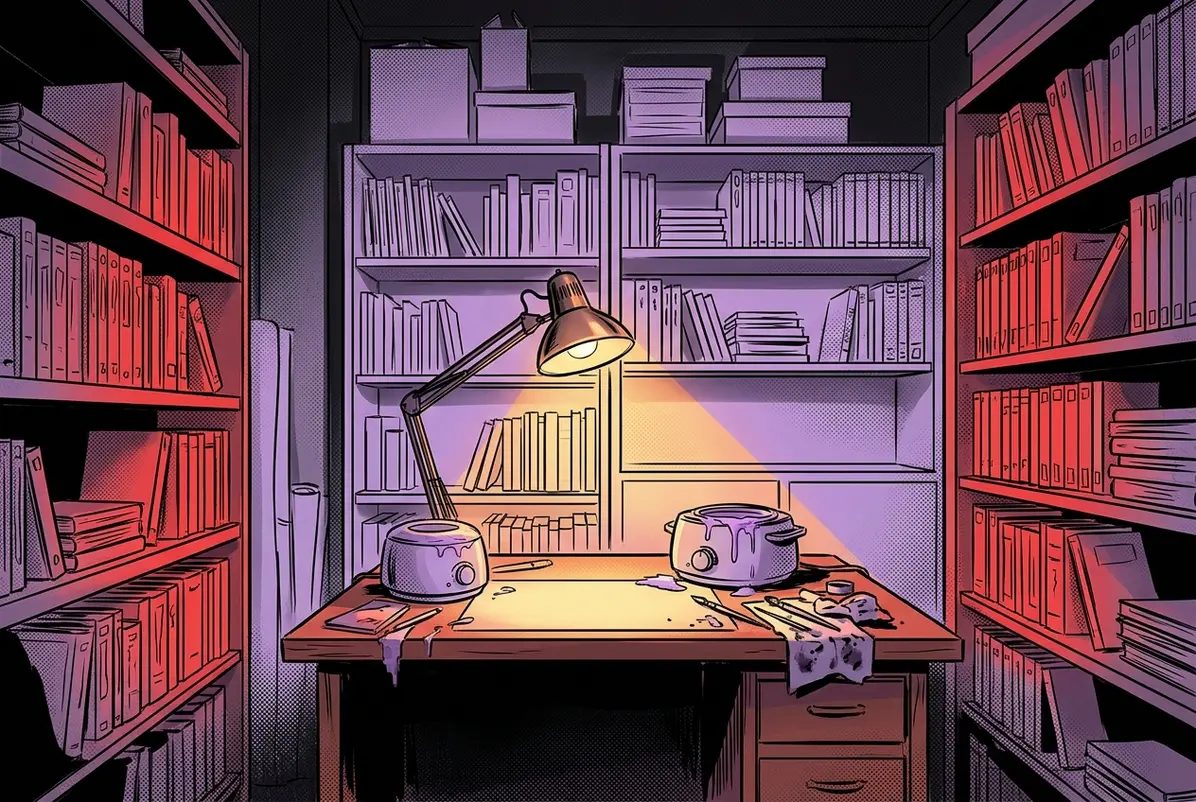
A physical edition offers a different kind of answer. It points to the body at the desk, the hand on the pen, the paper chosen carefully, the seal pressed into hot wax late at night. It does not make the work more human because it rejects technology. It makes the work more legible as human because it carries traces that are difficult to flatten into a prompt.
It reads like a small, stubborn, beautiful insistence. Not a refusal of the future, but a refusal to let the future make the evidence of human making disappear.
What Ink Traps Teach Us
The common assumption is that the debate over AI art is fundamentally about technology. It may be just as much about trust. When Hirohiko Araki says he could not tell his own work from an AI imitation, he is describing a crisis of authentication as much as a crisis of copyright. As he put it, “Copyright infringement by AI is also a ‘villain’ that we manga artists must face.”
A wax seal will not stop a diffusion model from training on linework. A hand-stitched spine will not fix the economics of manga production. But it can still do something meaningful. It can make the object feel situated, authored, and specific. You hold it, and part of the value comes from knowing that someone made choices beyond the image itself: the paper, the binding, the edition size, the mark in the wax, the imperfect edge.
That is the ink trap. It looks wrong until you understand the conditions it was designed for. In a creative world increasingly shaped by AI, the handmade manga edition may not be an argument against the machine so much as an argument for preserving the visible traces of the human. And from that perspective, it may be one of the more honest pieces of design thinking manga has produced this year.
'%3e%3cg id='Final-Copy-2_2_' transform='translate(1275.000000, 200.000000)'%3e%3cpath class='st0' d='M7.4,12.8h6.8l3.1-11.6H7.4C4.2,1.2,1.6,3.8,1.6,7S4.2,12.8,7.4,12.8z'/%3e%3c/g%3e%3c/g%3e%3c/g%3e%3cg id='final---dec.11-2020'%3e%3cg id='_x30_208-our-toggle' transform='translate(-1275.000000, -200.000000)'%3e%3cg id='Final-Copy-2' transform='translate(1275.000000, 200.000000)'%3e%3cpath class='st1' d='M22.6,0H7.4c-3.9,0-7,3.1-7,7s3.1,7,7,7h15.2c3.9,0,7-3.1,7-7S26.4,0,22.6,0z M1.6,7c0-3.2,2.6-5.8,5.8-5.8 h9.9l-3.1,11.6H7.4C4.2,12.8,1.6,10.2,1.6,7z'/%3e%3cpath id='x' class='st2' d='M24.6,4c0.2,0.2,0.2,0.6,0,0.8l0,0L22.5,7l2.2,2.2c0.2,0.2,0.2,0.6,0,0.8c-0.2,0.2-0.6,0.2-0.8,0 l0,0l-2.2-2.2L19.5,10c-0.2,0.2-0.6,0.2-0.8,0c-0.2-0.2-0.2-0.6,0-0.8l0,0L20.8,7l-2.2-2.2c-0.2-0.2-0.2-0.6,0-0.8 c0.2-0.2,0.6-0.2,0.8,0l0,0l2.2,2.2L23.8,4C24,3.8,24.4,3.8,24.6,4z'/%3e%3cpath id='y' class='st3' d='M12.7,4.1c0.2,0.2,0.3,0.6,0.1,0.8l0,0L8.6,9.8C8.5,9.9,8.4,10,8.3,10c-0.2,0.1-0.5,0.1-0.7-0.1l0,0 L5.4,7.7c-0.2-0.2-0.2-0.6,0-0.8c0.2-0.2,0.6-0.2,0.8,0l0,0L8,8.6l3.8-4.5C12,3.9,12.4,3.9,12.7,4.1z'/%3e%3c/g%3e%3c/g%3e%3c/g%3e%3c/g%3e%3c/svg%3e) Your Privacy Choices
Your Privacy Choices