

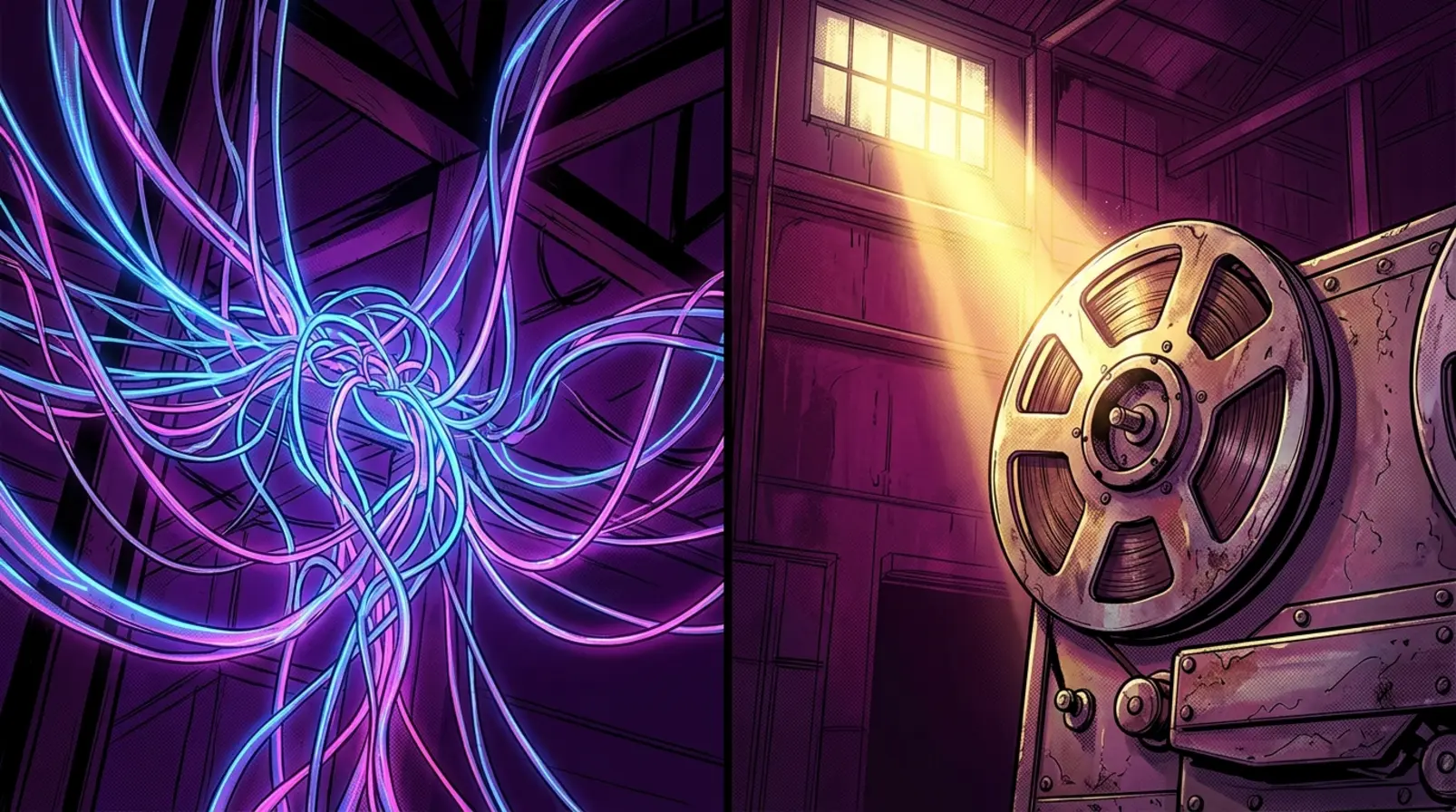

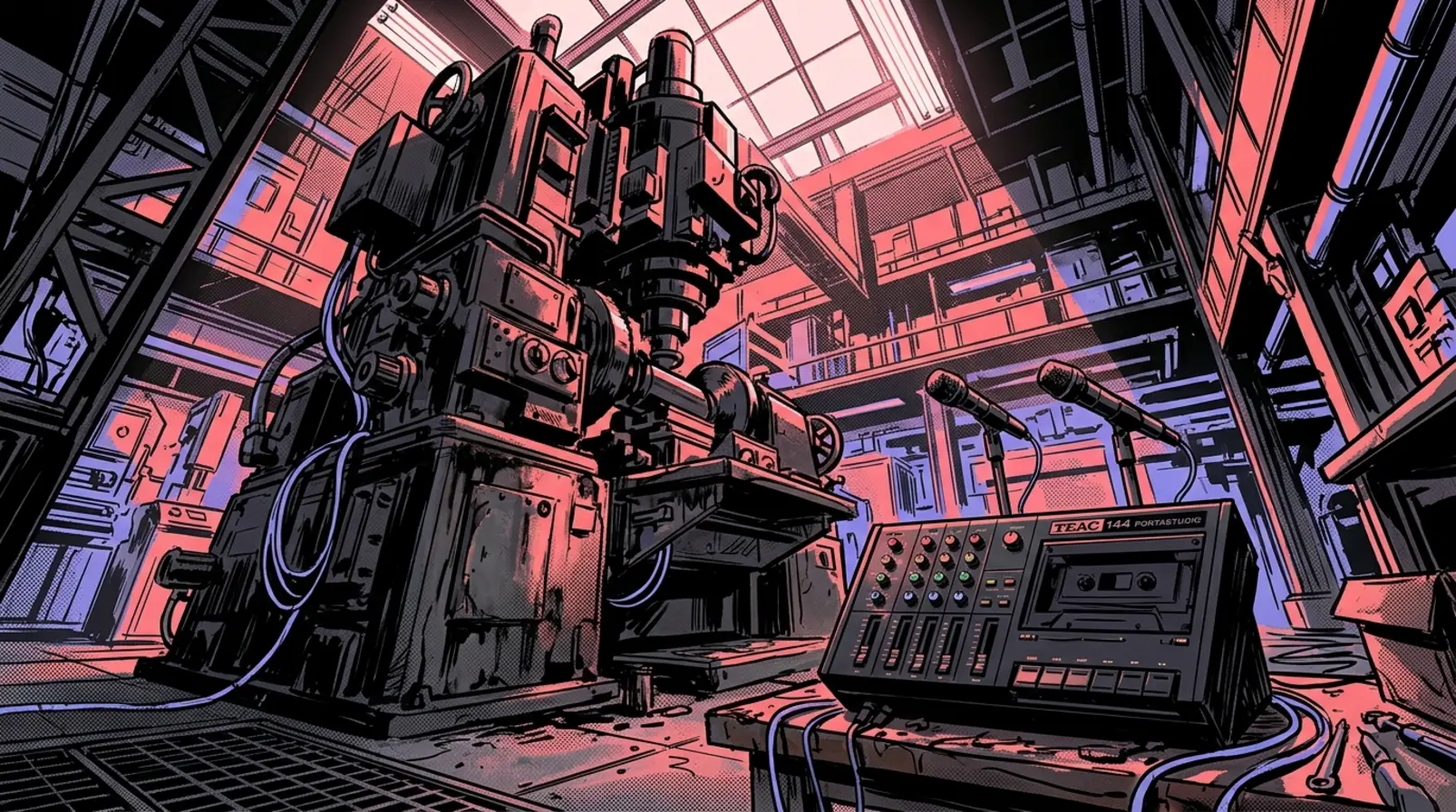
A “digital fast” in music recording is a deliberate decision to abandon digital audio workstations and their unlimited undo/redo capabilities in favor of analog tape, where every performance is committed to magnetic oxide and erasure is permanent. The practice, championed by engineers like Larry Crane of Tape Op Magazine, treats the finite nature of tape as a creative discipline rather than a handicap, forcing musicians to make decisions in real time instead of deferring them indefinitely.
Larry Crane, Jackpot! Recording Studio, and the Roots of Commitment
Larry Crane is an American editor, recording engineer, and archivist based in Portland, Oregon. He is the editor and founder of Tape Op magazine, the owner of Portland’s Jackpot! Recording Studio, and the archivist for the estate of musician Elliott Smith. He’s been a working engineer since the early 1980s, and his credentials read like a who’s-who of Pacific Northwest indie music.
In 1996, Crane began thinking about moving his home studio, Laundry Rules Recording, out of his SE Portland basement and into a commercial space. After a mutual friend noticed that songwriter Elliott Smith was also about to open a 16-track studio, the two met and decided to collaborate on a space, finding a little white and blue shop at 1925 SE Morrison in January 1997 for $500 a month. The studio has worked with some of the brightest up-and-coming and established artists since its founding in 1997, including Built to Spill, Wooden Shjips, Sleater-Kinney, Sonic Youth, Spoon, and R.E.M.
The first issue of Tape Op came out in April of 1996. Tape Op has the largest circulation in the world of a magazine devoted to music recording. It feels like no accident that Crane built both a publication and a studio at essentially the same moment. To me, both projects share the same DNA: the conviction that how you record matters as much as what you record.
The Infinite Undo Problem in Digital Recording
Here’s the tension that sits at the center of every modern session. Digital audio workstations like Pro Tools, Logic Pro, and Ableton Live offer what amounts to creative immortality. Every take is preserved. Every edit can be reversed. Nothing is ever truly gone. You can stack 200 tracks, comp together syllables from 40 vocal takes, and nudge a snare hit by three milliseconds. The undo button is bottomless.
Some artists find that the infinite possibilities can be paralyzing, leading to endless tweaking and second-guessing. In my view, the problem isn’t that digital tools are bad. They’re magnificent. The problem is that the absence of consequences can quietly erode the muscle that matters most: the ability to decide.
It reads like a paradox, but unlimited options can produce a kind of creative inertia. When nothing is permanent, nothing is urgent. When every take is saved, no take is the take. Engineers have grown tired of seeing Pro Tools sessions consisting of 100-plus tracks and plenty of deferred creative decisions plopped into the laps of mix engineers tasked with finding the song buried in there.
Larry Crane’s Analog Philosophy and the “Digital Fast”
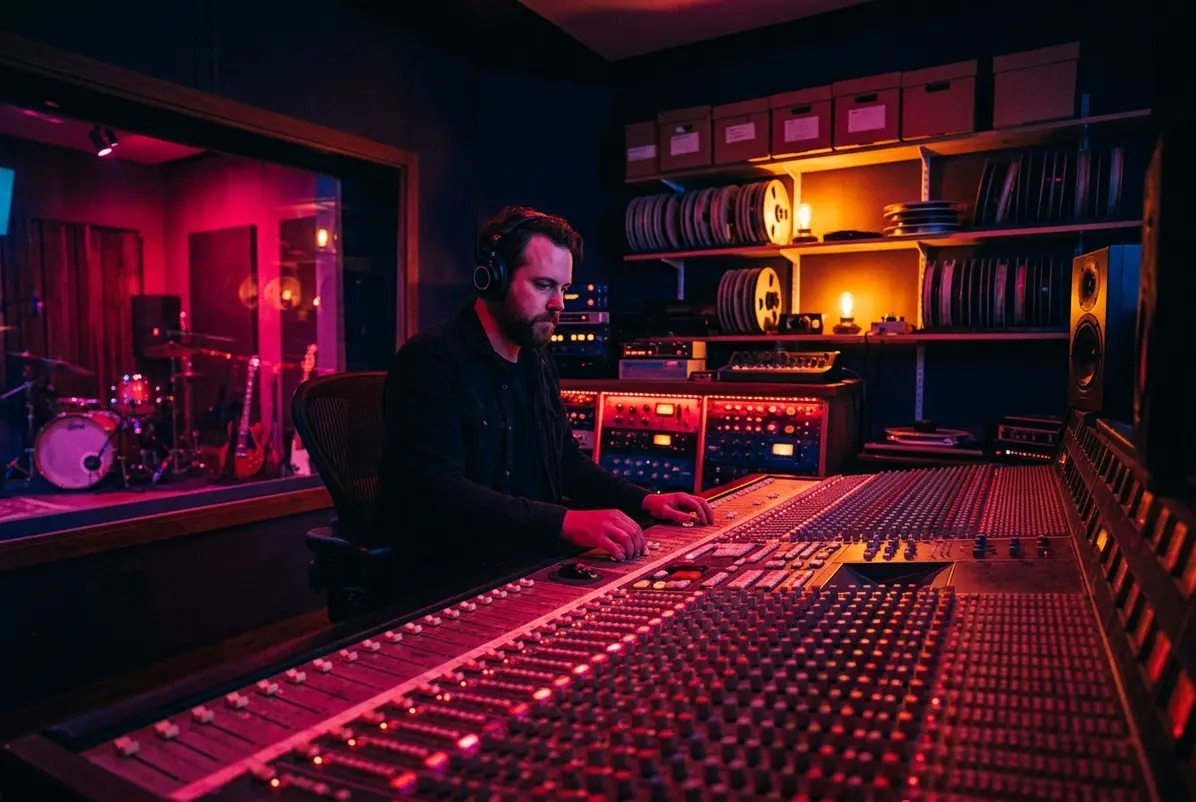
Crane’s studio is built for both worlds. Employing a combination of analog tape and digital workstations (Pro Tools and Logic), Jackpot! caters to vintage tastes while keeping the studio technology on the cutting edge, centered around a custom-built analog Rupert Neve Designs console. He has three Otari tape decks set up for 24- and 16-track on 2-inch tape and a 1/4-inch deck for mixing. One of his three Otari MTR-80 multitrack decks is regularly cannibalized to keep the other two fully operational.
What strikes me is that Crane doesn’t position himself as some anti-digital purist. Thanks to plenty of experience recording clients in a variety of ways, Crane is not nostalgic when it comes to analog. He’s pragmatic about it. There are times when a band might throw in the towel and just ask to move over to Pro Tools, which he’s OK with, too.
But the discipline of tape changes behavior. As Crane told Reverb, “You have to plan out analog sessions — budget your tracks ahead of time.” “It’s not like digital where you can keep adding tracks forever.” And then there’s the line that lands like a verdict: “If you can’t get a song down in 24 tracks, maybe it wasn’t a very good song in the first place.”
Crane has found that sometimes the calculations can be so daunting that bands come in prepared to zoom through songs nonstop. Having solos worked out and vocals pared down to what could be accomplished live on stage works in everyone’s favor in the long run, Crane thinks. There’s a case to be made that this preparation, forced by the medium itself, produces better records.
Jack White and the Gospel of “Recording Under Duress”
Crane isn’t alone in this conviction. On February 8, 2017, at the Recording Academy’s Producers & Engineers Wing 10th Annual Grammy Week Event at The Village Recording Studios in Los Angeles , Jack White accepted an honor and delivered a speech that crystallized the philosophy. White told the audience that analog inherently compels constant creative decisions.
White recalled his early days: “You’d record something and erase it if it wasn’t good enough; you’d erase it, and it was gone forever. Which is something that, I think, is becoming few and far between in the new generation, where you can record a million times and keep all of them. I still work in that way, and that kind of restriction, I think, is really important.”
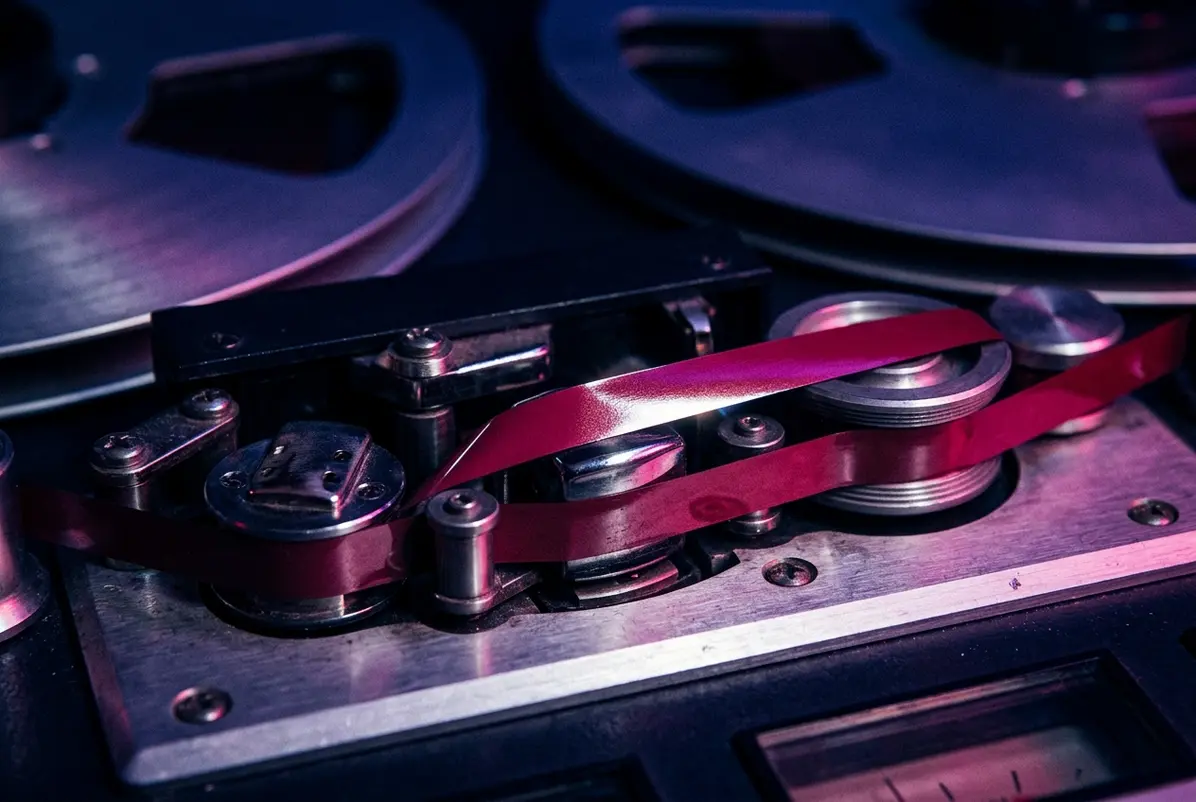
When a track on tape gets inadvertently recorded over and sent to “magnetic heaven,” it’s not coming back unless someone plays it or sings it again. “You can’t hit the spacebar and then command-Z and get it back,” warns Chris Mara, owner of Welcome To 1979 Studios. That finality is either terrifying or liberating. My take is that it’s both, and that’s precisely the point.
The Economics of Tape and Why the Constraint Is Real
The digital fast isn’t just a philosophical exercise. It has teeth, and those teeth are financial. Tape stock has always been extremely expensive. A reel of 2-inch tape costs around $350, and may only give you around 10 minutes (or less) of recording time. At 30 inches per second, the standard speed for high-fidelity tracking, you burn through tape fast. A full album session can eat through a dozen reels without breaking a sweat.
ATR Magnetics, one of the last manufacturers of professional recording tape, recently announced a transition of ownership to National Audio Company, effective July 1, 2026. The supply chain for analog tape has been precarious for years. When Quantegy, the last major U.S. manufacturer, shuttered its operations in the mid-2000s, studios scrambled. ATR is producing new 2-inch tape every day , but demand is high and lead times are real.
Reasonable people might disagree, but I think this scarcity is part of what makes the commitment meaningful. A reel of 2-inch tape isn’t a Spotify stream. It’s a physical object with a price tag and a time limit. Every minute costs money. Every erasure is permanent. That weight changes how people play.
What Happens When You Can’t Undo
Online recording communities are full of debates about this exact question. Some engineers swear that tape forces better performances. Others point out, correctly, that the undo button has saved countless sessions from disaster and that fetishizing limitation is its own kind of self-indulgence. Both sides have a point.
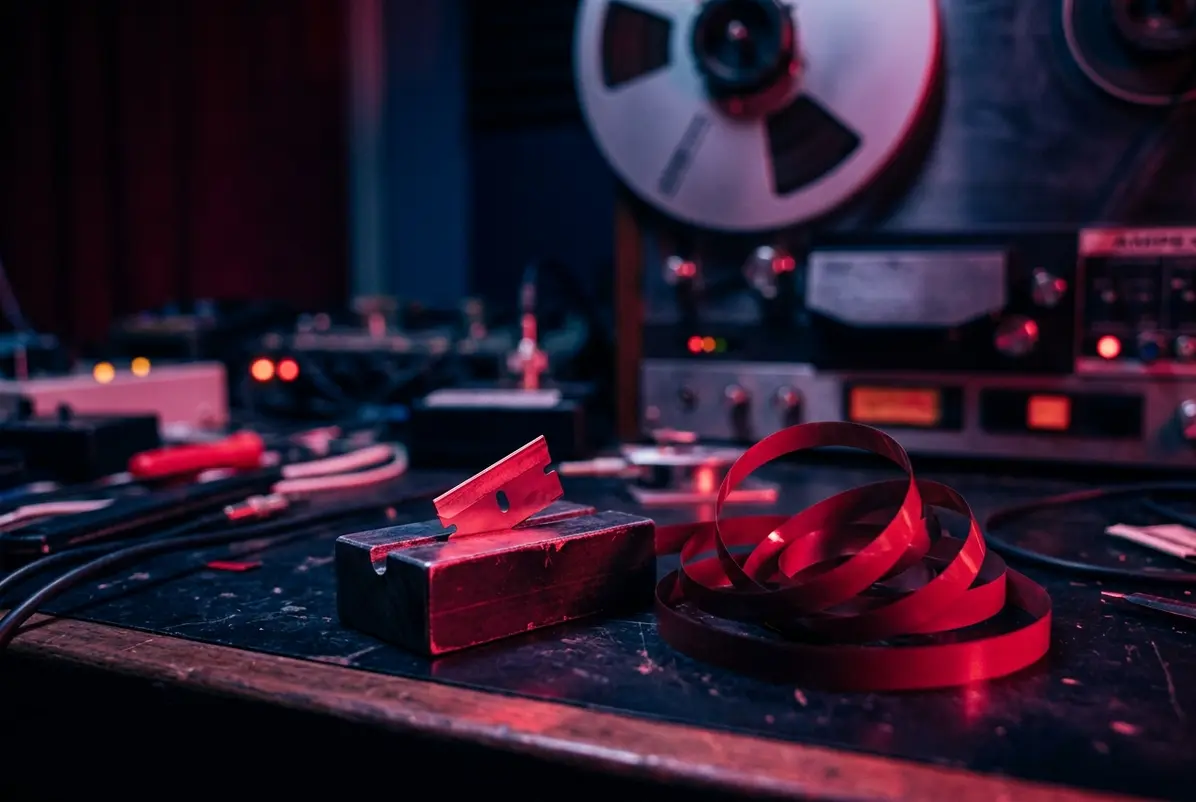
When you record to tape, you’re forced to make decisions in the moment. There’s no endless undo button, no option to “fix it in the mix.” This limitation often leads to more focused, intentional performances. It feels like the musical equivalent of writing with a fountain pen instead of a word processor. The permanence changes the weight of each mark.
What I find most interesting about Crane’s approach is that it isn’t absolutist. Larry Crane and Geoff Stanfield have broken down analog, in-the-box, and hybrid mixing approaches on the Tape Op podcast. The hybrid studio, where tracking starts on tape and editing finishes in the box, comes across as the pragmatic middle ground that most working professionals actually inhabit.
The “Digital Fast” as Creative Practice
The phrase “digital fast” carries obvious spiritual overtones, and that’s not an accident. Fasting is about voluntary deprivation in service of clarity. The idea is that by removing the infinite safety net of undo, you reconnect with something more immediate and honest.
Crane’s own recording advice distills to a simple principle: “Arranging, cutting things out, cutting frequencies out, just don’t put as much into the final mix as you think it needs.” It’s a philosophy of subtraction in an age of accumulation. To me, this is where Crane’s thinking resonates beyond the studio. The war against the infinite undo is really a war against the paralysis of infinite choice.
As Crane has said, “It’s about being a fan first, and then I think it’s about seeing opportunities in front of you, and if you think they could be interesting and fun, you’ve got to make an opening for them and plow forward.” That forward motion, that refusal to endlessly circle back, is what tape demands. By our reckoning, it’s also what makes the best records feel alive.
Frequently Asked Questions
What is a “digital fast” in music recording?
A digital fast is the practice of temporarily abandoning digital audio workstations and their unlimited undo capabilities in favor of analog tape recording. The goal is to force real-time creative decisions and eliminate the temptation to endlessly revise performances.
Who is Larry Crane and why is he associated with analog recording?
Larry Crane is an American editor, recording engineer, and archivist based in Portland, Oregon. He is the editor and founder of Tape Op magazine, the owner of Jackpot! Recording Studio, and the archivist for the estate of Elliott Smith. His studio uses both analog tape and digital workstations, and he has been a prominent voice advocating for the creative benefits of tape’s constraints.
How much does recording to analog tape cost?
A reel of 2-inch tape costs around $350 and may only give you around 10 minutes of recording time at 30 inches per second. Sessions also require machine maintenance, alignment, and head cleaning. By comparison, digital recording on a DAW has essentially zero marginal media cost.
What did Jack White say about “recording under duress”?
White said, “Recording under duress is kind of interesting.” He recalled that in his early days, “You’d record something and erase it if it wasn’t good enough; you’d erase it, and it was gone forever,” noting that this kind of restriction is becoming rare in the digital age. He made these remarks at the Recording Academy’s 2017 Grammy Week event.
Is analog tape still being manufactured?
Yes. ATR Magnetics is producing new 2-inch tape every day. The company recently announced a transition of ownership to National Audio Company, effective July 1, 2026. RecordingTheMasters (formerly RMGI/BASF) also continues to produce professional tape in France.
Can you combine analog tape and digital recording in the same session?
Yes, and many studios do. Jackpot! Recording Studio employs a combination of analog tape and digital workstations, catering to vintage tastes while keeping the studio technology on the cutting edge. A common hybrid approach involves tracking live instruments to tape, then transferring to a DAW for editing and mixing.
'%3e%3cg id='Final-Copy-2_2_' transform='translate(1275.000000, 200.000000)'%3e%3cpath class='st0' d='M7.4,12.8h6.8l3.1-11.6H7.4C4.2,1.2,1.6,3.8,1.6,7S4.2,12.8,7.4,12.8z'/%3e%3c/g%3e%3c/g%3e%3c/g%3e%3cg id='final---dec.11-2020'%3e%3cg id='_x30_208-our-toggle' transform='translate(-1275.000000, -200.000000)'%3e%3cg id='Final-Copy-2' transform='translate(1275.000000, 200.000000)'%3e%3cpath class='st1' d='M22.6,0H7.4c-3.9,0-7,3.1-7,7s3.1,7,7,7h15.2c3.9,0,7-3.1,7-7S26.4,0,22.6,0z M1.6,7c0-3.2,2.6-5.8,5.8-5.8 h9.9l-3.1,11.6H7.4C4.2,12.8,1.6,10.2,1.6,7z'/%3e%3cpath id='x' class='st2' d='M24.6,4c0.2,0.2,0.2,0.6,0,0.8l0,0L22.5,7l2.2,2.2c0.2,0.2,0.2,0.6,0,0.8c-0.2,0.2-0.6,0.2-0.8,0 l0,0l-2.2-2.2L19.5,10c-0.2,0.2-0.6,0.2-0.8,0c-0.2-0.2-0.2-0.6,0-0.8l0,0L20.8,7l-2.2-2.2c-0.2-0.2-0.2-0.6,0-0.8 c0.2-0.2,0.6-0.2,0.8,0l0,0l2.2,2.2L23.8,4C24,3.8,24.4,3.8,24.6,4z'/%3e%3cpath id='y' class='st3' d='M12.7,4.1c0.2,0.2,0.3,0.6,0.1,0.8l0,0L8.6,9.8C8.5,9.9,8.4,10,8.3,10c-0.2,0.1-0.5,0.1-0.7-0.1l0,0 L5.4,7.7c-0.2-0.2-0.2-0.6,0-0.8c0.2-0.2,0.6-0.2,0.8,0l0,0L8,8.6l3.8-4.5C12,3.9,12.4,3.9,12.7,4.1z'/%3e%3c/g%3e%3c/g%3e%3c/g%3e%3c/g%3e%3c/svg%3e) Your Privacy Choices
Your Privacy Choices