


There’s a moment in The Imaginary when Rudger, the invisible boy born from a girl’s mind, begins to fade. His outlines shiver. The color drains from his hair and skin like watercolor left in the rain. It lasts only a few seconds, but it lands like a thesis statement: the film is not trying to hide the tremor of the human hand. It is trying to make that tremor visible.
That is the strange achievement of Yoshiyuki Momose’s film. The Imaginary looks polished, expensive, and technically adventurous, but its real power comes from refusing the clean death-mask perfection of so much modern animation. The image breathes. The line quivers. The light has weight, but the drawing still feels vulnerable. The movie’s best visual idea is not that hand-drawn animation can be made to look more digital. It is that digital tools can be used to protect the instability that made the drawing alive in the first place.
Momose did not arrive at that idea as a tourist. Nippon Connection notes that he has worked in animation since 1971 and joined Studio Ghibli in 1988, where his credits included Grave of the Fireflies and Spirited Away. Studio Ponoc’s official site says he worked alongside Isao Takahata from Grave of the Fireflies through The Tale of The Princess Kaguya, and that Takahata called him not merely his “right arm,” but “both arms.” That is not a résumé. That is a geological record.
By the time Momose directed The Imaginary, he was not chasing the future from outside the tradition. He was carrying the tradition into a new lighting rig.
The Quiet Third Man
Momose’s name rarely surfaces in casual conversations about Ghibli with the same force as Hayao Miyazaki or Isao Takahata. That absence is part of the story. He spent decades inside the machinery of masterpieces, shaping the emotional behavior of images without becoming the public face of them.
Producer Yoshiaki Nishimura has been unusually direct about that hidden stature. Speaking to Cartoon Brew, Nishimura said that when he entered Ghibli, Miyazaki and Takahata were the obvious giants, but Momose was “the third man” and “a special presence” at the studio. Nishimura added that because Momose never got to direct a feature at Ghibli, he promised himself that if he ever had the chance to choose a feature director, he wanted Momose to have that opportunity at Studio Ponoc.
That context matters because The Imaginary does not feel like a young director announcing himself. It feels like an old hand finally being given the room to turn craft knowledge into philosophy. The film is about imaginary friends, forgotten children, vanishing selves, and the small private worlds people build to survive. Momose’s images understand that theme at the level of texture. Nothing in the movie feels fully fixed. Everything looks as if it could disappear if the light changed.
Engineering the Wobble
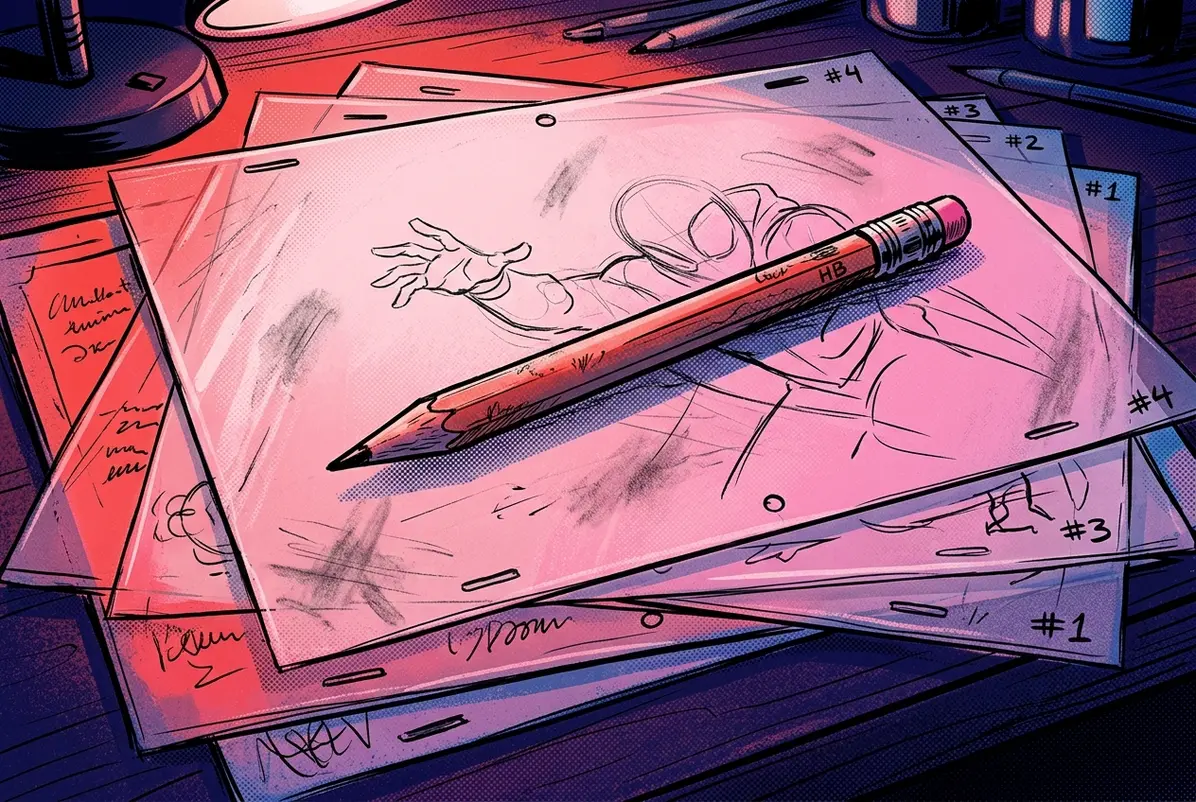
The Imaginary is hand-drawn, but calling it simply hand-drawn undersells the experiment. Studio Ponoc describes the film as hand-drawn animation deepened by new techniques of light and shadow, created through collaboration with French artists and digital technology to achieve textures that traditional hand-drawn animation could not easily produce. The key is not replacement. The key is pressure. The film puts digital light against pencil instability and lets the tension remain visible.
That collaboration ran through Les Films du Poisson Rouge, the French studio associated with the lighting and texturing work that helped give Sergio Pablos’ Klaus its dimensional 2D look. Cartoon Brew reported that Ponoc’s push on The Imaginary led to a collaboration with Les Films du Poisson Rouge, which had helped develop lighting techniques for Klaus before bringing that knowledge into Ponoc’s pipeline.
The technical temptation here would have been obvious: use the new tools to make the drawings behave more like clean 3D objects. Instead, the film does something more interesting. It adds volume without embalming the image. Light wraps around characters, shadows thicken emotional space, and surfaces gain depth, but the line still carries the microscopic unrest of a drawing made by a person.
Nishimura explained the purpose with unusual clarity. In an interview with Film Stories, he said the French-developed technique allowed the team to add texture and shadow to the animation, creating depth while helping imaginary friends feel present “as if they are standing there” and allowing light and shadow to capture character emotion beneath the surface of the image.
That is the film’s visual gamble. The shadow is not decoration. The shadow is psychology.
Why the Wobble Matters
The tremor matters because The Imaginary is not about stable beings. It is about invented companions who exist only as long as they are remembered. Rudger is not a superhero with invisibility as a gimmick. He is a fragile act of attention. His body is made from a child’s interior weather.
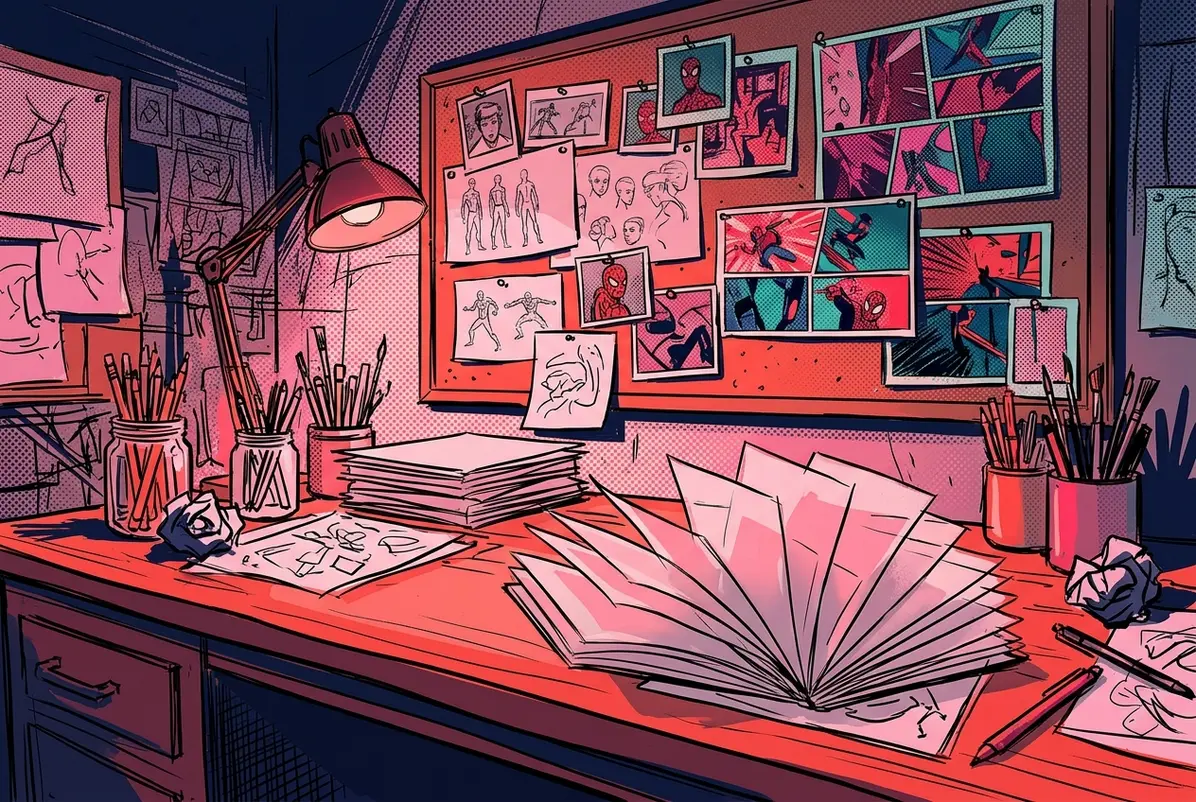
That makes the film’s controlled imperfection more than an aesthetic flourish. In traditional animation, the slight variation between hand-drawn frames can create a visible shimmer often called line boil. Many contemporary workflows try to reduce that instability. The Imaginary appears to preserve it, then places a more advanced light-and-shadow system on top. The result is not nostalgia. It is contradiction with discipline.
The issue is not whether hand-drawn animation should remain pure. Purity is usually a museum word. The stronger question is whether new tools can extend the expressive life of the hand instead of correcting it out of existence. Momose’s answer is visible in the movie’s faces, in the flicker of Rudger’s body, and in the population of the Town of Imaginaries, where the film’s creatures feel less like a standardized asset library than a catalog of private childhood logic.
Nishimura told Cartoon Brew that each child’s imagination is different, so the world of The Imaginary could not be depicted with a single look. That is why he believed Momose was the right director for the material from the beginning. The production method becomes the argument. Every imaginary friend needs a different kind of body because every imagination has its own grammar.
That is where the film becomes more than a showcase. A less careful production could have turned the Imaginaries into a parade of cute designs. Momose’s version treats them as evidence. Each figure seems to carry the residue of the mind that made it. The wobble is not a defect. It is characterization.
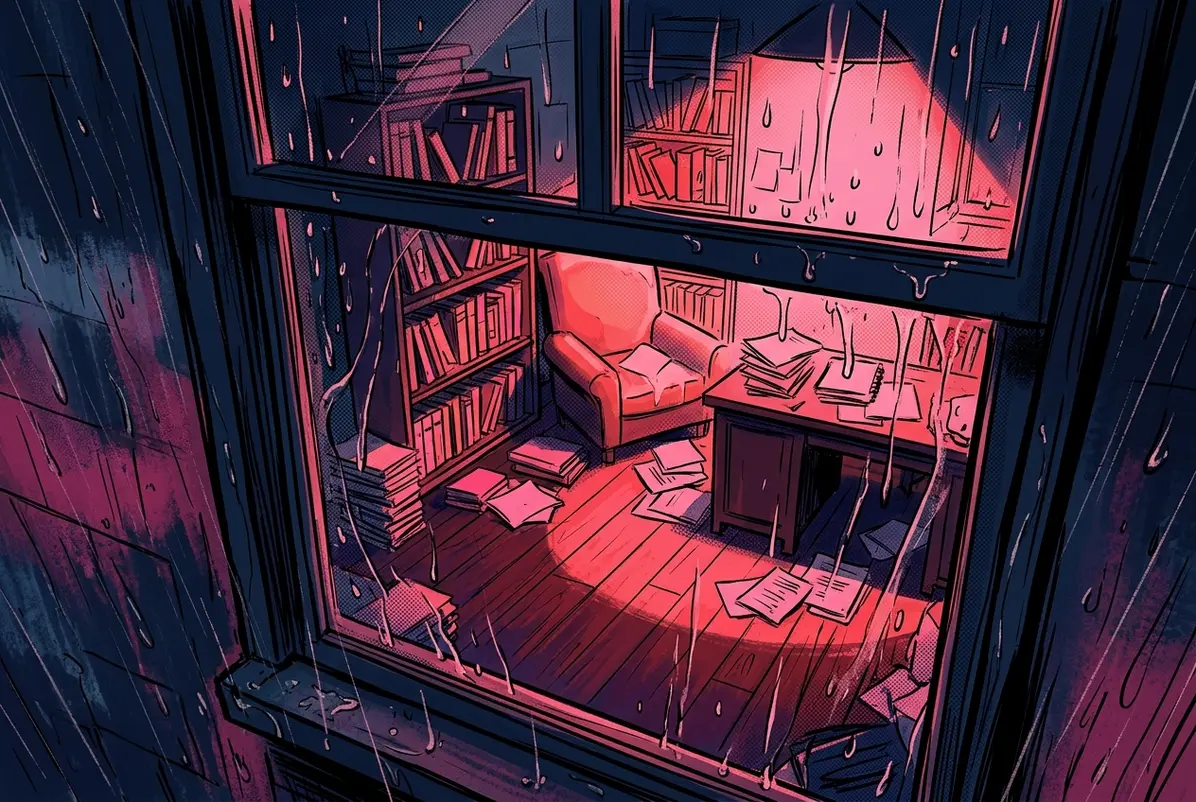
The Line That Remembers
The Imaginary was released theatrically in Japan in December 2023, then arrived globally on Netflix in July 2024 as part of Netflix’s streaming deal for Studio Ponoc animated features reported by Cartoon Brew. Its critical reception has been strong: Rotten Tomatoes currently lists the film at 91 percent from 82 reviews, with a consensus calling it “visually splendid” and emotionally resonant on the site’s Tomatometer page.
Reasonable viewers can disagree about whether the story lands every turn. The film can drift, and its dream logic sometimes asks the audience to accept emotional clarity where narrative mechanics get hazy. But the visual achievement is harder to dismiss. The Imaginary understands that animation history is not a ladder where every new tool replaces an older one. It is a haunted workshop. Techniques survive when artists find new reasons to keep them alive.
Momose’s great move is that he does not treat the pencil as sacred. He treats it as alive. That distinction matters. Sacred things are protected from contact. Living things change when touched. The French lighting and texturing tools do not betray the handmade image. They put pressure on it, reveal it, deepen it, and make its fragility more legible.
The future of hand-drawn animation was never going to be solved by pretending the computer did not exist. Nor was it going to be saved by allowing software to polish every tremor into obedience. The Imaginary finds a stranger answer: let the machine light the ghost, but do not let it exorcise the hand.
Momose has spent a professional lifetime inside the wobble. With The Imaginary, he turns that wobble into a theory of memory, imagination, and disappearance. The line keeps moving. It keeps shaking. That is not the flaw in the image. That is the image remembering how it was made.
'%3e%3cg id='Final-Copy-2_2_' transform='translate(1275.000000, 200.000000)'%3e%3cpath class='st0' d='M7.4,12.8h6.8l3.1-11.6H7.4C4.2,1.2,1.6,3.8,1.6,7S4.2,12.8,7.4,12.8z'/%3e%3c/g%3e%3c/g%3e%3c/g%3e%3cg id='final---dec.11-2020'%3e%3cg id='_x30_208-our-toggle' transform='translate(-1275.000000, -200.000000)'%3e%3cg id='Final-Copy-2' transform='translate(1275.000000, 200.000000)'%3e%3cpath class='st1' d='M22.6,0H7.4c-3.9,0-7,3.1-7,7s3.1,7,7,7h15.2c3.9,0,7-3.1,7-7S26.4,0,22.6,0z M1.6,7c0-3.2,2.6-5.8,5.8-5.8 h9.9l-3.1,11.6H7.4C4.2,12.8,1.6,10.2,1.6,7z'/%3e%3cpath id='x' class='st2' d='M24.6,4c0.2,0.2,0.2,0.6,0,0.8l0,0L22.5,7l2.2,2.2c0.2,0.2,0.2,0.6,0,0.8c-0.2,0.2-0.6,0.2-0.8,0 l0,0l-2.2-2.2L19.5,10c-0.2,0.2-0.6,0.2-0.8,0c-0.2-0.2-0.2-0.6,0-0.8l0,0L20.8,7l-2.2-2.2c-0.2-0.2-0.2-0.6,0-0.8 c0.2-0.2,0.6-0.2,0.8,0l0,0l2.2,2.2L23.8,4C24,3.8,24.4,3.8,24.6,4z'/%3e%3cpath id='y' class='st3' d='M12.7,4.1c0.2,0.2,0.3,0.6,0.1,0.8l0,0L8.6,9.8C8.5,9.9,8.4,10,8.3,10c-0.2,0.1-0.5,0.1-0.7-0.1l0,0 L5.4,7.7c-0.2-0.2-0.2-0.6,0-0.8c0.2-0.2,0.6-0.2,0.8,0l0,0L8,8.6l3.8-4.5C12,3.9,12.4,3.9,12.7,4.1z'/%3e%3c/g%3e%3c/g%3e%3c/g%3e%3c/g%3e%3c/svg%3e) Your Privacy Choices
Your Privacy Choices