


In 2016, Hayao Miyazaki watched an AI create animation and called it an “insult to life itself.” Nine years later, his art style was AI-generated 25 million times in five days. The irony isn’t just bitter. It’s revelatory.
The 90s anime you treasure took one year and three months to animate four seconds of a crowd scene. AI can replicate that visual in four seconds flat. But here’s what gets lost in the prompt: those four seconds mattered because someone bled time into them. Every frame carried the weight of a human decision, a tired hand, a stubborn vision that refused shortcuts. You can’t prompt that kind of gravity. You can only earn it.
The Fingerprint Era
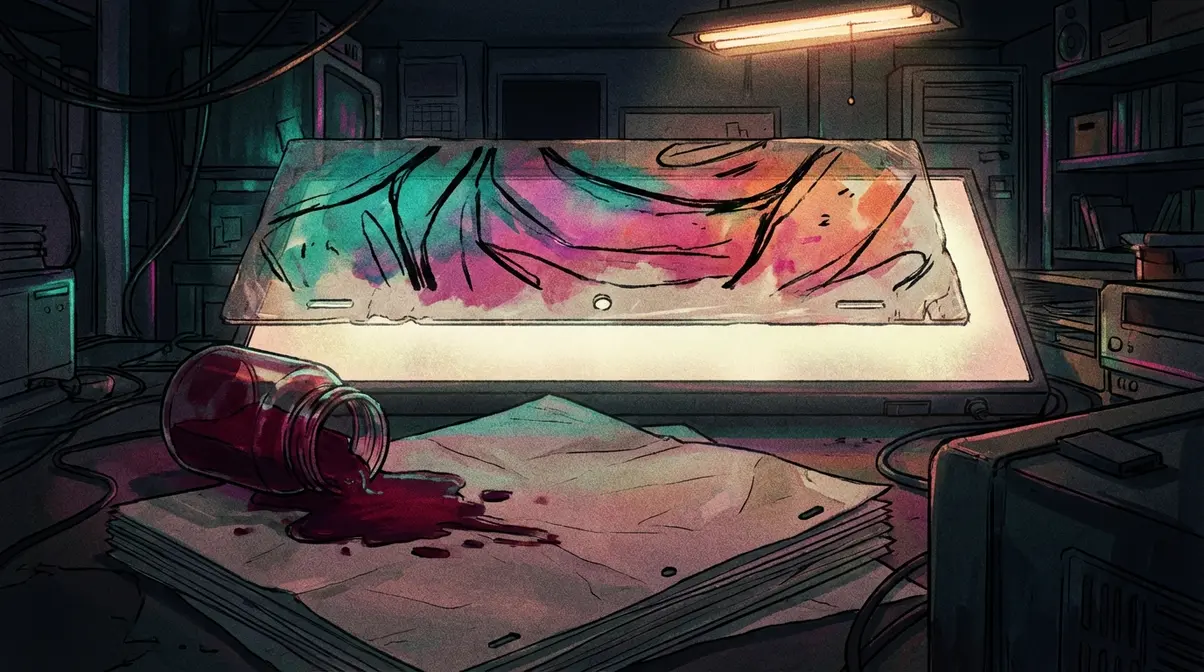
Traditional 90s anime wasn’t just drawn by hand. It was inked and colored on transparent celluloid paper, photographed by analog cameras that captured every frame onto negative film. Each background was hand-painted by skilled artists employing techniques that left visible brush strokes, slight paint variations, occasional imperfections. These weren’t mistakes. They were signatures.
Online communities obsess over these details for good reason. Fans describe cel animation as having “warmth and cozy qualities” that digital work simply can’t replicate, comparing it to music on vinyl. That analogy holds. The medium itself imposed constraints that became aesthetic choices. The slight color bleeding, the VHS scan lines, the way light seemed to glow differently through hand-painted cels: these weren’t stylistic flourishes. They were the inevitable result of physical materials meeting human touch.
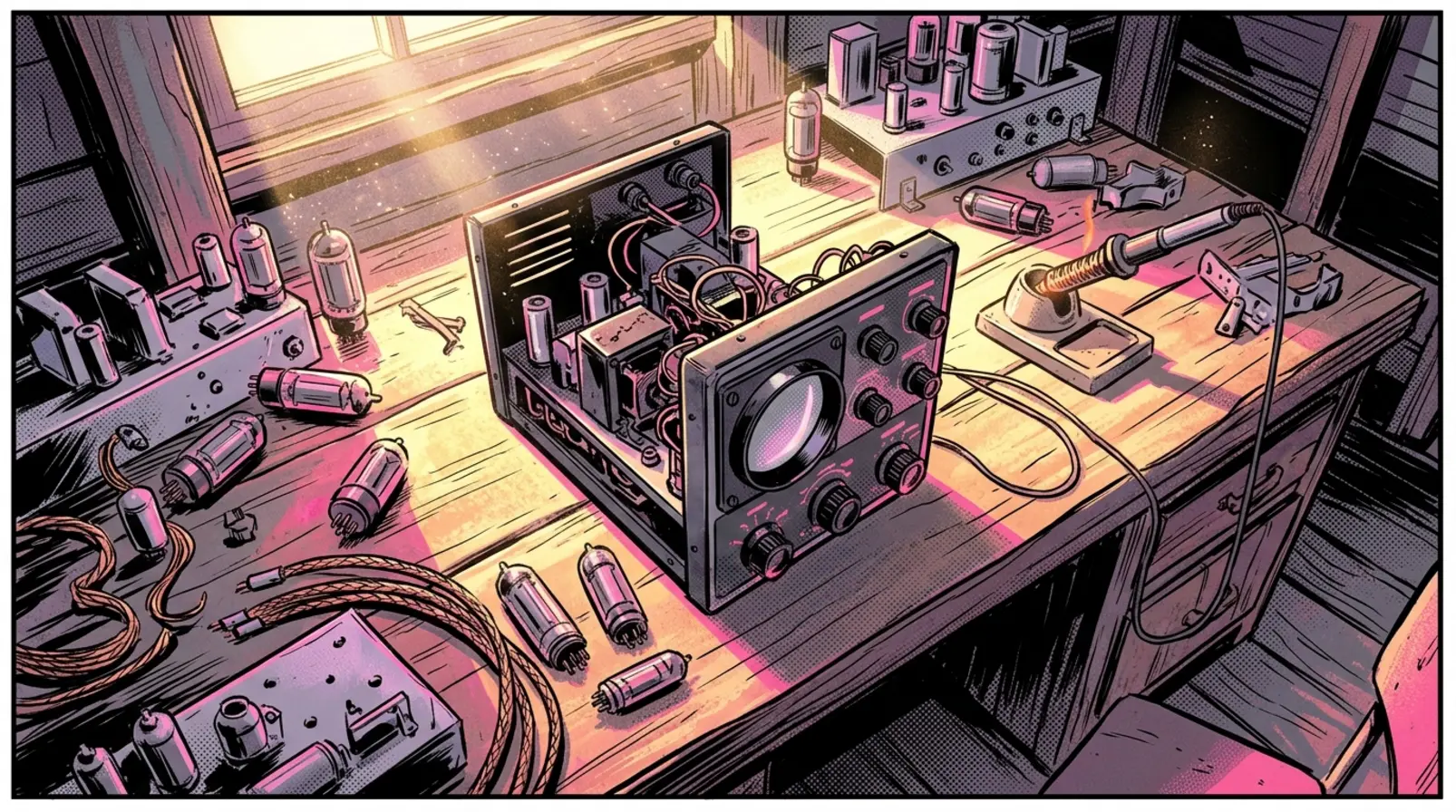
Thicker line work wasn’t a trend. It was a necessity of the inking process. Simpler shading wasn’t minimalism. It was efficiency born from the reality that every color layer meant another cel, another paint job, another opportunity for human error (and human magic). The 90s represented the absolute peak of this craft, techniques that had been mostly available only to large-budget projects in the 80s now widely utilized across the industry.
The Labor Behind the Glow
Here’s what AI evangelists conveniently skip: animation was always “handcrafted pain,” as Miyazaki once called it. The average 90s anime episode cost $200,000 to $300,000 to produce. A 2024 study revealed that roughly 40% of people working in the anime industry earn less than $15,400 a year. Half of workers aged 20 to 30 make less than that, while the average Japanese adult salary sits at almost double.
The industry operates on broken economics, and it always has. But the solution isn’t replacing underpaid artists with algorithms. It’s paying artists what their craft is worth. When Netflix dropped an AI-assisted anime short in 2023, citing “labor shortages” as justification, the backlash was immediate and fierce. Artists and fans saw through the rhetoric: this wasn’t about solving workforce problems. It was about cutting costs on human talent while the anime industry itself ballooned to $25.3 billion in 2024.
The cognitive dissonance is staggering. We’re told AI will democratize animation, make it accessible, solve production bottlenecks. Meanwhile, films like Redline needed almost 100,000 hand-drawn frames and seven years to complete. It bombed initially. Today it’s considered one of the best-looking anime of all time. That transformation from commercial failure to legendary status happened because people recognized something irreplaceable in its construction: evidence of human obsession.
The Uncanny Valley of Emotion
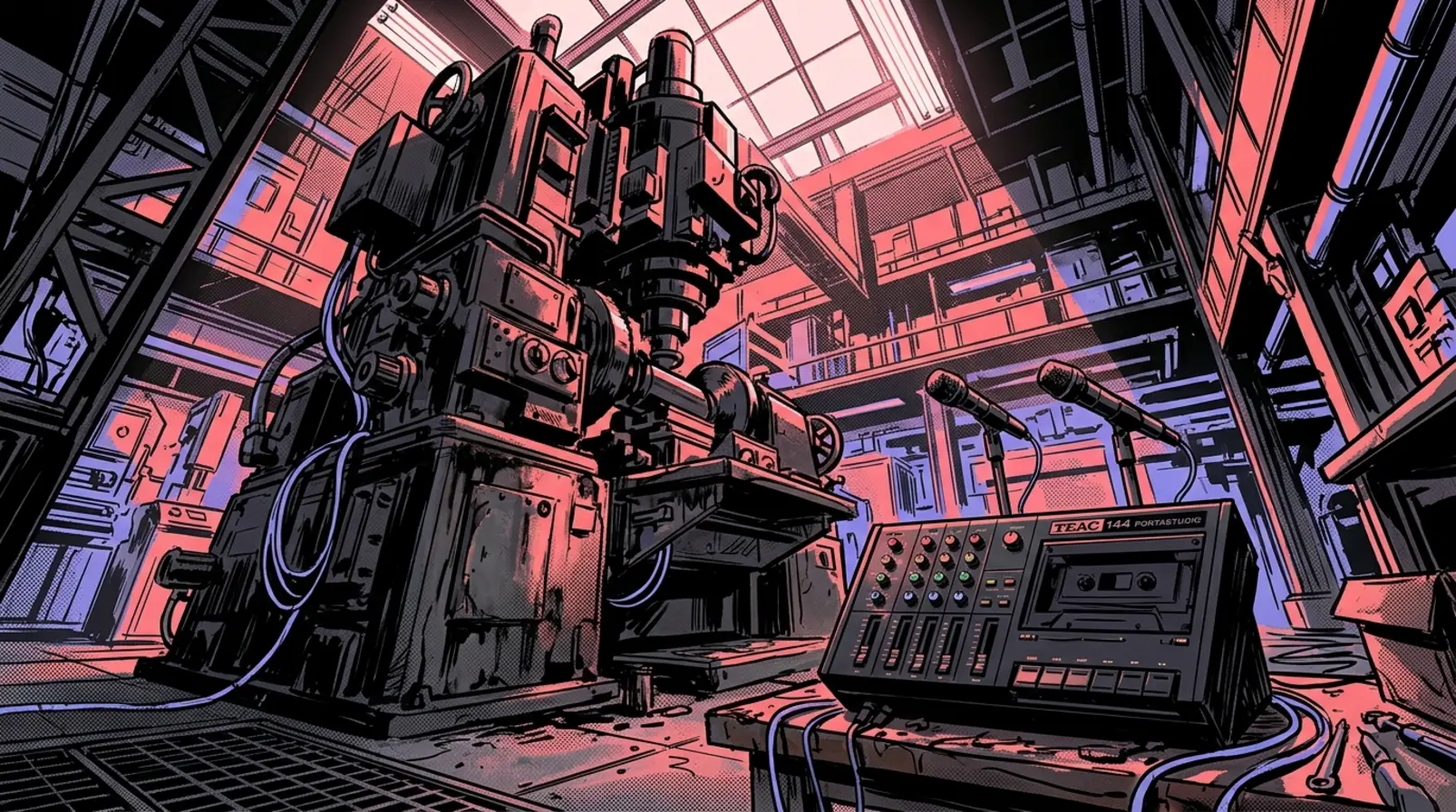
AI can now replicate the 90s aesthetic with astonishing accuracy. It can generate the yellowish tint of aged film stock, the grittiness of analog transfers, even the slight jitter between frames that gave hand-drawn animation its organic rhythm. What it can’t replicate is the why behind the what.
Authenticity isn’t just technical precision. It’s tied to emotion, intention, context. A hand-drawn character might show subtle asymmetry in a smile (one eye crinkling slightly more) to convey shy confidence. An AI can replicate that expression perfectly in isolation but fails to maintain its evolution across five sequential frames. The micro-expressions that land emotionally, the background details that imply narrative weight, the way a character’s posture shifts under psychological pressure: these emerge from artists who understand bodies, emotions, storytelling at a cellular level.
Enthusiast forums frequently point out this distinction. While AI can produce impressive animations, it relies on formulas and patterns. It lacks lived experience, personal struggle, the cultural context deeply embedded in hand-drawn work. Anime isn’t about replicating reality. It’s about amplifying emotion through distortion. When photorealistic rendering meets the exaggerated forms typical in anime, something essential gets lost in translation. The soul evacuates.
The Last Generation
Sazae-san aired the last anime episode using any cels at all on September 29, 2013. That date marks a hard boundary. Everything since has been digital, with varying degrees of fidelity to traditional techniques. Some shows attempt to look like cel animation through filters and deliberate imperfections, but as fans note, “it really doesn’t quite hit it right.” You can simulate the aesthetic. You can’t simulate the process.
Kiyotaka Oshiyama, director of 2024’s critically acclaimed Look Back (a film praised for being incredibly drawn and animated), stated after completion: “I think this will be the last work created solely by human hands.” That’s not hyperbole. It’s recognition of an economic and technological reality. Studios don’t really have a choice anymore. Digital coloring is faster, cheaper, and with competition intensifying, productions need to reach certain quality thresholds just to survive.
The shift to digital is conventionally dated around 2000. By 1999, entirely digitally colored titles were appearing. The transition was gradual, then sudden. Now we’re in another liminal moment: the shift from digital-but-human to AI-assisted-or-generated. Hirohiko Araki, legendary creator of Jojo’s Bizarre Adventure, fears AI will lead to “a world of con artists.” He’s not wrong to worry. When you can prompt a Miyazaki-style landscape in seconds, what happens to the artists who spent decades learning to paint like that?
The Hybrid Compromise
Some voices advocate for pragmatism. Makoto Tezuka suggests that innovation always faces resistance, viewing AI as just another tool. Others believe AI could raise quality, especially for in-between frames and background characters. The most compelling avatars emerging today aren’t purely AI or purely hand-drawn. They’re hybrid: AI-generated base concepts refined by illustrators who inject narrative gravity, hand-drawn sketches enhanced with AI-assisted color scripting.
This hybrid model might represent the future: machines for speed, humans for soul. But it’s a compromise, not a solution. The critical elements of great animation (vision, artistry, emotional connection) remain firmly human-driven. AI can handle technical execution. It can’t handle meaning-making.
What We’re Really Fighting For
The rage isn’t really about technology. It’s about value. When AI companies train their models on artists’ work without consent or compensation, then sell tools that undercut those same artists’ livelihoods, that’s not innovation. It’s extraction. The anime industry already exploits its workforce. AI threatens to make that exploitation total.
The 90s anime aesthetic people love so desperately isn’t just a visual style. It’s evidence of a particular moment when craft, constraint, and vision aligned. The imperfections weren’t bugs. They were features that emerged from humans working at the edge of what was physically possible with the tools available. Those visible pencil marks, slight color variations, organic textures: they’re proof that someone was there, making choices, solving problems, leaving traces.
You can prompt a 90s-style anime frame. You can’t prompt the accumulated knowledge of an animator who spent 20 years learning how fabric moves, how light catches hair, how a character’s weight shifts when they’re lying. You can’t prompt the cultural context of Japan’s Quality Revolution, the economic pressures that shaped production choices, the specific studios and directors who pioneered techniques. You can’t prompt struggle, revision, the moment when an artist crumples up the fifteenth attempt and finally gets it right on the sixteenth.
Hand-drawn animation carries the fingerprint of its creator’s soul. It bears the weight of time, effort, emotion. No algorithm can simulate that because simulation isn’t the point. The point is presence. The point is proof that someone cared enough to do it the hard way.
The 90s aren’t coming back. Cel animation is dead. But the ethos that made it legendary doesn’t have to die with it. Support artists. Pay for craft. Demand transparency about AI usage. Recognize that efficiency isn’t the only value worth optimizing for. Sometimes the slow, expensive, difficult way is the only way that matters.
The soul of 90s anime can’t be prompted because soul isn’t data. It’s evidence of human presence. And that’s worth fighting for.
'%3e%3cg id='Final-Copy-2_2_' transform='translate(1275.000000, 200.000000)'%3e%3cpath class='st0' d='M7.4,12.8h6.8l3.1-11.6H7.4C4.2,1.2,1.6,3.8,1.6,7S4.2,12.8,7.4,12.8z'/%3e%3c/g%3e%3c/g%3e%3c/g%3e%3cg id='final---dec.11-2020'%3e%3cg id='_x30_208-our-toggle' transform='translate(-1275.000000, -200.000000)'%3e%3cg id='Final-Copy-2' transform='translate(1275.000000, 200.000000)'%3e%3cpath class='st1' d='M22.6,0H7.4c-3.9,0-7,3.1-7,7s3.1,7,7,7h15.2c3.9,0,7-3.1,7-7S26.4,0,22.6,0z M1.6,7c0-3.2,2.6-5.8,5.8-5.8 h9.9l-3.1,11.6H7.4C4.2,12.8,1.6,10.2,1.6,7z'/%3e%3cpath id='x' class='st2' d='M24.6,4c0.2,0.2,0.2,0.6,0,0.8l0,0L22.5,7l2.2,2.2c0.2,0.2,0.2,0.6,0,0.8c-0.2,0.2-0.6,0.2-0.8,0 l0,0l-2.2-2.2L19.5,10c-0.2,0.2-0.6,0.2-0.8,0c-0.2-0.2-0.2-0.6,0-0.8l0,0L20.8,7l-2.2-2.2c-0.2-0.2-0.2-0.6,0-0.8 c0.2-0.2,0.6-0.2,0.8,0l0,0l2.2,2.2L23.8,4C24,3.8,24.4,3.8,24.6,4z'/%3e%3cpath id='y' class='st3' d='M12.7,4.1c0.2,0.2,0.3,0.6,0.1,0.8l0,0L8.6,9.8C8.5,9.9,8.4,10,8.3,10c-0.2,0.1-0.5,0.1-0.7-0.1l0,0 L5.4,7.7c-0.2-0.2-0.2-0.6,0-0.8c0.2-0.2,0.6-0.2,0.8,0l0,0L8,8.6l3.8-4.5C12,3.9,12.4,3.9,12.7,4.1z'/%3e%3c/g%3e%3c/g%3e%3c/g%3e%3c/g%3e%3c/svg%3e) Your Privacy Choices
Your Privacy Choices