


1UP Arcade Brisbane is Australia’s largest freeplay retro arcade, housing more than 200 original arcade games and pinball machines at its current location in Woolloongabba, Queensland. Operating since 2017, the venue functions as both arcade and living archive: one entry fee unlocks unlimited freeplay on authentic hardware, much of it still running on the CRT displays these games were designed around. That makes 1UP more than a nostalgia stop. It is a public-facing test case for one of retro gaming’s quietest preservation problems: the games can survive, but the screens are disappearing.
How 1UP Arcade Brisbane Became Australia’s Largest Retro Arcade
1UP Arcade opened on May 13, 2017, originally setting up in Morningside with nearly 60 freeplay titles and room to grow. Concrete Playground reported at the time that founder Stephen Holmes had spent years collecting and restoring arcade machines, with a focus on authenticity rather than cheap imitation. That meant original cabinets, original boards, and original parts wherever possible.
The collection grew into something much larger. Today, 1UP Arcade describes itself as Australia’s largest freeplay retro arcade, offering more than 200 original arcade games under one roof. Its current home is 55 Ipswich Road, Woolloongabba, inside the Laser Force building, where the arcade operates seven days a week with late sessions on Friday and Saturday.
The roster stretches across decades of arcade history: early video-game icons, golden-age cabinets, scrolling beat-’em-ups, light-gun machines, racers, fighting games, pinball, and cult rarities. 1UP’s official listings include the kind of machines that turn an arcade from a room full of cabinets into a playable map of the medium.
That playable quality matters. 1UP is not built around glass cases and “do not touch” labels. The venue’s flat-rate model removes the old coin-drop anxiety from arcade play. As Holmes told Concrete Playground, the goal was to attract players of all ages and skill levels by removing the need to keep feeding money into a machine just to improve. The result is a museum you can actually use.
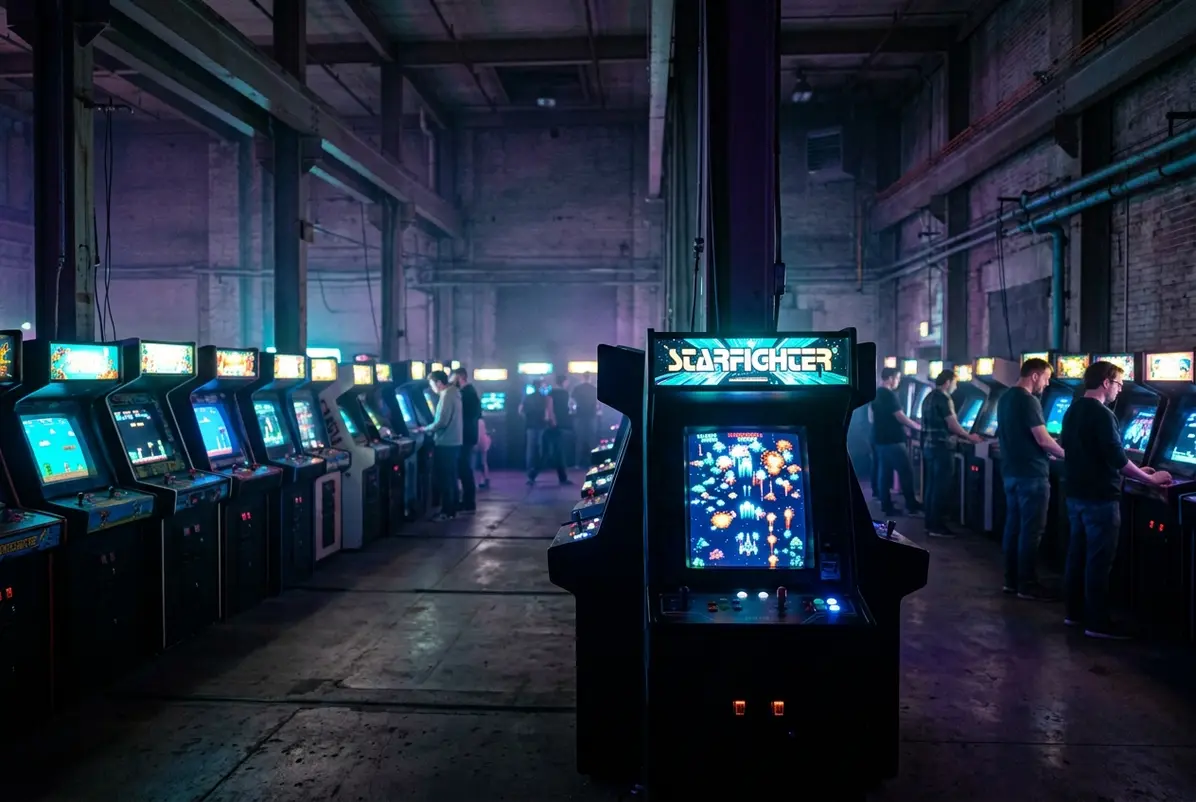
The sharper point is that 1UP’s authenticity does not stop at the cabinet art or the control panel. It includes the screens. Row after row of CRT displays gives the venue its glow: curved glass, scanlines, phosphor bloom, softened pixels, and the particular visual warmth of games being shown on the technology they were made for. Replacing those displays with LCDs would not simply modernize the machines. It would change the historical texture of the games themselves.
Why CRT Monitors Matter for 1UP Arcade Brisbane’s Authenticity
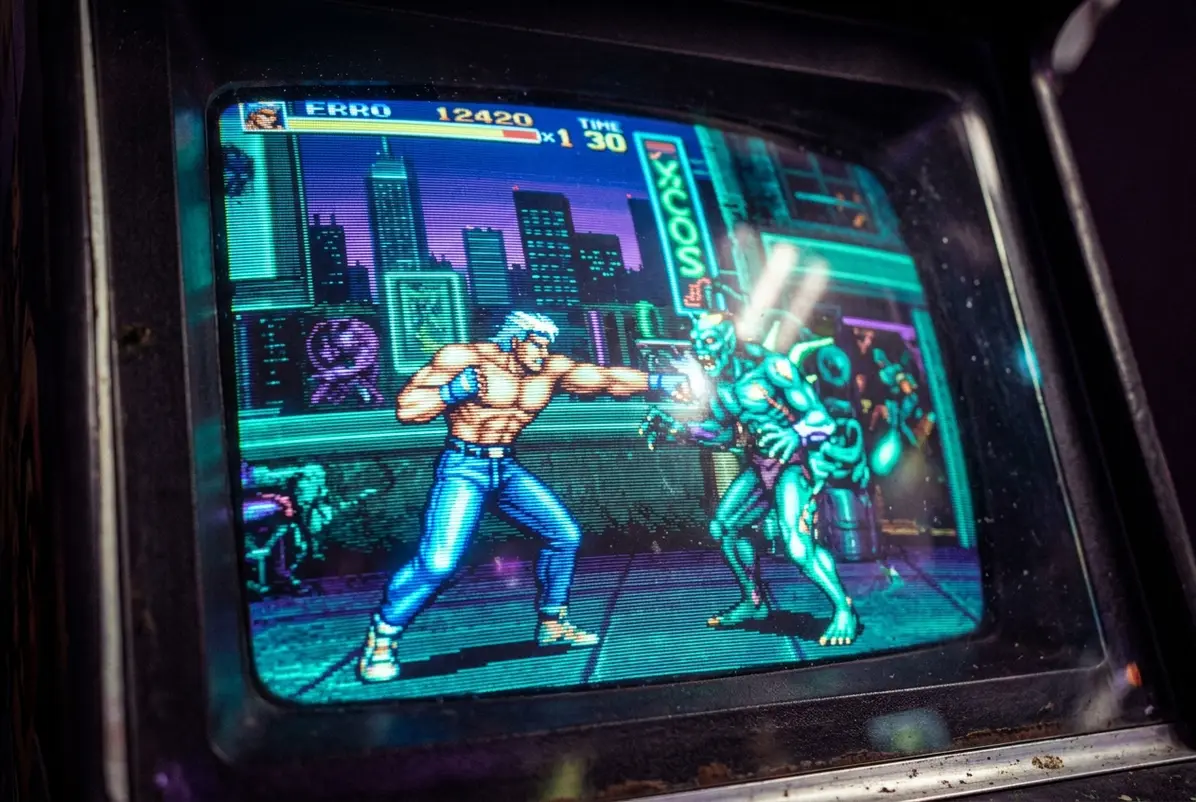
A CRT forms an image by firing electron beams at a phosphor-coated screen, sweeping across the display in a raster pattern and building the picture line by line. In color displays, red, green, and blue signals combine into the final image. That process gives classic arcade games their visual character: scanlines, glow, motion behavior, analog softness, and a kind of natural blending that modern flat panels can imitate but not fully reproduce.
That is why CRTs still matter in arcade preservation. Classic arcade boards were designed for low-resolution CRT displays, often in a 4:3 shape, with visual art tuned around the way phosphors, scanlines, and analog video signals behave. On a modern flat panel, the same game can look sharper but less correct, cleaner but less alive. Pixel art that once blended naturally can become harsh. Motion that once felt immediate can feel processed if scaling or display latency enters the chain.
The difference is not only visual. Arcade games were made for immediacy. A CRT does not add the kind of digital-processing lag associated with many modern display chains. For fast fighting games, rhythm-based play, shooters, racers, and twitch-heavy classics, that responsiveness is part of the machine’s feel. A cabinet is not only a ROM and a joystick. It is the entire signal path from board to screen to player.
For a preservation-focused arcade, this creates a difficult rule: the display is not an accessory. It is part of the artifact.
1UP Arcade Brisbane and the Global CRT Shortage
The problem is simple and brutal: new arcade CRT monitors are no longer being manufactured at meaningful scale. The supply that remains is finite, aging, heavy, fragile, and increasingly dependent on donor parts, repair knowledge, and luck.
As GamesBeat reported, the cathode-ray-tube technology that powered classic arcade monitors has largely vanished from modern display manufacturing, leaving arcade restorers and operators to work with dwindling remaining stock. The same report noted that Dream Arcades, an arcade cabinet and parts supplier, had fewer than 30 large CRT monitors left in stock at the time, with no expectation of replenishment in that size.
That was years ago. The underlying problem has only become more severe. A recent preservation discussion described the decline of CRTs as part of a broader “TV apocalypse” in game preservation, noting that classic games were often designed to take advantage of CRT behavior and that maintaining the hardware is becoming increasingly difficult. GamesRadar reported those concerns from preservation experts in 2026, framing CRT scarcity as only one piece of a larger hardware-preservation crisis.
For a home collector, one failing CRT is a problem. For a venue running hundreds of original games, it becomes infrastructure risk. Every tube has a lifespan. Every chassis has components that age. Every move risks damage. Every repair requires someone who understands hardware most of the consumer-electronics industry abandoned years ago.
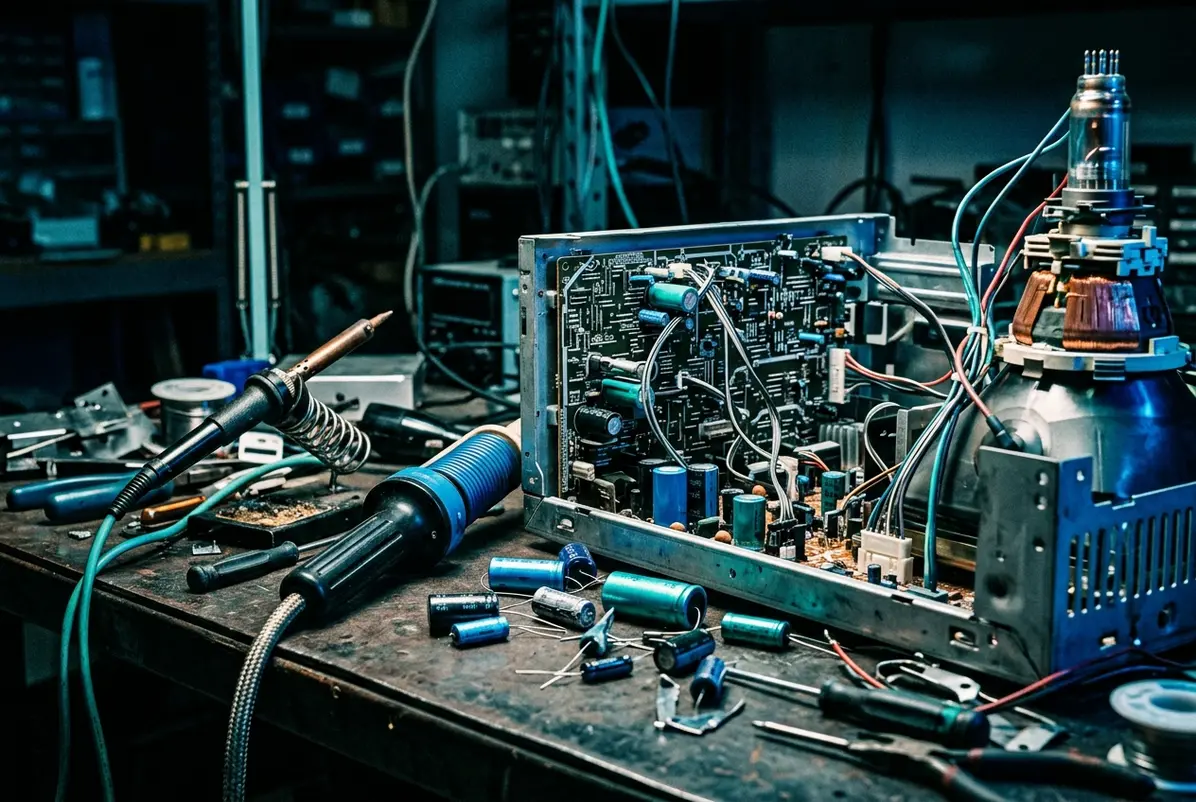
This is where the arcade becomes a kind of hospital. The machines are public-facing and joyous, but behind the scenes the work is clinical: testing, cleaning, recapping, sourcing parts, adjusting geometry, managing burn-in, and deciding when a display can be saved and when a replacement is unavoidable. The romance of the glow depends on a maintenance culture that is anything but romantic.
How 1UP Arcade Brisbane Maintains a Living Collection
Running Australia’s largest freeplay retro arcade means accepting failure as part of the job. These are old machines. Monitors dim. Buttons wear out. Power supplies fail. Boards misbehave. Pinball mechanisms drift out of adjustment. A public arcade cannot freeze its collection in perfect condition; it has to keep repairing the collection while people are using it.
1UP’s website acknowledges that repairs are part of the rhythm of the venue. Out-of-order signs are not signs of neglect; they are signs that a living collection is being kept alive in public.
The CRT piece is especially demanding. A cabinet with its original CRT carries historical and experiential value, but originality is not always simple. A tube can be dim, burned in, unstable, or unsafe. A chassis can need work. A compatible replacement may be hard to find. The choice is not always “authentic CRT” versus “lazy LCD.” Sometimes the choice is between a compromised original display, a repaired display, a donor tube, a modern replacement, or a machine that cannot be operated at all.
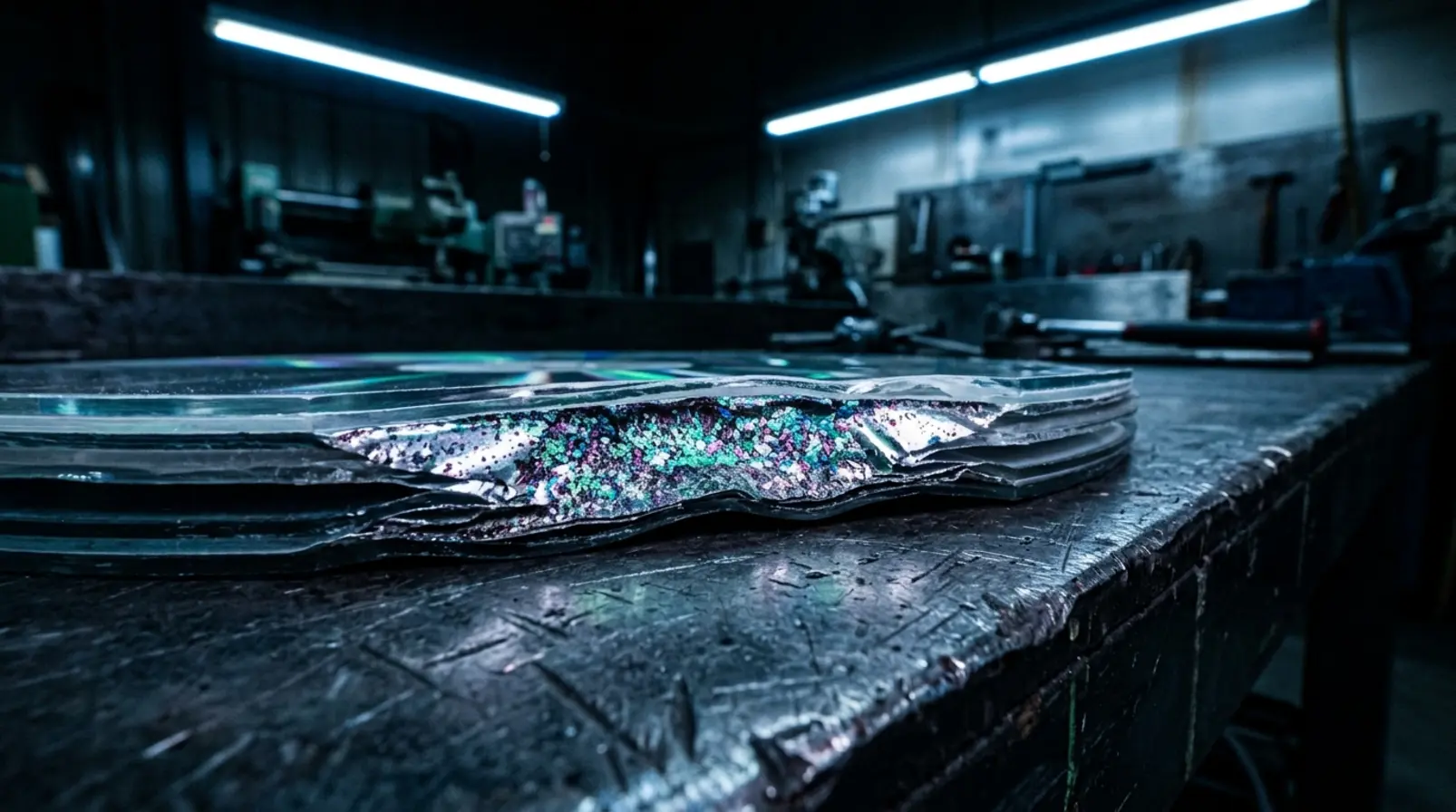
That is why the people who repair CRTs matter as much as the screens themselves. The expertise required to safely diagnose and repair arcade monitors is getting rarer. CRT work involves high voltage, heavy glass, specialized parts, and failure modes that most modern electronics repair no longer touches. Even unplugged displays can retain dangerous charge, making proper discharge and handling procedures essential.
The result is a double scarcity. The tubes are disappearing, and so is the repair culture around them. A working CRT is not just a piece of glass. It is the endpoint of a supply chain that now runs through garages, forums, donor cabinets, retired technicians, old service manuals, and people stubborn enough to keep obsolete things alive.
Modern Alternatives to CRT Monitors for Arcade Cabinets
Modern alternatives have improved, and they matter. Some operators use 4:3 LCD replacement panels built specifically for arcade cabinets. UNICO’s Phoenix-series arcade replacement monitors, for example, are marketed as 4:3 LCD replacements that support legacy arcade signals such as CGA and EGA, alongside HDMI and VGA. For operators facing dead tubes and unavailable replacements, products like these can keep cabinets playable.
External scalers have also become far more sophisticated. The RetroTINK-4K is a high-end video processor for retro gaming, supporting output resolutions up to 4K60, pixel-perfect scaling, advanced image processing, and CRT-simulation features. Devices like this can make old video signals more usable on modern displays and give players more control over how retro games are presented.
But alternatives remain alternatives. A good LCD replacement can be practical, reliable, and visually acceptable. A strong scaler can produce an excellent modern image. Neither fully replaces the physical behavior of a CRT inside an original cabinet: the curvature, the beam, the glow, the analog blending, the way the image seems to breathe rather than sit flatly on a panel.
This is the compromise at the center of arcade preservation. The goal is not always absolute originality at any cost. The goal is continuity: keeping the game playable while preserving as much of its intended experience as possible. Sometimes that means saving the tube. Sometimes it means making peace with a replacement. The important thing is not pretending the replacement is neutral.
1UP Arcade Brisbane’s Place in the International Arcade Community
1UP’s role extends beyond its local audience. The arcade is connected to competitive preservation culture through COIN-OP WARS, a worldwide arcade ranking system designed and developed by Stephen Holmes of 1UP Arcade as a free tool for classic arcade competition. That system turns original hardware into a networked scoreboard, linking the local act of standing at a cabinet to a broader international scene.
The venue also preserves unusual and regionally rare games. 1UP’s own listing for Demon Front says it is proud to be the only known arcade in Australia offering the rare IGS PGM run-and-gun game to the public. That kind of claim matters because arcade preservation is not only about famous machines. It is also about keeping playable access to games that never received the same cultural afterlife as Street Fighter II, Donkey Kong, or Daytona USA.
This is what separates a serious preservation venue from a bar with a few cabinets in the corner. 1UP’s value is not just that it has many games. It is that the games are maintained as public, playable machines, with their hardware identity treated as part of the experience.
The CRT question is the pressure point because it reveals how fragile that model is. A ROM can be copied. A cabinet can be photographed. Artwork can be reproduced. But the experience of standing in front of an original arcade machine, looking into a curved tube while the board drives the display it was designed for, is harder to preserve. It requires hardware, space, maintenance, voltage, expertise, and stubbornness.
The Glow Is the Archive
1UP Arcade Brisbane is easy to describe as a fun place to play old games. That is true, but too small. The more interesting description is that it is a living archive of arcade conditions. Not just code. Not just cabinets. Conditions.
Arcade history did not happen on neutral screens. It happened through glass, phosphor, wood, plastic, cigarette-scarred control panels, coin doors, marquee lights, bad carpet, loud rooms, and the pressure of someone waiting behind the player for the next turn. Every authentic cabinet carries some of that world with it. The CRT is one of the last parts of that world that cannot be easily faked.
That is why 1UP’s collection matters. Its machines do not merely display old games. They demonstrate the conditions under which those games made sense. The glow is not decoration. The glow is part of the archive.
Eventually, more cabinets will need modern replacements. Some compromises will be unavoidable. Preservation is not purity; it is decision-making under decay. But the fact that a place like 1UP is still trying to keep the original experience alive, in public, at scale, makes the work more than nostalgia.
It is a race against obsolescence with the lights still on.
Frequently Asked Questions About 1UP Arcade Brisbane and CRT Monitors
What is 1UP Arcade Brisbane?
1UP Arcade is Australia’s largest freeplay retro arcade, with more than 200 original arcade games and pinball machines. It is located at 55 Ipswich Road, Woolloongabba, Queensland, and charges a flat-rate entry fee for unlimited freeplay.
Why do arcade cabinets use CRT monitors instead of LCDs?
Classic arcade games were designed around CRT display behavior, including 4:3 geometry, scanlines, phosphor glow, analog softness, and immediate response. Replacing a CRT with an LCD can keep a cabinet playable, but it changes the visual and sometimes the gameplay feel of the original machine.
Are CRT monitors still being manufactured?
New arcade CRT monitors are no longer manufactured at meaningful scale. Operators and collectors rely on surviving stock, donor tubes, repairable old monitors, and technicians who still understand CRT repair.
What happens when an arcade CRT fails?
Depending on the fault, a CRT monitor may be repairable through chassis work, capacitor replacement, solder reflow, adjustment, cleaning, or donor parts. In other cases, the tube or chassis may be too far gone, forcing the operator to find a compatible replacement or use a modern display alternative.
What are the best alternatives to CRT monitors for retro arcade cabinets?
Some operators use 4:3 arcade replacement LCDs that support legacy signals such as CGA and EGA. Others use video processors such as the RetroTINK-4K for retro consoles and modern display chains. These solutions can be practical and impressive, but they remain compromises compared with a working CRT inside an original cabinet.
Can you visit 1UP Arcade Brisbane without booking?
Yes. 1UP Arcade offers flat-rate all-day entry with unlimited freeplay. The venue is open seven days a week, from 10am to 8pm, with late sessions until 10pm on Friday and Saturday.
'%3e%3cg id='Final-Copy-2_2_' transform='translate(1275.000000, 200.000000)'%3e%3cpath class='st0' d='M7.4,12.8h6.8l3.1-11.6H7.4C4.2,1.2,1.6,3.8,1.6,7S4.2,12.8,7.4,12.8z'/%3e%3c/g%3e%3c/g%3e%3c/g%3e%3cg id='final---dec.11-2020'%3e%3cg id='_x30_208-our-toggle' transform='translate(-1275.000000, -200.000000)'%3e%3cg id='Final-Copy-2' transform='translate(1275.000000, 200.000000)'%3e%3cpath class='st1' d='M22.6,0H7.4c-3.9,0-7,3.1-7,7s3.1,7,7,7h15.2c3.9,0,7-3.1,7-7S26.4,0,22.6,0z M1.6,7c0-3.2,2.6-5.8,5.8-5.8 h9.9l-3.1,11.6H7.4C4.2,12.8,1.6,10.2,1.6,7z'/%3e%3cpath id='x' class='st2' d='M24.6,4c0.2,0.2,0.2,0.6,0,0.8l0,0L22.5,7l2.2,2.2c0.2,0.2,0.2,0.6,0,0.8c-0.2,0.2-0.6,0.2-0.8,0 l0,0l-2.2-2.2L19.5,10c-0.2,0.2-0.6,0.2-0.8,0c-0.2-0.2-0.2-0.6,0-0.8l0,0L20.8,7l-2.2-2.2c-0.2-0.2-0.2-0.6,0-0.8 c0.2-0.2,0.6-0.2,0.8,0l0,0l2.2,2.2L23.8,4C24,3.8,24.4,3.8,24.6,4z'/%3e%3cpath id='y' class='st3' d='M12.7,4.1c0.2,0.2,0.3,0.6,0.1,0.8l0,0L8.6,9.8C8.5,9.9,8.4,10,8.3,10c-0.2,0.1-0.5,0.1-0.7-0.1l0,0 L5.4,7.7c-0.2-0.2-0.2-0.6,0-0.8c0.2-0.2,0.6-0.2,0.8,0l0,0L8,8.6l3.8-4.5C12,3.9,12.4,3.9,12.7,4.1z'/%3e%3c/g%3e%3c/g%3e%3c/g%3e%3c/g%3e%3c/svg%3e) Your Privacy Choices
Your Privacy Choices