


A Console Made of Wood
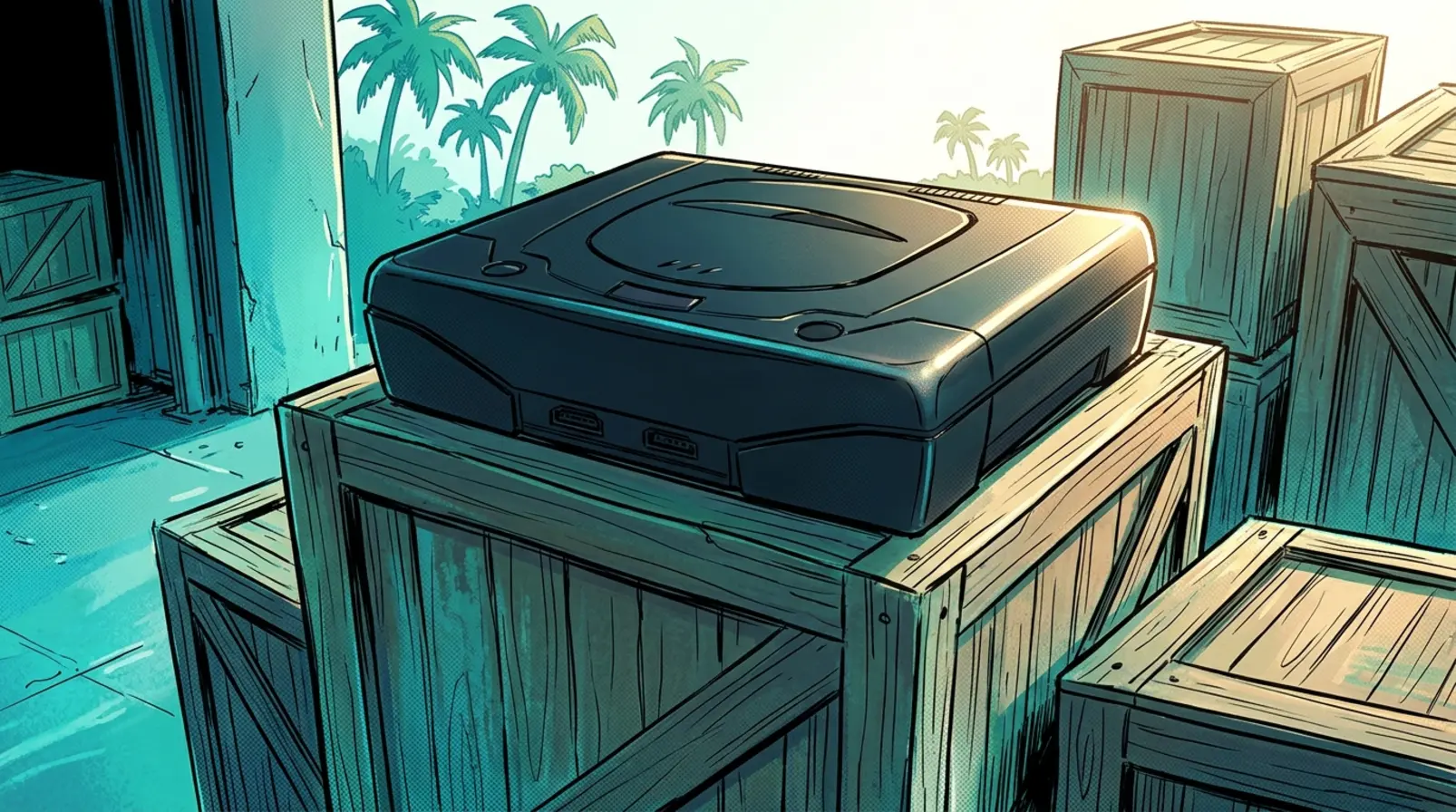
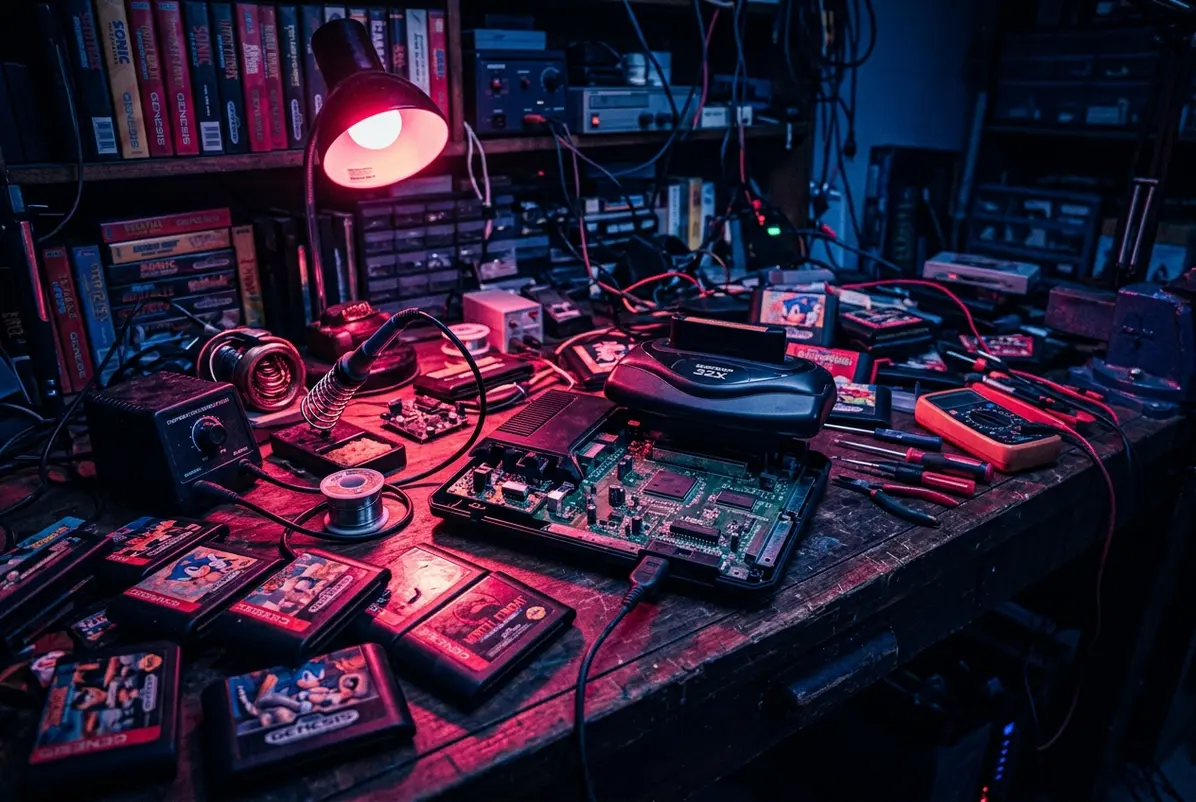
There is a photograph that circulates through retro gaming forums like a relic from a parallel universe. It shows a sleek, dark console with smooth contours and a cartridge slot, stamped with the Sega logo. It looks finished. It looks real. It was, in fact, a non-functional mock-up constructed from wood and plastic, built solely to represent the intended industrial design of the system. The Sega Neptune never breathed silicon. It never ran a game. And yet, three decades later, it is about to exist for the first time, because a small Brazilian company decided to will it into being.
The GF1 Neptune is being developed by the Brazilian company GamesCare. Originally envisioned by Sega in the mid-1990s as a combination of the Genesis and 32X in a single unit, the Neptune never made it past prototype mockups. Sega planned to release it in fall 1995, with a retail price under $200, but cancelled the project in October of that year, citing fears that it would dilute marketing for the Saturn while being priced uncomfortably close to their 32-bit offering.
The conventional take on the Neptune goes like this: it was a footnote, a dead branch on Sega’s chaotic mid-’90s hardware tree, interesting only as trivia. My take is that this reading misses the point entirely. The Neptune was not a footnote. It was a confession. Sega knew the 32X was a mess. Sega’s own vice president of marketing, Mike Ribero, admitted as much at the end of 1995: “I won’t lie to you, we screwed up with 32X. We overpromised and underdelivered.” The Neptune was supposed to be the apology, the clean integration that should have shipped from day one. Then Sega killed it before it could speak.
Why Brazil?
To anyone who hasn’t followed the peculiar geography of console history, the fact that a Brazilian company is resurrecting a cancelled Sega console might seem random. It is anything but. Tectoy is credited with the continued success of Sega consoles in Brazil far past their lifetimes worldwide, and at one point held an 80% market share of video games in the country. The company has sold 8 million Master System variants and 3 million Mega Drive variants.
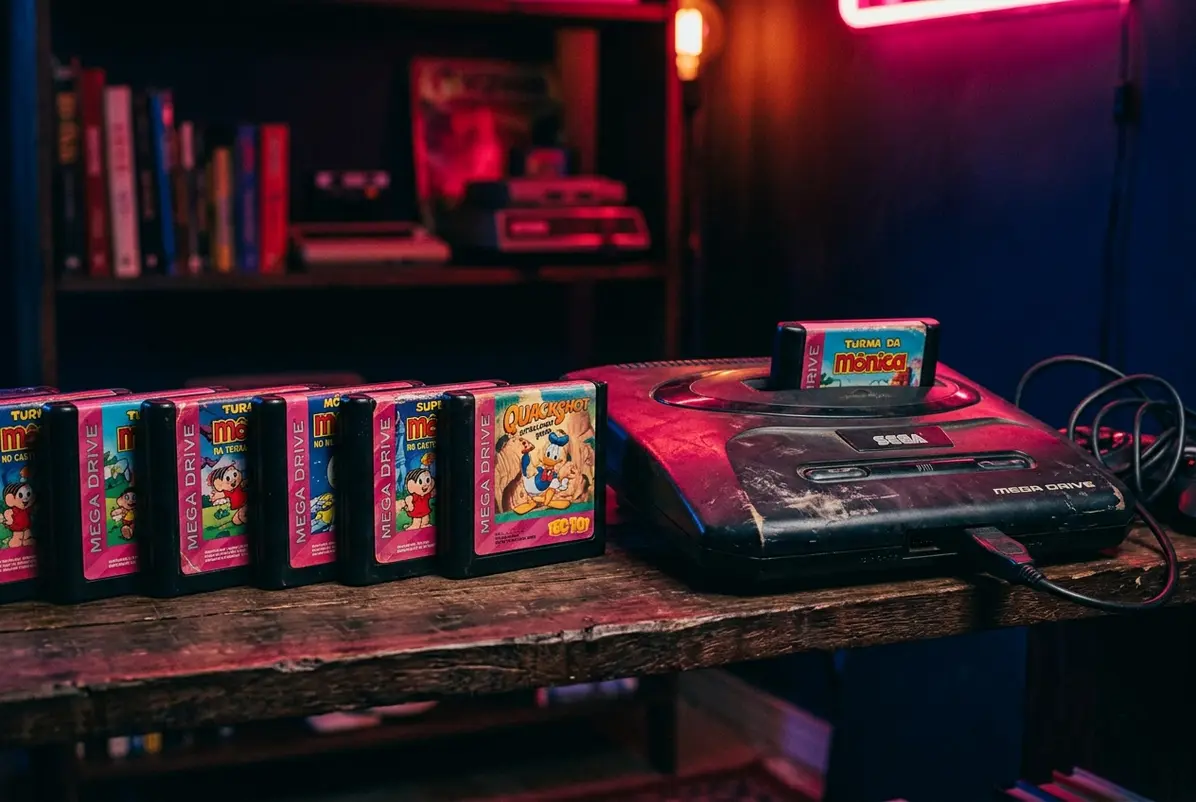
For many in the world, their own countries’ history of gaming was entirely different to what was happening elsewhere. In Brazil, a company named Tectoy launched the Sega Master System in 1989 and miraculously turned the country into a nation of Sega lovers, so much so that the Master System is being sold to this day. Sega’s primary competition, Nintendo, did not officially arrive in Brazil until 1993. By then, Sega’s roots ran deep.
What strikes me is how this isn’t just commercial history. It reads like cultural identity. Tectoy didn’t merely distribute hardware. They created original Master System and Mega Drive games released exclusively in Brazil, including Portuguese translations and alternate versions of existing titles. In a well-known example, they replaced the hero of the Wonder Boy series with Mônica, a girl with powerful strength, from the beloved Brazilian comic Monica’s Gang. Sega, in Brazil, became something Sega never managed to be in Japan or North America: a national institution.
GamesCare emerges from this rich Sega heritage. Based in São Paulo, the company specializes in retro gaming equipment repairs and modifications, giving them deep technical knowledge of Sega’s hardware architecture. It feels like the most natural origin story imaginable. Of course the people who kept these machines alive for decades would be the ones to build the console Sega abandoned.
FPGA, Not Emulation
The distinction matters, and it is worth lingering on. Rather than using salvaged parts or relying on software emulation, the GF1 Neptune is powered by FPGA technology, which recreates the hardware behavior of both Genesis and 32X consoles at a low level. Software emulation interprets instructions; FPGA recreates the circuitry itself in programmable silicon. The result, when done well, is behavior that mirrors original hardware with minimal latency.
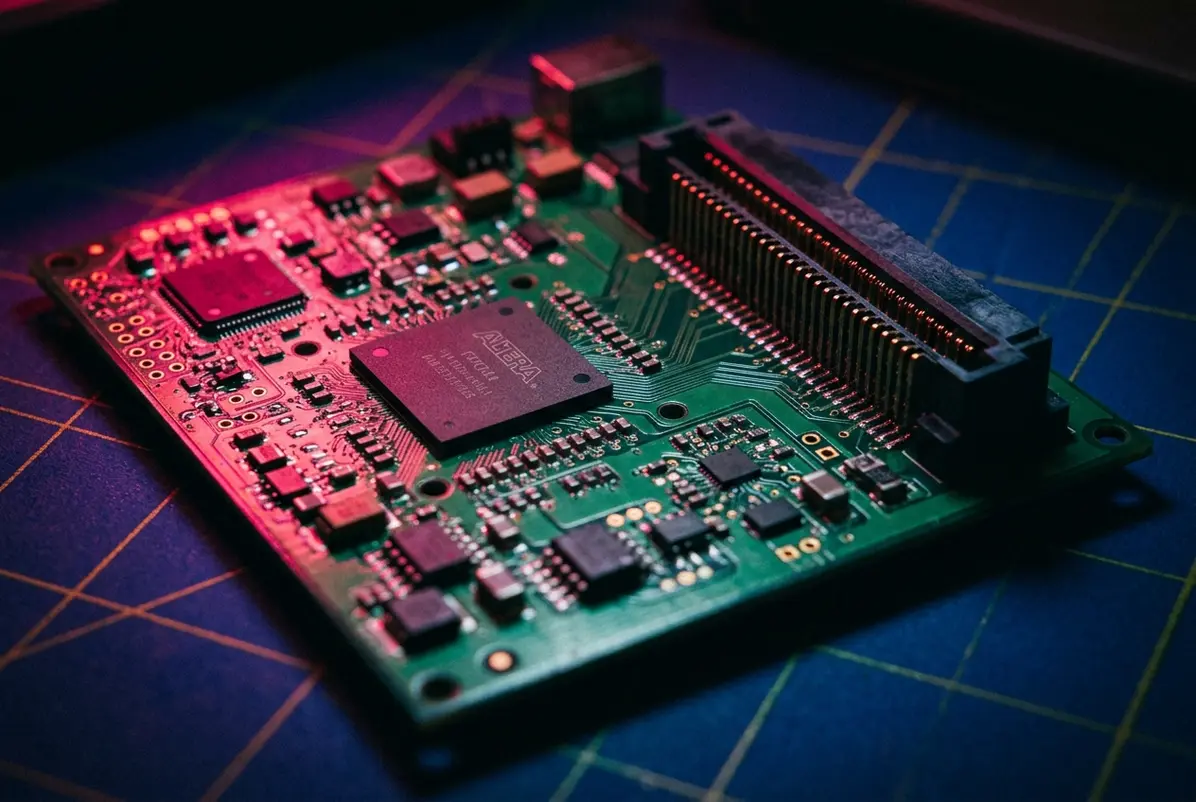
Just like the original concept, the GF1 Neptune will be capable of playing Genesis/Mega Drive and 32X game cartridges and will be compatible with Genesis accessories and the Sega CD add-on. Unlike the Sega Neptune, the GF1 will leverage modern FPGA technology to output games in 1080p high definition and feature a built-in online store for purchasing and downloading indie Genesis games. In online discussions, some enthusiasts have wondered whether this makes the GF1 more of a spiritual successor than a faithful recreation. There’s a case to be made for both readings, but to me, the indie storefront is what separates GamesCare from the preservation purists. They’re not building a museum piece. They’re building a living platform.
GamesCare had to push the machine’s release to 2026, but has now released a video showing the 32X FPGA core in action, with the system running Knuckles’ Chaotix from a Mega EverDrive Pro flash cartridge. The team says it has been “working with total dedication,” and that the console is now “up and running” with the “main planned cores,” which are Mega Drive, Master System, and 32X.
No Crowdfunding. No Pre-Orders. No Excuses.
Here is where the counter-narrative gets interesting. The FPGA retro console space has been scarred by broken promises. Ambitious projects have taken money upfront and then gone quiet for months or years. GamesCare has committed to bringing the GF1 Neptune to the community “without any crowdfunding or pre-orders,” stating that they want everyone to “invest their money only after experiencing the console through independent reviews.”
Reasonable people might disagree, but I think this is the single most significant decision GamesCare has made. In a niche where trust has been burned repeatedly, refusing to take money before the product exists is a radical act of confidence. Or faith. Or stubbornness. Whatever it is, it lands as refreshing.
Originally slated to have begun pre-orders in December 2025, the GF-1 Neptune has been pushed back in an effort to ensure that GamesCare’s quality standards are met. The company stated that the delay will enable it to “ensure that both the software and the cores provide a stable and high-quality experience.” In a space where delays usually trigger panic, the online reaction has been remarkably patient. Enthusiasts in retro gaming communities seem to understand that getting 32X compatibility right is a genuine technical challenge. Even on original hardware, 32X games were known for their spotty compatibility.
The Console as Cultural Artifact
The popular framing of the GF1 Neptune focuses on hardware specs and FPGA cores. That framing is accurate but incomplete. To me, the deeper story is about who gets to finish the sentence that Sega left dangling in 1995. It was not Analogue. It was not a Silicon Valley startup. It was a repair shop in São Paulo, staffed by people who grew up in a country where Sega wasn’t a runner-up to Nintendo but the dominant force in gaming.
In an interview with Retro Dodo, GamesCare explained their motivation: “My feeling as a fan is greater than that of a businessman, and the idea came a few years ago to recreate an iconic console like this, though we knew it would only be possible using FPGA.” They added: “With a lot of patience and luck, we found the right designers and development began.”
I think there is something worth sitting with in that statement. The GF1 Neptune is not a product born from market analysis. It is a product born from longing. The announcement at Gamescom Latam 2024 sent waves through the retro gaming community. In forum discussions, collectors have debated whether the GF1 qualifies as “the real Neptune” or merely a tribute. It feels like a false binary. The original Neptune was made of wood. This one plays cartridges. By any functional definition, the GF1 is more real than the thing it’s named after.
Sega’s mid-’90s implosion is well documented. The company was supporting five different consoles, as well as the Sega CD and 32X add-ons , and the internal politics between Sega of Japan and Sega of America were corrosive. The Neptune was collateral damage. But hardware doesn’t care about corporate politics. The circuits that should have existed in 1995 are being built now, in 2026, by people who never stopped caring about the machine Sega walked away from. In my view, that is not just preservation. That is devotion with a soldering iron.
'%3e%3cg id='Final-Copy-2_2_' transform='translate(1275.000000, 200.000000)'%3e%3cpath class='st0' d='M7.4,12.8h6.8l3.1-11.6H7.4C4.2,1.2,1.6,3.8,1.6,7S4.2,12.8,7.4,12.8z'/%3e%3c/g%3e%3c/g%3e%3c/g%3e%3cg id='final---dec.11-2020'%3e%3cg id='_x30_208-our-toggle' transform='translate(-1275.000000, -200.000000)'%3e%3cg id='Final-Copy-2' transform='translate(1275.000000, 200.000000)'%3e%3cpath class='st1' d='M22.6,0H7.4c-3.9,0-7,3.1-7,7s3.1,7,7,7h15.2c3.9,0,7-3.1,7-7S26.4,0,22.6,0z M1.6,7c0-3.2,2.6-5.8,5.8-5.8 h9.9l-3.1,11.6H7.4C4.2,12.8,1.6,10.2,1.6,7z'/%3e%3cpath id='x' class='st2' d='M24.6,4c0.2,0.2,0.2,0.6,0,0.8l0,0L22.5,7l2.2,2.2c0.2,0.2,0.2,0.6,0,0.8c-0.2,0.2-0.6,0.2-0.8,0 l0,0l-2.2-2.2L19.5,10c-0.2,0.2-0.6,0.2-0.8,0c-0.2-0.2-0.2-0.6,0-0.8l0,0L20.8,7l-2.2-2.2c-0.2-0.2-0.2-0.6,0-0.8 c0.2-0.2,0.6-0.2,0.8,0l0,0l2.2,2.2L23.8,4C24,3.8,24.4,3.8,24.6,4z'/%3e%3cpath id='y' class='st3' d='M12.7,4.1c0.2,0.2,0.3,0.6,0.1,0.8l0,0L8.6,9.8C8.5,9.9,8.4,10,8.3,10c-0.2,0.1-0.5,0.1-0.7-0.1l0,0 L5.4,7.7c-0.2-0.2-0.2-0.6,0-0.8c0.2-0.2,0.6-0.2,0.8,0l0,0L8,8.6l3.8-4.5C12,3.9,12.4,3.9,12.7,4.1z'/%3e%3c/g%3e%3c/g%3e%3c/g%3e%3c/g%3e%3c/svg%3e) Your Privacy Choices
Your Privacy Choices