

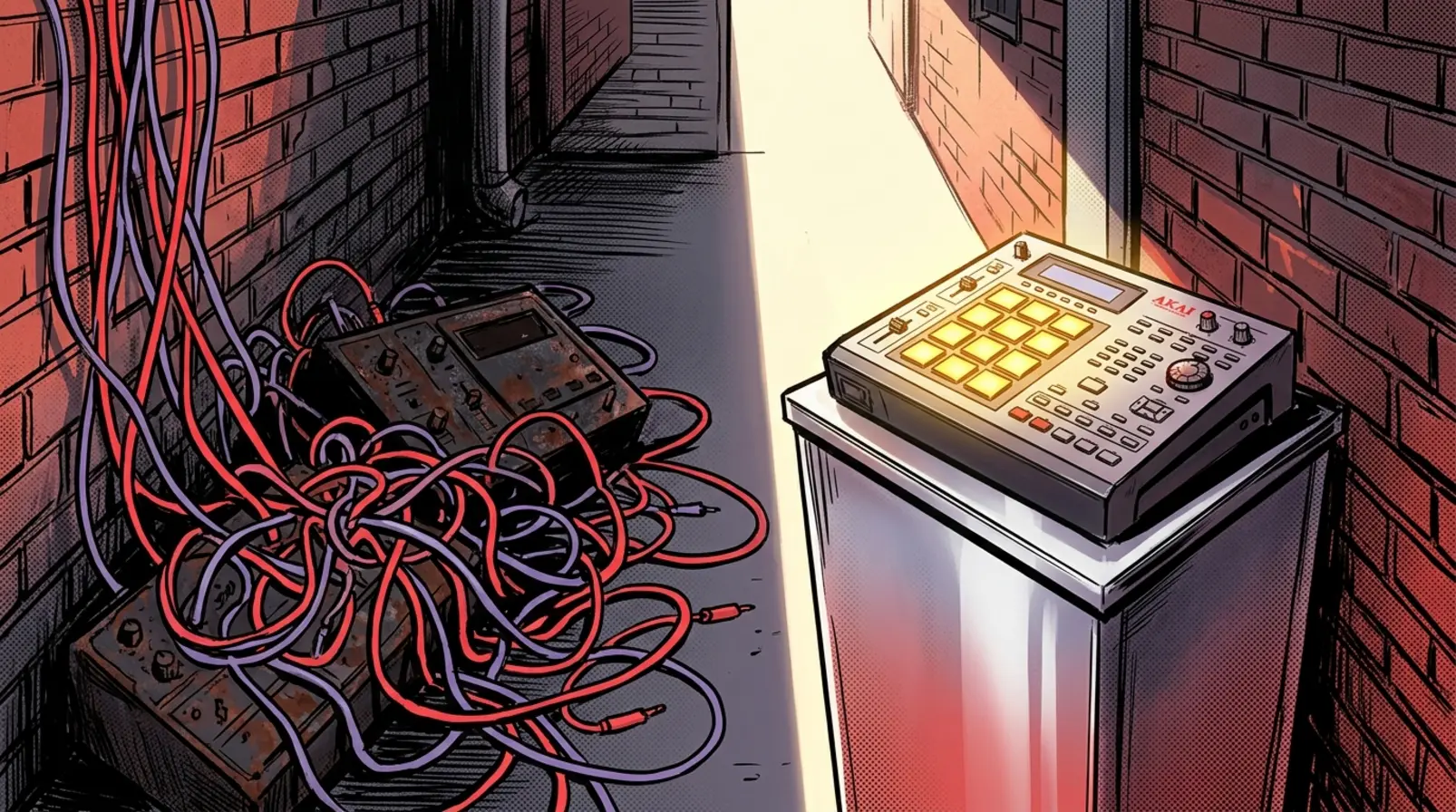

The Firmware Update That Changed the Instrument
There is a particular kind of grief that only gear people understand. It hits when a manufacturer updates the firmware on your instrument and the thing that made it yours vanishes behind a new menu structure. You did not lose the hardware. You lost the workflow.
In the MPC world right now, that grief is loud.
The transition from MPC2 to MPC3 introduced significant architectural changes, most notably what Akai describes as the “unification of tracks and programs into a single track container”. For longtime users, that was not just a software update. It was a philosophical rupture. The old separation between Tracks and Programs was messy, powerful, and deeply familiar. MPC3 made the system cleaner, but it also made some of the old muscle memory feel homeless.
In my view, though, the community is mourning something that was never as elegant as memory makes it. The old MPC workflow was not a cathedral. It was a beautiful, productive mess. And Akai’s decision to tame it, while painful, may be the most honest thing the company has done in years.
What Actually Changed
Let’s be specific, because specificity matters more than nostalgia. In MPC2, a Program could be used across multiple Tracks and Sequences in ways that made the machine feel unusually loose. You could build patterns, swap Programs around, reuse kits, and treat the relationship between performance, sequence, and sound source as something flexible rather than fixed.
MPC3 changes that relationship. Under the new architecture, Programs and Tracks are unified into a single track container. Akai’s FAQ explains that MPC2 projects can be loaded into MPC3, but warns that they “may not load with identical behaviour” because of those architectural changes. Akai recommends saving a new copy of MPC2 projects before importing them, which is the kind of sentence that makes longtime users feel a cold breeze.
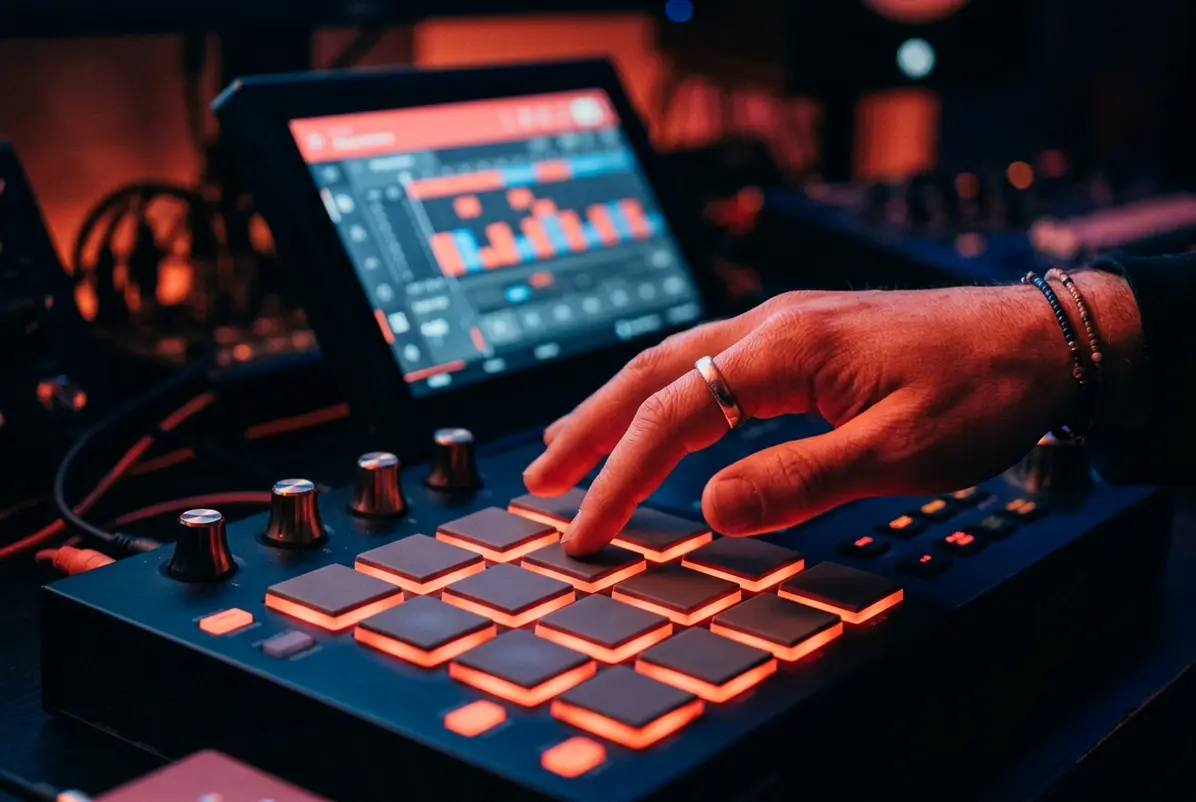
The Track Mute behavior became another flashpoint. Longtime users were used to treating Track Mutes as part of sequence-based composition and live arrangement. In the MPC3 transition, users objected that mutes behaved more globally than they expected, flattening a performance habit that had become central to how many people built songs. The practical complaint was simple: the old MPC let you treat arrangements like scenes in motion. The new one seemed more determined to organize them.
That frustration is legitimate. The MPC has never been only a sequencer. It is a performance instrument. A change to muting, Program assignment, or project import behavior is not just a database migration. It changes how the hands think.
But I also think the outrage misses something important. The old way was powerful because it was strange. It was not automatically better because it was strange.
The Mythology of the Old Way
The MPC has always been more than a box. It is one of the few pieces of music hardware that became a cultural language. Roger Linn, who had already designed the LM-1 and LinnDrum, created the original MPC concept with Akai, and the MPC60 arrived in 1988 as a combined sampler, sequencer, and pad-based production workstation. Its genius was not only technical. It gave rhythm a new surface.
The MPC became inseparable from hip-hop production because it made sampling tactile. A producer could chop sound into pads, finger-drum with feel, and build tracks from fragments that behaved like an instrument rather than a spreadsheet. That legacy is not marketing fluff. J Dilla’s Akai MPC3000 Limited Edition is part of the collection of the Smithsonian National Museum of African American History and Culture, a physical recognition of how deeply the machine shaped modern beatmaking. The Smithsonian identifies it as a MIDI Production Center 3000 Limited Edition used by J Dilla.
That is a legacy worth protecting. But here is the uncomfortable part: the workflow people are mourning was not frozen in amber by Roger Linn. The MPC3000 was the last product of the Akai/Roger Linn collaboration. Akai continued building MPCs long after Linn’s direct involvement ended. Linn himself later criticized Akai’s post-collaboration direction, telling Attack Magazine that, from what he had seen, Akai seemed to be making slight changes to his old 1986 designs, “basically rearranging the deck chairs on the Titanic”.
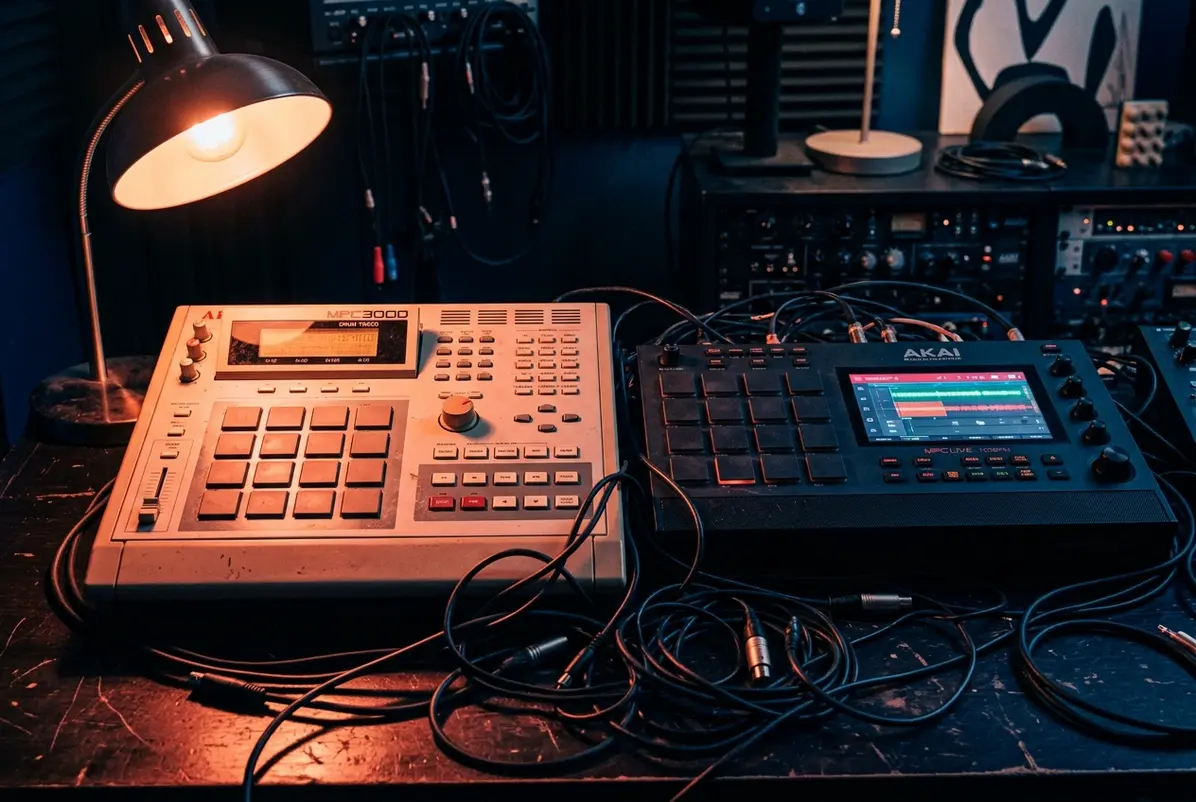
That quote cuts both ways. It is easy to use it as a weapon against modern Akai. But it also complicates the idea that any one historical MPC workflow is sacred. The MPC has always been a machine in revision. The myth is that there was once a pure form. The reality is that every generation inherited compromises from the last one and turned them into habits.
To me, the old MPC workflow was a beautiful accident. It emerged from constraints: limited screens, limited memory, limited sampling time, hardware-first thinking, and a sequencing model that made sense because the machine could not behave like a modern DAW. Users turned those limits into style. That matters. But a style born from constraint is not automatically a design principle forever.
The Pro Pack Problem
None of this means Akai handled the transition perfectly. The cleanest criticism of MPC3 is not that Akai tried to modernize the platform. It is that the modernization arrived with a new line between the free update and the paid future..
Akai’s MPC Pro Pack adds features including Clip Launching, Matrix and Clip Edit modes, enhanced effects, and other performance-oriented tools. Akai’s support page also highlights Clip Launching and the Super Warp Algorithm among the Pro Pack features. The Pro Pack support page presents it as an expansion to the MPC workflow rather than a simple bug-fix update.
That is where the optics get ugly. Synth Anatomy reported that the MPC 3.6 update was available as a free download for existing hardware users, while the MPC Pro Pack launched at an introductory price of $99, down from $199, and was free for MPC Live III users. That split made the transition feel, to some users, like two things happening at once: Akai was rewriting the MPC’s architecture for everyone, then charging extra for some of the features that made the new direction feel complete.
That is the real Pro Pack problem. It is not that companies should never charge for new features. Musicians understand paid expansions. The problem is emotional timing. When a company changes the workflow people already own, then sells part of the future as an add-on, the upgrade starts to feel less like generosity and more like leverage.
That feeling may not be entirely fair. Development costs money. Standalone hardware needs ongoing software work. Clip launching, time-stretching improvements, effects, and performance tools do not build themselves. But gear loyalty is not rational accounting. It is trust. Once the workflow changes, every paywall feels louder.
What Comes After the Frontier
The real tension is not only about Track Mutes or Program assignments. It is about what the MPC is becoming.
The modern MPC is no longer just a drum machine, sampler, and sequencer. It is a standalone production environment with plugin instruments, audio tracks, stem tools, arrangement features, touchscreens, CV, MIDI, USB, Ableton integration, and now clip-launching workflows that pull it even closer to the DAW world. MusicRadar’s review of the MPC Live III described the modern MPC as a powerful standalone production box and noted clip launching as one of its significant additions. That direction is not subtle.
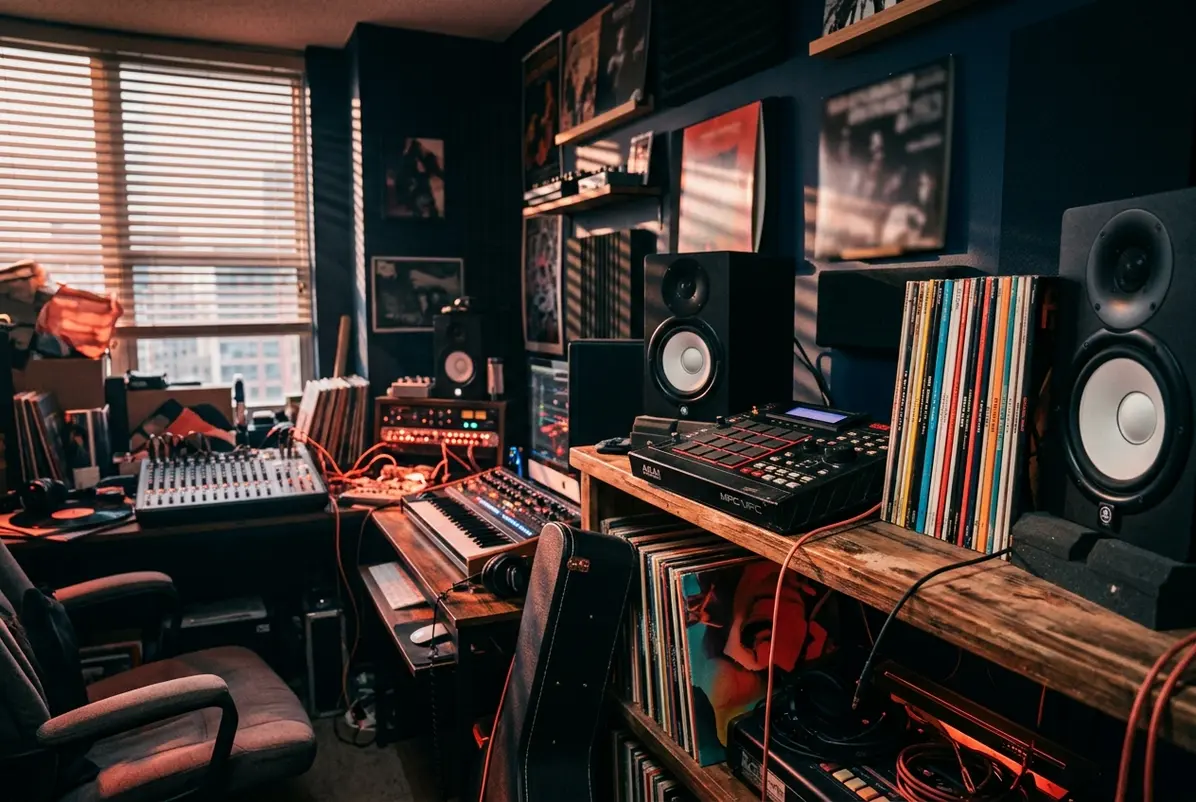
That is the uncomfortable truth under the whole argument. The MPC is converging with the DAW. The question is whether that convergence destroys what made the MPC special or whether the MPC was always heading here.
Reasonable people can disagree. To longtime users, the old workflow was not a bug. It was the point. The non-linear weirdness, the separation between Program and Track, the sequence-based performance habits, the sense that the machine did not think like a computer — all of that gave the MPC its feel. Flatten too much of it, and the fear is obvious: why not just use a DAW on a big screen?
But to newer users, the old workflow could feel like a private language spoken by people who had already suffered through it. The distinction between Tracks, Programs, Sequences, Songs, and the invisible logic connecting them was powerful once learned, but not always inviting. MPC3 is Akai’s attempt to make the instrument legible to a generation that expects a production environment to behave more like the software it already knows.
That is not betrayal. It is a trade.
The Taming of the Wild Machine
My take is that the old MPC workflow was a wild machine, and wild machines create devotion precisely because they resist being smoothed out. You learn their corners. You build rituals around their limitations. You begin to confuse friction with identity because, after enough years, the friction really does become part of your music.
That is why MPC3 hurts. It does not simply add features. It tells longtime users that some of the old rituals were not sacred architecture. They were technical debt.
Akai could have handled that message with more care. It could have communicated the philosophical shift more clearly. It could have offered more legacy behavior options. It could have made the paid/free split feel less like a line between old loyalty and new hardware. Those criticisms are fair.
But the direction itself is not hard to understand. The MPC cannot remain forever as a museum of 1990s sequencing habits while also competing as a modern standalone production system. At some point, the instrument has to decide whether it is preserving a workflow or building one.
The grief is real. The anger is understandable. A workflow is not just a workflow when people have built songs, muscle memory, and personal history inside it. But the frontier closed. The MPC is no longer a strange box at the edge of digital music. It is a mature platform trying to become a modern studio without losing its hands.
Whether Akai succeeds depends on what happens next. If MPC3 becomes a cleaner foundation for better performance, deeper arrangement, and fewer old contradictions, the pain may eventually look like a necessary break. If it becomes a DAW-shaped compromise with the best parts sold back piecemeal, the backlash will age very differently.
For now, the pads are still there. The swing is still there. The argument is still there. That may be the most MPC thing about MPC3: even when the machine changes, the community keeps sequencing grief into rhythm.


'%3e%3cg id='Final-Copy-2_2_' transform='translate(1275.000000, 200.000000)'%3e%3cpath class='st0' d='M7.4,12.8h6.8l3.1-11.6H7.4C4.2,1.2,1.6,3.8,1.6,7S4.2,12.8,7.4,12.8z'/%3e%3c/g%3e%3c/g%3e%3c/g%3e%3cg id='final---dec.11-2020'%3e%3cg id='_x30_208-our-toggle' transform='translate(-1275.000000, -200.000000)'%3e%3cg id='Final-Copy-2' transform='translate(1275.000000, 200.000000)'%3e%3cpath class='st1' d='M22.6,0H7.4c-3.9,0-7,3.1-7,7s3.1,7,7,7h15.2c3.9,0,7-3.1,7-7S26.4,0,22.6,0z M1.6,7c0-3.2,2.6-5.8,5.8-5.8 h9.9l-3.1,11.6H7.4C4.2,12.8,1.6,10.2,1.6,7z'/%3e%3cpath id='x' class='st2' d='M24.6,4c0.2,0.2,0.2,0.6,0,0.8l0,0L22.5,7l2.2,2.2c0.2,0.2,0.2,0.6,0,0.8c-0.2,0.2-0.6,0.2-0.8,0 l0,0l-2.2-2.2L19.5,10c-0.2,0.2-0.6,0.2-0.8,0c-0.2-0.2-0.2-0.6,0-0.8l0,0L20.8,7l-2.2-2.2c-0.2-0.2-0.2-0.6,0-0.8 c0.2-0.2,0.6-0.2,0.8,0l0,0l2.2,2.2L23.8,4C24,3.8,24.4,3.8,24.6,4z'/%3e%3cpath id='y' class='st3' d='M12.7,4.1c0.2,0.2,0.3,0.6,0.1,0.8l0,0L8.6,9.8C8.5,9.9,8.4,10,8.3,10c-0.2,0.1-0.5,0.1-0.7-0.1l0,0 L5.4,7.7c-0.2-0.2-0.2-0.6,0-0.8c0.2-0.2,0.6-0.2,0.8,0l0,0L8,8.6l3.8-4.5C12,3.9,12.4,3.9,12.7,4.1z'/%3e%3c/g%3e%3c/g%3e%3c/g%3e%3c/g%3e%3c/svg%3e) Your Privacy Choices
Your Privacy Choices