


Walk into almost any vintage game store in 2026 and you’ll notice something strange: shelves packed with cartridges nobody seems eager to buy, price tags fading at the edges, owners behind the counter scrolling through their phones and wondering where all the collectors went.
The retro game market is not disappearing, but it is correcting hard. Sellers say inventory can sit for months, even when priced below recent comps. A copy of Chrono Trigger that might have triggered a bidding war in 2021 now sits quietly in a display case at around $200, waiting for the right buyer instead of the first buyer.
At the same time, companies are still trying to package nostalgia for a broader audience. At CES 2025, My Arcade unveiled its Gamestation Retro line, including a $199 portable loaded with more than 100 built-in games from Bandai Namco and Capcom. The timing felt almost ironic. New hardware built around retro appeal is arriving just as parts of the physical collecting market are cooling off.
The Market Finally Cooled
During the pandemic-era boom, retro prices rose so quickly that many buyers started treating old games less like toys or cultural artifacts and more like speculative assets. That was always going to end badly.
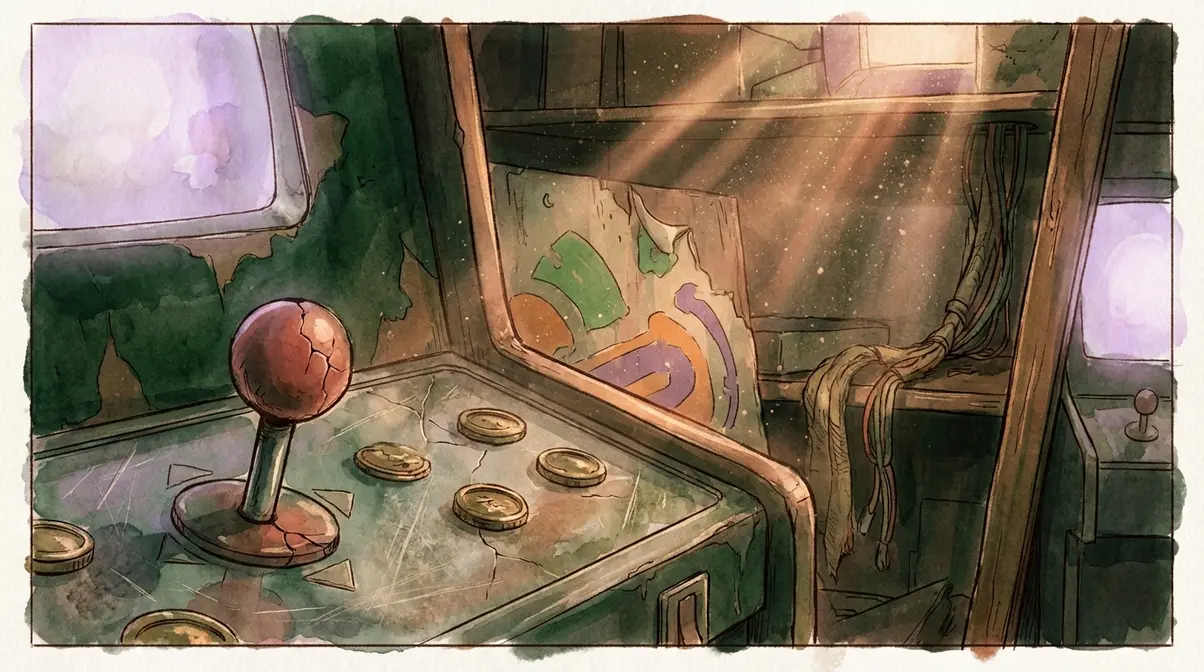
Original arcade cabinets that once commanded $5,000 during the peak of the frenzy now often struggle to move closer to $3,000. A clean, all-original Ms. Pac-Man cabinet can still attract serious interest, but the days of near-panic buying are gone. What looked like permanent appreciation now looks more like a classic bubble: too much money chasing too much nostalgia all at once.
The generational math helps explain it. Millennials and Gen X collectors powered the biggest surge, fueled by childhood attachment and adult income. But nostalgia has a shelf life. Younger buyers may love retro aesthetics, but they do not necessarily share the same connection to cartridges, CRTs, and the rituals that made original hardware feel sacred to older collectors.
That creates a split market. The rarest, cleanest, best-documented pieces still sell. Everything else sits longer, negotiates harder, and reminds sellers that “vintage” is not the same thing as “liquid.”
For companies operating in the space, that softening is not necessarily bad news. Vincent Gallopain of XOGO Consulting, which represents My Arcade, sees the opportunity in accessibility. If original hardware is becoming too expensive, too fragile, or too inconvenient for casual fans, reproduction hardware and licensed plug-and-play devices can step in where the collector market cannot.
Emulation Won the Accessibility Argument
While parts of the physical market are cooling, emulation keeps getting better, easier, and harder to ignore.
Projects such as gb-recompiled show how far fan-led preservation tools have advanced, converting Game Boy ROMs into native C binaries. Emulator ecosystems like RetroArch continue to expand across desktop, mobile, and handheld devices. Raspberry Pi builds, FPGA systems, and portable emulation handhelds have made it possible for more people to play older games than at any point since those games were new.
This is the part of the story that collectors sometimes resist, but it is also the part they cannot really defeat. Original hardware offers authenticity. Emulation offers access. In 2026, access is winning.
That does not mean the purists are wrong. They are not. Playing Super Metroid on an original Super Nintendo connected to a CRT is a different experience from playing it on a modern LCD through an emulator. The controller feels different. The image behaves differently. The tiny imperfections matter. For many players, those imperfections are the experience.
But emulation does something original hardware never could: it preserves at scale. According to the Video Game History Foundation, roughly 87 percent of classic U.S. video games are no longer commercially available. Cartridges degrade. Disc drives fail. Capacitors leak. Plastics yellow. Even when the software survives, the hardware required to play it becomes harder to maintain every year.
That leaves preservation in an uncomfortable place. Official channels remain limited, licensing remains messy, and legal protections for broad digital access remain weak. For all the hand-wringing around emulation, it is still doing much of the practical work of keeping game history playable.
The Arcade Comeback Was Real, Just Not in the Way Collectors Expected
Here is the twist: retro gaming did not vanish. It changed formats.
Arcade bars keep opening. Barcade has continued expanding, and cities across the United States now support venues that mix classic cabinets, pinball, food, and alcohol into something closer to a social nostalgia business than a preservation business. These places are not selling ownership. They are selling access, atmosphere, and memory.
That is why they can thrive even while the broader collector market cools. They are not asking customers to spend hundreds on a cartridge or thousands on a cabinet. They are asking them to spend one evening reliving a feeling.
The same logic applies to the high end of pinball and arcade collecting. Jersey Jack Pinball and Stern continue releasing expensive new machines aimed at operators and affluent enthusiasts. Those products are not really about retro preservation. They are luxury entertainment objects. In other words, they belong to a different economy entirely.
That is the central contradiction of the retro market in 2026. The culture is still alive. The demand for nostalgia is still real. But nostalgia no longer guarantees that physical media will appreciate, or even move quickly.
What the Crash Actually Means
It is tempting to frame this as a collapse. It is more accurate to call it a reckoning.
The retro slowdown is forcing the hobby to answer questions it avoided during the boom years. What are people actually paying for: preservation, status, or memory? Who gets access to game history when original copies become expensive collectibles? And what happens when the people with the deepest emotional attachment to this material stop being the primary market?
Collectors are right to value original hardware. Emulation advocates are right to value accessibility. These positions are not opposites so much as competing answers to the same problem.
That problem is easiest to see in classrooms, museums, and archives. At Indiana University Indianapolis, professor Matthew Powers once found that students in his video game history class had never played the original Super Mario Bros. He stopped the lecture, connected an NES, and let them experience it directly. His lab assistant, Haven Hamelin, helps keep that aging hardware operational so those moments remain possible.
That scene gets closer to the heart of the issue than any auction result or price chart. The real divide is not between original hardware and emulation. It is between people who can access game history and people who cannot.
A $200 copy of EarthBound preserves nothing if it lives forever behind acrylic. A flawless ROM dump solves only part of the problem if the surrounding context, hardware history, and cultural memory disappear. Preservation without access becomes hoarding. Access without context becomes flattening.
What Comes Next
The market will eventually settle. Some collectors will adapt. Others will exit. Prices on mid-tier material may continue softening, while genuinely rare and exceptional pieces hold their value better. Emulation will keep improving. Preservation groups will keep pushing. Commercial retro hardware will continue chasing the buyers who want convenience without the headaches of aging electronics.
But the most important question is no longer whether retro games still matter. They clearly do.
The real question is what, exactly, people are trying to save.
Is it the software?
Is it the hardware?
Is it the memory of being young, standing in front of a cabinet that promised adventure for a quarter?
The answer, inconveniently, is all of it.
That is what makes the 2026 correction worth paying attention to. It is not just a story about falling prices. It is a story about a hobby growing up, losing some of its speculative heat, and being forced to decide whether it cares more about ownership or survival.
Both still matter.
But for the first time in years, they no longer look like the same thing.


'%3e%3cg id='Final-Copy-2_2_' transform='translate(1275.000000, 200.000000)'%3e%3cpath class='st0' d='M7.4,12.8h6.8l3.1-11.6H7.4C4.2,1.2,1.6,3.8,1.6,7S4.2,12.8,7.4,12.8z'/%3e%3c/g%3e%3c/g%3e%3c/g%3e%3cg id='final---dec.11-2020'%3e%3cg id='_x30_208-our-toggle' transform='translate(-1275.000000, -200.000000)'%3e%3cg id='Final-Copy-2' transform='translate(1275.000000, 200.000000)'%3e%3cpath class='st1' d='M22.6,0H7.4c-3.9,0-7,3.1-7,7s3.1,7,7,7h15.2c3.9,0,7-3.1,7-7S26.4,0,22.6,0z M1.6,7c0-3.2,2.6-5.8,5.8-5.8 h9.9l-3.1,11.6H7.4C4.2,12.8,1.6,10.2,1.6,7z'/%3e%3cpath id='x' class='st2' d='M24.6,4c0.2,0.2,0.2,0.6,0,0.8l0,0L22.5,7l2.2,2.2c0.2,0.2,0.2,0.6,0,0.8c-0.2,0.2-0.6,0.2-0.8,0 l0,0l-2.2-2.2L19.5,10c-0.2,0.2-0.6,0.2-0.8,0c-0.2-0.2-0.2-0.6,0-0.8l0,0L20.8,7l-2.2-2.2c-0.2-0.2-0.2-0.6,0-0.8 c0.2-0.2,0.6-0.2,0.8,0l0,0l2.2,2.2L23.8,4C24,3.8,24.4,3.8,24.6,4z'/%3e%3cpath id='y' class='st3' d='M12.7,4.1c0.2,0.2,0.3,0.6,0.1,0.8l0,0L8.6,9.8C8.5,9.9,8.4,10,8.3,10c-0.2,0.1-0.5,0.1-0.7-0.1l0,0 L5.4,7.7c-0.2-0.2-0.2-0.6,0-0.8c0.2-0.2,0.6-0.2,0.8,0l0,0L8,8.6l3.8-4.5C12,3.9,12.4,3.9,12.7,4.1z'/%3e%3c/g%3e%3c/g%3e%3c/g%3e%3c/g%3e%3c/svg%3e) Your Privacy Choices
Your Privacy Choices