

One United Power
Somewhere in Kreuzberg, behind the anonymity of balaclavas and encrypted messages, a crew of spray-can operatives has been rewriting the grammar of graffiti for over two decades. 1UP, short for One United Power, is a graffiti crew from the district of Kreuzberg in Berlin, active since 2003. They have been described as “one of the most well-known graffiti crews in the world” and are known for their bombing, rooftop paintings, and wholecar and wholetrain works. To me, those descriptors barely scratch what makes them singular. Plenty of crews bomb hard. Few have built a mythology this airtight while remaining this prolific.
All of the members are anonymous, and some do not do solo graffiti, preferring only to tag as 1UP. That detail lands as more than operational security. It feels like a philosophical position: the collective supersedes the individual hand. Twenty years ago, members of the graffiti collective relinquished their individual artistic identities and tags to join forces under one name. The seed that sprouted in 2003 as a group of four friends in Kreuzberg grew to become the 30-plus member crew known as One United Power.
There have been said to be up to 55 members of different genders, with ages ranging from 20 to 40, and the members are not all German, representing various European countries. The group has had over 300 criminal charges filed against them, but none of the members have been caught so far. That statistic alone reads like a track listing for an album nobody was supposed to hear.
Actions, Not Exhibitions
What 1UP calls an “Action” is something closer to a choreographed heist than a painting session. An Action is a carefully coordinated and planned effort by the 1UP members to get their pieces completed and highly visible. The Action goes far beyond just the art; it’s in the execution of the plan and the energy of everyone involved. In my view, this is where 1UP splits from the broader street art world. They’re not making murals for Instagram. They’re staging events that happen to leave paint behind.
Members of the collective huddle in train stations for hours, waiting to spray the walls for the commuter rush or climb onto unsuspecting roofs to drip paint down the side of buildings. The crew and their photographers suffer casualties: slashed hands while climbing fences and a glass shower while pulling a train emergency brake. They stay up all night hoping to execute an Action before their day jobs start in the morning. As a Vice interview captured, the crew described leading “double lives as graffiti artists” alongside jobs and normal routines.
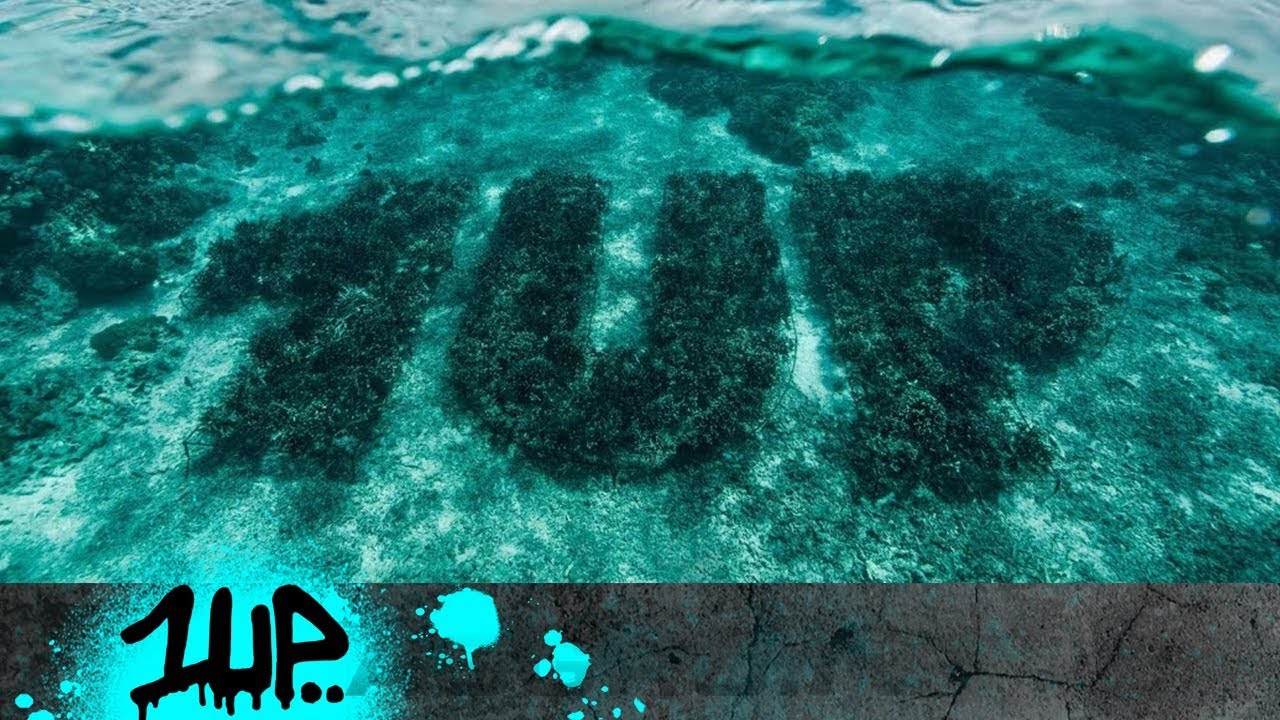
The scope of their canvas is staggering. Their work has appeared around the world, including an underwater graffiti piece out of live coral at Nusa Penida and a 2017 piece on the Mediterranean Sky shipwreck which was large enough to be visible from satellites. Located at Nusa Penida Island off Bali, the coral piece consists of a 3D installation in the shape of the group’s signature tag, serving as an artificial coral reef that encourages coral growth. That project, done in collaboration with PangeaSeed Foundation and Coral Guardian, turned vandalism’s most notorious practitioners into marine conservationists. What strikes me is how naturally the transition reads: if you’ve already tagged a shipwreck visible from space, the ocean floor is just the next frontier.
The Photographer Who Kept Up
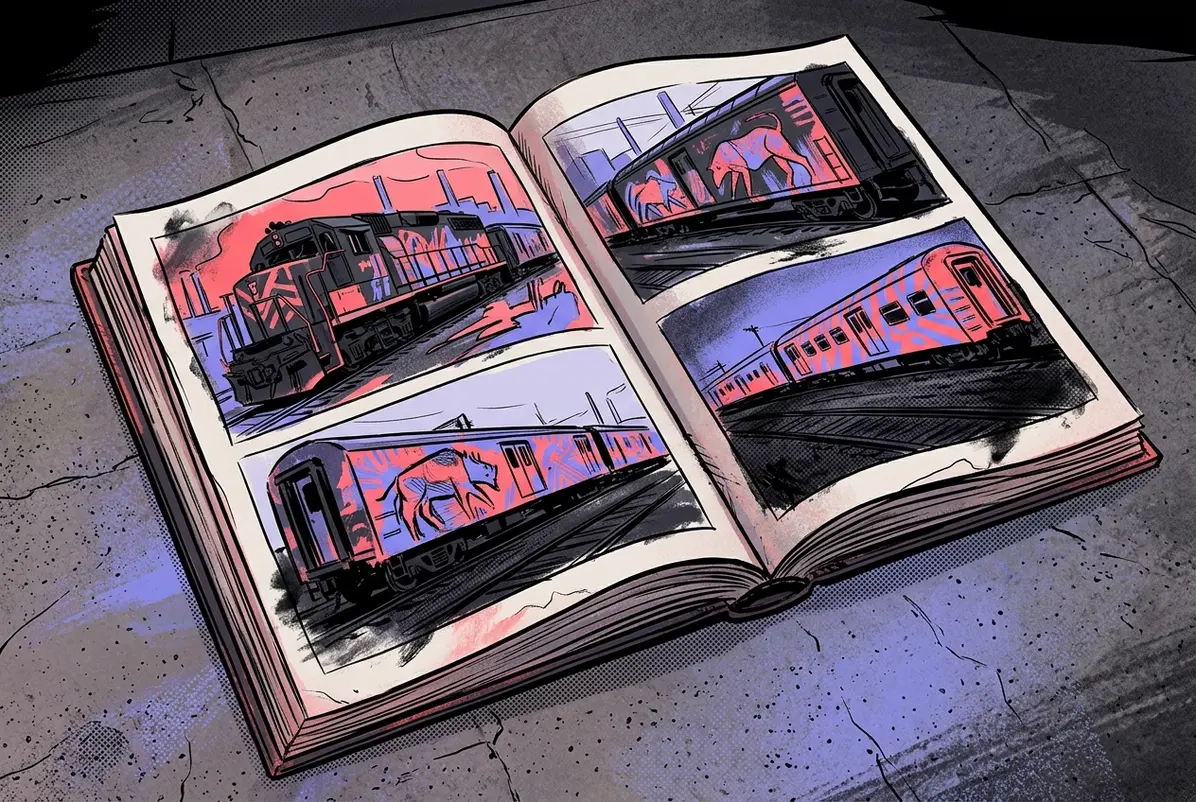
Graffiti is born to disappear. Trains get buffed. Walls get painted over. Rooftops weather into abstraction. The history of the form has always depended on whoever was holding the camera. Henry Chalfant is known as the most significant documentarian of New York City subway art of the late 1970s and 1980s. His photographs, along with the 1983 film he co-produced with Tony Silver, Style Wars, and the essential text Subway Art, a 1984 book co-authored with Martha Cooper, have immortalized this ephemeral art form.
Cooper’s connection to 1UP came decades later. In 2018, 1UP collaborated with graffiti photographer Martha Cooper as part of their One Week With 1UP tour. The resulting book, published through Urban Spree, paired Cooper and Berlin-based photographer Ninja K. with the crew for a week of sleepless nights. It was the second published book by and about the legendary Berlin-based crew. The Kreuzberg crew embarked Cooper and Ninja K. on a series of underground actions through tunnels, rooftops, featuring high-pressure fire extinguisher tags, roll-downs, street bombings, whole cars, and backjumps.
My take is that the Cooper collaboration was more than a photo op. It was a generational handshake. The woman who co-wrote what is still called “the graffiti bible” embedded herself with a crew operating under conditions she recognized from 1970s New York but amplified by encrypted communications, drone footage, and a level of coordination that would exhaust a film production crew. Cooper herself has said, “Neither Henry nor I ever thought that we were capturing every train. We didn’t think that we were archiving that era. And of course, we missed a lot.” That admission haunts the entire history of subway graffiti documentation.
Walls That Remember Themselves
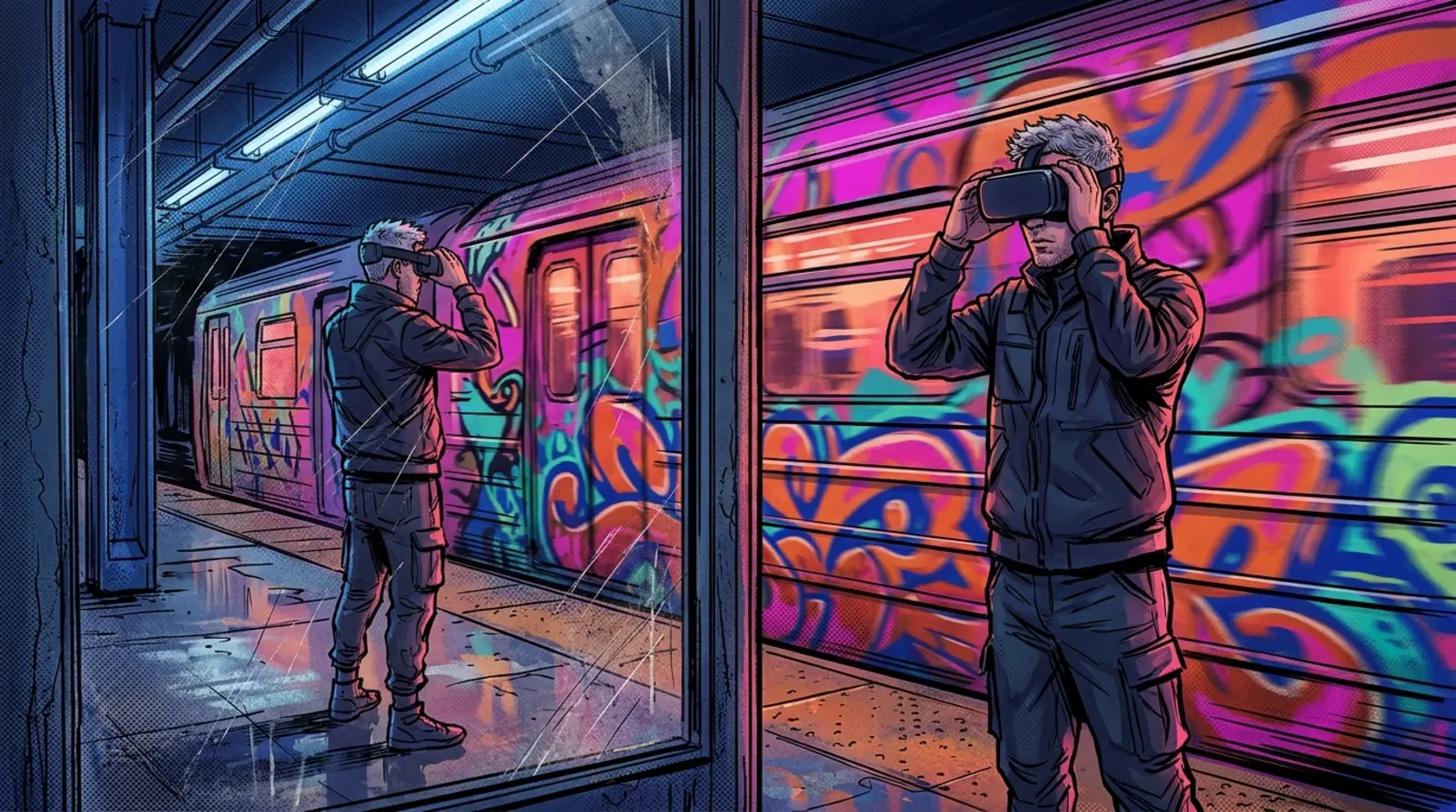
This is where the conversation tilts. As cities change and walls are repainted, the stories embedded in graffiti are at risk of being lost. But thanks to advances in 3D scanning and augmented reality, preservation is no longer confined to static photos or videos. VR graffiti simulators like Kingspray already let users paint in environments modeled after train yards and abandoned subway stations. Kingspray offers a range of detailed environments, from a dusky city rooftop, to a dark train yard at night, to an abandoned Subway Station.
In Berlin specifically, the artist Vermibus created the Immersion series, which used 360-degree video to preserve site-specific street art in VR. The VR artwork, part of the Immersion series, is now preserved on the Ethereum blockchain as an NFT. Vermibus recorded the physical work in situ using monoscopic 360-degree video to produce an immersive VR viewing experience long after the work’s removal. There’s a case to be made that this kind of project is what 1UP’s legacy demands: not the freezing of a single piece, but the preservation of a spatial experience. Standing on a platform. The hum of an incoming train. The scale of a wholecar piece as it rolls past your field of vision at speed.
Online discussions among graffiti enthusiasts have been circling this exact tension. Some see VR archives as the only way to preserve works that transit authorities scrub within 48 hours. Others worry that digitizing the experience strips it of the danger and illegality that give graffiti its meaning. Reasonable people might disagree, but I think both positions miss the point. The archive doesn’t replace the act. It just makes sure someone, somewhere, remembers it happened.
Advanced documentation techniques now include gigapixel photography that captures details invisible to the naked eye, 3D laser scanning that preserves exact spatial relationships, and augmented reality applications that allow viewers to experience historical street art in its original locations using mobile devices. These tools are already being deployed for other forms of ephemeral art. It reads like only a matter of time before someone builds a walkable VR reconstruction of a bombed-out Berlin U-Bahn station, complete with 1UP throwups dripping in the fluorescent light.
The Secession
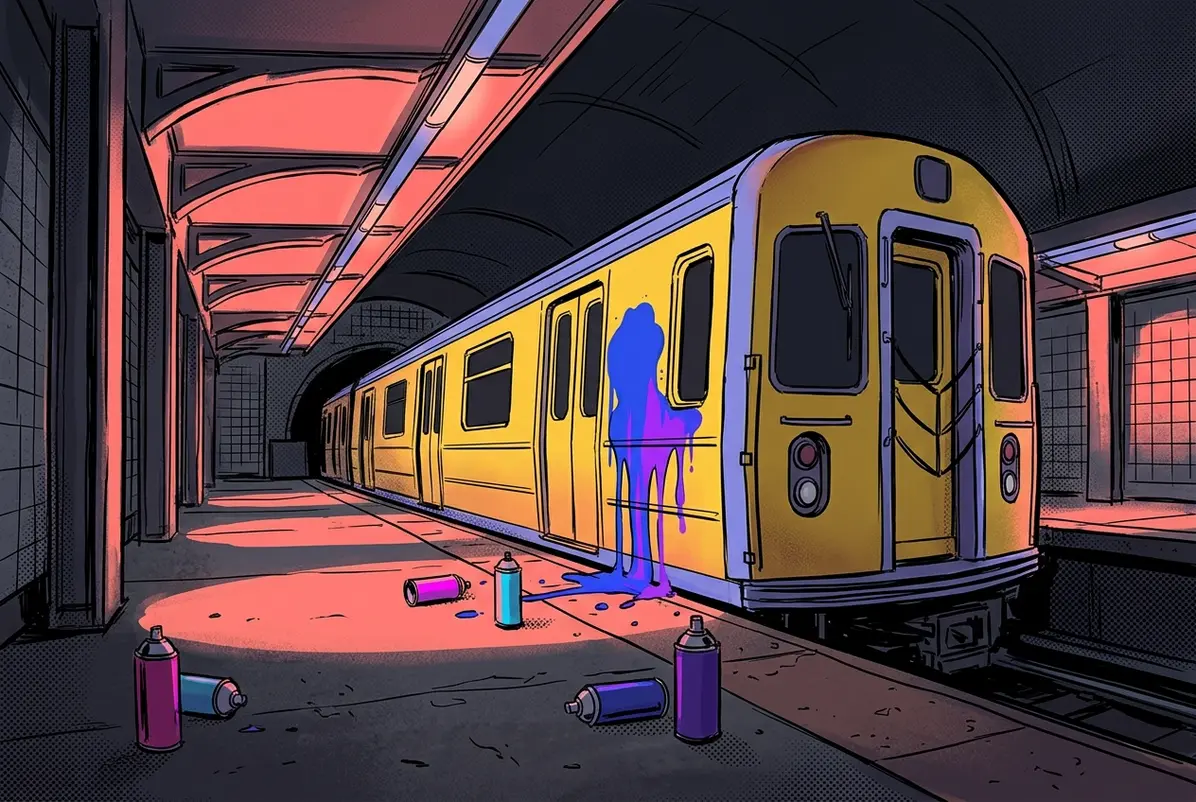
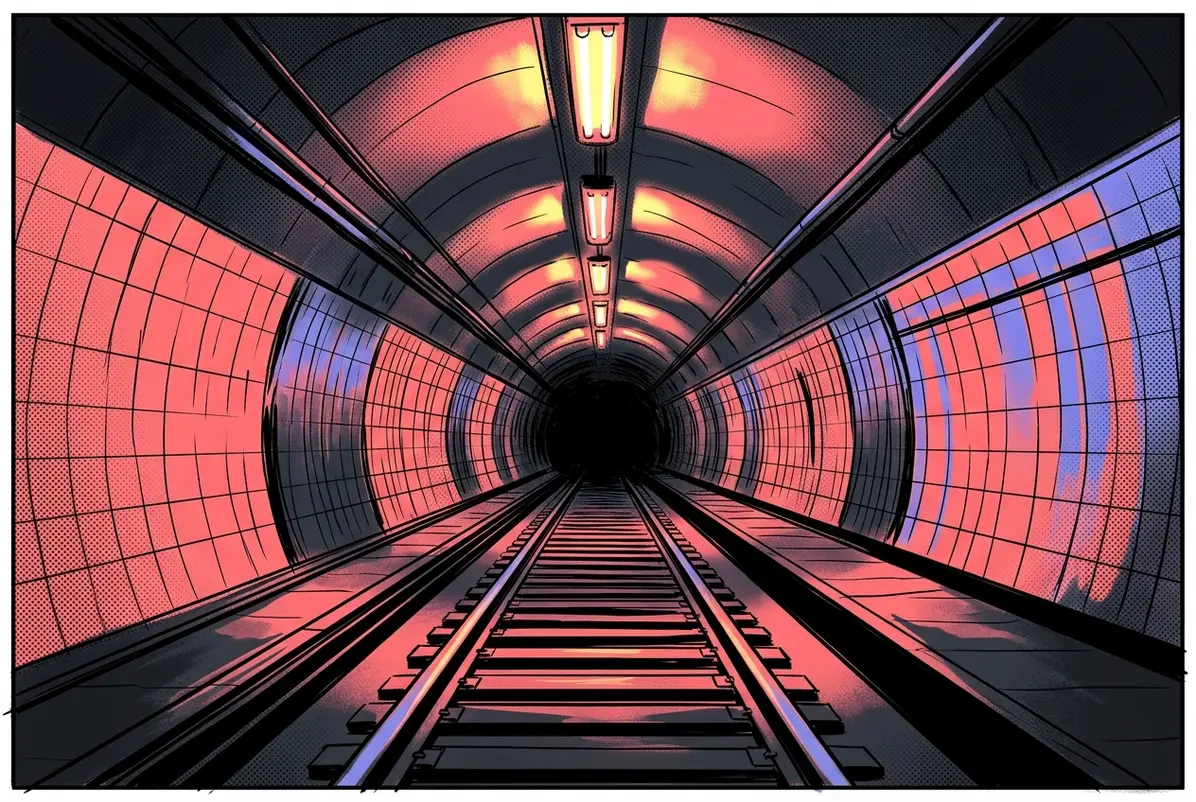
Opened in 1902, the Berlin U-Bahn is Germany’s most extensive underground network, serving 170 stations. Its ten operating lines and trademark yellow trains have become one of the most recognizable symbols of the city and, since the fall of the Berlin Wall in 1989, one of graffiti writers’ favorite painting surfaces. Inspired by the roots of the art form dating back to 1970s New York, over a hundred artists have been decorating wagons and stations, turning Berlin’s underground into Europe’s most prominent graffiti scene.
To me, the phrase “digital secession” captures something specific about what’s happening with subway graffiti archives. The physical work exists in defiance of ownership. The transit authority cleans it. The city criminalizes it. The weather erodes it. Every piece is, by design, a temporary occupation of someone else’s infrastructure. But when that piece gets scanned, photographed in gigapixel resolution, or reconstructed in a VR environment, it secedes from the physical world entirely. It can no longer be buffed. It can no longer be prosecuted. It just exists, floating in a server somewhere, outlasting the wall it was painted on.
1UP’s film One United Power was released in 2011 on DVD, and their book I Am 1UP was published in 2014. In collaboration with fellow German crew Berlin Kidz and artist Good Guy Boris, the group produced a performance and video art piece titled Graffiti Olympics using drone footage, released on 2 March 2018. Each of these is, in its own way, a secession from the street. A parallel record. A version of the work that doesn’t need the wall anymore.
It feels like 1UP has been building toward this without ever naming it. They’ve tagged coral reefs, shipwrecks, and rooftops visible only from drones. They’ve appeared in Counter-Strike: Global Offensive‘s Berlin-set Overpass map. A 1UP piece is visible in the video game Counter-Strike: Global Offensive, in the Overpass map which is set in Berlin. Whether the crew ever builds a dedicated VR archive is almost beside the point. Their work already lives in more dimensions than paint on concrete ever could.
The subway graffiti archive, in whatever form it ultimately takes, won’t be a museum. It’ll be something stranger and more honest: a space where the work exists exactly as long as someone cares enough to keep the server running. Which, when you think about it, is exactly how graffiti has always worked. Except now the buff never comes.
'%3e%3cg id='Final-Copy-2_2_' transform='translate(1275.000000, 200.000000)'%3e%3cpath class='st0' d='M7.4,12.8h6.8l3.1-11.6H7.4C4.2,1.2,1.6,3.8,1.6,7S4.2,12.8,7.4,12.8z'/%3e%3c/g%3e%3c/g%3e%3c/g%3e%3cg id='final---dec.11-2020'%3e%3cg id='_x30_208-our-toggle' transform='translate(-1275.000000, -200.000000)'%3e%3cg id='Final-Copy-2' transform='translate(1275.000000, 200.000000)'%3e%3cpath class='st1' d='M22.6,0H7.4c-3.9,0-7,3.1-7,7s3.1,7,7,7h15.2c3.9,0,7-3.1,7-7S26.4,0,22.6,0z M1.6,7c0-3.2,2.6-5.8,5.8-5.8 h9.9l-3.1,11.6H7.4C4.2,12.8,1.6,10.2,1.6,7z'/%3e%3cpath id='x' class='st2' d='M24.6,4c0.2,0.2,0.2,0.6,0,0.8l0,0L22.5,7l2.2,2.2c0.2,0.2,0.2,0.6,0,0.8c-0.2,0.2-0.6,0.2-0.8,0 l0,0l-2.2-2.2L19.5,10c-0.2,0.2-0.6,0.2-0.8,0c-0.2-0.2-0.2-0.6,0-0.8l0,0L20.8,7l-2.2-2.2c-0.2-0.2-0.2-0.6,0-0.8 c0.2-0.2,0.6-0.2,0.8,0l0,0l2.2,2.2L23.8,4C24,3.8,24.4,3.8,24.6,4z'/%3e%3cpath id='y' class='st3' d='M12.7,4.1c0.2,0.2,0.3,0.6,0.1,0.8l0,0L8.6,9.8C8.5,9.9,8.4,10,8.3,10c-0.2,0.1-0.5,0.1-0.7-0.1l0,0 L5.4,7.7c-0.2-0.2-0.2-0.6,0-0.8c0.2-0.2,0.6-0.2,0.8,0l0,0L8,8.6l3.8-4.5C12,3.9,12.4,3.9,12.7,4.1z'/%3e%3c/g%3e%3c/g%3e%3c/g%3e%3c/g%3e%3c/svg%3e) Your Privacy Choices
Your Privacy Choices