


The Handshake
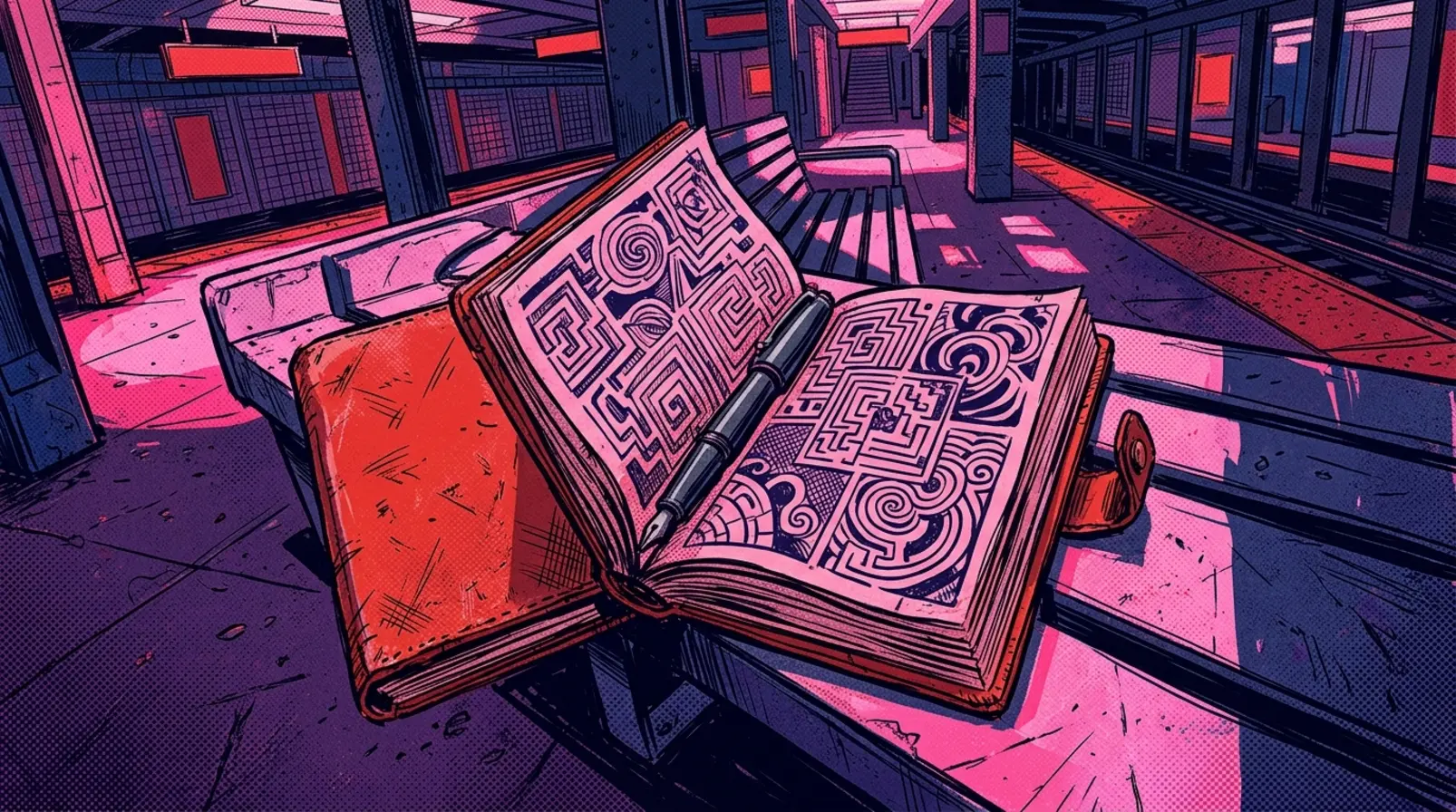
Somewhere in your apartment, there’s a notebook. Maybe it’s buried under a pile of unopened mail, or wedged between sofa cushions, or sitting clean and untouched on a shelf because you bought it with good intentions that evaporated by February. Lorelei and the Laser Eyes, the puzzle game from Swedish developer Simogo, wants you to go find that notebook. It doesn’t ask politely. It doesn’t offer an alternative. It simply presents you with a locked hotel full of ciphers, codes, mathematical riddles, and layered mysteries, and trusts that you’ll figure out the rest.
Lorelei and the Laser Eyes was initially released on Nintendo Switch and Steam on May 16, 2024. It’s a puzzle game developed by Simogo and published by Annapurna Interactive, centered on exploring and problem-solving across a massive hotel, without prior explanation as to the player’s whereabouts, identity, or relations. It was one of the most critically celebrated games of that year. It was nominated for Best Independent Game at The Game Awards in 2024 , and Lorelei and the Laser Eyes won Game of the Year at the Thinky Awards, described as “a wonderfully cryptic mystery set in a strange manor filled with lateral puzzles.” Now, Annapurna Interactive and Simogo have released a Nintendo Switch 2 Edition for $24.99 , giving a whole new wave of players the chance to wander the halls of Hotel Letztes Jahr. And to reach for a pen.
What interests me about this game, two years into its life, isn’t just its puzzle design or its black-and-white surrealism. It’s the argument it makes about where thinking actually happens, and whether a screen can contain it all.
The Notebook as Game Mechanic
As Lorelei and the Laser Eyes was about to launch, Simogo considered producing an official guide book, but dismissed the idea because they felt the social element of discussing puzzles with friends would be lost. They knew that note-taking would be required, and people had already reached out asking if the studio would produce and sell a notebook for the game. The two ideas morphed into a hybrid: a mix between a notebook and guide book that merely pushed players in a direction without providing answers. Designer Åsa Wallander created the book, which was printed locally in Malmö.
Simogo sent this custom notebook to press alongside the game, writing, “Please do not consider this notebook a gift designed to sway your opinion on our game in any direction. Rather, view it as a secret handshake between strangers.” That phrase lands as more than a cute PR line. To me, it reads like a statement of design philosophy. The notebook isn’t supplementary. It’s load-bearing.
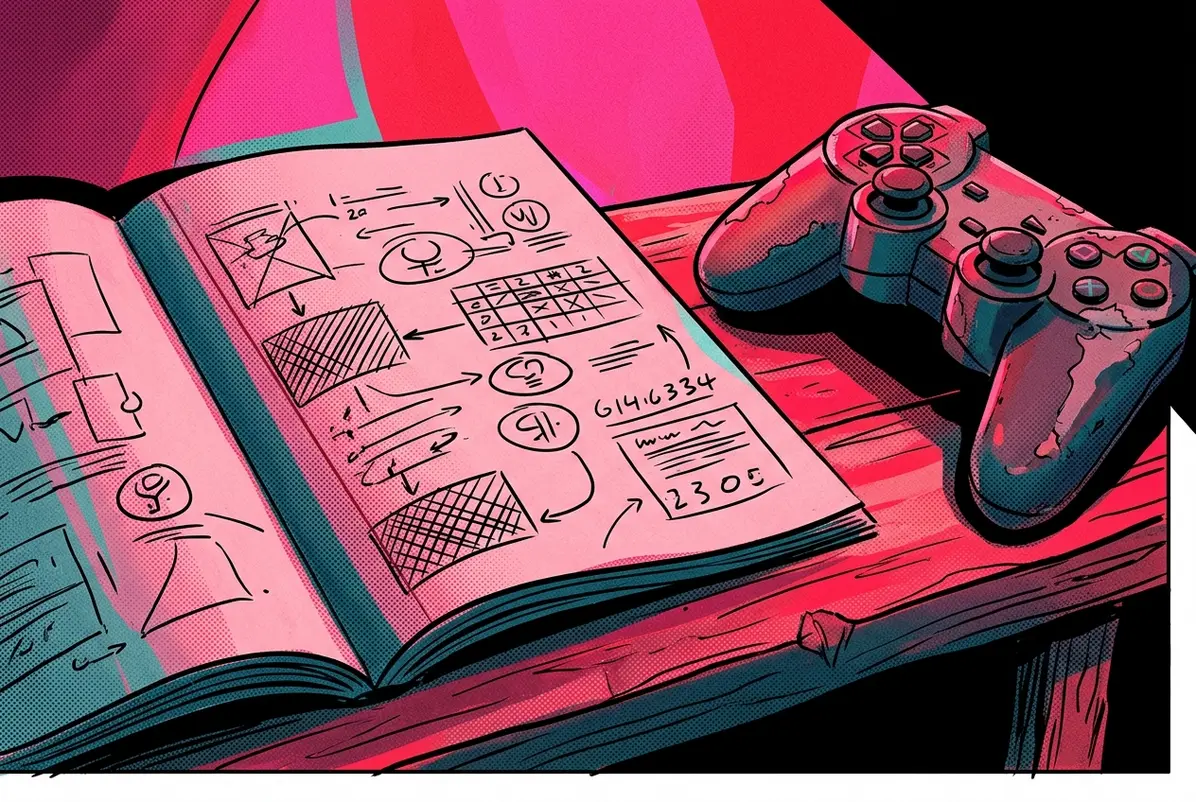
GameSpot’s reviewer filled 31 pages of his notebook over the course of 34 hours exploring the cryptic halls of Hotel Letztes Jahr. That’s not a quirky anecdote. That’s the game working exactly as intended. As Room Escape Artist noted, “It was helpful, if not necessary, to have a notebook at hand while playing to track open threads and work through some of the more intricate solves.”
This is where the debate starts. In online discussions, players are split. Some describe the notebook experience with genuine affection. One player wrote about finishing the game and still missing it, saying they loved “taking notes, copying patterns, flicking through and solving puzzles while not even playing the game.” Others pushed back, pointing out that the game includes a diegetic “photographic memory” system that caches every document you encounter. Why, they ask, should a game in 2024 require you to reach outside the screen? Isn’t that a failure of interface design?
The Case For and Against the Pen
The tension here is real, and I think it’s worth sitting with. Simogo has said the game was structurally inspired by Metroid, The Legend of Zelda, and Resident Evil, and that they wanted its complexity to revolve entirely around understanding, never around dexterity. They wanted the game to be playable by almost anyone, using only one button along with directional inputs. That’s an accessibility-first philosophy. And yet the game’s actual cognitive demands are ferocious. It feels like a contradiction, but I think it’s a deliberate one.
As The Gamer observed, taking physical handwritten notes is “sort of a lost art in most modern video games.” Back in the PS1 and PS2 era, taking notes was so normal for puzzles, codes, and whatnot that instruction manuals often included a page solely for notes. Modern games have largely engineered this away through quest markers, waypoints, and in-game journals. Lorelei goes the other direction. It respects the player enough to assume they’ll meet the game on its own terms.
There’s a case to be made that this is exclusionary. Not everyone has the patience, the free time, or the cognitive bandwidth to maintain a physical log alongside a 30-plus hour puzzle game. Some players in community threads have expressed frustration at hitting a wall and feeling like the game simply wasn’t designed for them. That’s a valid concern. A game that prides itself on one-button accessibility but then requires a separate analog tracking system outside the console sends a mixed signal.
But here’s where I land: the notebook isn’t a failure of the interface. It is the interface. Or at least, part of it. Simogo, as Thinky Games put it, is “aping the genius creator’s flawed demand for perfection, for the idea that must not be tampered with,” making “a title made not to fit existing trends or tastes but to realise a clear vision.” My take is that Lorelei and the Laser Eyes is a game about the act of thinking itself, and the notebook is where that thinking becomes tangible. You’re not just solving puzzles. You’re building a physical artifact of your engagement with a piece of art.
Pen, Paper, and Precedent
Lorelei didn’t invent this, of course. Myst shipped with a blank notebook in some editions. La-Mulana is famously unplayable without one. Return of the Obra Dinn, Outer Wilds, Tunic, Fez, Chants of Sennaar, and now Blue Prince have all leaned into the idea that the best puzzle games extend beyond the screen. As one writer noted, “Lorelei and the Laser Eyes is a perfect example of a game that floods your brain with cryptic symbols and riddles. Trying to store it all in your head is impossible.”
What strikes me is how this connects to Simogo’s broader body of work. The studio has acknowledged that the DNA from Year Walk, DEVICE 6, and The Sailor’s Dream can be felt in the game. Those earlier titles, especially DEVICE 6, played with the boundaries between reading and playing, between the device in your hands and the story inside it. Lorelei takes that impulse and stretches it into the physical world. The game lives on your Switch. The solutions live in your notebook. The experience lives in the space between.
Writer Jonas Tarestad has noted that the amount of text in Lorelei pretty much matches a typical novel, but unlike a novel, it consists of hundreds of texts that all form a larger narrative. That scale is part of why the notebook becomes essential. You can’t hold a novel’s worth of fragmented clues in working memory. The photographic memory system inside the game stores the raw data. But pattern recognition, cross-referencing, sketching out spatial relationships between codes found three hours apart? That requires something the screen can’t give you.
Where I Come Down
I think Lorelei and the Laser Eyes is one of the most important puzzle games of the past decade. Reasonable people might disagree, but the fact that it forces you off-screen, into a notebook, with a pen in your hand, is a feature, not a flaw. It’s a game that understands something fundamental: the deepest engagement with a piece of media isn’t passive consumption. It’s active, messy, analog participation. It’s circling a number and drawing an arrow to another page and then realizing at 1 a.m. that you’ve been thinking about a locked door in a fictional European hotel for 45 minutes and you haven’t touched the controller once.
Simogo has described the game as “a collage of styles, ideas, and disparate inspirations.” By our reckoning, the notebook is one more layer of that collage. It’s the part you make yourself. And in a medium that increasingly wants to hold your hand, automate your progress, and keep your eyes locked on the screen, there’s something quietly radical about a game that says: put the controller down. Pick up a pen. Think.
The Nintendo Switch 2 Edition is available now for $24.99, with a free upgrade for owners of the original Switch version. Bring your own notebook. The hotel is waiting.
'%3e%3cg id='Final-Copy-2_2_' transform='translate(1275.000000, 200.000000)'%3e%3cpath class='st0' d='M7.4,12.8h6.8l3.1-11.6H7.4C4.2,1.2,1.6,3.8,1.6,7S4.2,12.8,7.4,12.8z'/%3e%3c/g%3e%3c/g%3e%3c/g%3e%3cg id='final---dec.11-2020'%3e%3cg id='_x30_208-our-toggle' transform='translate(-1275.000000, -200.000000)'%3e%3cg id='Final-Copy-2' transform='translate(1275.000000, 200.000000)'%3e%3cpath class='st1' d='M22.6,0H7.4c-3.9,0-7,3.1-7,7s3.1,7,7,7h15.2c3.9,0,7-3.1,7-7S26.4,0,22.6,0z M1.6,7c0-3.2,2.6-5.8,5.8-5.8 h9.9l-3.1,11.6H7.4C4.2,12.8,1.6,10.2,1.6,7z'/%3e%3cpath id='x' class='st2' d='M24.6,4c0.2,0.2,0.2,0.6,0,0.8l0,0L22.5,7l2.2,2.2c0.2,0.2,0.2,0.6,0,0.8c-0.2,0.2-0.6,0.2-0.8,0 l0,0l-2.2-2.2L19.5,10c-0.2,0.2-0.6,0.2-0.8,0c-0.2-0.2-0.2-0.6,0-0.8l0,0L20.8,7l-2.2-2.2c-0.2-0.2-0.2-0.6,0-0.8 c0.2-0.2,0.6-0.2,0.8,0l0,0l2.2,2.2L23.8,4C24,3.8,24.4,3.8,24.6,4z'/%3e%3cpath id='y' class='st3' d='M12.7,4.1c0.2,0.2,0.3,0.6,0.1,0.8l0,0L8.6,9.8C8.5,9.9,8.4,10,8.3,10c-0.2,0.1-0.5,0.1-0.7-0.1l0,0 L5.4,7.7c-0.2-0.2-0.2-0.6,0-0.8c0.2-0.2,0.6-0.2,0.8,0l0,0L8,8.6l3.8-4.5C12,3.9,12.4,3.9,12.7,4.1z'/%3e%3c/g%3e%3c/g%3e%3c/g%3e%3c/g%3e%3c/svg%3e) Your Privacy Choices
Your Privacy Choices