


Somebody Forgot to Tell Physical Media It Was Dead
The strange part is not that physical media survived. Survival can mean a box in a closet. The strange part is that in 2026, old formats are still attracting new hardware, new rituals, and new money.
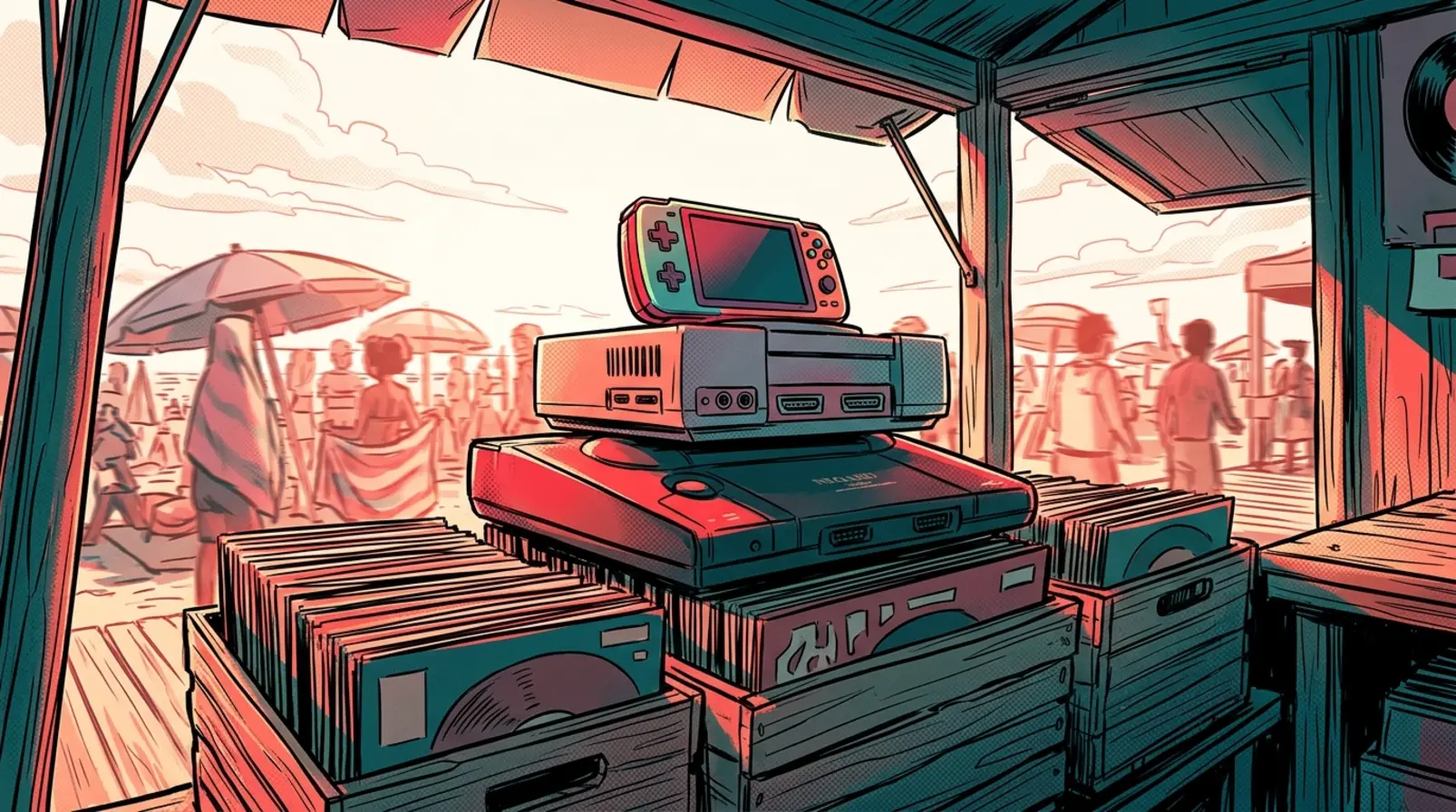
SNK and Plaion Replai are bringing back the NEOGEO AES+, a $249.99 console listed for release and shipping starting November 12, 2026. Plaion says gameplay is “not achieved through emulation,” but through re-engineered ASIC chips. HyperMegaTech’s Super Pocket Rare Edition compresses 14 Rare games into a pocket handheld. U.S. vinyl sales passed $1 billion in 2025, with 46.8 million units sold, according to the RIAA’s year-end report. And in Detroit, Mitch Socia’s Tapes Only screens movies from a VCR because the rule is brutal and perfect: “we’re not gonna show anything that was not released on tape.”
None of this was supposed to happen. Streaming was supposed to make ownership feel embarrassing, like sentimental clutter. The disc was supposed to become residue. The cartridge was supposed to become a museum object. The tape was supposed to become a joke. But the shelf keeps filling because the shelf solves a problem streaming created: it makes culture feel held.
Silicon, Reborn
The NEOGEO AES+ is the cleanest symbol because it rejects the usual retro shortcut. This is not a keychain console with preloaded ROMs and a nostalgia shell. Plaion describes it as a “hardware-faithful reimplementation” compatible with new and original AES cartridges, with HDMI for modern displays and original AV output for CRT setups. The language is almost religious: not emulation, not FPGA approximation, but silicon resurrection. Strip away the incense and the product logic is clear. The machine is selling ceremony.
That matters because the lost thing was never only the game. It was the loading ritual, the cartridge weight, the controller port, the console that expected the player to meet it on its own terms. The seal is not the product here. Neither is pure nostalgia. The slot is the product. The click is the product. The machine turns memory back into an action.
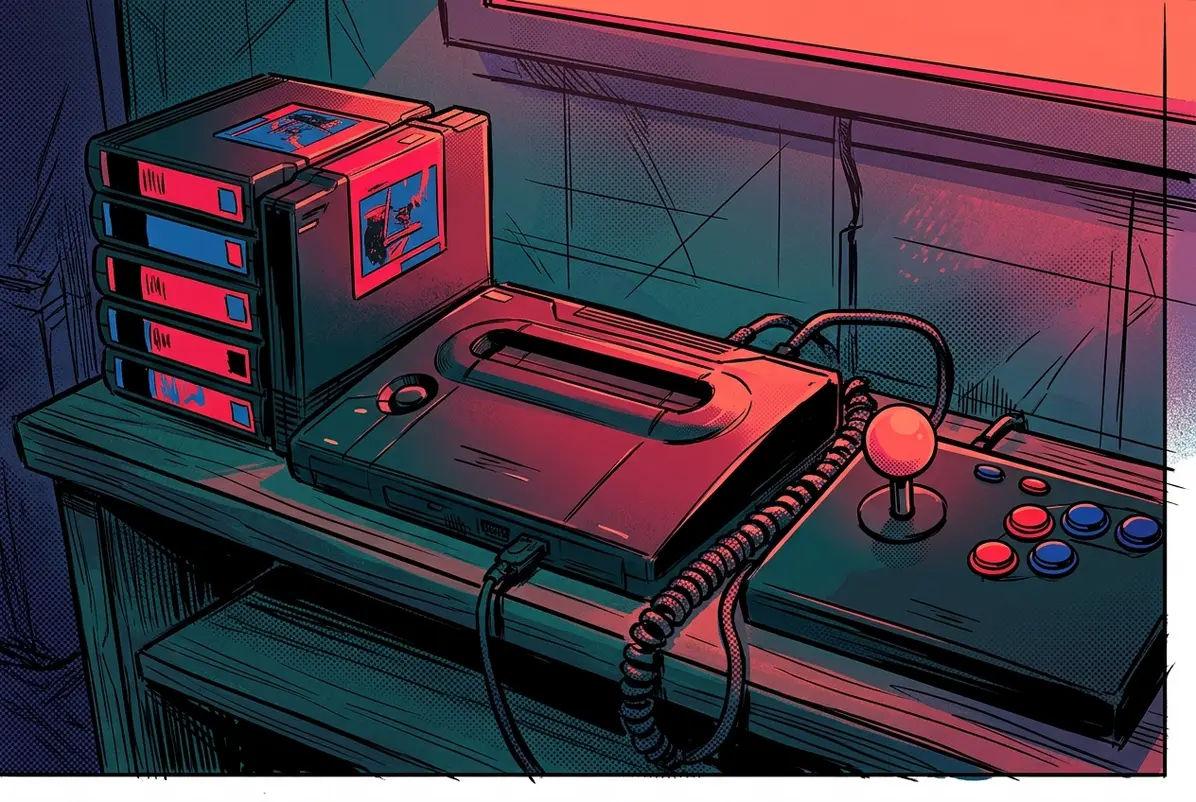
The SuperStation One takes a less purist but equally revealing route. Retro Remake describes it as an FPGA console inspired by the PSone, built for PS1 games, original memory cards, original controllers, and MiSTer FPGA cores. Its real living-room problem is not whether enthusiasts can make it work. Enthusiasts always can. The question is whether hardware-level preservation can stop feeling like a lab bench.
That is why Console Mode matters. Time Extension reported that the beta build includes game views, on-device artwork scraping, a screenshot viewer, resolution switching, RetroAchievements support, and per-game core overrides. Those are interface features, not merely accuracy features. They show the retro scene trying to make preservation playable without sanding off all the weirdness.
Even the Rare handheld tells the same story in miniature: not authenticity as hardware theology, but authenticity as a curated pocket object. Retro culture is not moving in one direction. It is splitting into luxury replica, FPGA workbench, and cheap licensed toy, all orbiting the same premise: old media still wants a body.
The Groove in the Wax
Vinyl is the easiest part of the story to over-explain because its comeback already has mythology. The numbers are better than the mythology. The RIAA put U.S. vinyl at 46.8 million units and $1.04 billion in revenue in 2025, its 19th consecutive year of growth. Luminate’s year-end data, using album-sales figures, put U.S. vinyl at 47.9 million, up 8.6%, and said four in ten vinyl records were sold at independent record stores.
That does not mean streaming lost. RIAA said streaming still represented 82% of U.S. recorded-music revenue in 2025. It means ownership has found a new job inside a streaming economy. A record is a receipt that became furniture. It is a playlist with a spine.
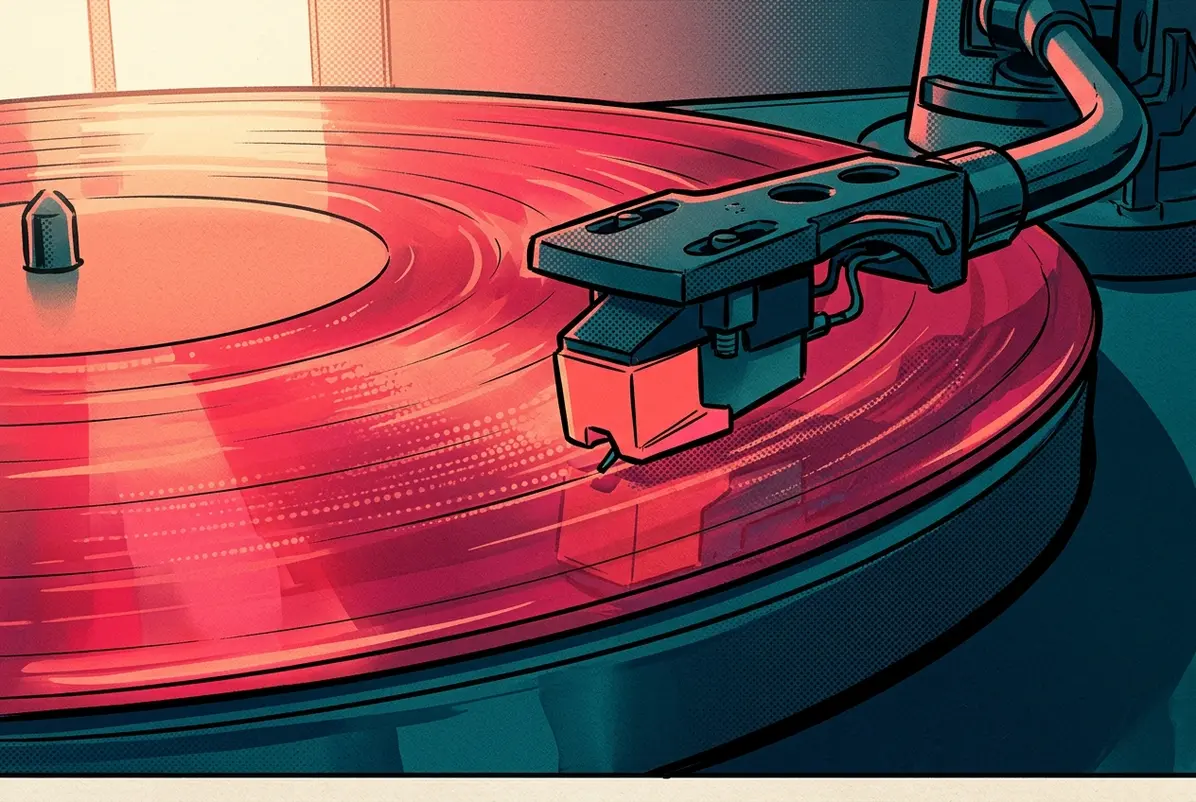
The physical music market is no longer trapped inside one taste profile, either. Luminate noted that 2025’s physical-sales momentum came not only from Taylor Swift’s The Life of a Showgirl, but also from Stray Kids CDs and the KPop Demon Hunters soundtrack ending the year in the physical-album top 10. The lesson is not that every format is booming. It is that superfandom has learned how to make digital culture physical again.
Tapes, Discs, and the Shelf That Speaks
Discs and tapes are more revealing because they carry less prestige. Vinyl has warmth and boutiques. VHS has tracking noise, dead remotes, and the constant threat of broken plastic. That is why the format’s persistence cuts harder. A tape night is not about convenience. It is about making inconvenience social.
The disc market is still shrinking, but the collapse has slowed. The Los Angeles Times, citing the Digital Entertainment Group, reported that DVD, Blu-ray, and 4K Ultra HD sales declined 9% in 2025 after drops of more than 20% in both 2023 and 2024. That is not a victory lap. It is a market landing hard enough to leave a dent, then discovering people standing around the crater.
In Detroit, ClickOnDetroit found the small-scale version of the same pattern: Occult 83 renting DVDs and VHS tapes, Starlit TV still repairing VCRs, and Socia building VHS Detroit around swaps and screenings. The important detail is not scale. It is behavior. People are repairing the machines that let them keep promises streaming does not make.
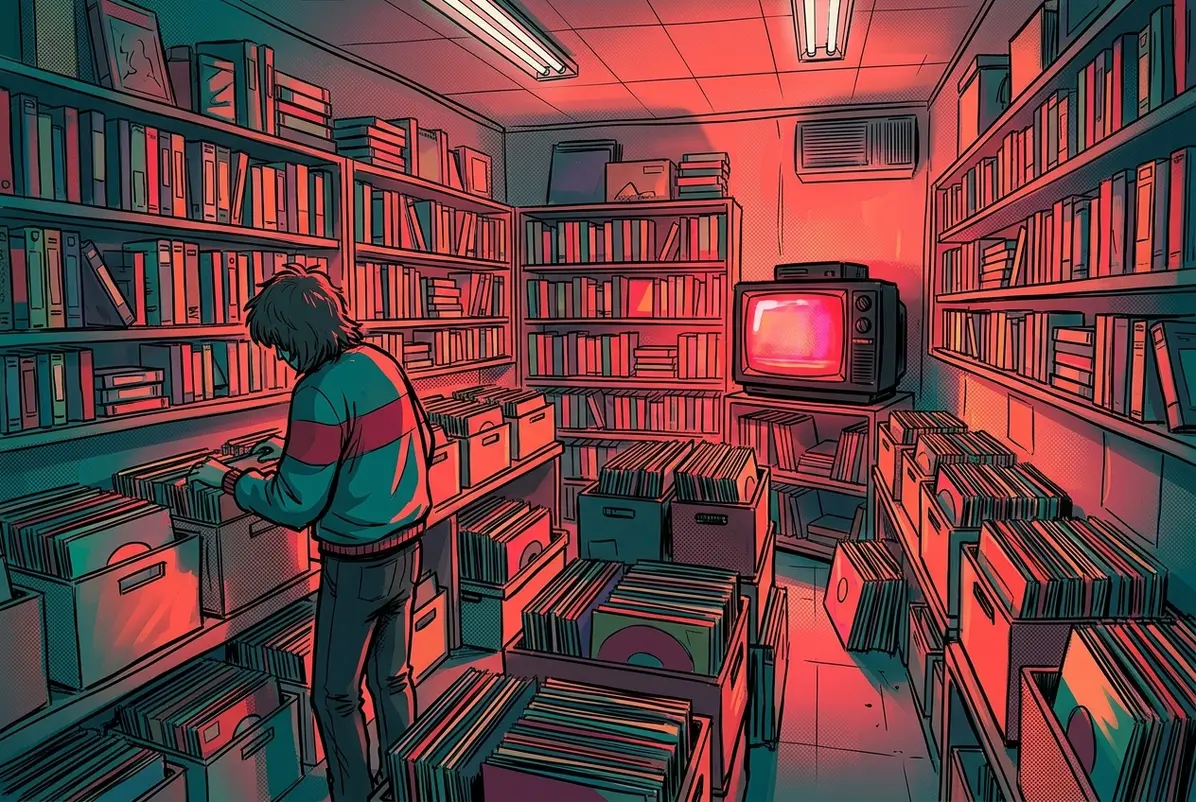
Boutique Blu-ray labels occupy the premium end of the same instinct. Arrow Video, Vinegar Syndrome, and Radiance Films do not simply sell access to movies. They sell editions: restorations, packaging, extras, scarcity, context. The movie remains the center. The edition is the argument around it.
What the Shelf Wants
The mistake is treating all of this as one comeback. It is not one comeback. It is a set of refusals that rhyme.
The Neo Geo buyer, the vinyl collector, the Blu-ray obsessive, and the VHS-swap regular are not necessarily the same person. They do not need to be. What connects them is not a unified market but a shared suspicion that access has been mistaken for possession.
Streaming won convenience, scale, and search. It also made culture feel provisional. Titles rotate. Interfaces change. Licenses expire. Purchases can feel less like ownership than permission. That anxiety shows up explicitly in ClickOnDetroit’s interviews, where Socia and Doran Konja point to streaming’s impermanence and licensing as reasons people are turning back toward physical formats.
The shelf is not nostalgia alone. It is a memory system, a social signal, a repair problem, and a quiet declaration of custody. Physical media did not come back because the future failed. It came back because the future made possession newly legible.
Streaming taught people that everything could be available. The shelf reminded them that availability and possession were never the same promise.
'%3e%3cg id='Final-Copy-2_2_' transform='translate(1275.000000, 200.000000)'%3e%3cpath class='st0' d='M7.4,12.8h6.8l3.1-11.6H7.4C4.2,1.2,1.6,3.8,1.6,7S4.2,12.8,7.4,12.8z'/%3e%3c/g%3e%3c/g%3e%3c/g%3e%3cg id='final---dec.11-2020'%3e%3cg id='_x30_208-our-toggle' transform='translate(-1275.000000, -200.000000)'%3e%3cg id='Final-Copy-2' transform='translate(1275.000000, 200.000000)'%3e%3cpath class='st1' d='M22.6,0H7.4c-3.9,0-7,3.1-7,7s3.1,7,7,7h15.2c3.9,0,7-3.1,7-7S26.4,0,22.6,0z M1.6,7c0-3.2,2.6-5.8,5.8-5.8 h9.9l-3.1,11.6H7.4C4.2,12.8,1.6,10.2,1.6,7z'/%3e%3cpath id='x' class='st2' d='M24.6,4c0.2,0.2,0.2,0.6,0,0.8l0,0L22.5,7l2.2,2.2c0.2,0.2,0.2,0.6,0,0.8c-0.2,0.2-0.6,0.2-0.8,0 l0,0l-2.2-2.2L19.5,10c-0.2,0.2-0.6,0.2-0.8,0c-0.2-0.2-0.2-0.6,0-0.8l0,0L20.8,7l-2.2-2.2c-0.2-0.2-0.2-0.6,0-0.8 c0.2-0.2,0.6-0.2,0.8,0l0,0l2.2,2.2L23.8,4C24,3.8,24.4,3.8,24.6,4z'/%3e%3cpath id='y' class='st3' d='M12.7,4.1c0.2,0.2,0.3,0.6,0.1,0.8l0,0L8.6,9.8C8.5,9.9,8.4,10,8.3,10c-0.2,0.1-0.5,0.1-0.7-0.1l0,0 L5.4,7.7c-0.2-0.2-0.2-0.6,0-0.8c0.2-0.2,0.6-0.2,0.8,0l0,0L8,8.6l3.8-4.5C12,3.9,12.4,3.9,12.7,4.1z'/%3e%3c/g%3e%3c/g%3e%3c/g%3e%3c/g%3e%3c/svg%3e) Your Privacy Choices
Your Privacy Choices