

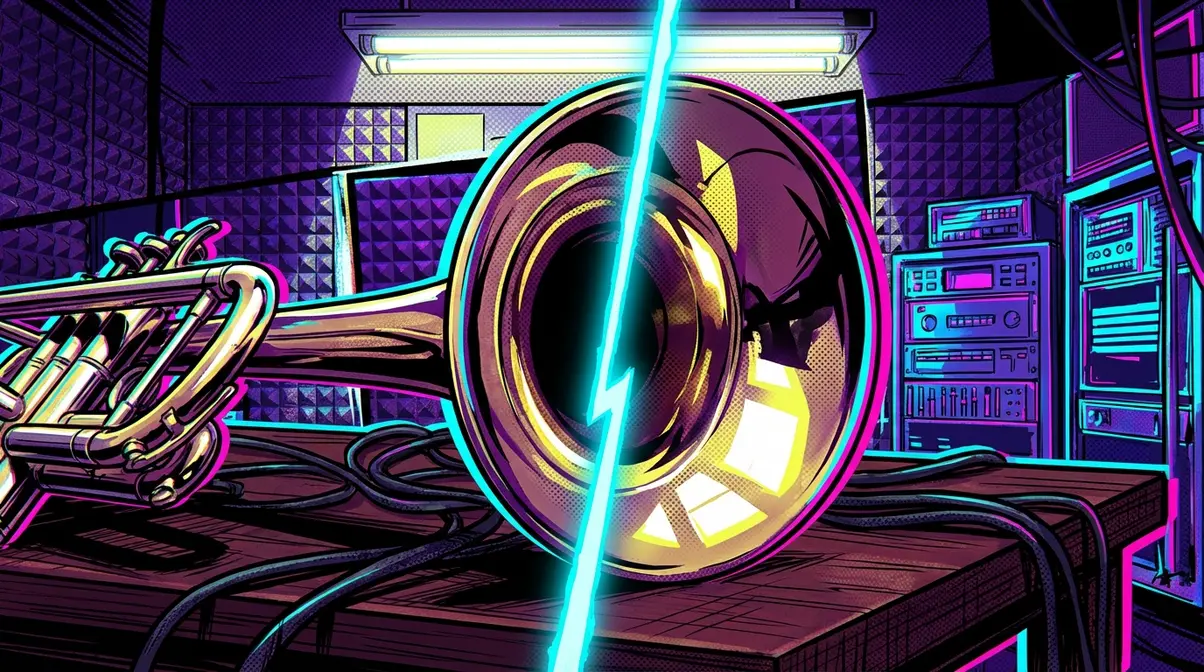
Picture a single horn chord. Four notes in the key of B-flat. It lasts 0.23 seconds. You would never notice it in a club, never hum it in the shower, never pick it out of a lineup. Yet in 2016, that 0.23-second segment of horns from a song called “Love Break” by the Salsoul Orchestra became the centerpiece of a federal copyright infringement case against Madonna over her 1990 mega-hit “Vogue.” That sliver of brass, thinner than a blink, nearly became the most expensive quarter-note in pop history. It didn’t. But the fact that it went to trial at all tells you everything about where the vibe sample went to die.
The Courtroom That Killed the Loop
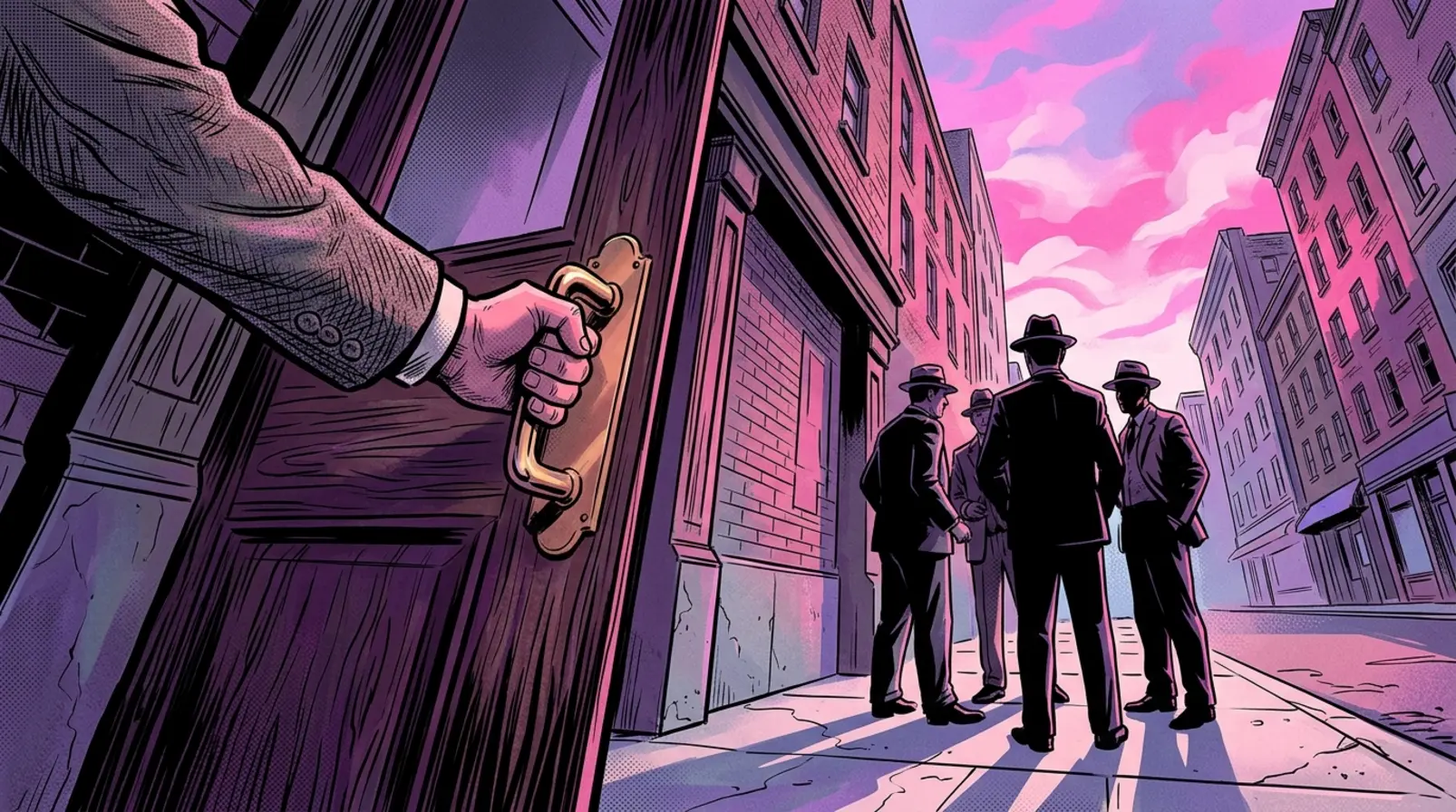
Two rulings built the cage. In 2005, the Sixth Circuit declared in Bridgeport Music v. Dimension Films: “Get a license or do not sample. We do not see this as stifling creativity in any significant way.” The decision effectively eliminated the de minimis doctrine for digitally sampling recorded music. The case involved a manipulated two-second snippet of Funkadelic’s “Get Off Your Ass and Jam” embedded in an N.W.A. track. Two seconds. That was enough.
The court held that all unauthorized sampling of sound recordings is copyright infringement, regardless of how small the sample may be in relation to the sampled work as a whole. Before that, there was freedom of sampling, and the music made during this time was largely done without restrictions. After it, a chill set in that never fully thawed.
The Ninth Circuit eventually pushed back in VMG Salsoul v. Ciccone , ruling that if a highly trained musician listening to the recordings with the express aim of determining which parts had been copied could not do so accurately, an average audience could not do better. Madonna’s horn hit was cleared. But by then, the damage was structural. Producers had already internalized the message: touch a record, hire a lawyer. A circuit split had emerged, and the split revolved around whether a producer who samples a copyrighted digital sound recording without a license can claim the copying was too trivial to matter. Two federal circuits, two opposite answers. No resolution from the Supreme Court. The ambiguity itself became the punishment.
Metro Boomin and the Synthetic Cathedral
Into that legal fog walked Leland Tyler Wayne, a teenager from St. Louis with a cracked copy of FL Studio and an internet connection. He didn’t come up digging in crates. He came up making beats in his bedroom, connecting with rappers on Twitter, and eventually convincing his mother to drive him eight hours to Atlanta. He was seventeen. He enrolled at Morehouse College in 2012 but dropped out after a semester because the demands of a music career were already too heavy to carry alongside coursework.
Metro Boomin didn’t need vinyl. His production style was built from the ground up on synthetic textures: minor-key melodies, haunting pads, reversed sounds, and the seismic 808 bass hits that became his calling card. His beats leaned on space and silence rather than density. When he sampled, it was notable precisely because it was rare. He generally created his own loops or had loopmakers produce custom ones for him.
The distinction matters. The classic hip-hop sample was an act of archaeology. You found a forgotten record, isolated a phrase, looped it, built a world around it. DJ Premier did it. Madlib did it. The Bomb Squad layered dozens of them into dense collages for Public Enemy. But Metro’s generation inherited a landscape where that archaeology had been priced out or litigated into submission. The vibe sample, that atmospheric fragment lifted to set a mood rather than quote a melody, was the last survivor of the old school. And even that was dying.
The Kingsway Workaround
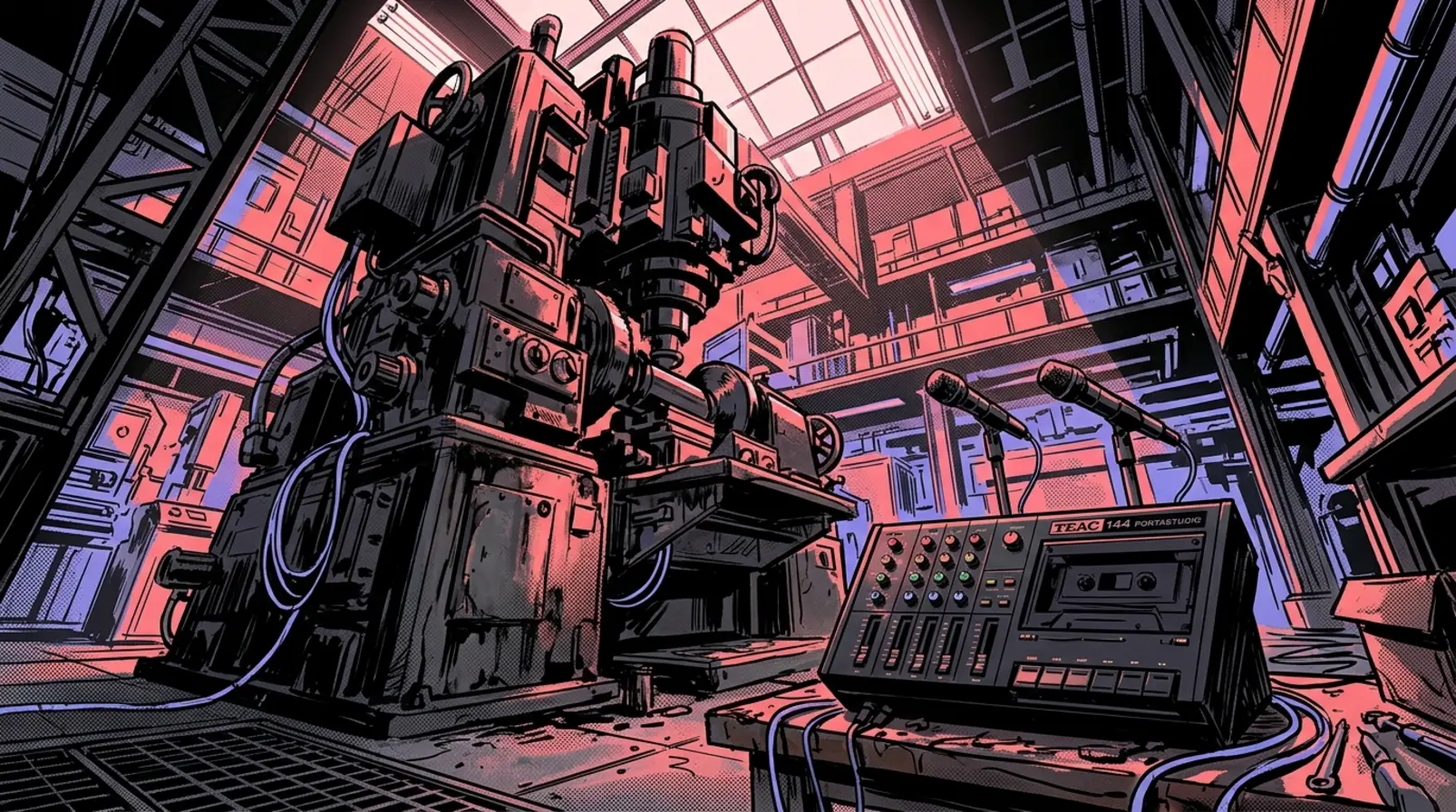
In 2015, Toronto producer Frank Dukes launched the Kingsway Music Library, a resource artists and other producers can use to help mitigate some of the clearance issues that come along with sampling. The concept was elegant and a little melancholy: instead of sampling old records, Dukes would compose new music that sounded like old records, record it through vintage Neve preamps and onto one-inch tape, then license it to producers with master clearance guaranteed.
The piano loop on Kanye West’s “Real Friends”? Sampled from Kingsway. The synth on “Levitate” off Travis Scott’s Astroworld? Kingsway. The beat of “No Tellin'” by Drake? Built around a Kingsway sample. Producers like Jake One, Illmind, and Hit-Boy all used the library. Even Madlib, the loop digga himself, used Kingsway for “Half Manne Half Cocaine” on Bandana with Freddie Gibbs. That last detail is the quiet earthquake. When the most revered crate-digger in hip-hop reaches for a pre-cleared composition instead of a dusty 45, the old paradigm isn’t evolving. It’s conceding.
Dukes has spoken openly about his motivation: “I’ve had songs get shut down because of clearance issues. Not so much because of the person refusing, but because we couldn’t track down the rights owner.” The enemy wasn’t greed. It was entropy. Publishing chains so tangled that sometimes the people who believed they owned a song didn’t actually own it.
BBL Drizzy and the Ghost in the Machine
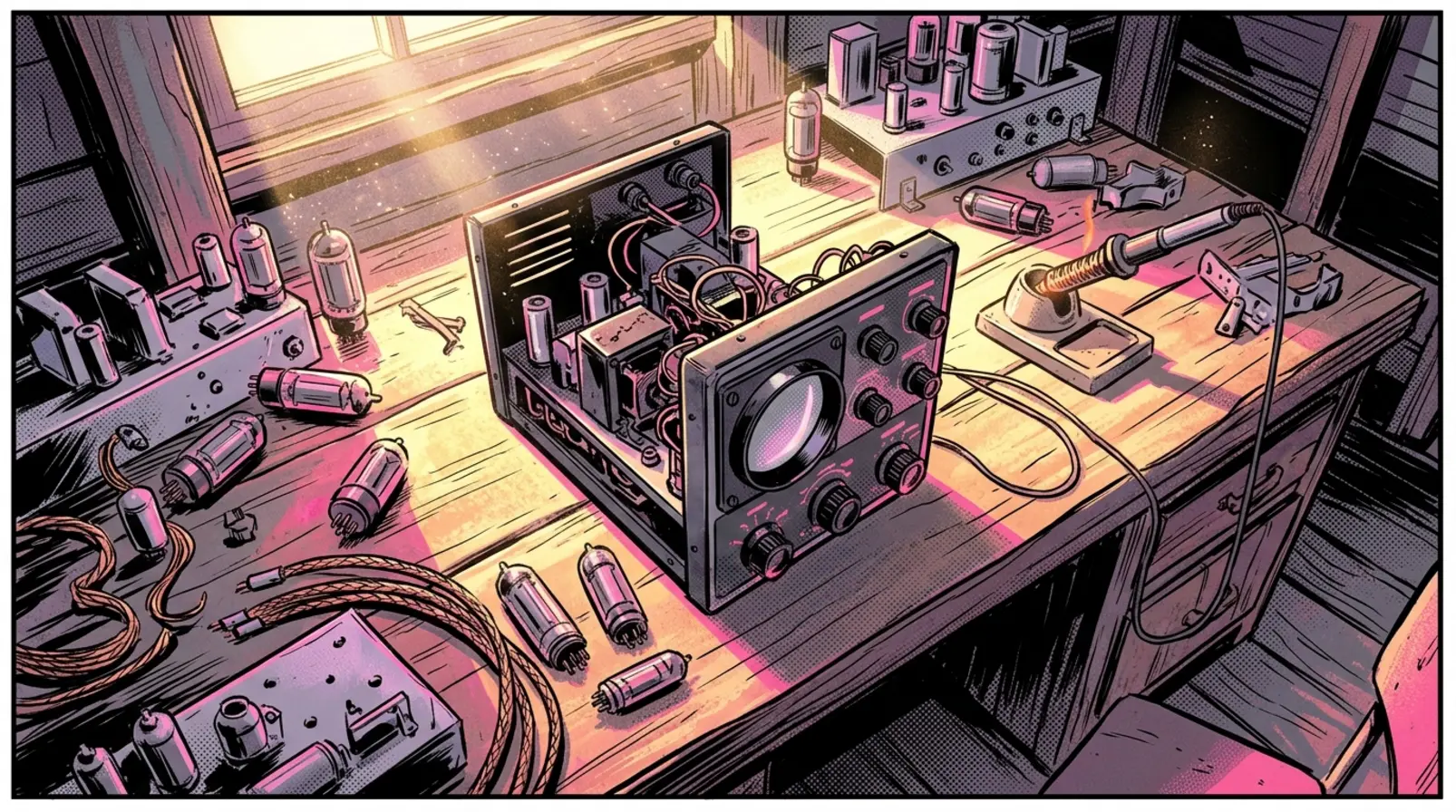
If Kingsway was the diplomatic solution, “BBL Drizzy” was the chaotic one. When Drake dismissively told Metro Boomin to go and “make some drums” during their 2024 feud, the superproducer went off and did just that. The resulting beat, titled “BBL Drizzy,” paired a vintage-sounding soul vocalist over some 808 drums, was released to SoundCloud on May 5, and swiftly went viral. But soon after, it was revealed that the singer from the “BBL Drizzy” beat didn’t exist. The vocals, melody, and instrumental of the sample were generated by Udio, an AI music startup founded by former Google DeepMind engineers.
It is the first notable example of an AI-generated song being used as a sample in commercial music production. Metro didn’t even know it was synthetic when he flipped it. AI tools, it turns out, excel at generating music reminiscent of 1960s and ’70s soul and R&B, which just so happens to be the favored sample source for hip-hop producers. Think about the circularity of that for a moment. The machine learned to mimic the very records that copyright law made too expensive to touch. It reverse-engineered the vibe sample from the grave.
A Vanderbilt law professor noted that if a song is completely created using AI, then that track is public domain, meaning anyone can sample it for free without the threat of a lawsuit. No clearance. No publishing split. No eight-month negotiation with a rights holder who may not even exist. The 200-millisecond death sentence that Bridgeport imposed on sampling had, in a strange and unsettling way, created the economic incentive for its own replacement.
What the Vibe Was, and What It Isn’t
The vibe sample was never really about the sound. It was about provenance. It was about the knowledge that the warm crackle under a J Dilla beat came from a specific pressing of a specific record that he found in a specific bin in a specific Detroit shop. The sample carried a history that predated the producer, and the producer’s genius was in hearing something new inside something old. That transaction, between past and present, between a forgotten musician and a young one with headphones and a sampler, was the beating heart of hip-hop production for three decades.
What replaced it isn’t worse, exactly. Metro Boomin’s cinematic darkness, Frank Dukes’ meticulous recreations, even the uncanny valley warmth of an AI-generated Motown pastiche: these are all valid sounds. Good sounds, often. But they are sounds without ancestors. They carry no dust. The vibe sample was a bridge between eras, and the bridge has been decommissioned, not by taste but by statute, by licensing fees, by the slow grinding of intellectual property law against the grain of musical culture.
Metro Boomin sits at the exact center of this collapse, not as its cause but as its most visible inheritor. He came of age after the courtroom rulings, built his empire on synthetic textures that sidestepped the legal minefield entirely, and then, in one viral moment with “BBL Drizzy,” accidentally demonstrated what comes next. The sample without a source. The vibe without a past.
Somewhere, a 0.23-second horn chord from a disco record nobody remembers is still reverberating through federal case law, shaping every beat that gets made and every one that doesn’t. That’s the 200-millisecond death sentence. Not a sound. A silence.
'%3e%3cg id='Final-Copy-2_2_' transform='translate(1275.000000, 200.000000)'%3e%3cpath class='st0' d='M7.4,12.8h6.8l3.1-11.6H7.4C4.2,1.2,1.6,3.8,1.6,7S4.2,12.8,7.4,12.8z'/%3e%3c/g%3e%3c/g%3e%3c/g%3e%3cg id='final---dec.11-2020'%3e%3cg id='_x30_208-our-toggle' transform='translate(-1275.000000, -200.000000)'%3e%3cg id='Final-Copy-2' transform='translate(1275.000000, 200.000000)'%3e%3cpath class='st1' d='M22.6,0H7.4c-3.9,0-7,3.1-7,7s3.1,7,7,7h15.2c3.9,0,7-3.1,7-7S26.4,0,22.6,0z M1.6,7c0-3.2,2.6-5.8,5.8-5.8 h9.9l-3.1,11.6H7.4C4.2,12.8,1.6,10.2,1.6,7z'/%3e%3cpath id='x' class='st2' d='M24.6,4c0.2,0.2,0.2,0.6,0,0.8l0,0L22.5,7l2.2,2.2c0.2,0.2,0.2,0.6,0,0.8c-0.2,0.2-0.6,0.2-0.8,0 l0,0l-2.2-2.2L19.5,10c-0.2,0.2-0.6,0.2-0.8,0c-0.2-0.2-0.2-0.6,0-0.8l0,0L20.8,7l-2.2-2.2c-0.2-0.2-0.2-0.6,0-0.8 c0.2-0.2,0.6-0.2,0.8,0l0,0l2.2,2.2L23.8,4C24,3.8,24.4,3.8,24.6,4z'/%3e%3cpath id='y' class='st3' d='M12.7,4.1c0.2,0.2,0.3,0.6,0.1,0.8l0,0L8.6,9.8C8.5,9.9,8.4,10,8.3,10c-0.2,0.1-0.5,0.1-0.7-0.1l0,0 L5.4,7.7c-0.2-0.2-0.2-0.6,0-0.8c0.2-0.2,0.6-0.2,0.8,0l0,0L8,8.6l3.8-4.5C12,3.9,12.4,3.9,12.7,4.1z'/%3e%3c/g%3e%3c/g%3e%3c/g%3e%3c/g%3e%3c/svg%3e) Your Privacy Choices
Your Privacy Choices