

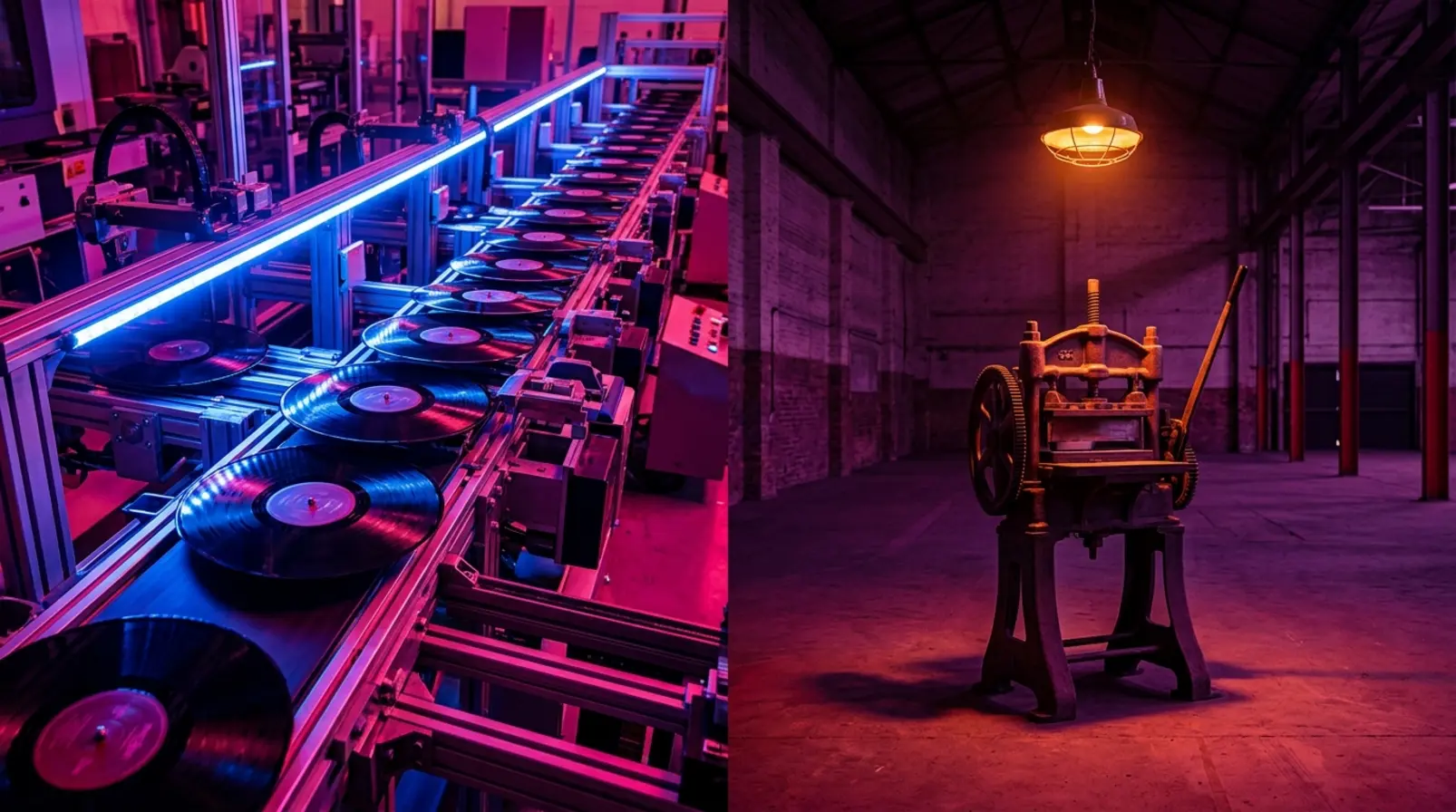


Vinyl can be booming in unit sales while still being a difficult business for the people manufacturing the records. The Recording Industry Association of America’s mid-year report put US vinyl revenue at $543.8 million for the first half of 2026, up 17.7 percent, while unit shipments rose 20.9 percent to 26.5 million.
Those RIAA dollar figures are wholesale value, net after returns, rather than what consumers spent at record-store counters. Even so, the direction is hard to miss. More records are moving, and more money is flowing through the format.
What has not followed automatically is an easy life for every pressing plant. Manufacturing capacity expanded dramatically during the revival, and some independent operators have since reported fewer orders, heavier competition or difficult economics. That does not establish the familiar claim that major labels simply shove independent releases out of the queue. It points to something less conspiratorial and probably more useful: a revived format can generate strong consumer demand and still produce winners and losers inside the supply chain.
One Album Can Be Huge Without Being the Whole Market
US vinyl revenue reached $1.043 billion on 46.8 million units in 2025, according to the RIAA’s year-end report. It was the format’s 19th consecutive year of growth, and the first year since 1983 that US vinyl revenue exceeded $1 billion.
Taylor Swift’s The Life of a Showgirl was an extraordinary part of that market. It sold about 1.6 million vinyl copies in the US during 2025, with at least eight vinyl variants. But it helps to keep the scale straight. Luminate measured total US vinyl sales at 47.9 million units for the year, putting Showgirl at roughly 3.3 percent of its vinyl total.
The difference between Luminate’s 47.9 million and the RIAA’s 46.8 million is also a reason not to splice the two datasets casually. They use different reporting systems; Luminate notes that its US physical-sales metrics include modeled independent-retail figures.
The same Luminate report makes the market look broader than a story about superstar variants alone. Vinyl sales rose 8.6 percent in its measurement, and four in ten records were sold through independent record stores. The blockbuster end of the business is enormous, but so is the retail infrastructure underneath it.
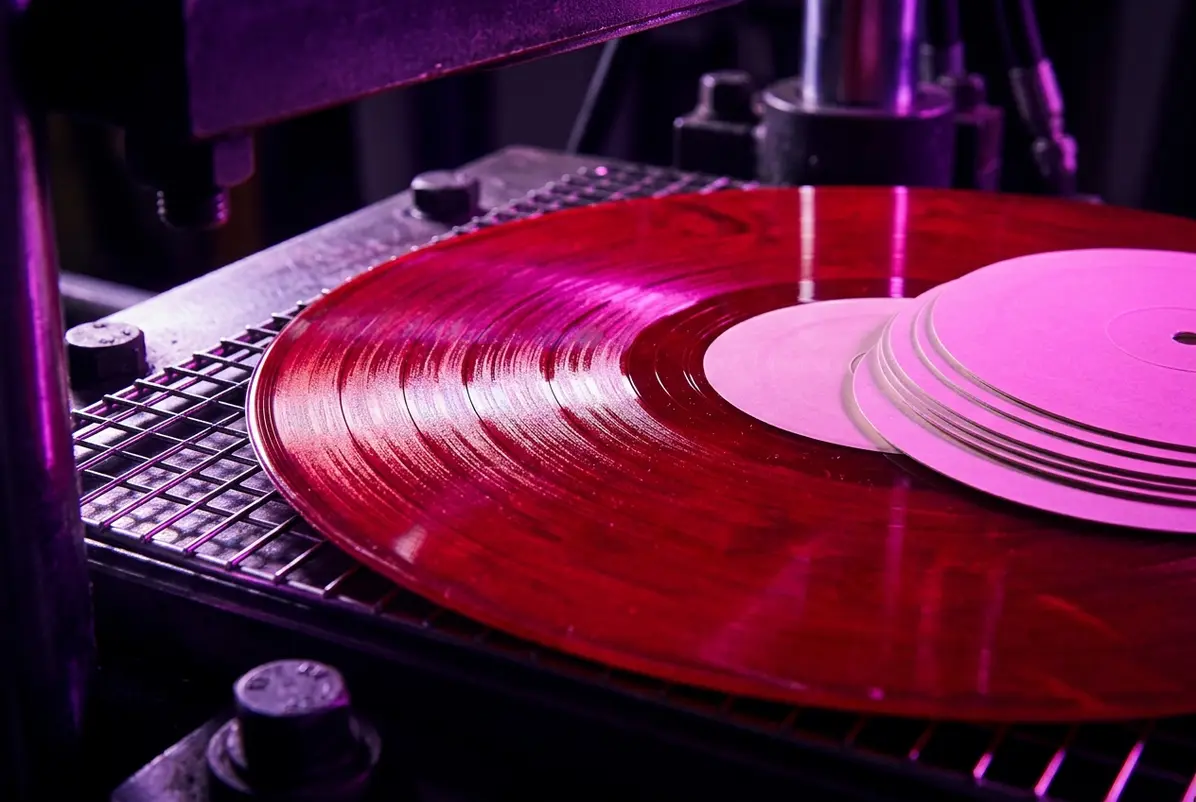
The Revival Created More Pressing Capacity
The manufacturing side expanded with the comeback. Nashville Public Radio reported that the number of vinyl manufacturers worldwide grew from 32 roughly a decade earlier to more than 200 by 2025.
That expansion solved one problem and created another. During the pandemic-era vinyl surge, plants were struggling to keep up with orders. By 2025, operators interviewed by WPLN were describing a much more crowded business.
Nashville’s The Vinyl Lab closed in January 2025 after nearly four years. Owner Scott LeMasters told the station that increased competition had brought fewer orders, and said independent plants he had spoken with were feeling similar pressure. United Record Pressing chief executive Mark Michaels was equally cautious: “The industry probably won’t have 200 manufacturers 10 years from now.”
The pattern continued in Oregon, but with an interesting wrinkle. Cascade Record Pressing closed near Portland in June 2026 after eleven years. At almost the same moment, a new operation was starting up. Object Permanence Records began production in Salem, becoming Oregon’s only operating pressing plant after Cascade’s closure.
That is a messier picture than collapse. One plant disappeared while another bought a secondhand automated press, signed a lease and started producing its first 500 records for Oregon bands. The vinyl revival had not run out of believers. The economics were simply no longer those of an industry desperately short of machines.

The Small-Run Problem Has Not Disappeared
For a small label, the problem is not simply finding a press. It is deciding how much money and inventory to put at risk before knowing how many records will sell.
Skyler Siddens, founder of electronic imprint SNDIGØ Records, wrote in a 2026 Hypebot guest article that a traditional 300-copy run could cost roughly $2,000 to $3,000 upfront. Siddens also described waiting six to nine months for conventional manufacturing.
Those figures are one label founder’s experience, not a universal pressing-plant rate card. Lead times can be much shorter: Object Permanence told the Salem Reporter that its process from order to shipment or pickup takes about six to eight weeks.
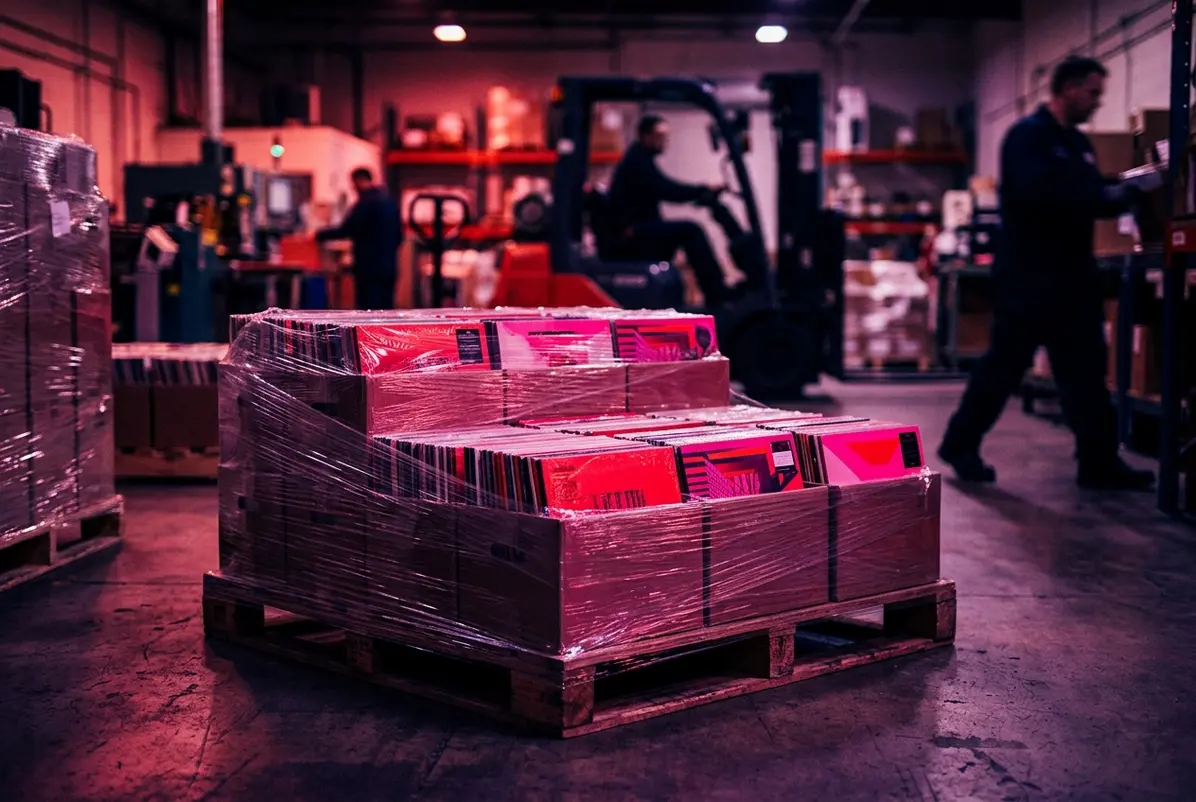
On-Demand Vinyl Changes the Bet
SNDIGØ chose another route, partnering with elasticStage. Siddens wrote that the arrangement reduced the label’s upfront manufacturing cost to zero because records are made only after customers order them.
There is an important technical distinction here. This is not simply a traditional pressing plant accepting one-copy orders. elasticStage itself contrasts its system with conventional vinyl pressing, where a lacquer is cut, electroplated into metal stampers and then used to press hundreds or thousands of copies. Its made-to-order system avoids that bulk-production sequence.
The product is different in other ways too. elasticStage specifies a 12-inch, 33⅓ RPM record made from PETG rather than the PVC commonly used for conventional pressings. Its current offering is black vinyl only, with a single-disc format. The trade is straightforward: fewer choices in manufacturing and packaging, but no minimum pressing run and no warehouse full of records that have already been paid for.
That alternative does not make conventional pressing obsolete. A label expecting to sell hundreds or thousands of copies may still prefer the economics, materials, packaging options and established process of a traditional plant. For a project with uncertain demand, avoiding a four-figure inventory gamble can matter more.
None of this makes vinyl’s revival a myth. RIAA data show that vinyl outsold CDs in both units and revenue during 2025 and again in the first half of 2026. Luminate shows independent record stores handling a substantial share of sales. New pressing businesses are still opening even as others close.
What has changed is the problem. A decade ago, much of the industry’s anxiety centered on whether enough pressing capacity existed to serve vinyl’s return. Now there are traditional plants competing for orders, blockbuster releases large enough to move seven figures of one LP, local manufacturers chasing smaller clients and on-demand systems removing minimum orders altogether.
Vinyl’s revival has reached the less romantic stage: the record is desirable again, but making records is still manufacturing.


'%3e%3cg id='Final-Copy-2_2_' transform='translate(1275.000000, 200.000000)'%3e%3cpath class='st0' d='M7.4,12.8h6.8l3.1-11.6H7.4C4.2,1.2,1.6,3.8,1.6,7S4.2,12.8,7.4,12.8z'/%3e%3c/g%3e%3c/g%3e%3c/g%3e%3cg id='final---dec.11-2020'%3e%3cg id='_x30_208-our-toggle' transform='translate(-1275.000000, -200.000000)'%3e%3cg id='Final-Copy-2' transform='translate(1275.000000, 200.000000)'%3e%3cpath class='st1' d='M22.6,0H7.4c-3.9,0-7,3.1-7,7s3.1,7,7,7h15.2c3.9,0,7-3.1,7-7S26.4,0,22.6,0z M1.6,7c0-3.2,2.6-5.8,5.8-5.8 h9.9l-3.1,11.6H7.4C4.2,12.8,1.6,10.2,1.6,7z'/%3e%3cpath id='x' class='st2' d='M24.6,4c0.2,0.2,0.2,0.6,0,0.8l0,0L22.5,7l2.2,2.2c0.2,0.2,0.2,0.6,0,0.8c-0.2,0.2-0.6,0.2-0.8,0 l0,0l-2.2-2.2L19.5,10c-0.2,0.2-0.6,0.2-0.8,0c-0.2-0.2-0.2-0.6,0-0.8l0,0L20.8,7l-2.2-2.2c-0.2-0.2-0.2-0.6,0-0.8 c0.2-0.2,0.6-0.2,0.8,0l0,0l2.2,2.2L23.8,4C24,3.8,24.4,3.8,24.6,4z'/%3e%3cpath id='y' class='st3' d='M12.7,4.1c0.2,0.2,0.3,0.6,0.1,0.8l0,0L8.6,9.8C8.5,9.9,8.4,10,8.3,10c-0.2,0.1-0.5,0.1-0.7-0.1l0,0 L5.4,7.7c-0.2-0.2-0.2-0.6,0-0.8c0.2-0.2,0.6-0.2,0.8,0l0,0L8,8.6l3.8-4.5C12,3.9,12.4,3.9,12.7,4.1z'/%3e%3c/g%3e%3c/g%3e%3c/g%3e%3c/g%3e%3c/svg%3e) Your Privacy Choices
Your Privacy Choices