

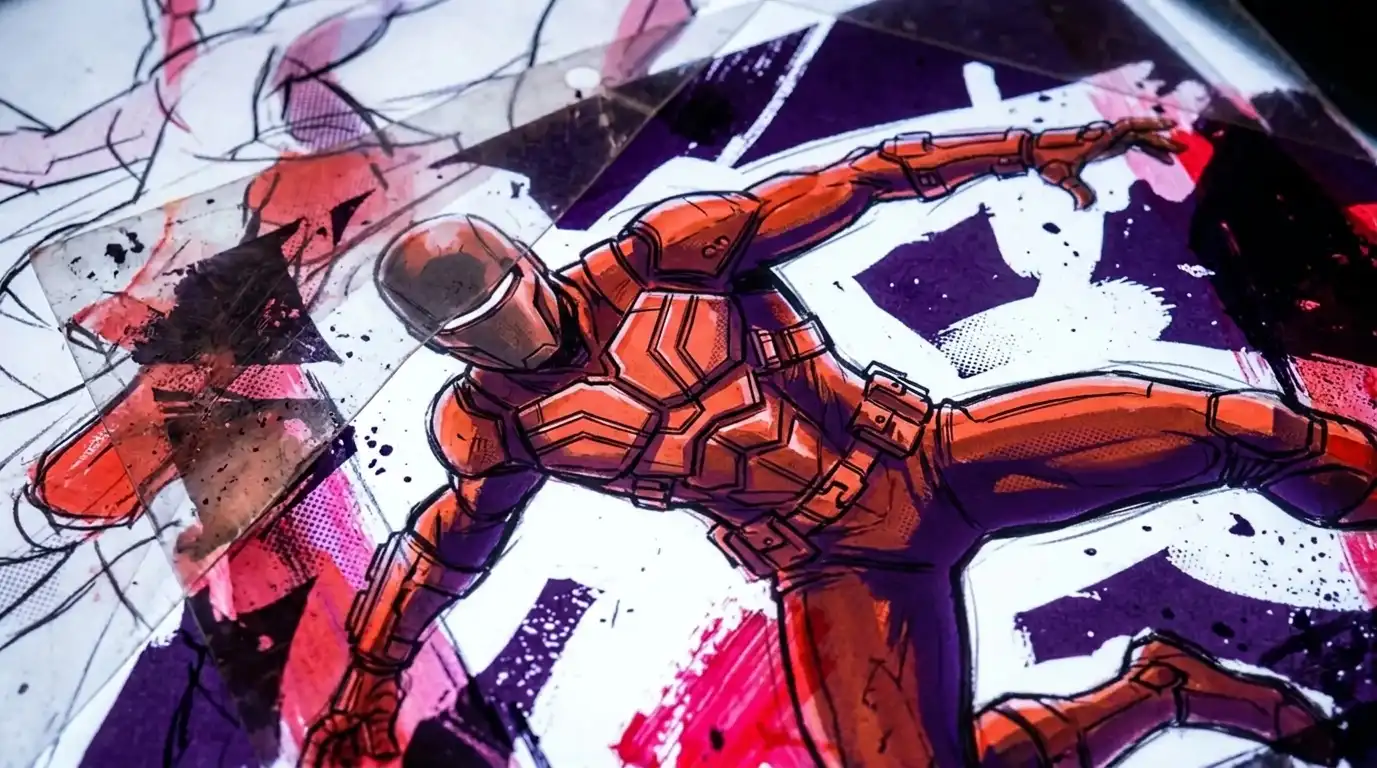

Sakuga is what happens when a viewer stops seeing animation as anonymous motion and starts looking for the labor inside it. The Japanese word refers broadly to the making of images and, in anime production, to drawn animation work. Fans transformed it into something more specific: a way of identifying, studying and celebrating moments when the craft becomes impossible to ignore.
The studio receives the logo. The cut keeps the handwriting.
What Sakuga Actually Means
Literally, sakuga (作画) means the making of pictures or drawings. Within anime production, the term is broader than its international fan usage. It refers to the work of creating drawn animation, not exclusively to spectacular action scenes or unusually fluid sequences.
Fan culture narrowed the word. In English-language anime discussion, sakuga commonly points to animation that stands out strongly enough to invite closer attention: an explosive action cut, a subtle piece of character acting, an unusual effects sequence or a few seconds in which timing, posing and movement feel unmistakably deliberate.
That does not make sakuga a scientific quality rating. It is a way of watching. Animation researcher Matteo Watz has argued that sakuga fandom is concerned not only with movement onscreen but with the processes and people that produced the movement. The sequence matters, but so does the question that follows it: who made this, and how?
The distinction is important because animation is collaborative. A finished cut may carry the work of key animators, in-between animators, animation directors, storyboard artists, episode directors, background artists, compositors and CG staff. Corrections can alter an animator’s original drawings, and production records do not always make every contribution publicly legible. Academic work on anime production describes that authorship as a dispersed form of agency spread across people, companies, production stages and sometimes national borders.
Sakuga fandom searches for individual hands inside that system. It should not pretend the system disappears.
When Fans Began Looking for the Hand
The modern history of sakuga appreciation is often traced through the rise of the Japanese charisma animator in the late 1970s and early 1980s: an animator whose style was recognizable enough to attract attention independently of the production around it. Writers on the subject frequently discuss Yoshinori Kanada alongside figures such as Yasuomi Umetsu, Yoshiaki Kawajiri and Ichirou Itano, without suggesting that they were the first animators fans had ever followed by name.
Kanada became the most influential early symbol of that shift. His contributions to the 1977–1978 television series Invincible Superman Zambot 3, particularly episode 22, displayed the qualities later associated with the Kanada lineage: aggressive poses, thick and expressive linework, distorted perspective and camera movement unconstrained by physical realism. Watz’s history notes that Kanada’s unusually identifiable style made it possible for attentive viewers to notice his work recurring across different episodes and productions, then connect those sequences to a name in the credits.
That connection changed how animation could be discussed. The unit of appreciation was no longer only the series, studio or director. It could be the animator and the cut.
In August 1982, Tokuma Shoten published the Yoshinori Kanada Special. Animation historian Matteo Watz has described it cautiously as possibly one of Japan’s earliest artbooks devoted to an individual animator. The book included original illustrations and key frames, essays from industry figures including Hayao Miyazaki, and a section that examined notable Kanada sequences frame by frame. Its importance was not merely that it collected attractive drawings; it treated one animator’s decisions as material worthy of sustained analysis.
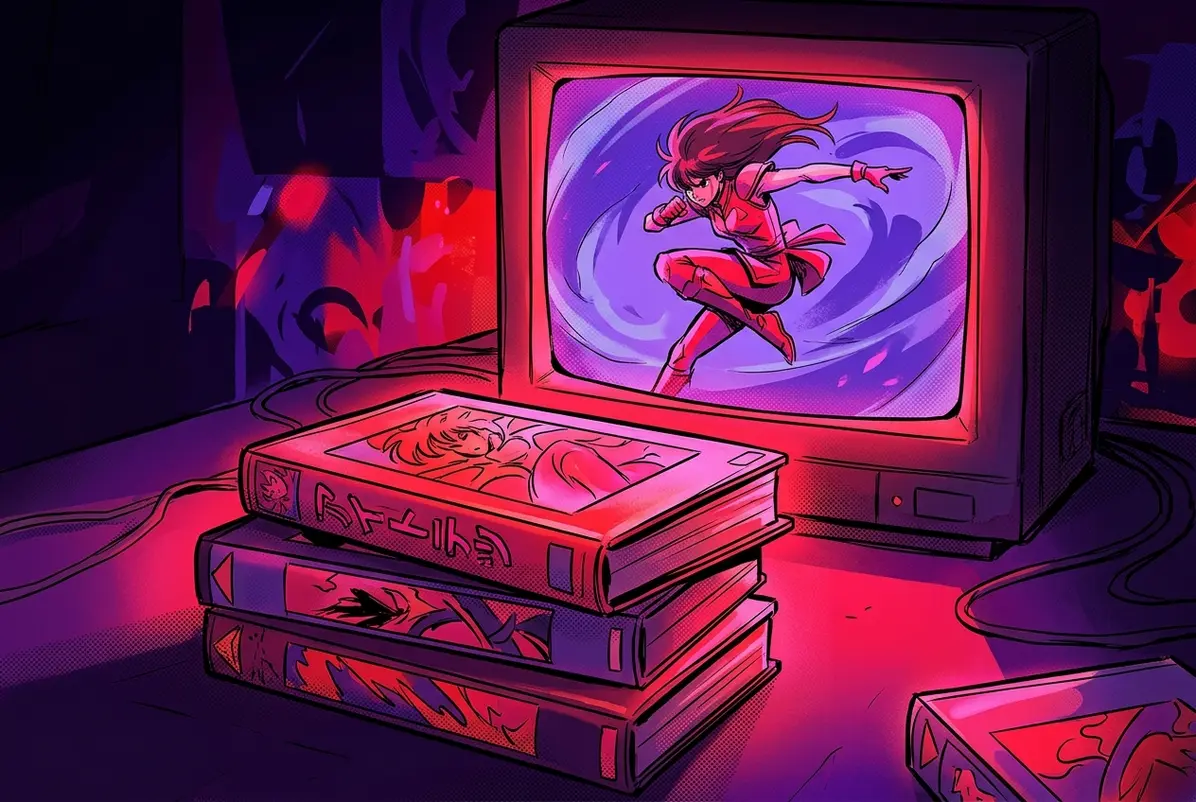
At roughly the same time, home video was changing what analysis could mean. Before domestic recording became widespread, a television episode could air once and vanish. A viewer could remember a striking sequence or inspect the credits, but comparison depended heavily on memory and access to rebroadcasts.
VCRs made animation repeatable. Fans could record broadcasts, trade tapes, slow sequences down and inspect them frame by frame. The technology’s spread coincided with the growth of otaku culture and the rising visibility of charisma animators. A fleeting impression could become a study object.
Sakuga fandom was built from that pause button.
How Sakuga Crossed Into Western Fandom
The next major shift arrived through the internet. Video clips, forums and fan-maintained reference sites gave viewers outside Japan access to the same basic ritual: isolate a sequence, replay it, compare it with other work and attempt to identify the people responsible.
Two early communities were particularly important. French-language Catsuka developed into a major resource for animation news, rare clips and discussion during the early 2000s. English-language AniPages, founded by Ben Ettinger in 2004, focused more directly on animation history and individual creators. Its “Karisuma Animators” material and forum discussions introduced English-speaking readers to animators whose names were rarely foregrounded in ordinary overseas anime coverage.
A fan who knew Naruto as a Studio Pierrot production could begin following the work associated with Norio Matsumoto or Atsushi Wakabayashi. The studio identity remained useful, but it was no longer the end of the investigation.
Around 2006, according to Watz’s reconstruction of the term’s online history, Japanese video sites began using sakuga as a tag for fan-edited “sakuga MAD” compilations. These videos stripped remarkable sequences from their original narrative contexts, arranged them around an animator, production or technique, and circulated them as objects of appreciation. The practice moved through Japanese message boards and video sites before appearing more widely on platforms such as YouTube.
This format was powerful and reductive at the same time. It made animation craft easier to discover, but it could also turn a feature-length film or television episode into a bag of disconnected highlights. The shot became visible. The production around it could disappear.
English-language coverage widened the audience further. Kevin Cirugeda’s 2015 Anime News Network feature, “The Joy of Sakuga,” offered an accessible introduction to the vocabulary, artists and viewing habits surrounding the community. By the late 2010s, the word had moved well beyond specialist forums, although its meaning often became flattened into a synonym for “the animation suddenly got expensive.”
That shorthand misses the real change. Sakuga was never only a description of what was onscreen. It was an instruction to look again.
Sakugabooru and the Sakugabowl
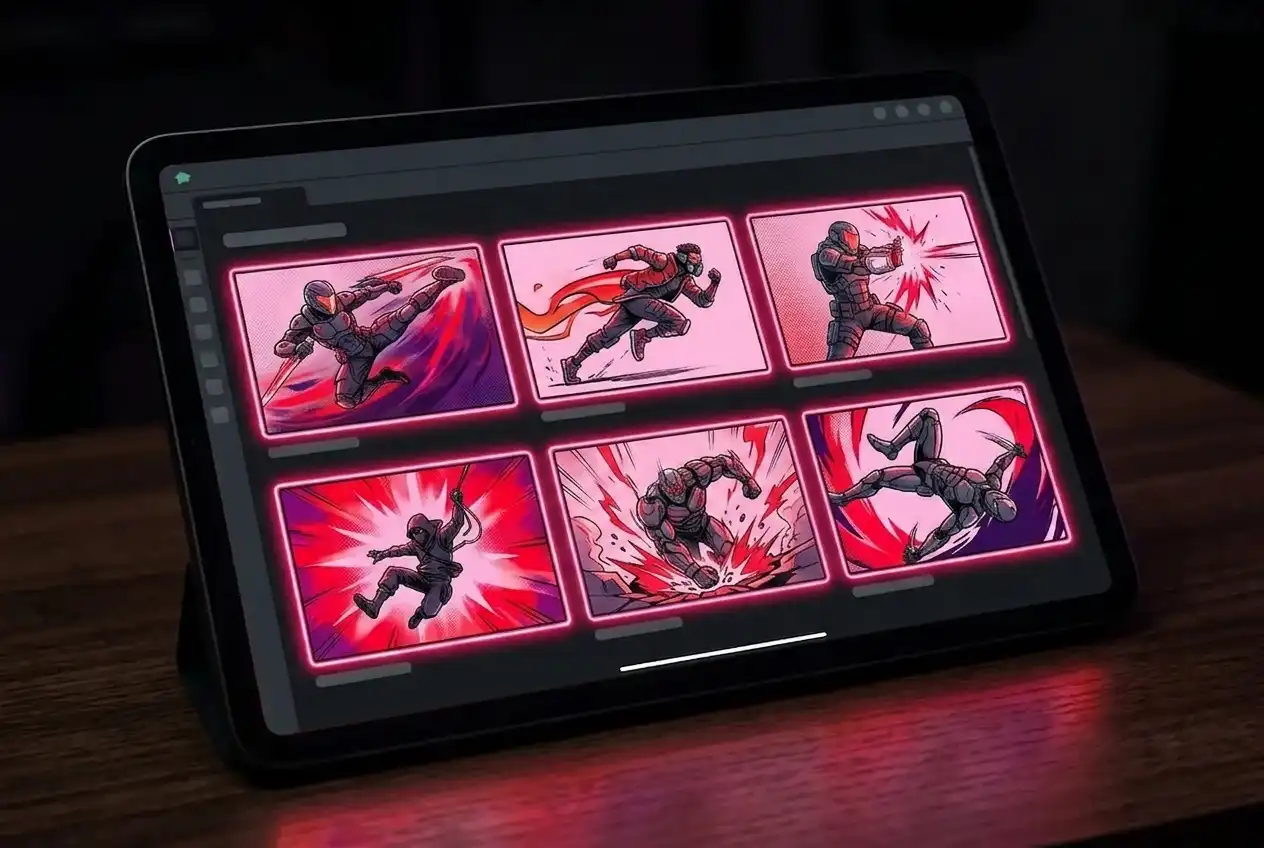
The most visible archive produced by this viewing culture is Sakugabooru, a tag-based database dedicated to sakuga videos and images. Its posts allow users to move between clips, productions, techniques and names attached by contributors, making it possible to trace recurring visual habits across otherwise unrelated works.
The archive is extraordinarily useful. It is not a court record. Some credits and attributions can be confirmed through production materials, staff statements or published records. Others may be informed community judgments based on style, timing and known staff participation. A finished sequence may also contain substantial corrections or contributions from more than one department.
The careful formulation is therefore not always “this animator made everything visible in this shot.” It may be “this cut is credited or commonly attributed to this animator, within a larger collaborative process.” Sakuga appreciation becomes less credible when confidence outruns the surviving evidence.
Sakuga Blog extends that archival practice into criticism, production reporting and interviews. At the beginning of the year, it also publishes the Sakugabooru Animation Awards, which the site calls its “Sakugabowl”. Contributors select notable work across categories such as episodes, shows, opening and ending sequences, aesthetics and animation design, then explain the reasoning behind their choices.
It is not merely an exercise in declaring winners. The written commentary preserves how knowledgeable viewers interpreted the year’s animation while it was still culturally current. The awards turn taste into documentation.
That is the larger function of sakuga fandom. It does not simply cheer when the drawings become more elaborate. It creates records around work that the ordinary marketing machinery of anime may credit only as a studio product.
How to Recognize Sakuga Without Pretending to Be Certain
There is no single visual test for sakuga. Smoothness can be impressive, but more drawings do not automatically produce more expressive animation. A sequence may stand out because it uses fewer drawings with unusually forceful poses, abrupt changes in timing or carefully controlled spacing.
Viewers often notice changes in linework, proportions, perspective or movement. Action may become more elastic. Effects may form distinctive shapes. A character’s body language may suddenly become unusually specific. The apparent camera may move through a space that would be difficult or impossible to photograph physically.
Some of those qualities are associated with identifiable traditions. Extreme perspective, held poses followed by sharp bursts of motion and conspicuously expressive drawing are often discussed in relation to Kanada and the animators influenced by him. That does not mean every distorted perspective shot descends directly from Kanada or that a particular technique proves the identity of its artist.
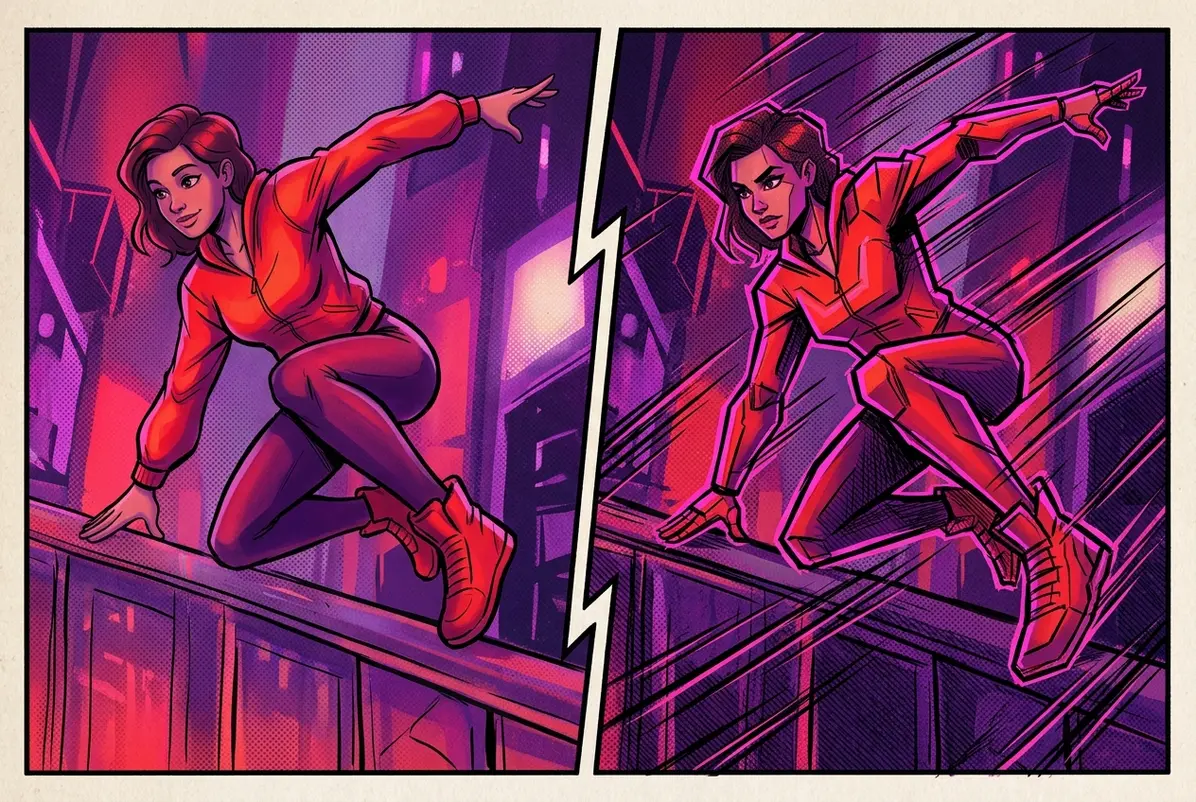
A sudden change may reflect a different key animator. It may also come from animation-direction corrections, storyboarding, effects work, compositing, CG integration or a deliberate change in the production’s overall visual strategy. Style recognition is an educated form of interpretation, not fingerprint analysis.
The best entry point is therefore not memorizing a checklist. It is developing the original sakuga habit: replay the sequence, notice what the movement is doing, inspect reliable credits and production materials when available, and remain honest about the limits of attribution.
The Cut Keeps the Credit Alive
Sakuga fandom did not invent remarkable animation. It invented a durable method for refusing to let remarkable animation remain completely anonymous.
That method can become distorted. Clips can be separated from the stories that give them meaning. Individual animators can be treated like solitary auteurs inside productions built by hundreds of people. Guesses can harden into facts through repetition. The hunt for spectacular movement can also ignore less obvious craft: restrained acting, layout, color, compositing, background work and the production coordination that allows any ambitious cut to survive.
But the underlying impulse remains valuable. Most viewers encounter anime through titles, characters, studios and directors. Sakuga culture asks them to look beneath those labels and notice that movement was constructed drawing by drawing, decision by decision, by workers whose names may otherwise pass in seconds of credits.
The sequence may last five seconds. Attribution turns those seconds into a body of work.
The studio receives the logo. Sakuga fandom searches for the hands inside it.
Frequently Asked Questions
What does sakuga mean in Japanese?
Sakuga (作画) literally refers to making pictures or drawings. In anime production, it is used broadly in relation to drawn animation work. International fan usage commonly applies the term to especially notable animation and to the practice of studying the artists and processes behind it.
Does sakuga simply mean high-quality animation?
Not exactly. Fans often use the word for animation they consider remarkable, but sakuga is not an objective quality grade. It can refer to expressive timing, unusual posing, effects animation, character acting or another production choice that rewards close attention. It also describes a culture of studying how animation was made.
Who founded sakuga culture?
No single person founded it. Yoshinori Kanada is commonly treated as its most influential early figure because his recognizable work helped strengthen fan interest in following individual animators during the late 1970s and early 1980s. He also had important predecessors, and sakuga culture developed through the combined influence of animators, publications, recording technology and fan communities.
What is Sakugabooru?
Sakugabooru is a tag-based archive dedicated to animation videos and images. Fans use it to search for clips associated with productions, techniques and creators. Its information is valuable, but community attribution should not always be treated as official confirmation.
How did sakuga become popular outside Japan?
Early internet communities played a major role. French-language Catsuka and English-language AniPages circulated clips, production information and discussion of individual animators during the early 2000s. Sakuga MAD compilations and video-sharing platforms spread the viewing practice further, while English-language articles such as Anime News Network’s “The Joy of Sakuga” made the subject more accessible to general anime audiences.
Can an animator always be identified by style alone?
No. Recognizable habits can support an attribution, but anime production is collaborative, and finished footage may include corrections or contributions from several departments. Official credits, production materials and direct staff confirmation are stronger evidence than visual resemblance alone.
'%3e%3cg id='Final-Copy-2_2_' transform='translate(1275.000000, 200.000000)'%3e%3cpath class='st0' d='M7.4,12.8h6.8l3.1-11.6H7.4C4.2,1.2,1.6,3.8,1.6,7S4.2,12.8,7.4,12.8z'/%3e%3c/g%3e%3c/g%3e%3c/g%3e%3cg id='final---dec.11-2020'%3e%3cg id='_x30_208-our-toggle' transform='translate(-1275.000000, -200.000000)'%3e%3cg id='Final-Copy-2' transform='translate(1275.000000, 200.000000)'%3e%3cpath class='st1' d='M22.6,0H7.4c-3.9,0-7,3.1-7,7s3.1,7,7,7h15.2c3.9,0,7-3.1,7-7S26.4,0,22.6,0z M1.6,7c0-3.2,2.6-5.8,5.8-5.8 h9.9l-3.1,11.6H7.4C4.2,12.8,1.6,10.2,1.6,7z'/%3e%3cpath id='x' class='st2' d='M24.6,4c0.2,0.2,0.2,0.6,0,0.8l0,0L22.5,7l2.2,2.2c0.2,0.2,0.2,0.6,0,0.8c-0.2,0.2-0.6,0.2-0.8,0 l0,0l-2.2-2.2L19.5,10c-0.2,0.2-0.6,0.2-0.8,0c-0.2-0.2-0.2-0.6,0-0.8l0,0L20.8,7l-2.2-2.2c-0.2-0.2-0.2-0.6,0-0.8 c0.2-0.2,0.6-0.2,0.8,0l0,0l2.2,2.2L23.8,4C24,3.8,24.4,3.8,24.6,4z'/%3e%3cpath id='y' class='st3' d='M12.7,4.1c0.2,0.2,0.3,0.6,0.1,0.8l0,0L8.6,9.8C8.5,9.9,8.4,10,8.3,10c-0.2,0.1-0.5,0.1-0.7-0.1l0,0 L5.4,7.7c-0.2-0.2-0.2-0.6,0-0.8c0.2-0.2,0.6-0.2,0.8,0l0,0L8,8.6l3.8-4.5C12,3.9,12.4,3.9,12.7,4.1z'/%3e%3c/g%3e%3c/g%3e%3c/g%3e%3c/g%3e%3c/svg%3e) Your Privacy Choices
Your Privacy Choices