

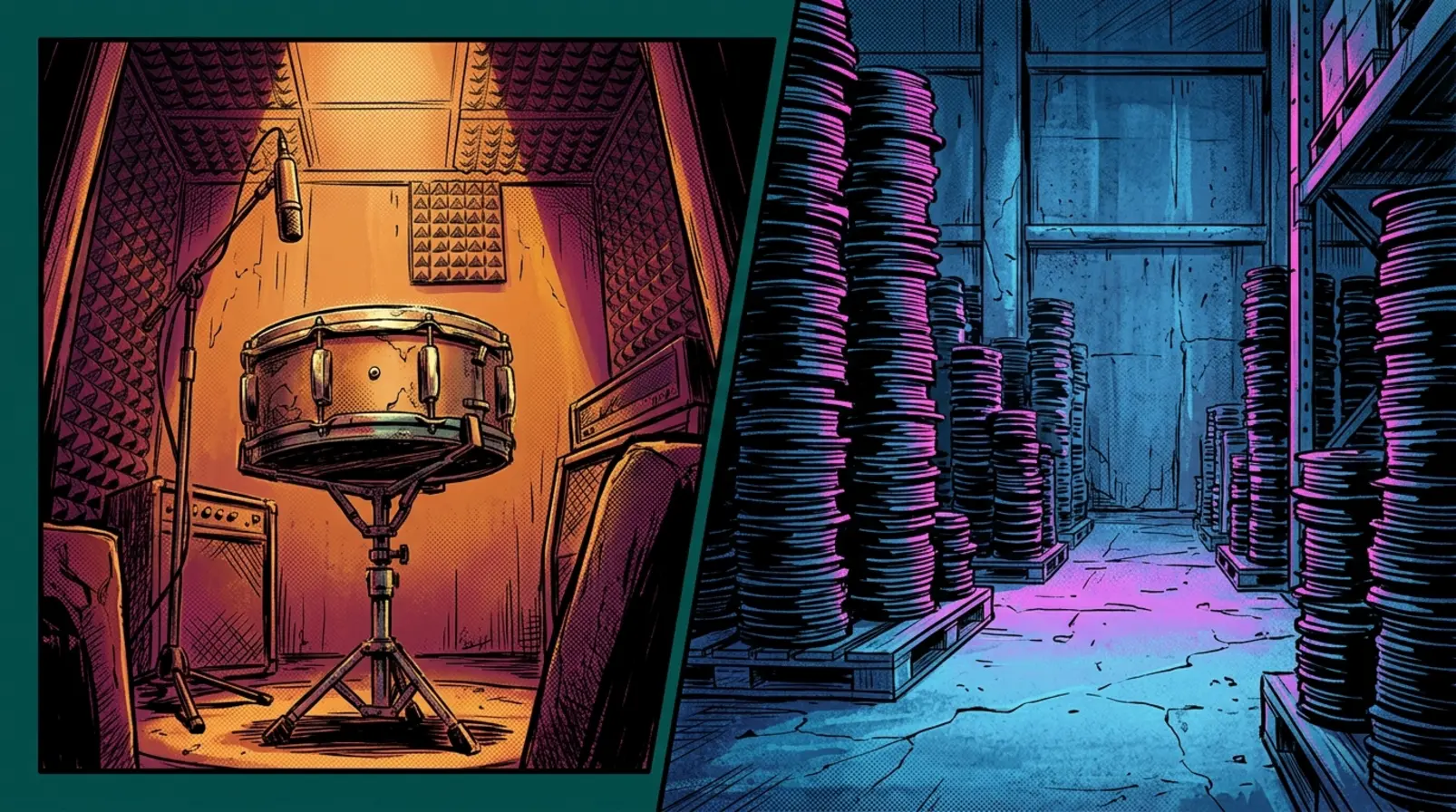

Halfway through The Winstons’ 1969 instrumental “Amen, Brother,” the rest of the band drops out and drummer Gregory Coleman takes over. For roughly six seconds, his kick, snare and ride cymbal fill the space. Then the song carries on. Those four bars became the Amen break, one of the most influential drum performances ever recorded.
It would travel from American soul records into New York hip-hop, British jungle, drum and bass, pop music and television. Guinness World Records recognized “Amen, Brother” as the most sampled track, documenting 2,835 uses as of March 21, 2018. In May 2026, the Library of Congress added the recording to the National Recording Registry. An instrumental B-side had become a piece of musical history, carried there by generations of musicians who kept finding new possibilities inside Coleman’s playing.
The Six Seconds That Made the Amen Break
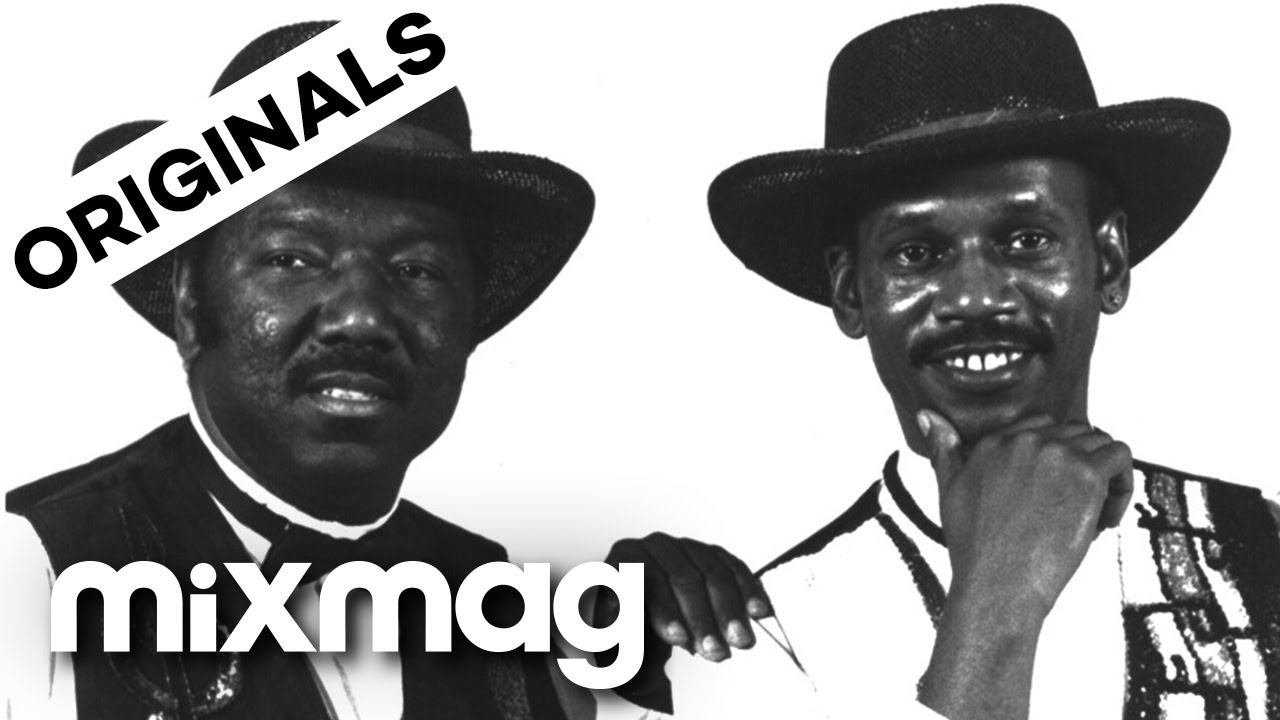
The Winstons were a Washington, D.C., soul and funk group whose biggest hit, “Color Him Father,” reached No. 2 on Billboard’s R&B chart and No. 7 on the Hot 100 in 1969. Songwriter and bandleader Richard Lewis Spencer received the 1970 Grammy for Best Rhythm & Blues Song.
“Amen, Brother” occupied the other side of the single. Drawing on gospel material familiar to the musicians, the instrumental came together quickly. Spencer later told the BBC that the band worked it up in about 20 minutes. Nobody was planning a new rhythmic vocabulary for musicians who hadn’t been born yet. They were making a record.
At approximately 1 minute and 26 seconds, Coleman gets his moment. What makes the passage special isn’t simply its speed. His ride cymbal holds a steady pulse while the snare moves around it, arriving late in the third bar before a syncopated flourish brings the band back in. Splice’s breakdown of the performance identifies these small rhythmic irregularities as essential to its character.
The beat has momentum without sounding mechanical. Individual hits land with different accents, and the cymbals leave a wash of sound behind the sharper snare strikes. Those details would become especially valuable when producers began slowing the recording, speeding it up and cutting it into pieces.
Spencer himself was modest about the break’s supposed genius. Asked by WFAE in 2017 what made it special, he admitted he couldn’t quite explain it. To musicians accustomed to playing danceable grooves every night, it was another drum passage. Its extraordinary second life began when a different generation heard it with different ears.
How Hip-Hop DJs Gave the Break a Second Life
Before digital audio workstations made sampling a matter of dragging waveforms across a screen, finding a good break meant digging through records. DJs hunted for passages where the drums played alone, then used turntables and editing equipment to extend or rearrange those moments.
Louis “BreakBeat Lou” Flores became one of the figures connecting that record-hunting culture with a new generation of producers. Flores credited Afrika Bambaataa with introducing him to “Amen, Brother” around 1980. Working with Lenny Roberts, he included the recording on the first volume of Ultimate Breaks & Beats in 1986, a compilation series devoted to making desirable drum breaks accessible to DJs.
The version required some ingenuity. In a Red Bull Music Academy interview, Flores described playing the 45-rpm record at 33 rpm. Slowing the playback lowered the pitch and transformed the rapid original passage into a heavier hip-hop groove. His editing made an overlooked section of a soul record newly useful.
Salt-N-Pepa used the break on “I Desire” in 1986. Mantronix manipulated it on “King of the Beats” in 1988, while N.W.A built much of “Straight Outta Compton” around a slowed-down version that same year. These recordings helped introduce Coleman’s playing to audiences who might never have encountered The Winstons’ original single.
It was a remarkable form of musical rediscovery. DJs had recognized something valuable in a record that the mainstream market had largely left behind. Sampling allowed that recording to enter new musical conversations without requiring its original performers to return to a studio.
How Jungle Turned the Amen Break Into a New Instrument
Hip-hop producers had demonstrated what could happen when an old drum break became the foundation of a new track. British producers working in breakbeat hardcore and jungle took the idea further during the early 1990s.
They didn’t always want Coleman’s original four-bar performance to repeat unchanged. Instead, they sliced it into smaller fragments: an individual snare, a kick, a cymbal strike or a short burst containing several hits. Those fragments could be retriggered in a different order, accelerated, reversed or layered with other sounds.
The result was sometimes so intricate that it resembled a drummer attempting several impossible maneuvers at once. But the texture of the original performance remained. The shifting accents, room sound and cymbal wash helped give these electronically assembled rhythms a sense of physical movement.
Jungle also grew from more than an interest in American drum breaks. London rave culture, Jamaican sound-system traditions, reggae, dancehall, hip-hop and new sampling techniques all helped shape its identity. As Beatportal’s history of drum and bass documents, the Amen break became a recurring ingredient in a much larger musical experiment.
Records by artists such as Shy FX, Squarepusher and other breakbeat innovators demonstrated how far that experiment could go. The same six seconds could become a driving loop, a rapid percussion storm or a pattern so carefully rearranged that the original drummer’s timing was transformed into something nearly unplayable by human hands.
British producer Roni Size captured the attraction particularly well in a 2017 WFAE interview, describing how he could manipulate the break and make it “sing and dance the way you wanted it to.”
That flexibility was the breakthrough. Coleman had recorded a specific performance in 1969. Sampling technology gave later musicians the freedom to treat its sounds as material for performances of their own.
From Underground Clubs to Pop Culture
By the late 1990s, the Amen break had traveled well beyond the scenes that popularized it. David Bowie used it in “Little Wonder,” while Oasis incorporated it into “D’You Know What I Mean?” in 1997. The opening theme of Futurama also brought the familiar rhythm into television, another example of the break’s reach documented by Splice.
Its appeal wasn’t confined to one sound or tempo. In hip-hop, the break could swing behind a rapper. In jungle, it could be reconstructed into intricate high-speed percussion. Elsewhere, a recognizable burst of its snare and cymbal pattern could lend a recording the excitement of decades of breakbeat culture.
The most interesting part is how much creative identity emerged from the same source. Producers could use the complete passage or rearrange individual sounds beyond easy recognition. The Amen break became familiar enough to serve as a reference point, yet flexible enough that new artists continued discovering different uses for it.
Honoring the Musicians Who Made It Possible
That influence eventually prompted a conversation about recognition and compensation. Interviews and published reporting indicate that Coleman and Spencer received no sampling royalties from the break’s widespread reuse, even as their recording helped shape major releases and entire genres.
There is also a story of appreciation inside that history. In 2015, British DJ Martyn Webster organized a crowdfunding campaign for Spencer, inviting listeners and musicians to acknowledge the contribution of The Winstons. The campaign raised approximately £24,000. It was a voluntary gift rather than sampling royalties, and it demonstrated how personally the recording’s legacy resonated with its audience.
Spencer received the money and thanked the supporters in a video. As WFAE reported, the former bandleader later taught history in North Carolina and remained proud of his family’s educational accomplishments as well as his musical career. In 2017, he was also selected for induction into the North Carolina Music Hall of Fame.
Coleman died in 2006 and Spencer in 2020. Although neither lived to see every subsequent honor, their musical contribution continued to inspire listeners, DJs and drummers. The crowdfunding campaign was one tangible expression of that gratitude.
The Amen Break Becomes American Sound Heritage
On May 14, 2026, the Library of Congress selected “Amen, Brother” for the National Recording Registry. The institution specifically celebrated Coleman’s six-second performance and the astonishing range of music that grew from it.
The selection placed a once-overlooked B-side among recordings recognized for their cultural, historical or aesthetic significance. It also acknowledged something music fans had understood for decades: the impact of a recording cannot always be measured by its original chart position, sales or intended purpose.
The break’s influence is still generating new performances. In April 2023, drummer Merlin Matthews released 75 newly recorded versions of the Amen break, using different combinations of kick drums, snares and ride cymbals at 136 beats per minute. The sample pack offered producers fresh recordings of the rhythmic idea, with subtle differences in tone, tuning and articulation.
It’s an especially fitting development for a piece of music that has spent decades being reconstructed. Coleman’s original performance inspired producers to manipulate recorded sound, and those manipulations have inspired other musicians to pick up drumsticks and play new versions.
The Amen break belongs to a musical tradition in which ideas move between performers, recordings, scenes and generations. A soul band’s instrumental becomes a hip-hop DJ’s prized discovery, then a jungle producer’s raw material, then a new drummer’s invitation to experiment. Each step changes the sound without erasing where it began.
On the original record, The Winstons gave Coleman four bars to himself. The rest of music has spent decades finding new ways to join him.
Amen Break FAQ
Who played the Amen break?
Gregory C. Coleman, the drummer for The Winstons, performed the four-bar solo on their 1969 instrumental “Amen, Brother.” His performance is credited by the Library of Congress.
Which genres use the Amen break?
The break has appeared in hip-hop, breakbeat hardcore, jungle, drum and bass, pop, rock and experimental electronic music. It is especially closely associated with British jungle and drum and bass, where producers rearranged its individual drum sounds into complex new patterns, as described in Beatportal’s genre history.
Did the original musicians earn royalties from sampling?
Published accounts indicate that Gregory Coleman and Richard Lewis Spencer did not receive royalties from the recording’s widespread sampling. In 2015, fans and musicians organized a crowdfunding campaign that raised approximately £24,000 for Spencer as a gesture of appreciation. The money was a gift, not sampling royalties.
Is “Amen, Brother” in the Library of Congress?
Yes. On May 14, 2026, the Library of Congress announced that The Winstons’ 1969 recording had been selected for the 2026 National Recording Registry, recognizing the recording’s lasting cultural importance.
'%3e%3cg id='Final-Copy-2_2_' transform='translate(1275.000000, 200.000000)'%3e%3cpath class='st0' d='M7.4,12.8h6.8l3.1-11.6H7.4C4.2,1.2,1.6,3.8,1.6,7S4.2,12.8,7.4,12.8z'/%3e%3c/g%3e%3c/g%3e%3c/g%3e%3cg id='final---dec.11-2020'%3e%3cg id='_x30_208-our-toggle' transform='translate(-1275.000000, -200.000000)'%3e%3cg id='Final-Copy-2' transform='translate(1275.000000, 200.000000)'%3e%3cpath class='st1' d='M22.6,0H7.4c-3.9,0-7,3.1-7,7s3.1,7,7,7h15.2c3.9,0,7-3.1,7-7S26.4,0,22.6,0z M1.6,7c0-3.2,2.6-5.8,5.8-5.8 h9.9l-3.1,11.6H7.4C4.2,12.8,1.6,10.2,1.6,7z'/%3e%3cpath id='x' class='st2' d='M24.6,4c0.2,0.2,0.2,0.6,0,0.8l0,0L22.5,7l2.2,2.2c0.2,0.2,0.2,0.6,0,0.8c-0.2,0.2-0.6,0.2-0.8,0 l0,0l-2.2-2.2L19.5,10c-0.2,0.2-0.6,0.2-0.8,0c-0.2-0.2-0.2-0.6,0-0.8l0,0L20.8,7l-2.2-2.2c-0.2-0.2-0.2-0.6,0-0.8 c0.2-0.2,0.6-0.2,0.8,0l0,0l2.2,2.2L23.8,4C24,3.8,24.4,3.8,24.6,4z'/%3e%3cpath id='y' class='st3' d='M12.7,4.1c0.2,0.2,0.3,0.6,0.1,0.8l0,0L8.6,9.8C8.5,9.9,8.4,10,8.3,10c-0.2,0.1-0.5,0.1-0.7-0.1l0,0 L5.4,7.7c-0.2-0.2-0.2-0.6,0-0.8c0.2-0.2,0.6-0.2,0.8,0l0,0L8,8.6l3.8-4.5C12,3.9,12.4,3.9,12.7,4.1z'/%3e%3c/g%3e%3c/g%3e%3c/g%3e%3c/g%3e%3c/svg%3e) Your Privacy Choices