

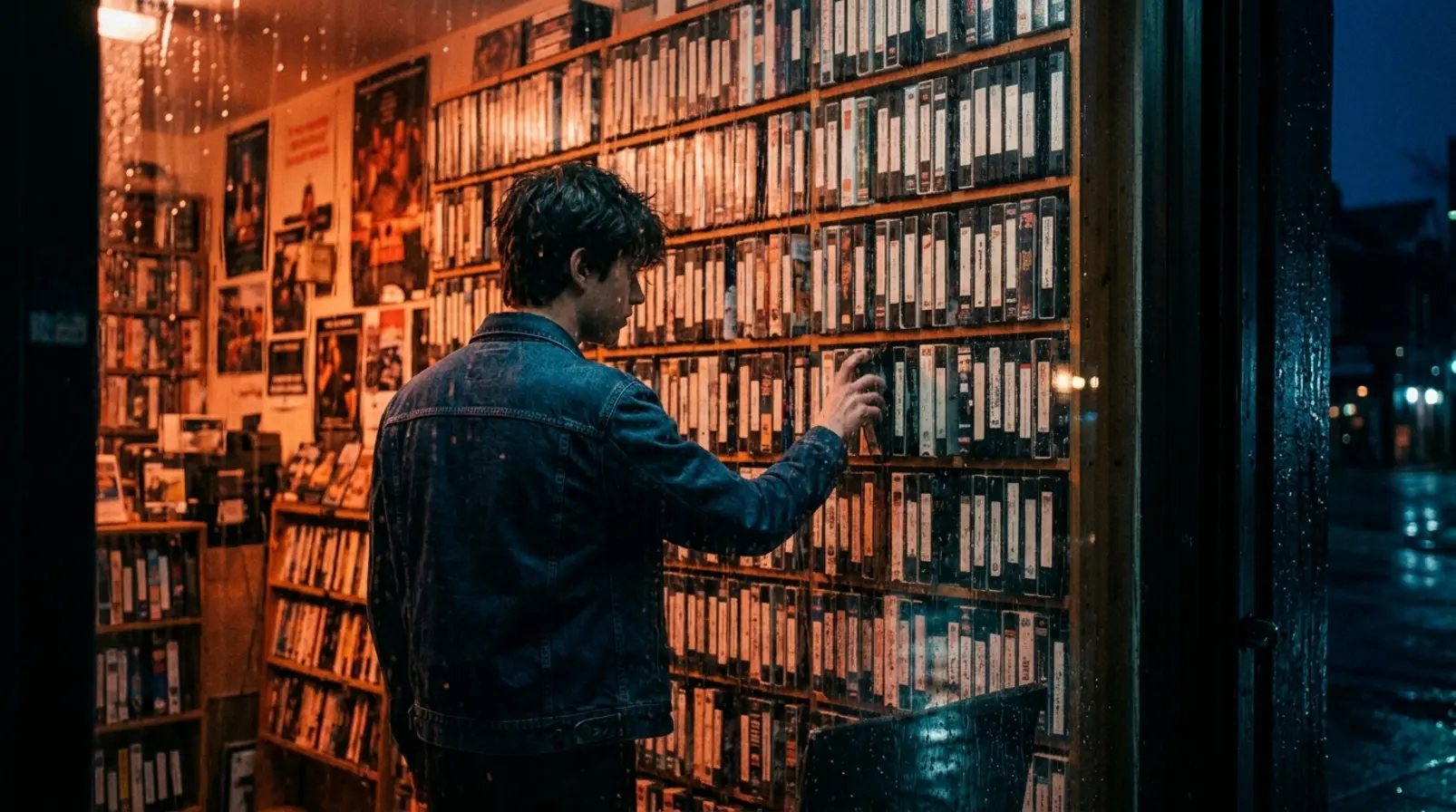

At My Cat’s VHS in Sacramento, owner Tony Swan told CBS Sacramento in June 2026 that he had sold 4,700 tapes after reaching 1,000 sales in February. That is one shop owner’s reported count, not evidence of a national VHS boom. But it lands inside a broader physical-media revival that is easier to see in stores than in industry totals. In Los Angeles, younger customers have described buying and renting discs partly because the movies they want are sometimes absent from streaming platforms.
Nostalgia is clearly part of the transaction. So are artwork, obsolete machinery, low-resolution texture and the simple pleasure of browsing a shelf. But physical media also offers something less sentimental: a copy sitting in the room is not waiting for a platform to renew a license. That does not make VHS permanent. It makes it independent in one very specific way.
Streaming Still Owns the Balance Sheet
The scale of the comeback is easy to exaggerate. In 2025, U.S. consumers spent $57.5 billion on subscription streaming, more than 92 percent of consumer home-entertainment spending tracked by the Digital Entertainment Group. Physical sell-through fell 9.3 percent to $870 million. Even inside that shrinking category, 4K UHD was the exception, rising 12 percent for the year.
There is an important limit to those numbers: DEG’s physical category covers DVD, Blu-ray and 4K UHD sell-through. It is not a measurement of the secondhand VHS trade happening at stores like My Cat’s VHS. The industry’s cleanest national data therefore says almost nothing about the little economy of twenty- and thirty-year-old tapes changing hands at retro shops, swaps and online marketplaces.
A nationally representative Consumer Reports survey of 2,022 U.S. adults, fielded in May 2024, found that 49 percent had used DVDs or Blu-rays at home during the previous year and 15 percent had used VHS tapes. Those are surprisingly large numbers for supposedly obsolete formats, but the survey establishes persistence rather than resurgence. It did not measure whether VHS use was increasing, who was buying the tapes or how much anyone was spending.
Vidiots in Los Angeles offers a better look at actual behavior. The nonprofit reopened in Eagle Rock in 2023 after its Santa Monica store had closed in 2017. It loaned roughly 22,000 discs in its first year back, around 50,000 the next year, and reached a little over 1,000 rentals a week in 2025. January 2026 became its biggest month yet.
Vidiots is mostly a DVD and Blu-ray story, not a VHS one. That distinction matters. Its growth points toward a larger appetite for physical access without proving that videocassettes themselves are returning to anything resembling their old mass-market role.
What a Tape Cannot Do to You
Streaming catalogs are conditional. Disney disclosed in 2023 that it had removed produced content from its direct-to-consumer services as part of a change in content strategy, triggering a $1.5 billion impairment charge at the time. Licensed films disappear when agreements end. Originals can disappear when companies decide the cost of keeping them available no longer fits the plan.
A cassette sitting on a shelf is outside that particular system. Nobody can remove its movie from an online menu because there is no menu.
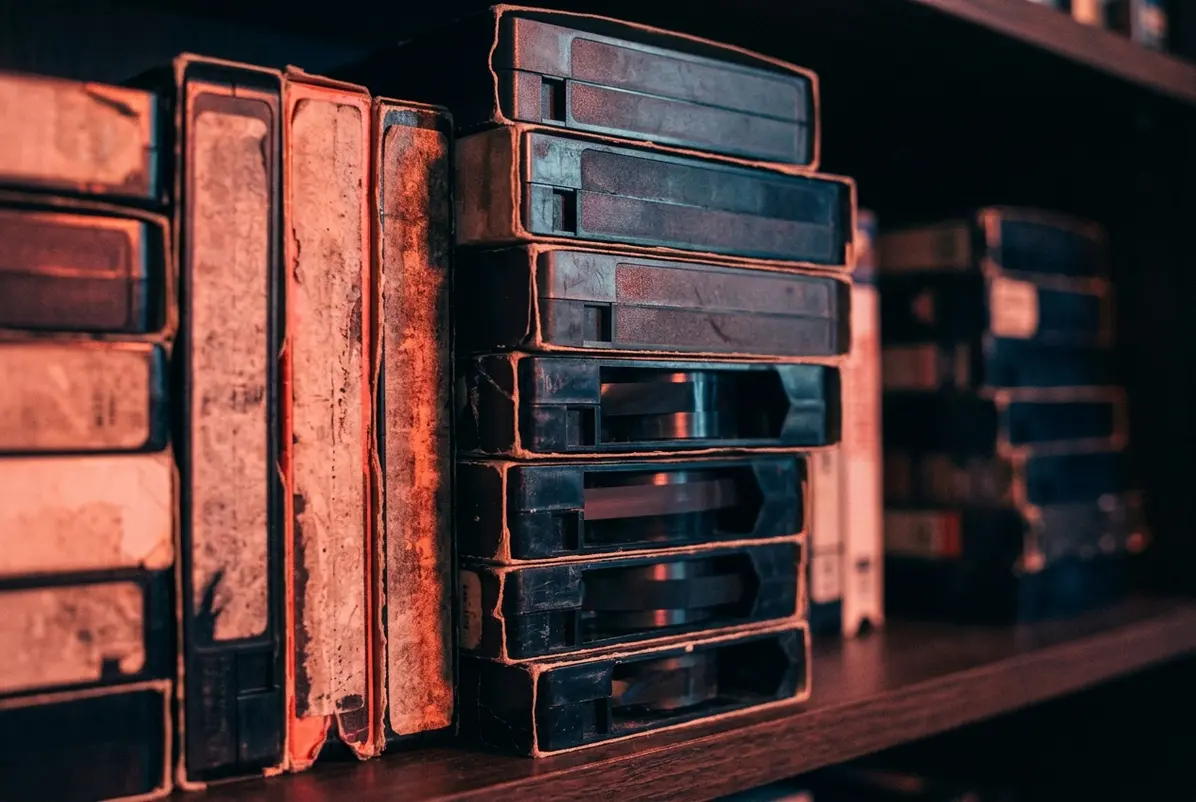
That should not be confused with archival permanence. The National Archives says magnetic tape life expectancy depends heavily on composition, storage and handling, with tapes under archival conditions generally lasting roughly 10 to 50 years before difficult decay appears. Videotape can shed, stick, distort or become unplayable. The National Archives also notes another weakness familiar to anyone who has tried to revive an old format: the machine required to read it has to survive too.
So the appeal is stranger than simply buying something “forever.” A VHS tape can die. What it cannot do is disappear because a licensing window closed on Tuesday.
The Comeback Has a VCR Problem
The mundane mechanism underneath the VHS revival is increasingly the machine itself. In April 2026, the Los Angeles Times reported that Be Kind Video in Burbank was renting VCRs and maintaining a waitlist for customers who wanted to buy one. At Video Hero VHS in Chatsworth, a staff member had taught himself to repair them.
That is a very different problem from vinyl, where a customer can still walk into a store and buy a newly manufactured turntable. VHS enthusiasm currently depends on a dwindling population of old decks, replacement parts, repair knowledge and people willing to keep the machinery alive. A wall of tapes is useless if the transport eats them.
The constraint also explains why the comeback can be culturally visible without becoming remotely mass-market. Finding an old copy of a movie is easy. Maintaining the little electromechanical factory required to play it is the commitment.
Sacramento Is Testing Whether Nostalgia Can Pay Rent
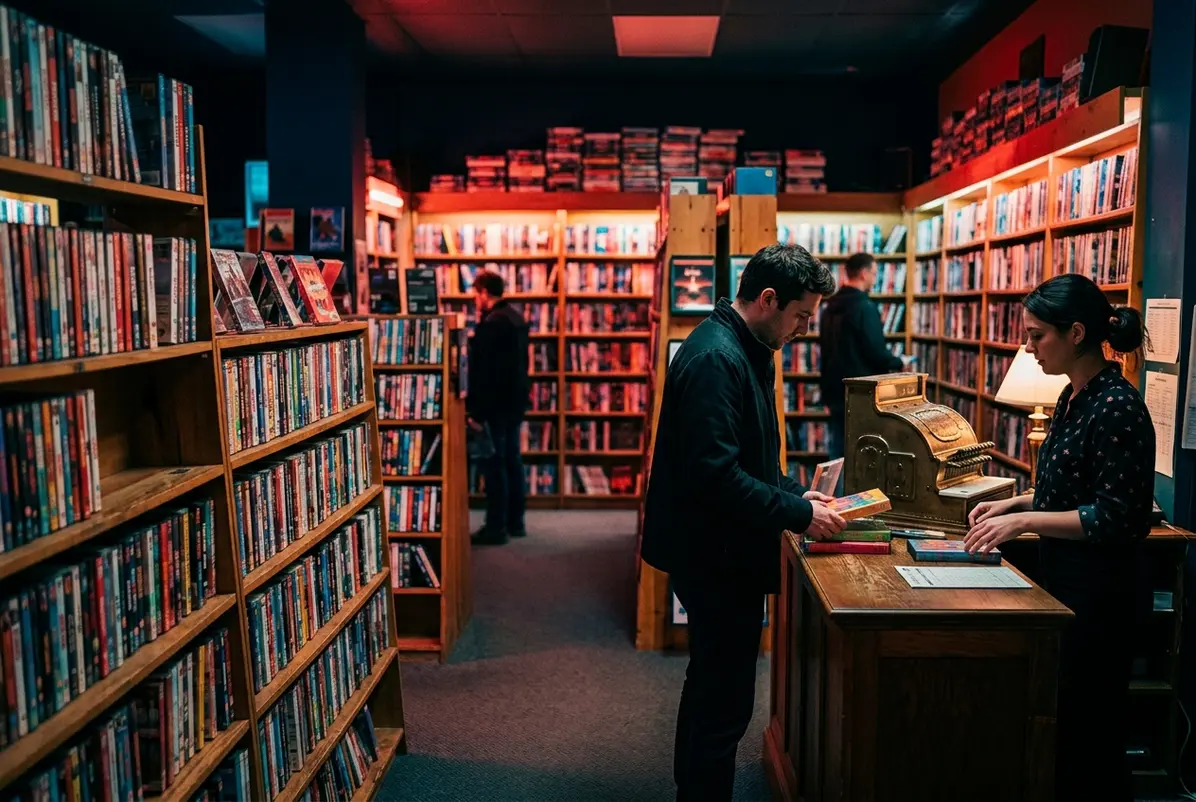
My Cat’s VHS is no longer Sacramento’s only attempt to turn that interest into a storefront. Chris Emery and Jefferson Miller have been building Very Good Video Store, and the Sacramento Business Journal reported on July 29 that the business planned to open at 3433 Broadway in Oak Park. Earlier reporting described plans for rentals, family-oriented titles and events rather than a store built only around rare horror tapes and collector speculation.
The second store is important precisely because it is not yet proof of success. A forthcoming shop is a bet. My Cat’s VHS has reported thousands of sales; Very Good Video still has to turn inventory, events and affection for the old video-store ritual into enough recurring business to support a physical location.
None of this threatens streaming. The numbers are not remotely close, and the VHS trade is too fragmented to support grand declarations about a national market reversal. What the scattered stores in Sacramento and Los Angeles show is narrower and more interesting. Streaming solved convenience so thoroughly that physical media no longer has to compete on convenience. It can sell the things the interface discarded: unavailable titles, human curation, cover art, mechanical ritual and a copy that remains where its owner left it.
The tape itself is fragile. That is part of the irony. What these stores are really selling is not permanence. It is possession… of a time… and an era.
'%3e%3cg id='Final-Copy-2_2_' transform='translate(1275.000000, 200.000000)'%3e%3cpath class='st0' d='M7.4,12.8h6.8l3.1-11.6H7.4C4.2,1.2,1.6,3.8,1.6,7S4.2,12.8,7.4,12.8z'/%3e%3c/g%3e%3c/g%3e%3c/g%3e%3cg id='final---dec.11-2020'%3e%3cg id='_x30_208-our-toggle' transform='translate(-1275.000000, -200.000000)'%3e%3cg id='Final-Copy-2' transform='translate(1275.000000, 200.000000)'%3e%3cpath class='st1' d='M22.6,0H7.4c-3.9,0-7,3.1-7,7s3.1,7,7,7h15.2c3.9,0,7-3.1,7-7S26.4,0,22.6,0z M1.6,7c0-3.2,2.6-5.8,5.8-5.8 h9.9l-3.1,11.6H7.4C4.2,12.8,1.6,10.2,1.6,7z'/%3e%3cpath id='x' class='st2' d='M24.6,4c0.2,0.2,0.2,0.6,0,0.8l0,0L22.5,7l2.2,2.2c0.2,0.2,0.2,0.6,0,0.8c-0.2,0.2-0.6,0.2-0.8,0 l0,0l-2.2-2.2L19.5,10c-0.2,0.2-0.6,0.2-0.8,0c-0.2-0.2-0.2-0.6,0-0.8l0,0L20.8,7l-2.2-2.2c-0.2-0.2-0.2-0.6,0-0.8 c0.2-0.2,0.6-0.2,0.8,0l0,0l2.2,2.2L23.8,4C24,3.8,24.4,3.8,24.6,4z'/%3e%3cpath id='y' class='st3' d='M12.7,4.1c0.2,0.2,0.3,0.6,0.1,0.8l0,0L8.6,9.8C8.5,9.9,8.4,10,8.3,10c-0.2,0.1-0.5,0.1-0.7-0.1l0,0 L5.4,7.7c-0.2-0.2-0.2-0.6,0-0.8c0.2-0.2,0.6-0.2,0.8,0l0,0L8,8.6l3.8-4.5C12,3.9,12.4,3.9,12.7,4.1z'/%3e%3c/g%3e%3c/g%3e%3c/g%3e%3c/g%3e%3c/svg%3e) Your Privacy Choices
Your Privacy Choices