

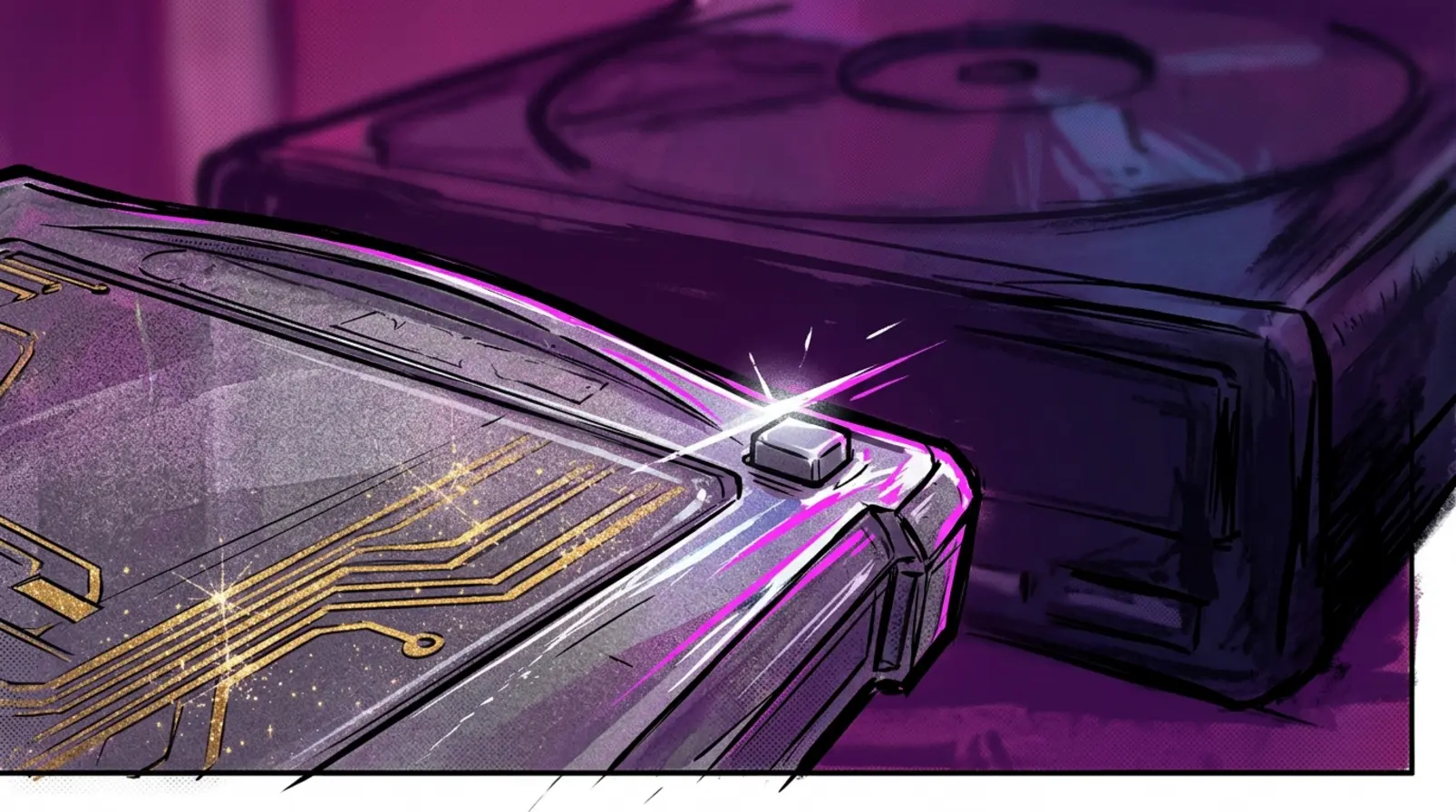

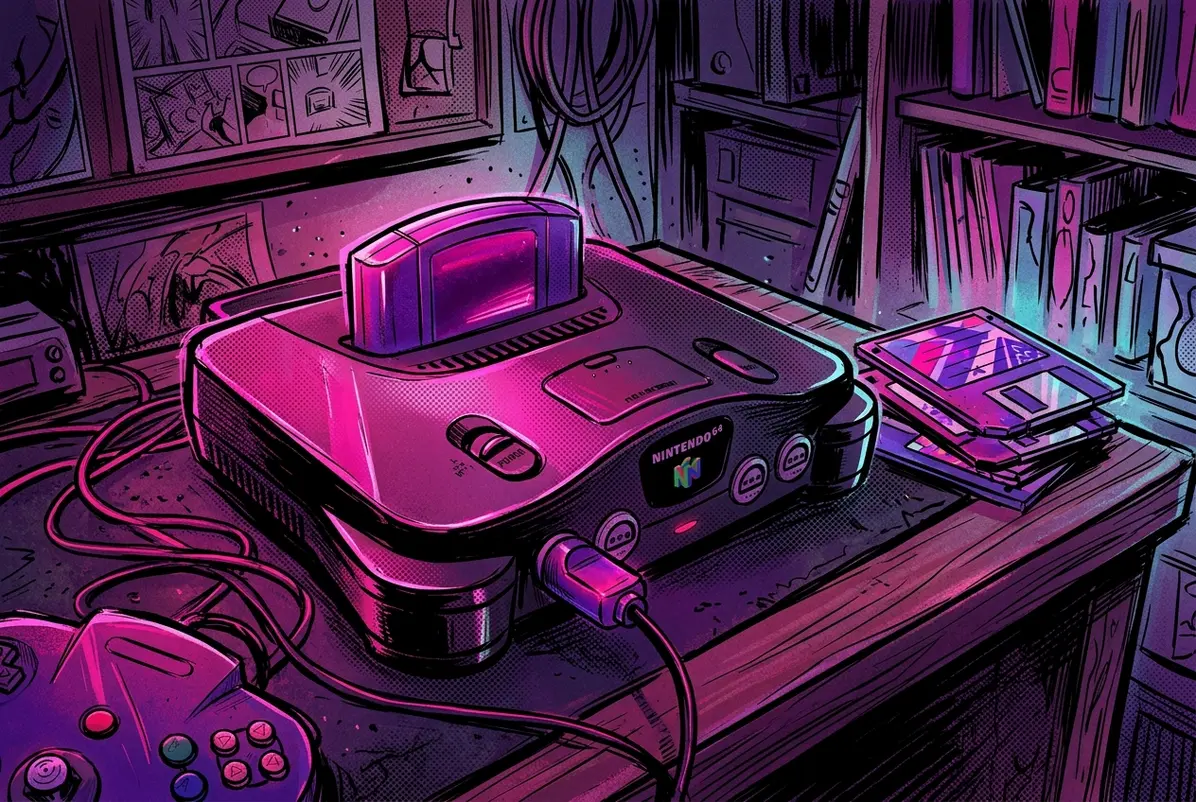
On original Nintendo 64 hardware, one of the 64DD’s strangest afterlives now fits in the cartridge slot. On August 2, 2026, RetroRGB reported Krikzz’s announcement of the EverDrive-64 Pro. Krikzz now lists the $169 flash cart with native 64DD support and an onboard button for swapping disks.
It is not the first cartridge to pull off the trick. SummerCart64, an open-source flash cart, already documents what its developers call complete 64DD hardware emulation, including direct playback of disk dumps, cartridge-and-disk combinations and multidisk software. The interesting change is therefore larger than one new EverDrive. The original 64DD is no longer necessary just to present 64DD disk-image data to an actual Nintendo 64. A peripheral that once occupied an entire layer beneath the console can now be impersonated from the slot above it.
What the Disk Drive Was Actually Trying to Do
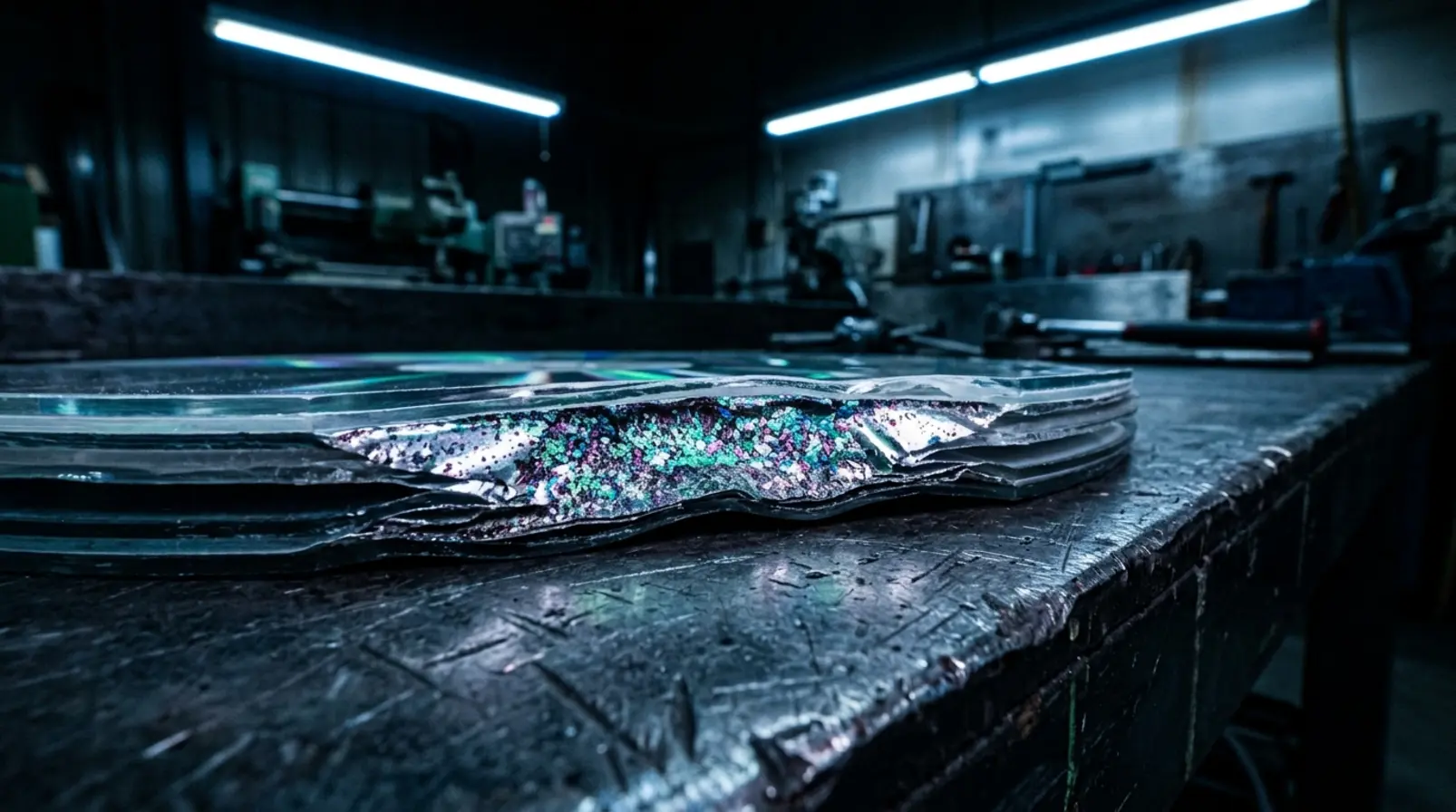
The 64DD was a Japan-only add-on that attached beneath the Nintendo 64 and used proprietary 64 MB magnetic disks with substantial writable regions. It also contained a real-time clock. Nintendo later described that writable capacity as more than a storage upgrade. In a 2008 discussion of the origins of Animal Crossing, Nintendo developers said the project began with the question of what kind of game could be built around the 64DD’s unusually large save data. The early concept involved multiple people affecting a shared world at different times.
That is an important clue to what Nintendo thought the machine might become. The drive was not merely a cheaper place to put game assets. Writable state could persist and accumulate in ways conventional Nintendo 64 cartridges made more difficult.
Randnet pushed the idea further. Announced in 1999 as a joint project between Nintendo and Recruit, the service paired the 64DD with communications hardware and offered internet access, email and network services. Contemporary coverage also described plans for users to edit music and images and publish characters they had created. Storage, creation and connectivity were supposed to reinforce one another.
Why the Hardware Arrived Too Late to Become a Platform
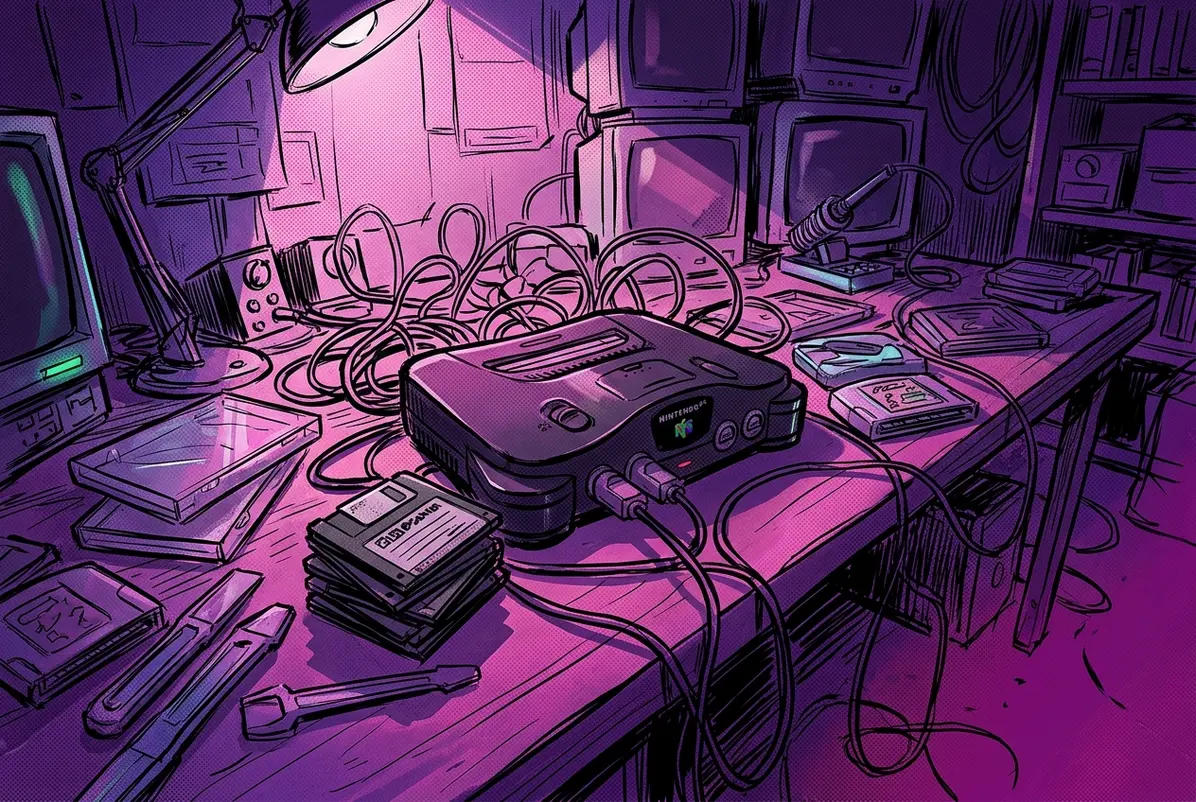
The 64DD finally arrived in Japan in December 1999 after years of delays and ultimately received only 10 released disks. By then, some of the games once associated with it had already found other ways forward.
The Legend of Zelda: Ocarina of Time exposes the problem at the level of moving parts. The game began development for the 64DD, but Nintendo’s original staff later explained that its huge library of Link animations worked better from cartridge. A ROM cartridge could retrieve animation data immediately. A magnetic disk had to move mechanically to the correct location, introducing seek time. With roughly 500 basic animation patterns in the finished game, simply preloading everything into memory was not practical.
That is more revealing than saying cartridges “won.” The 64DD’s writable medium enabled things Nintendo considered genuinely useful, but the same mechanical storage introduced friction when games needed fast access to large quantities of scattered data.
The network business had even less time to mature. Randnet began service in December 1999. By the end of October 2000 it had about 15,000 members, and RandnetDD said delays in planned content and the arrival of next-generation hardware had left it unable to see a path toward continuing to provide satisfactory new games and services. Randnet shut down on February 28, 2001.
Two Flash Carts Quietly Revisited the Job
More than two decades later, SummerCart64 attacks the problem from the opposite direction. Its official feature documentation says disk dumps can be loaded directly from microSD or USB and specifically lists support for combination games, where a Nintendo 64 cartridge and 64DD disk are expected to exist together, as well as multidisk titles.
Krikzz describes the EverDrive-64 Pro somewhat differently, listing native 64DD support alongside an onboard button for disk swapping. A current 64DD.org setup guide for the Pro also documents cartridge-plus-expansion combinations and notes that the appropriate 64DD IPL boot ROM files are required.
That last detail matters. Neither cartridge magically reads an original magnetic disk. Disk-image data lives on modern flash storage, while the cartridge hardware presents the behavior the Nintendo 64 software expects from the missing add-on. The boot environment still has to be supplied. Preservation has moved the medium, not abolished its architecture.
Combination software makes the trick especially clear. An expansion such as the F-Zero X Expansion Kit was designed around a normal Nintendo 64 Game Pak and a 64DD disk operating together. Supporting that arrangement means doing more than launching a converted standalone ROM. The flash cart has to let the original cartridge-side software behave as though the second storage device exists.
The Add-On Became a Feature
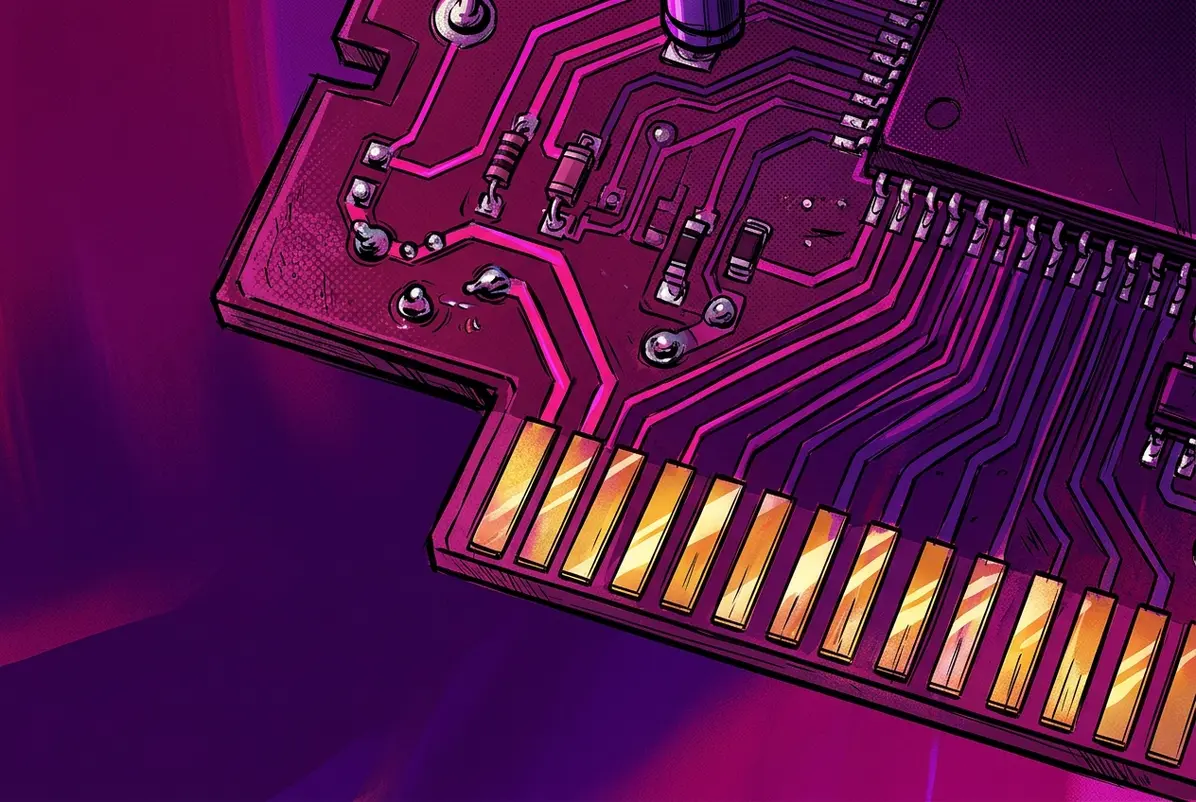
The EverDrive-64 Pro’s specification sheet makes the compression of all this history look almost mundane. A Cyclone 10 FPGA, 128 MB of SDRAM, a high-speed USB port, cheat support, a built-in NES core and native 64DD support occupy the same feature list. The disk drive is no longer the product. It is one capability implemented by the product.
SummerCart64 arrives at a similar destination from a different culture. It began as development-oriented hardware and remains completely open source. The EverDrive-64 Pro is a commercial $169 cartridge from an established flash-cart maker. Their engineering and business models are not interchangeable. What they share is the architectural reversal: the 64DD was built to expand what a cartridge-based Nintendo 64 could do, while these cartridges absorb the function of the expansion.
What a Flash Cart Cannot Actually Restore
None of this retroactively turns the 64DD into a successful platform. It also does not recreate the complete product Nintendo and Recruit were attempting to sell. The original service concept bundled the drive with communications hardware, utility software and paid network services. Email, web access, downloadable material and online publishing depended on infrastructure beyond the disk mechanism itself.
The modern cartridges preserve a narrower layer: local access to disk-image software and enough of the 64DD’s hardware behavior for that software to operate on a Nintendo 64. They do not restore Randnet, the original magnetic media or the commercial ecosystem that was supposed to make the peripheral matter.
That narrower survival may be more interesting anyway. Hardware preservation often ends up separating a machine’s useful logic from the physical and commercial machinery that originally carried it. Nintendo designed the 64DD as a new medium beneath the Nintendo 64. In 2026, some of its most important behavior can return to the same console through the cartridge slot it was built to supplement.
'%3e%3cg id='Final-Copy-2_2_' transform='translate(1275.000000, 200.000000)'%3e%3cpath class='st0' d='M7.4,12.8h6.8l3.1-11.6H7.4C4.2,1.2,1.6,3.8,1.6,7S4.2,12.8,7.4,12.8z'/%3e%3c/g%3e%3c/g%3e%3c/g%3e%3cg id='final---dec.11-2020'%3e%3cg id='_x30_208-our-toggle' transform='translate(-1275.000000, -200.000000)'%3e%3cg id='Final-Copy-2' transform='translate(1275.000000, 200.000000)'%3e%3cpath class='st1' d='M22.6,0H7.4c-3.9,0-7,3.1-7,7s3.1,7,7,7h15.2c3.9,0,7-3.1,7-7S26.4,0,22.6,0z M1.6,7c0-3.2,2.6-5.8,5.8-5.8 h9.9l-3.1,11.6H7.4C4.2,12.8,1.6,10.2,1.6,7z'/%3e%3cpath id='x' class='st2' d='M24.6,4c0.2,0.2,0.2,0.6,0,0.8l0,0L22.5,7l2.2,2.2c0.2,0.2,0.2,0.6,0,0.8c-0.2,0.2-0.6,0.2-0.8,0 l0,0l-2.2-2.2L19.5,10c-0.2,0.2-0.6,0.2-0.8,0c-0.2-0.2-0.2-0.6,0-0.8l0,0L20.8,7l-2.2-2.2c-0.2-0.2-0.2-0.6,0-0.8 c0.2-0.2,0.6-0.2,0.8,0l0,0l2.2,2.2L23.8,4C24,3.8,24.4,3.8,24.6,4z'/%3e%3cpath id='y' class='st3' d='M12.7,4.1c0.2,0.2,0.3,0.6,0.1,0.8l0,0L8.6,9.8C8.5,9.9,8.4,10,8.3,10c-0.2,0.1-0.5,0.1-0.7-0.1l0,0 L5.4,7.7c-0.2-0.2-0.2-0.6,0-0.8c0.2-0.2,0.6-0.2,0.8,0l0,0L8,8.6l3.8-4.5C12,3.9,12.4,3.9,12.7,4.1z'/%3e%3c/g%3e%3c/g%3e%3c/g%3e%3c/g%3e%3c/svg%3e) Your Privacy Choices
Your Privacy Choices