



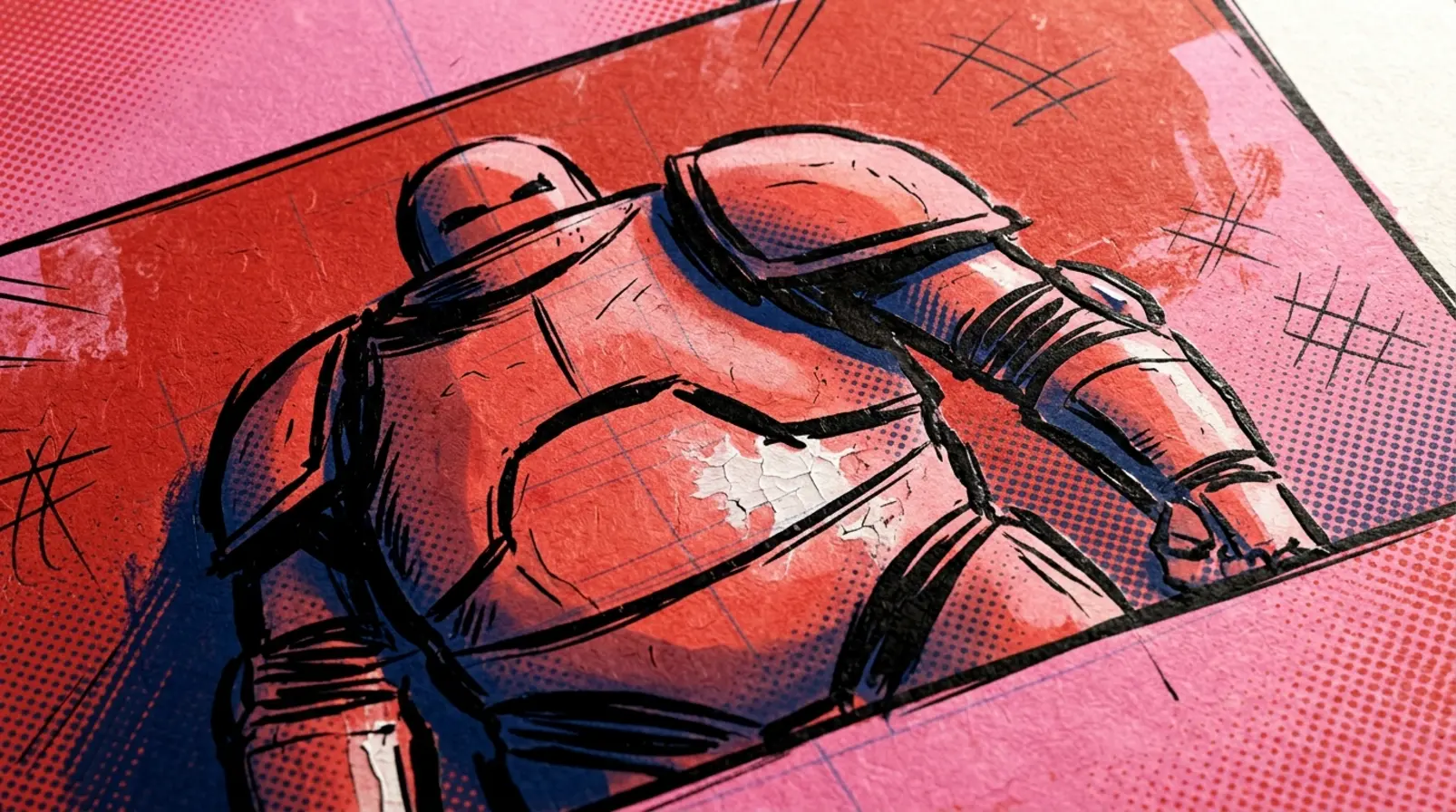
San Francisco awarded $129,294 to Balmy Alley Revive & Thrive, a project led by artists Tirso Gonzalez and Yano Rivera to restore six murals, five in Balmy Alley and one in the mini-park at 24th and York Streets. Five original artists are participating, including Juana Alicia. El Tecolote reported September 8 that the restoration designs were awaiting Arts Commission approval and that the group expected work to begin in September.
There is a useful contradiction buried in the project’s history. PLACA, the 1984 mural project that transformed Balmy Alley into a major site of Central American solidarity art, took its name partly from the idea of leaving a mark. Its artists intended twenty-seven murals to register the wars and U.S. intervention reshaping Central America. But many of those marks went onto garage doors, wooden doors and other ordinary exterior surfaces.
Four decades later, some of the artists are coming back to repair what survived. The city money does more than preserve paintings. It puts a budget behind the difficult physical question that was there from the beginning: how does public art meant to carry historical memory survive when the wall, door or fence underneath it was never built to last?
The Fields Came First
Juana Alicia moved to Salinas, California, in 1972 at the invitation of César Chávez. She worked in the agricultural fields during the United Farm Workers era, including for strawberry grower FreshPict and Interharvest, a United Fruit-owned lettuce company. She stopped fieldwork in September 1976 while seven months pregnant after pesticide poisoning, according to her oral history for the Smithsonian’s Archives of American Art.
Those years eventually went onto a wall. Her 1983 mural Las Lechugueras measured 30 by 70 feet and was painted in Politec acrylic, according to the artist’s own documentation. In the Smithsonian interview, Alicia called the work autobiographical.
The mural did not survive indefinitely. After it deteriorated beyond the point Alicia believed she could restore it herself, she sought city funding and was denied, according to El Tecolote. In 2004, she painted La Llorona’s Sacred Waters on the same wall at 24th and York.

PLACA Put Politics on Garage Doors
In 1984, Ray Patlán and Patricia Rodríguez recruited San Francisco artists for a concentrated mural project responding to the wars in El Salvador, Guatemala, Honduras and Nicaragua and opposing U.S. intervention in the region. They called it PLACA.
The name carried several meanings in Spanish, including plaque, nameplate and license plate, while also echoing placazo, a graffiti mark or tag. The project was intended to leave a mark on Balmy Alley. With a single $2,500 grant from the Zellerbach Family Foundation, thirty-six artists produced twenty-seven murals, according to SFMOMA’s history of the project.
The ambition was enormous. The infrastructure was not. Artists painted the surfaces the alley gave them: walls, wooden doors and roll-down garage doors attached to working homes and buildings. The murals became a political environment precisely because they occupied those everyday surfaces rather than a museum or purpose-built monument.

That choice also created the problem confronting the restoration project now. Exterior paint weathers. Wood cracks. Fences deteriorate. Garage doors get replaced. Property changes hands. El Tecolote reported that the current group originally proposed ten murals and ended with six; one candidate would have required replacing an entire garage door, while some property owners declined to participate.
A Permanent Mark on Impermanent Surfaces
One of the works now receiving attention is Juana Alicia’s 1996 No One Should Comply with an Immoral Law, a portrait of Salvadoran archbishop Óscar Romero. University of California research documents the mural and its location in Balmy Alley.
It was itself a replacement. Alicia’s PLACA mural Te Oímos Guatemala had occupied the location before the garage door carrying it was replaced. In 1996 she returned to the site with the Romero mural. A political image disappeared with a piece of building hardware; another political image took its place.
That history makes the current $129,294 grant more interesting than a conventional beautification project. The city’s Community Challenge Grant award lists Balmy Alley Revive & Thrive under Mission Murals, sponsored by Brava for Women in the Arts. The broader project includes mural restoration, new art, infrastructure improvements and community participation. For the restoration group, however, the six murals are intended as a beginning rather than an endpoint. Gonzalez told El Tecolote that the collective hopes the work can demonstrate a case for regular public funding of mural maintenance.

The original artists were dealing with current events, not preparing objects for an archive. PLACA responded to wars then unfolding in Central America. Alicia painted from agricultural labor she had actually performed. Later murals addressed other changes in the Mission. Their historical value accumulated afterward, while sun, moisture, plants, replacement doors and ordinary property maintenance kept working on the material underneath them.
Alicia now divides her time between Berkeley and Mérida, Yucatán. Her return to the project closes an unusual loop. The artist who once turned field labor and international politics into public images is now returning to help conserve that history.
PLACA wanted to leave a mark. It succeeded. The harder part, forty-two years later, is keeping the surface underneath it from disappearing.

'%3e%3cg id='Final-Copy-2_2_' transform='translate(1275.000000, 200.000000)'%3e%3cpath class='st0' d='M7.4,12.8h6.8l3.1-11.6H7.4C4.2,1.2,1.6,3.8,1.6,7S4.2,12.8,7.4,12.8z'/%3e%3c/g%3e%3c/g%3e%3c/g%3e%3cg id='final---dec.11-2020'%3e%3cg id='_x30_208-our-toggle' transform='translate(-1275.000000, -200.000000)'%3e%3cg id='Final-Copy-2' transform='translate(1275.000000, 200.000000)'%3e%3cpath class='st1' d='M22.6,0H7.4c-3.9,0-7,3.1-7,7s3.1,7,7,7h15.2c3.9,0,7-3.1,7-7S26.4,0,22.6,0z M1.6,7c0-3.2,2.6-5.8,5.8-5.8 h9.9l-3.1,11.6H7.4C4.2,12.8,1.6,10.2,1.6,7z'/%3e%3cpath id='x' class='st2' d='M24.6,4c0.2,0.2,0.2,0.6,0,0.8l0,0L22.5,7l2.2,2.2c0.2,0.2,0.2,0.6,0,0.8c-0.2,0.2-0.6,0.2-0.8,0 l0,0l-2.2-2.2L19.5,10c-0.2,0.2-0.6,0.2-0.8,0c-0.2-0.2-0.2-0.6,0-0.8l0,0L20.8,7l-2.2-2.2c-0.2-0.2-0.2-0.6,0-0.8 c0.2-0.2,0.6-0.2,0.8,0l0,0l2.2,2.2L23.8,4C24,3.8,24.4,3.8,24.6,4z'/%3e%3cpath id='y' class='st3' d='M12.7,4.1c0.2,0.2,0.3,0.6,0.1,0.8l0,0L8.6,9.8C8.5,9.9,8.4,10,8.3,10c-0.2,0.1-0.5,0.1-0.7-0.1l0,0 L5.4,7.7c-0.2-0.2-0.2-0.6,0-0.8c0.2-0.2,0.6-0.2,0.8,0l0,0L8,8.6l3.8-4.5C12,3.9,12.4,3.9,12.7,4.1z'/%3e%3c/g%3e%3c/g%3e%3c/g%3e%3c/g%3e%3c/svg%3e) Your Privacy Choices
Your Privacy Choices