

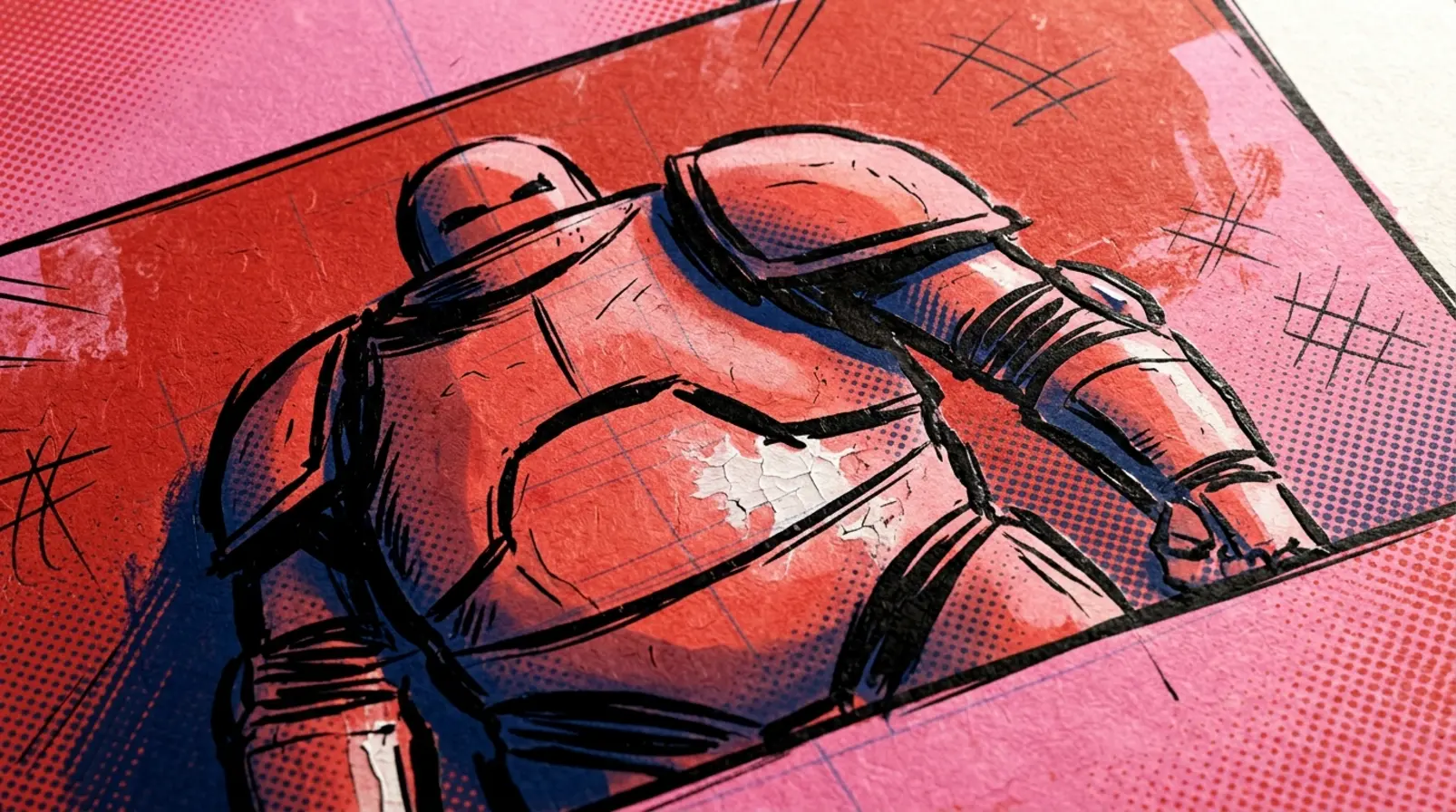

A single page of original comic art sold for $3,875,000 on July 10, 2026. The board is Don Heck’s opening splash for the Iron Man story in the March 1963 issue of Tales of Suspense No. 39, the comic that introduced the character. Heritage Auctions called it a new auction record for original comic art, while ICv2 described it as the most expensive piece of U.S. comic art ever sold at auction. The previous U.S. record was $3,360,000, set in January 2022 by page 25 from Marvel Super-Heroes Secret Wars No. 8.
The obvious story is that Iron Man became enormously valuable. The stranger one is that the object commanding nearly $4 million was once just part of the production machinery. Marvel printed the comic, kept the board, and operated for years without a systematic program for returning older original art. The record sale turns attention back toward a much messier history of storage, missing pages and eventually contested returns.
Heritage’s explanation for the price starts with scarcity. “Very few of the early Marvel splash pages are known to exist,” auction director Joe Mannarino said. What makes that scarcity interesting is the system behind it. Early Marvel art was not being handled as a future class of blue-chip collectibles. It was production material.
A Publisher Without a Systematic Return Program
Marvel did not have a systematic art-return program during the 1960s. Irene Vartanoff, who later managed the company’s art warehouse, said Marvel began returning current original art with titles carrying 1974 cover dates. The “warehouse,” as she described it, was actually a locked room in an industrial building.
Vartanoff also recalled Stan Lee, sometimes through production executive Sol Brodsky, asking her to supply a small number of pages for business contacts. More revealing than the giveaways was her description of the company’s attitude toward the material: “Marvel Comics did not value the original art once the comic book had been printed.” She wrote that Marvel showed similarly little interest in preserving material for reprints and that her later warehouse inventory turned up only a handful of original covers.
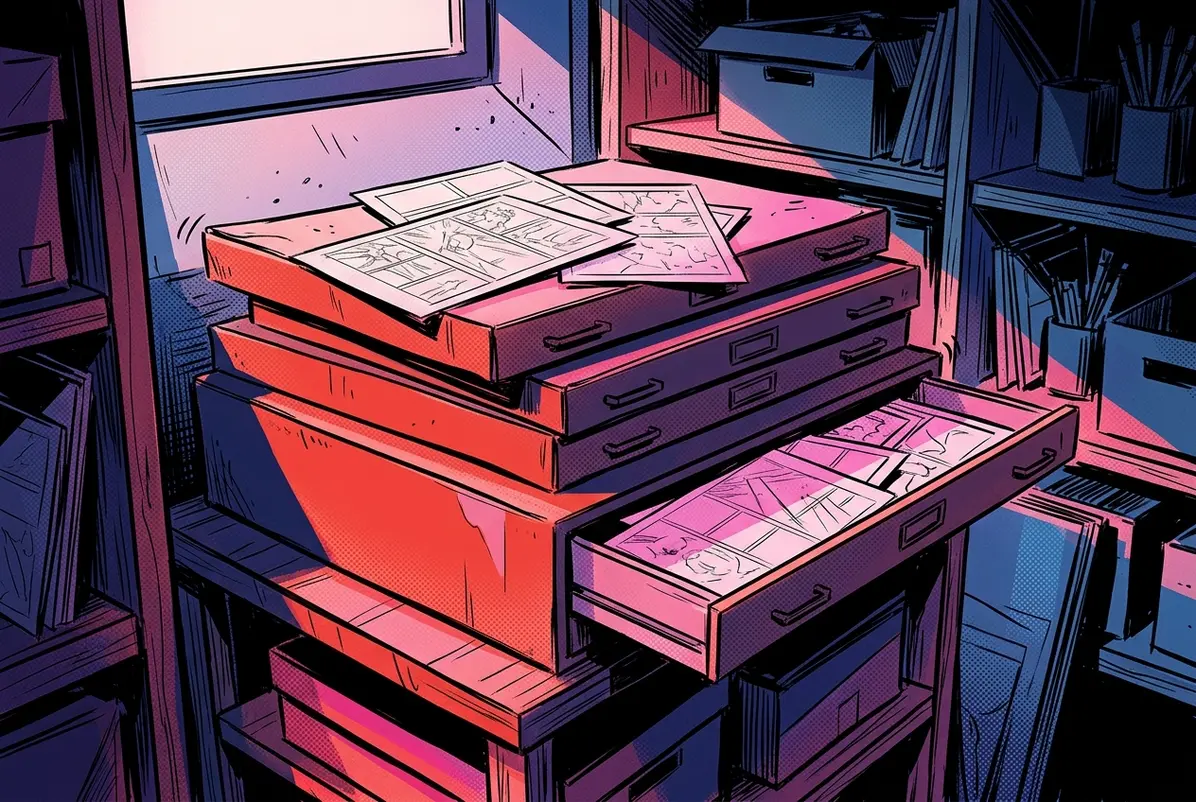
Jack Kirby’s experience shows how large the gap could become. Kirby produced more than 8,000 pages for Marvel between 1960 and 1970, according to The Comics Journal. When Marvel began offering the return of older backstock in 1984, its initial accounting identified only 88 Kirby pages.
Kirby’s return was also handled differently from those of most other creators. Instead of the standard one-page release, Marvel sent him a four-page agreement describing the artwork as a gift and placing extensive restrictions on its display, reproduction and commercial use. The dispute became public in 1985. By May 1987, Marvel had dropped the four-page document, amended the shorter form and returned the art. The eventual tally had risen to approximately 1,900 Kirby pages—far more than the original 88, but still only a fraction of his reported Marvel output from the 1960s.
One Page and One Printed Comic
The same four-day Heritage event produced a useful comparison. A CGC 4.5 copy of Action Comics No. 1, Superman’s 1938 debut, sold for $1,525,000. Heritage said roughly 200,000 copies were originally printed and estimated that 100 or fewer survive.
The Heck board sold for about 2.54 times as much.
That does not make original art categorically more valuable than comic books; auction prices depend on the particular objects and bidders in the room. It does expose a fascinating difference in scarcity. Action Comics No. 1 was manufactured by the hundreds of thousands for readers. Heck’s splash page was the physical object from which one piece of one comic was produced. There was only one.
The original board also still looks like a production object. Heritage’s lot description notes graphite beneath the ink, an original paste-up credits box signed by Stan Lee, glue stains, handling wear and pinholes in the upper corners. Those are not defects imported into the story afterward. They are traces of what the board was for.
What the auction record does not reveal is how this particular page left Marvel’s custody. The published provenance does not support saying it was discarded, stolen, rescued from destruction or nearly lost. Its individual journey remains separate from the broader documented history.
Scarcity Wasn’t Always the Point
The Heck page was not an isolated expensive lot. Eighteen comic-art lots reached at least six figures in Heritage’s July auction. That does not, by itself, prove a permanent market trajectory. It does show what collectors were willing to pay in that room for surviving pieces of comics history.
The deeper irony is already established without inventing a missing chapter in this page’s provenance. Vartanoff described a company that once placed little value on original boards after publication. Kirby’s initial backstock offer accounted for 88 pages from a decade in which he had produced more than 8,000. Early Marvel splash pages are now scarce enough for Heritage’s comics director to mention their survival as part of the market logic behind a record price.
Sixty-three years after Tales of Suspense No. 39 reached readers, collectors paid $3,875,000 for the battered sheet of Bristol board behind its first page. The glue stains and pinholes survived the transition intact. What changed was everything around them.
'%3e%3cg id='Final-Copy-2_2_' transform='translate(1275.000000, 200.000000)'%3e%3cpath class='st0' d='M7.4,12.8h6.8l3.1-11.6H7.4C4.2,1.2,1.6,3.8,1.6,7S4.2,12.8,7.4,12.8z'/%3e%3c/g%3e%3c/g%3e%3c/g%3e%3cg id='final---dec.11-2020'%3e%3cg id='_x30_208-our-toggle' transform='translate(-1275.000000, -200.000000)'%3e%3cg id='Final-Copy-2' transform='translate(1275.000000, 200.000000)'%3e%3cpath class='st1' d='M22.6,0H7.4c-3.9,0-7,3.1-7,7s3.1,7,7,7h15.2c3.9,0,7-3.1,7-7S26.4,0,22.6,0z M1.6,7c0-3.2,2.6-5.8,5.8-5.8 h9.9l-3.1,11.6H7.4C4.2,12.8,1.6,10.2,1.6,7z'/%3e%3cpath id='x' class='st2' d='M24.6,4c0.2,0.2,0.2,0.6,0,0.8l0,0L22.5,7l2.2,2.2c0.2,0.2,0.2,0.6,0,0.8c-0.2,0.2-0.6,0.2-0.8,0 l0,0l-2.2-2.2L19.5,10c-0.2,0.2-0.6,0.2-0.8,0c-0.2-0.2-0.2-0.6,0-0.8l0,0L20.8,7l-2.2-2.2c-0.2-0.2-0.2-0.6,0-0.8 c0.2-0.2,0.6-0.2,0.8,0l0,0l2.2,2.2L23.8,4C24,3.8,24.4,3.8,24.6,4z'/%3e%3cpath id='y' class='st3' d='M12.7,4.1c0.2,0.2,0.3,0.6,0.1,0.8l0,0L8.6,9.8C8.5,9.9,8.4,10,8.3,10c-0.2,0.1-0.5,0.1-0.7-0.1l0,0 L5.4,7.7c-0.2-0.2-0.2-0.6,0-0.8c0.2-0.2,0.6-0.2,0.8,0l0,0L8,8.6l3.8-4.5C12,3.9,12.4,3.9,12.7,4.1z'/%3e%3c/g%3e%3c/g%3e%3c/g%3e%3c/g%3e%3c/svg%3e) Your Privacy Choices
Your Privacy Choices