


A variant cover is alternate cover art for the same comic-book issue. It can be sold alongside the regular edition, offered as a retailer incentive, commissioned for a store or convention, or built around a particular artist, finish, or treatment. The modern marketed format is generally traced to DC’s The Man of Steel #1 in 1986. Forty years later, the cover itself has become a collectible market running alongside the comic underneath it.
How the Variant Cover Became a Market of Its Own
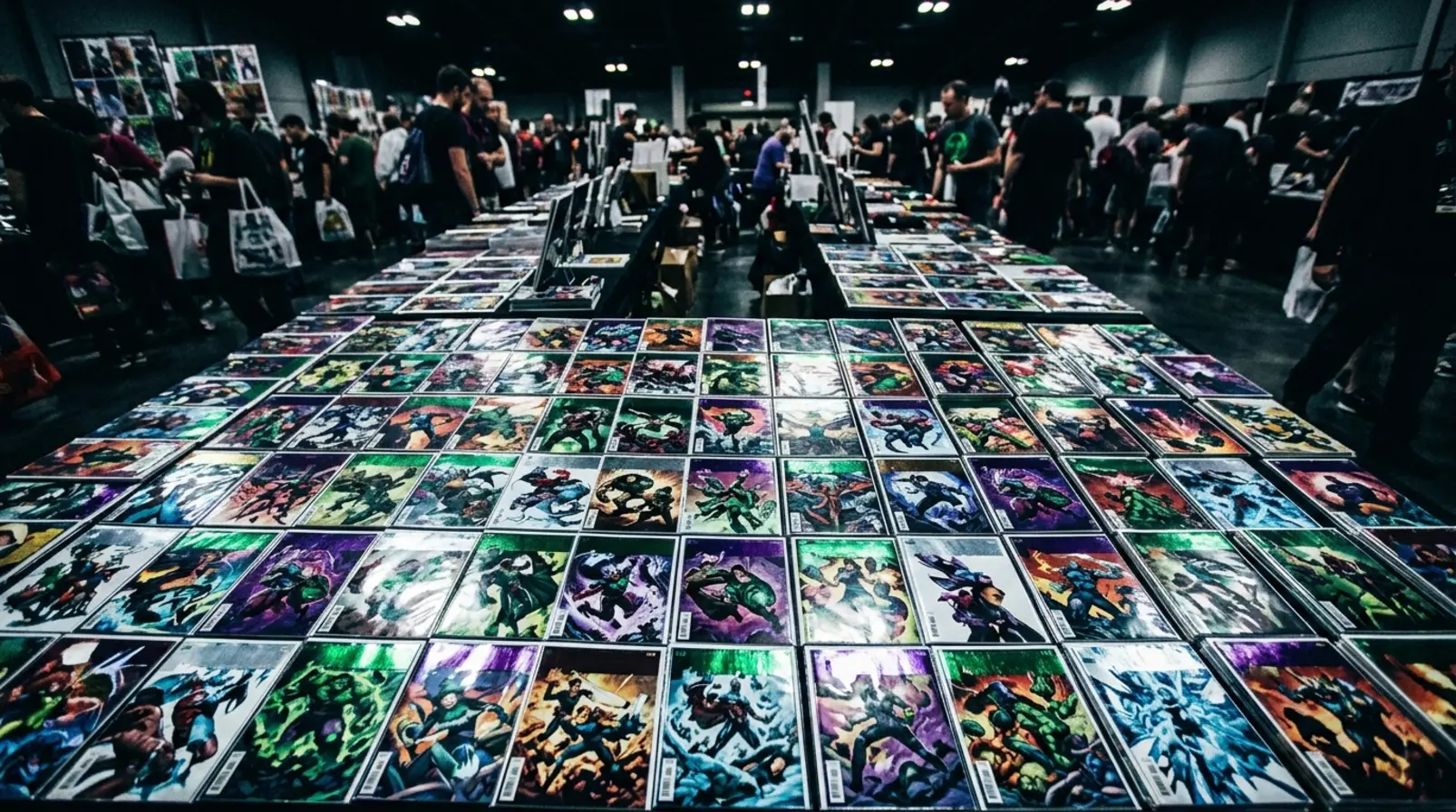
San Diego Comic-Con 2026 gives some idea of the scale. CovrPrice identified 896 exclusive comics associated with the show, up from 760 in 2025 and 560 in 2024. That is an 18 percent increase in a year and 60 percent in two.
DC accounted for 170 of those exclusives, Image for 117, Boom! Studios for 68, and Marvel for 32. Absolute Batman alone appeared with 53 pieces of unique cover art.
The aftermarket can move just as quickly. CovrPrice listed a Werther Dell’Edera embossed-metal tenth printing of Boom!’s Something Is Killing the Children #1, limited to 100 copies, with an original selling price of $100 and a calculated fair market value of $658 as of July 29. That does not mean every convention exclusive appreciates, or that $658 is a guaranteed sale price. It shows why the cover can become an object of speculation independent of the story inside it.
The Origins of the Variant Cover Format
Alternate comic covers existed in various forms before 1986, particularly through differences between newsstand and direct-market editions. What changed with DC’s The Man of Steel #1 was intent. John Byrne’s Superman relaunch was deliberately marketed with alternate cover artwork, and the issue is widely treated as the beginning of the modern variant-cover format.
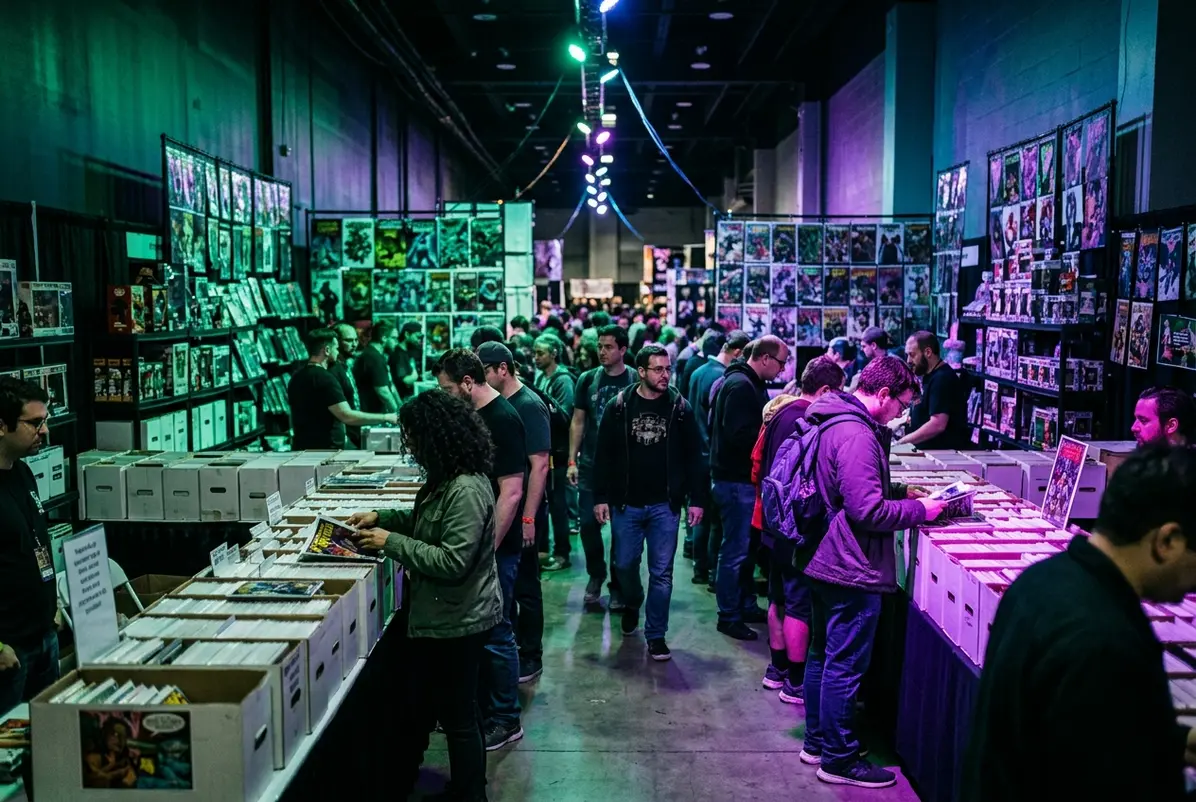
Five years later, Marvel demonstrated how powerful multiple covers could become as a sales mechanism. X-Men #1 became the best-selling single comic-book edition on record at 8.1 million copies. Jim Lee drew four covers that could be assembled into one larger image; a fifth gatefold version reproducing that combined artwork followed a month later.
The book arrived during the early-1990s speculator boom, when publishers increasingly packaged comics as collectibles as well as things to read. Multiple covers were only one piece of that machinery, alongside polybags, foil stamping, holograms, supposedly significant first issues, and other manufactured reasons to buy another copy. The speculation-heavy market eventually collapsed as part of the industry’s broader mid-1990s contraction.
The variant cover survived.
What a 1:25 Variant Cover Actually Means
The ratio variant is where the modern system gets more interesting. A 1:10, 1:25, or 1:100 designation generally describes the retailer’s ordering requirement, not a publicly declared print run.
Under a 1:25 incentive, for example, a retailer that meets the qualifying order for 25 regular copies can typically order one incentive copy. A 1:100 variant requires a much larger commitment to the regular issue. The ratio therefore describes retailer eligibility. It does not mean that only 25 or 100 copies of the variant exist.
That distinction matters. A 1:100 cover sounds extraordinarily scarce, but if enough stores qualify for it, the total number of copies can still be substantial. Conversely, a store or convention exclusive may have an explicitly stated edition of only a few hundred copies without carrying any incentive ratio at all.
There is also no rule requiring a shop to sell a 1:25 variant for $25. Retailers set their own prices. The ratio may influence the opening price because the store had to commit capital to the qualifying order, but artist, character, demand, condition, and actual availability can quickly matter more than the number printed after the colon.
Why Collectors Chase the Cover Instead of the Book
The simplest answer is that the cover has become its own object.
A collector may already own the story in another edition. What changes between variants is the artwork, artist, treatment, edition size, distribution method, or connection to a particular store or event. A foil convention exclusive by a sought-after artist is therefore competing partly as a comic and partly as a limited print with a comic attached to it.
That market is not developing in a collapsing comics business. ICv2 estimated North American comics and graphic-novel sales at $2.2 billion in 2025, above the pandemic-era peak. Comic sales through the direct market rose 30 percent year over year, while graphic-novel sales through comic shops increased 28 percent.
Variants give publishers, retailers, conventions, and artists another way to divide that audience into smaller niches. One reader wants the regular cover. Another follows a specific artist. Another wants every Absolute Batman cover. Another wants only convention exclusives. The interior pages can be identical while the reasons for buying them are completely different.
When Scarcity Gets Complicated
The strange thing about the modern variant market is that individual books can be genuinely scarce while variants as a category are overwhelmingly abundant.
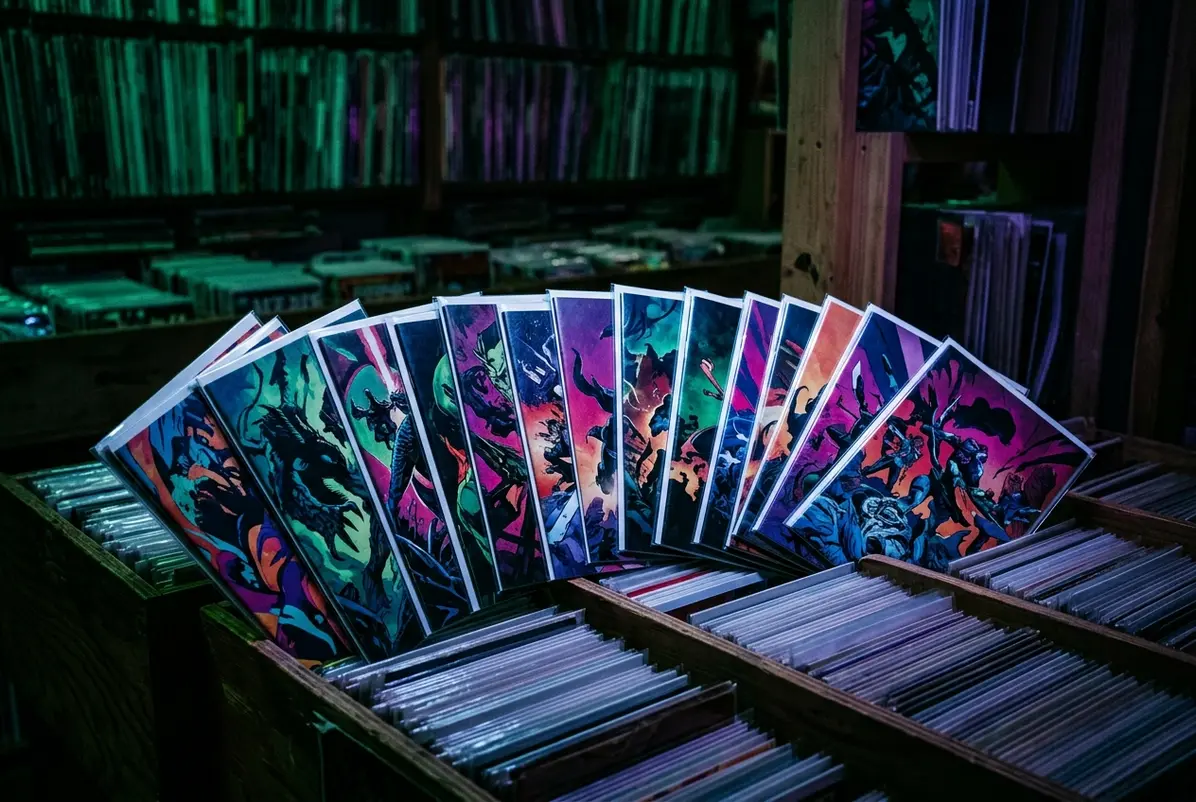
CLZ Comics had already cataloged 630 SDCC 2026 exclusives on July 21, before the convention opened. CovrPrice’s post-convention research eventually reached 896. Neither figure says anything by itself about the print run of a particular cover. Instead, they show just how many different supposedly special objects collectors were being asked to distinguish from one another at a single event.
That is the tension built into the format. A particular edition can be limited to 100 copies while sitting inside a market producing hundreds of other limited editions. Scarcity of an individual object and abundance of collectible choices can exist at exactly the same time.
Variant Covers and the Older Comic Market Are Not the Same Thing
It is tempting to connect modern variant prices with the enormous sums paid for Golden Age comics, but they are different kinds of scarcity.
A CGC 9.0 copy of the 1939 Superman #1 sold through Heritage Auctions for $9.12 million on November 20, 2025. On January 9, 2026, a copy of Action Comics #1 changed hands privately for $15 million.
Those books became scarce through survival. They were children’s entertainment printed nearly nine decades ago, and relatively few copies survived in high grade. A modern convention exclusive limited to 100 copies begins scarce because somebody decided to manufacture exactly 100 of them.
The resulting prices can both be described as products of scarcity, but the mechanism creating that scarcity is fundamentally different.
Variant Cover FAQ
What is a variant cover in comics?
A variant cover is alternate cover art for the same comic-book issue. Variants can include open-order covers, retailer incentives, store exclusives, convention editions, artist variants, foil or other special treatments, and other alternate presentations of the same issue.
What does a 1:25 variant cover mean?
It generally means a retailer must meet an ordering requirement involving 25 copies of the qualifying regular edition to become eligible to order one incentive copy. It does not mean only 25 copies of the variant were printed.
How much should a 1:25 variant cover cost?
There is no mandatory $25 price. Retailers set their own prices, and aftermarket values depend on demand, artist, character, condition, available supply, and the popularity of the underlying issue.
Why do publishers release so many variant covers?
Variants can showcase different artists, create retailer or convention exclusives, give collectors additional choices, and, in the case of incentive variants, encourage retailers to place larger qualifying orders.
Are variant covers a reliable collectible investment?
No return is guaranteed. A ratio does not establish the total print run, and aftermarket prices can change rapidly. A deliberately limited modern edition is also a different kind of collectible from an older comic that became scarce through decades of attrition.
The useful lesson from the 1990s is not that variant covers are somehow illegitimate. Plenty are spectacular pieces of comic art, and collecting them can be the entire point. It is that a second cover does something subtle to the object. The story no longer has to change for somebody to have a reason to buy the comic again.
At SDCC 2026, collectors had 896 variations on that idea.
'%3e%3cg id='Final-Copy-2_2_' transform='translate(1275.000000, 200.000000)'%3e%3cpath class='st0' d='M7.4,12.8h6.8l3.1-11.6H7.4C4.2,1.2,1.6,3.8,1.6,7S4.2,12.8,7.4,12.8z'/%3e%3c/g%3e%3c/g%3e%3c/g%3e%3cg id='final---dec.11-2020'%3e%3cg id='_x30_208-our-toggle' transform='translate(-1275.000000, -200.000000)'%3e%3cg id='Final-Copy-2' transform='translate(1275.000000, 200.000000)'%3e%3cpath class='st1' d='M22.6,0H7.4c-3.9,0-7,3.1-7,7s3.1,7,7,7h15.2c3.9,0,7-3.1,7-7S26.4,0,22.6,0z M1.6,7c0-3.2,2.6-5.8,5.8-5.8 h9.9l-3.1,11.6H7.4C4.2,12.8,1.6,10.2,1.6,7z'/%3e%3cpath id='x' class='st2' d='M24.6,4c0.2,0.2,0.2,0.6,0,0.8l0,0L22.5,7l2.2,2.2c0.2,0.2,0.2,0.6,0,0.8c-0.2,0.2-0.6,0.2-0.8,0 l0,0l-2.2-2.2L19.5,10c-0.2,0.2-0.6,0.2-0.8,0c-0.2-0.2-0.2-0.6,0-0.8l0,0L20.8,7l-2.2-2.2c-0.2-0.2-0.2-0.6,0-0.8 c0.2-0.2,0.6-0.2,0.8,0l0,0l2.2,2.2L23.8,4C24,3.8,24.4,3.8,24.6,4z'/%3e%3cpath id='y' class='st3' d='M12.7,4.1c0.2,0.2,0.3,0.6,0.1,0.8l0,0L8.6,9.8C8.5,9.9,8.4,10,8.3,10c-0.2,0.1-0.5,0.1-0.7-0.1l0,0 L5.4,7.7c-0.2-0.2-0.2-0.6,0-0.8c0.2-0.2,0.6-0.2,0.8,0l0,0L8,8.6l3.8-4.5C12,3.9,12.4,3.9,12.7,4.1z'/%3e%3c/g%3e%3c/g%3e%3c/g%3e%3c/g%3e%3c/svg%3e) Your Privacy Choices
Your Privacy Choices