




There’s a particular breed of synthesizer that doesn’t just generate sound. It tries to talk. To moan. To shape vowels out of voltage, consonants out of current. The new AnalogFX Larynx, unveiled by Mark at Superbooth 2026, belongs to this lineage. It’s a keyboard version of the SER-2020 formant analog synthesizer , with extras including a stereo delay with control over delay time, feedback, mix, and modulation from two LFOs . And it has become a flashpoint for a debate that’s been simmering in the synth community for years: when you build 16 pre-programmed formant settings into an analog instrument, are you opening a door or closing one?
First, the facts. A few years ago, Dutch boutique manufacturer AnalogFX introduced the SER-2020, a beautiful semi-modular analog synth that draws inspiration from the rare Synton Syrinx from 1983 . AnalogFX is a very small boutique operation with no connection to Synton other than being based around 100km down the road from Synton’s old headquarters, in the small Dutch city of Deventer . The original Syrinx is one of those instruments that collectors whisper about. Only a few hundred were produced from 1983 through 1984 . In 1983, Felix Visser, product specialist Marc Paping, and designer Bert Vermeulen created the Synton Syrinx, a monophonic analog synthesizer that contained unique features such as a metal touchplate for manipulating sound as well as a formant filter . It has been used by Aphex Twin, Xpando, Air, Vince Clarke, Depeche Mode, and Electronic Dream Plant .
The Larynx carries that DNA forward. Its key feature is a filter section consisting of three CEM3350-based VCFs: a 24dB lowpass filter and two independent resonant bandpass filters, an unusual setup for an analog synth . By combining all three filters, you can create formant filtering sounds that are impossible with classic subtractive analog synths . The instrument is monophonic and semi-modular, with a 37-key keybed with aftertouch, combined with MPE compatibility and the signature Touch’n’Bend pad . Only 50 Larynx units will be available in the initial release .

The Throat of the Machine
To understand why the Larynx matters, you have to understand formant synthesis. As Gordon Reid explained in his foundational Sound On Sound piece on formant synthesis, with just three formant peaks, and with precise filters, you can create passable imitations of vowel sounds, because your ears can differentiate one vowel from another with only the first three formants present . The human vocal tract is, at a mechanical level, a tube with resonant modes. The pitched sounds are generated deep in our larynx, so they must pass through our throats, mouths, and noses before they reach the outside world . The Larynx synthesizer tries to approximate this process using three analog filters instead of flesh and cartilage.
The triple CEM3350 architecture is what makes this possible. Synths that use the CEM3350 include the Rhodes Chroma, Crumar Spirit, Synton Syrinx, Digisound 80-16 Dual Resonant Filter, and Solton Programmer 24 . The CEM3350 contains OTAs and supporting circuitry which simplify building a pair of state variable filters, and depending on where the audio signal is injected, you can get a simultaneous Low Pass and Band Pass, or Band Pass and High Pass response . In the Larynx, three of these chips work together, and a selector switch offers four different filter routings. It feels like someone reverse-engineered the acoustics of a throat and built it out of silicon.
My take is that this is where AnalogFX’s design philosophy becomes genuinely interesting. Most analog monosynths give you one filter, maybe two. The Larynx gives you three and says: now make it speak. The triple filter setup doesn’t just change the tonal palette. It changes what the instrument is for.
Presets and the Purity Question
Here’s where the community splits. The Larynx introduces Formant Mode with 16 pre-programmed human voice formant settings, so you can quickly shape sounds that emulate speech-like tones or create distinctive, animated bass textures . On one side, you have people who see this as a welcome concession to playability. On the other, people who feel that pre-programmed formant settings undermine the entire point of an instrument designed for deep, hands-on sound shaping.
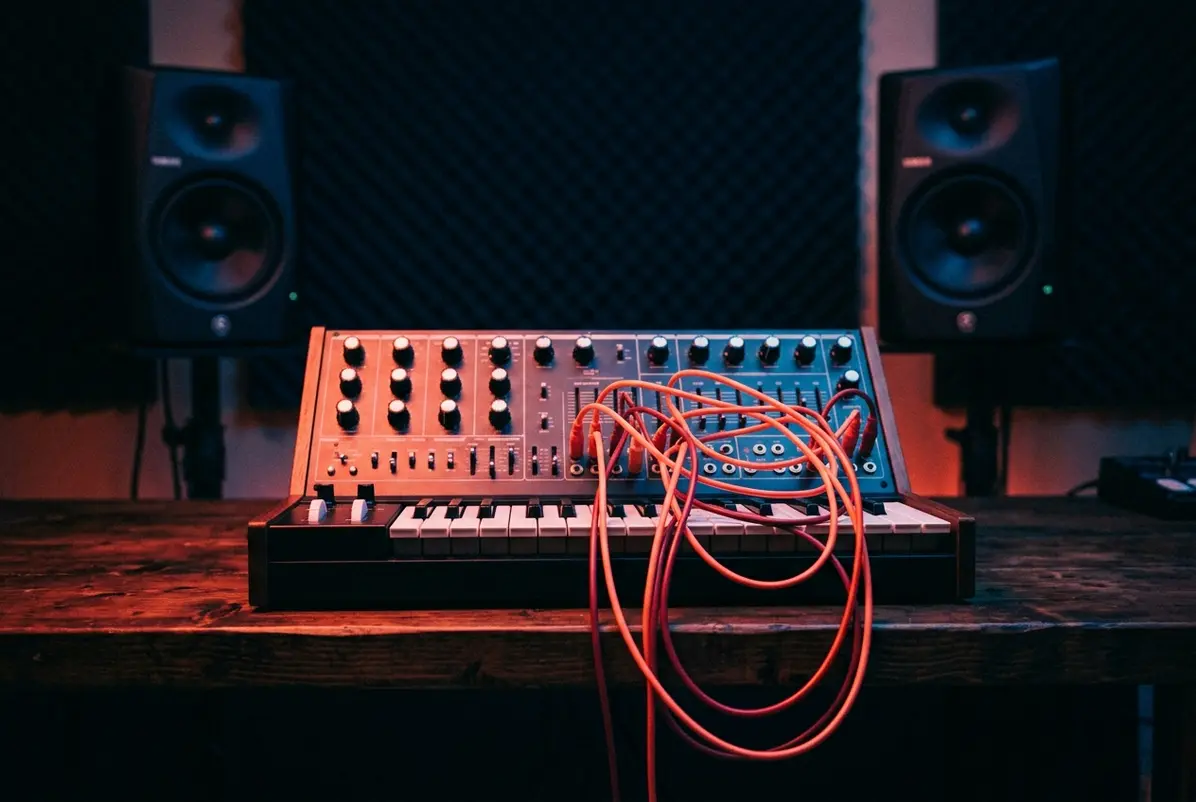
In online discussions, the divide is sharp. Some musicians see the 16 formant presets as training wheels that help new users understand what the triple-filter architecture can do. Others call it a philosophical contradiction: you build a synth explicitly for people who want to shape sound rather than recall presets, then you ship it with presets. The tension is real, and it’s worth sitting with.
What strikes me is that both camps have a point. The Larynx’s formant presets aren’t like a wavetable synth’s “Init Pad” patch. They’re more like reference points on a map of the human voice. You can start from “ah” and twist the resonance until it screams. You can begin at “ee” and pull the bandpass peaks apart until the vowel dissolves into something alien. To me, the presets read less as a crutch and more as an invitation. But reasonable people might disagree.
The deeper issue is whether a boutique analog instrument should do any of this work for you. The SER-2020, broadly speaking, was old-school analogue synthesis: no sequencer, no effects, no presets, just pure analogue synth power . The Larynx adds an auto-glide function, and a new built-in arpeggiator and sequencer . It adds the stereo delay. It adds the formant presets. Each addition is individually defensible. Taken together, they shift the instrument’s identity. It reads like a transition from laboratory tool to performance instrument, and that transition always generates friction in communities that value raw control above convenience.
A Voice Worth Having
Let me state my position plainly. I think the Larynx is the right move. Not because presets are good or bad in the abstract, but because the alternative was leaving formant synthesis locked behind a knowledge wall that most working musicians simply don’t have time to climb. You can patch a modular analogue synthesizer to produce vowel sounds, but if you have almost unlimited funds and space, plus a particularly chunky power supply, you can add more formants to make the resulting sound more human . Most people don’t have unlimited funds and space. The Larynx is available to pre-order with a 10% introductory discount for €929 . That’s real money, but for a boutique analog instrument with this kind of architecture, it comes across as remarkably fair.
There’s a case to be made that the Larynx’s real significance isn’t the presets at all. It’s the price, the format, and the ambition. The Synton Syrinx was developed by Felix Visser, who passed away last year . That instrument is now so rare and expensive that it exists primarily as a legend. The Larynx won’t replicate it exactly. Nothing can. But it takes the core concept of vocal-tract modeling through analog filters and puts it in a package that a touring musician can actually carry to a gig.
The formant synthesis tradition stretches back decades. There is a long history of attempts to build mechanical “talking heads,” with historically confirmed speech synthesis beginning with Wolfgang von Kempelen in the 18th century . The CEM3350 chip, developed by Doug Curtis’s company founded in 1979 , gave synth designers the building blocks to attempt something similar with electricity. Mark and AnalogFX are working in a lineage that connects Enlightenment automata to Aphex Twin’s studio. In my view, that’s a lineage worth honoring with an instrument that more than fifty people can actually play.
The debate over the Larynx’s presets will continue. It should. The tension between accessibility and purity is productive. It forces designers to justify their choices and musicians to examine their assumptions. But the Larynx, as a physical object, lands as something rare: a synthesizer that models the body it was built to replace. Three filters for three formants. A throat made of Curtis chips. The human voice, approximated in solder and copper, and offered up at a price point that doesn’t require a second mortgage. That’s not a compromise. That’s craft.


'%3e%3cg id='Final-Copy-2_2_' transform='translate(1275.000000, 200.000000)'%3e%3cpath class='st0' d='M7.4,12.8h6.8l3.1-11.6H7.4C4.2,1.2,1.6,3.8,1.6,7S4.2,12.8,7.4,12.8z'/%3e%3c/g%3e%3c/g%3e%3c/g%3e%3cg id='final---dec.11-2020'%3e%3cg id='_x30_208-our-toggle' transform='translate(-1275.000000, -200.000000)'%3e%3cg id='Final-Copy-2' transform='translate(1275.000000, 200.000000)'%3e%3cpath class='st1' d='M22.6,0H7.4c-3.9,0-7,3.1-7,7s3.1,7,7,7h15.2c3.9,0,7-3.1,7-7S26.4,0,22.6,0z M1.6,7c0-3.2,2.6-5.8,5.8-5.8 h9.9l-3.1,11.6H7.4C4.2,12.8,1.6,10.2,1.6,7z'/%3e%3cpath id='x' class='st2' d='M24.6,4c0.2,0.2,0.2,0.6,0,0.8l0,0L22.5,7l2.2,2.2c0.2,0.2,0.2,0.6,0,0.8c-0.2,0.2-0.6,0.2-0.8,0 l0,0l-2.2-2.2L19.5,10c-0.2,0.2-0.6,0.2-0.8,0c-0.2-0.2-0.2-0.6,0-0.8l0,0L20.8,7l-2.2-2.2c-0.2-0.2-0.2-0.6,0-0.8 c0.2-0.2,0.6-0.2,0.8,0l0,0l2.2,2.2L23.8,4C24,3.8,24.4,3.8,24.6,4z'/%3e%3cpath id='y' class='st3' d='M12.7,4.1c0.2,0.2,0.3,0.6,0.1,0.8l0,0L8.6,9.8C8.5,9.9,8.4,10,8.3,10c-0.2,0.1-0.5,0.1-0.7-0.1l0,0 L5.4,7.7c-0.2-0.2-0.2-0.6,0-0.8c0.2-0.2,0.6-0.2,0.8,0l0,0L8,8.6l3.8-4.5C12,3.9,12.4,3.9,12.7,4.1z'/%3e%3c/g%3e%3c/g%3e%3c/g%3e%3c/g%3e%3c/svg%3e) Your Privacy Choices
Your Privacy Choices