

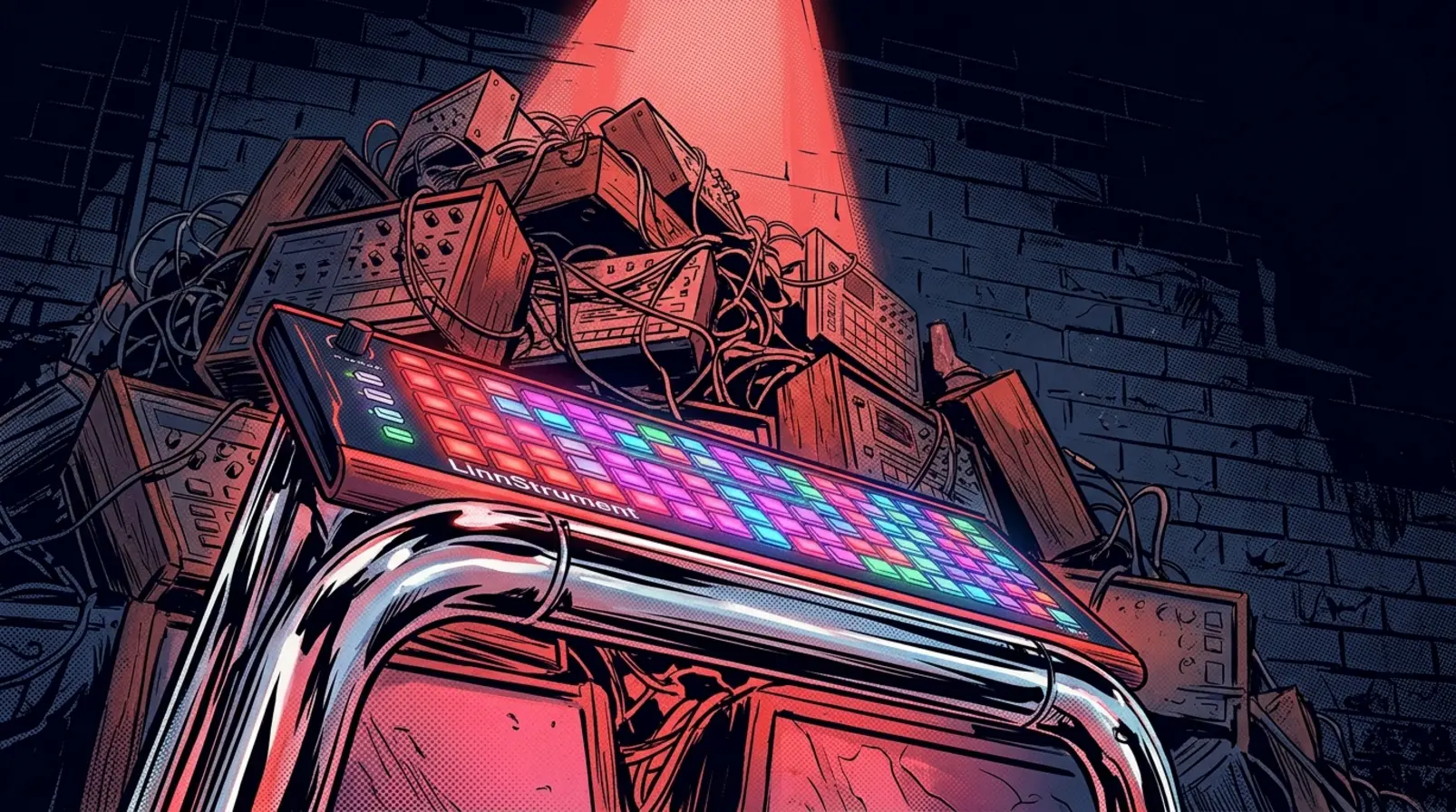

Roger Linn is the American instrument designer behind the Linn LM-1 Drum Computer and the Akai MPC60, two machines that helped change the language of modern music production. The LM-1 brought sampled acoustic drum sounds into pop music, while the MPC60 helped make sampling, sequencing, and finger-drumming feel like one integrated act. Decades later, Linn’s most interesting argument may not be about the machines he already built, but about the machines the music industry keeps rebuilding.
Roger Linn and the Machines That Changed Everything
Before you can understand the critique, you have to understand the résumé. Roger Linn’s LM-1 Drum Computer, released in 1980, is widely recognized as the world’s first drum machine with sampled sounds. Unlike earlier rhythm boxes that generated synthetic percussion, the LM-1 used digitally stored recordings of real drums. It was expensive, rare, and immediately influential. The list of artists associated with its sound reads like a map of 1980s pop: Prince, Michael Jackson, Peter Gabriel, Stevie Wonder, and countless others.
Then came the MPC60. Released in 1988, the Akai MPC60 grew out of a collaboration between Linn and Akai, combining sampling, sequencing, and velocity-sensitive pads into a single production workstation. Contemporary coverage described it as a “MIDI Production Centre,” while later histories have treated the MPC line as one of the defining interfaces of sample-based music. It did not invent hip-hop production, but it gave producers a physical language for chopping, sequencing, and performing sound that still echoes through beat-making today. Music Technology’s 1988 review captured the machine at the moment it arrived, before the mythology had fully formed.
So when Linn talks about the state of music technology, it is worth paying attention. He is not a commentator standing outside the history of electronic instruments. He is one of the people who changed that history. And in recent years, his comments have pointed toward a useful way of understanding the modern gear market: a nostalgia-industrial complex, where old machines are not merely remembered, but endlessly reissued, cloned, miniaturized, and mythologized.
What the Nostalgia-Industrial Complex Really Means
To be careful, “nostalgia-industrial complex” is not being presented here as a formal Roger Linn slogan. It is a useful shorthand for the condition his recent comments describe. In early 2025, responding to renewed interest in vintage-style digital drum machines, Linn asked, “What’s the big deal about nostalgia?” He added that “an old bit is no different than a new bit,” drawing a distinction between the understandable appeal of analog circuitry and the stranger fetish for old digital drum-machine data.
That distinction matters. Linn is not arguing that old music is bad, or that vintage instruments should be thrown into a landfill. His point is sharper than that: if a digital drum machine is valuable because of the information stored inside it, then worshiping the age of that information can become irrational. A bit does not become warmer because it is old. A sample does not become more expressive because it was trapped in a Reagan-era box.
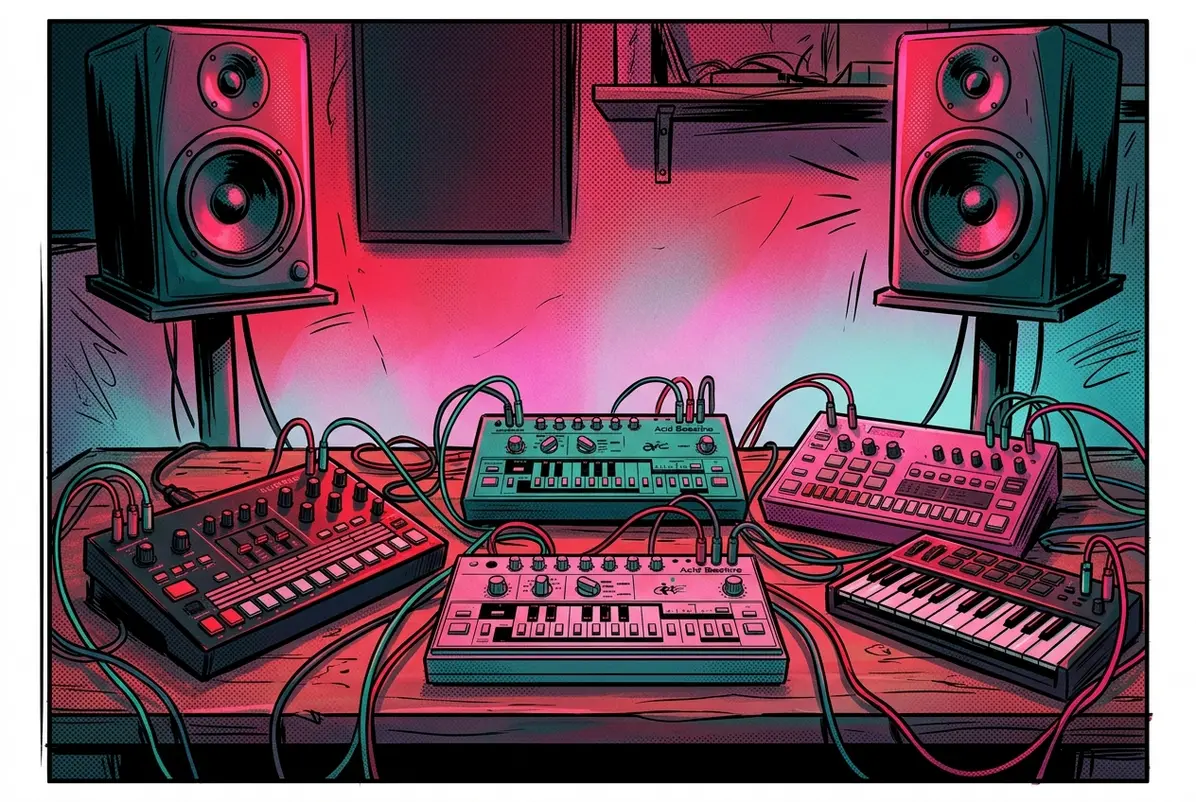
That is where the nostalgia-industrial complex becomes useful as a frame. It describes a market that often treats the past not as a source of inspiration, but as a product roadmap. The pitch is familiar: here is the sound of a legendary machine, the workflow of a legendary machine, the faceplate of a legendary machine, the button color of a legendary machine. The implication is that musical possibility lives somewhere behind us, waiting to be faithfully recreated.
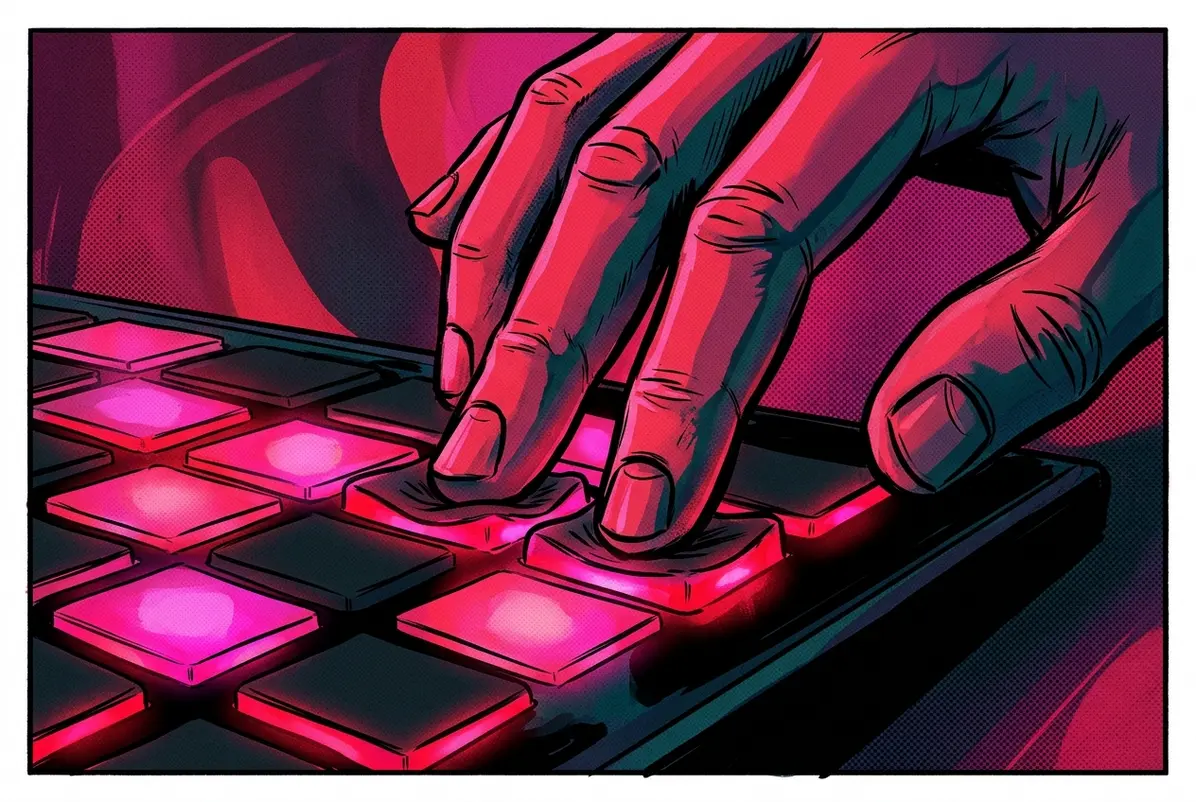
There is a reason that works. Musicians are not immune to myth. Gear is tactile, emotional, and tribal. A box can feel like a passport into a lineage. But Linn’s career complicates that fantasy, because the machines that made him famous were not nostalgic when they appeared. They were new answers to new problems.
The Reissue Reflex
To be fair to the companies building retro-inspired instruments, the economics are obvious. Musicians love familiar names. Retailers understand recognizable silhouettes. YouTube thumbnails practically write themselves when a product can be described as “the return of” something beloved. And accessibility matters. A budget-friendly recreation of an instrument that once cost thousands of dollars can put a previously unreachable sound into the hands of bedroom producers.
That is not a trivial achievement. A producer who cannot afford a vintage synthesizer, drum machine, or sampler may still be able to participate in that sonic tradition through a modern recreation. There is a democratic argument for reissues and clones, and it should not be dismissed out of hand.
But the issue is not whether retro-inspired gear should exist. The issue is what happens when the past becomes the safest business model in the room. The more the market rewards recognizable nostalgia, the harder it becomes to sell genuinely unfamiliar instruments. The reissue is easy to explain. The clone is easy to compare. The faithful recreation is easy to market. The new interface, the new gesture, the new performance language — those require patience.
That is the tension Linn exposes. Electronic music was built by people who were willing to make strange machines. The danger now is that the industry has become better at commemorating those machines than at risking the next strange one.
The LinnStrument and the Case for Expressive Design
The best reason to take Linn’s critique seriously is that he did not stop at critique. He built an alternative. The LinnStrument is an expressive MIDI controller built around a grid of touch-sensitive note pads. Instead of treating notes as simple on/off events, it senses continuous finger movement: left-right motion for pitch, forward-backward motion for timbre, and pressure for dynamics.
In other words, the LinnStrument is not trying to make electronic music sound older. It is trying to make electronic performance feel more alive. It asks a different question from most vintage-inspired gear. Not “how do we recover the sound of the past?” but “how should fingers speak to software now?”
That question connects directly to MPE, or MIDI Polyphonic Expression. Linn’s own support documentation explains that MPE allows three dimensions of continuous touch control — pressure, left/right movement, and front/back movement — independently for each simultaneous touch. The MIDI Association describes MPE as an official specification in which each note can be assigned its own MIDI channel, allowing expressive messages like pitch bend to apply per note instead of globally. The MPE specification was adopted by the MIDI Association, giving this kind of multidimensional control a standardized language.
My take is that the LinnStrument matters less as a commercial product than as a philosophical object. It makes a claim about what electronic instruments can be. The interesting frontier is not simply better emulation. It is a richer connection between body and sound.
Why This Critique Lands Now
Linn’s argument lands differently now because the tools for copying the past have become astonishingly good. Software instruments can emulate classic synths and drum machines with enough fidelity for most practical production contexts. Hardware companies can recreate old layouts, old colors, old workflows, and old limitations. Entire product categories now live in the space between homage and reenactment.
That does not mean the music made with those tools is automatically derivative. A creative musician can make new work with almost anything. An old drum sound can still be used in a fresh way. A classic interface can still be a useful interface. The danger is not the existence of old sounds. The danger is the belief that old sounds are where innovation must begin.
To me, that is what Linn is pushing against. Not memory. Not influence. Not reverence. He is pushing against the substitution of ritual for invention. There is a difference between using a familiar sound because it serves the track and buying a familiar object because it makes the future feel less uncertain.
Roger Linn’s Legacy Beyond the Machines
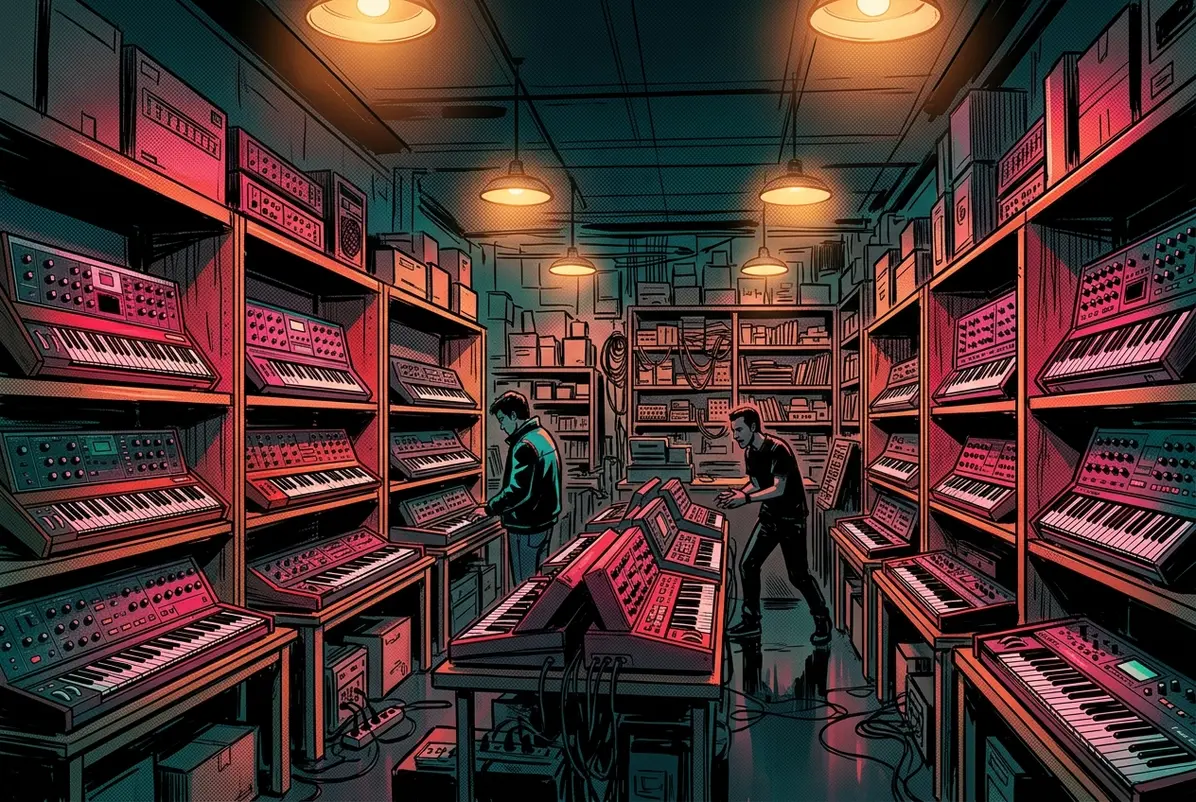
Roger Linn’s legacy is already secure. The LM-1 helped transform the sound of pop. The MPC60 helped shape the physical grammar of sampling. His name is attached to machines that changed how records are made. But the more interesting late-career story is that Linn has not settled into being the patron saint of old boxes.
Instead, he keeps returning to a problem that electronic instrument design still has not fully solved: how to make digital sound respond to human touch with the nuance of an acoustic instrument. The LinnStrument is not nostalgic because it cannot be. It does not promise that your music will sound like 1983 or 1988. It asks you to learn a new relationship with your hands.
That is an uncomfortable proposal in a market built on instant recognition. A reissue flatters the musician by saying: you already know why this matters. A new instrument makes a more demanding offer: you might not understand this yet.
Reasonable people can love vintage gear and still see the point. The critique is not that the past has no value. The critique is that a culture obsessed with recreating its old tools may eventually forget why those tools mattered in the first place. The LM-1 and MPC60 were not important because they preserved a tradition. They were important because they interrupted one.
That may be the real lesson in Roger Linn’s work. The future of music gear will not be built by perfectly remembering the machines that changed everything. It will be built by making machines strange enough to change everything again.
Frequently Asked Questions
What is the nostalgia-industrial complex in music gear?
In this article, the phrase refers to the music technology industry’s tendency to reissue, clone, miniaturize, and mythologize vintage instruments instead of putting equal energy into new forms of musical interaction. It is not presented as Roger Linn’s formal slogan, but as a useful frame for understanding his criticism of nostalgia around vintage digital drum machines.
What instruments did Roger Linn create?
Roger Linn created the Linn LM-1 Drum Computer, released in 1980 and widely recognized as the first drum machine with sampled sounds. He later collaborated with Akai on the MPC60, released in 1988. His later work includes the LinnStrument, an expressive MIDI controller.
What did Roger Linn say about nostalgia?
In comments about vintage-style digital drum machines, Linn asked, “What’s the big deal about nostalgia?” He argued that “an old bit is no different than a new bit,” questioning why musicians attach special value to old digital drum-machine data when digital information does not age like analog circuitry.
What is MPE and why does it matter?
MPE stands for MIDI Polyphonic Expression. It allows expressive performance data, such as pitch bend, pressure, and timbre changes, to be applied independently to individual notes rather than globally. The MIDI Association adopted MPE as a specification, and LinnStrument uses it to make each finger movement more expressive.
How does the LinnStrument differ from a traditional MIDI keyboard?
A traditional MIDI keyboard usually treats notes as keys with velocity and, sometimes, aftertouch. The LinnStrument uses a grid of pressure-sensitive pads that track left-right movement, forward-backward movement, and pressure independently for each touch. That lets performers bend pitch, shape timbre, and control dynamics per note in a way that feels closer to a multidimensional instrument than a simple trigger surface.
Is Roger Linn against vintage instruments?
Not exactly. His comments challenge the fetish for old digital drum machines and the broader tendency to treat nostalgia as innovation. The point is not that musicians should stop loving classic sounds. The point is that electronic instrument design should not stop at recreating them.


'%3e%3cg id='Final-Copy-2_2_' transform='translate(1275.000000, 200.000000)'%3e%3cpath class='st0' d='M7.4,12.8h6.8l3.1-11.6H7.4C4.2,1.2,1.6,3.8,1.6,7S4.2,12.8,7.4,12.8z'/%3e%3c/g%3e%3c/g%3e%3c/g%3e%3cg id='final---dec.11-2020'%3e%3cg id='_x30_208-our-toggle' transform='translate(-1275.000000, -200.000000)'%3e%3cg id='Final-Copy-2' transform='translate(1275.000000, 200.000000)'%3e%3cpath class='st1' d='M22.6,0H7.4c-3.9,0-7,3.1-7,7s3.1,7,7,7h15.2c3.9,0,7-3.1,7-7S26.4,0,22.6,0z M1.6,7c0-3.2,2.6-5.8,5.8-5.8 h9.9l-3.1,11.6H7.4C4.2,12.8,1.6,10.2,1.6,7z'/%3e%3cpath id='x' class='st2' d='M24.6,4c0.2,0.2,0.2,0.6,0,0.8l0,0L22.5,7l2.2,2.2c0.2,0.2,0.2,0.6,0,0.8c-0.2,0.2-0.6,0.2-0.8,0 l0,0l-2.2-2.2L19.5,10c-0.2,0.2-0.6,0.2-0.8,0c-0.2-0.2-0.2-0.6,0-0.8l0,0L20.8,7l-2.2-2.2c-0.2-0.2-0.2-0.6,0-0.8 c0.2-0.2,0.6-0.2,0.8,0l0,0l2.2,2.2L23.8,4C24,3.8,24.4,3.8,24.6,4z'/%3e%3cpath id='y' class='st3' d='M12.7,4.1c0.2,0.2,0.3,0.6,0.1,0.8l0,0L8.6,9.8C8.5,9.9,8.4,10,8.3,10c-0.2,0.1-0.5,0.1-0.7-0.1l0,0 L5.4,7.7c-0.2-0.2-0.2-0.6,0-0.8c0.2-0.2,0.6-0.2,0.8,0l0,0L8,8.6l3.8-4.5C12,3.9,12.4,3.9,12.7,4.1z'/%3e%3c/g%3e%3c/g%3e%3c/g%3e%3c/g%3e%3c/svg%3e) Your Privacy Choices
Your Privacy Choices