

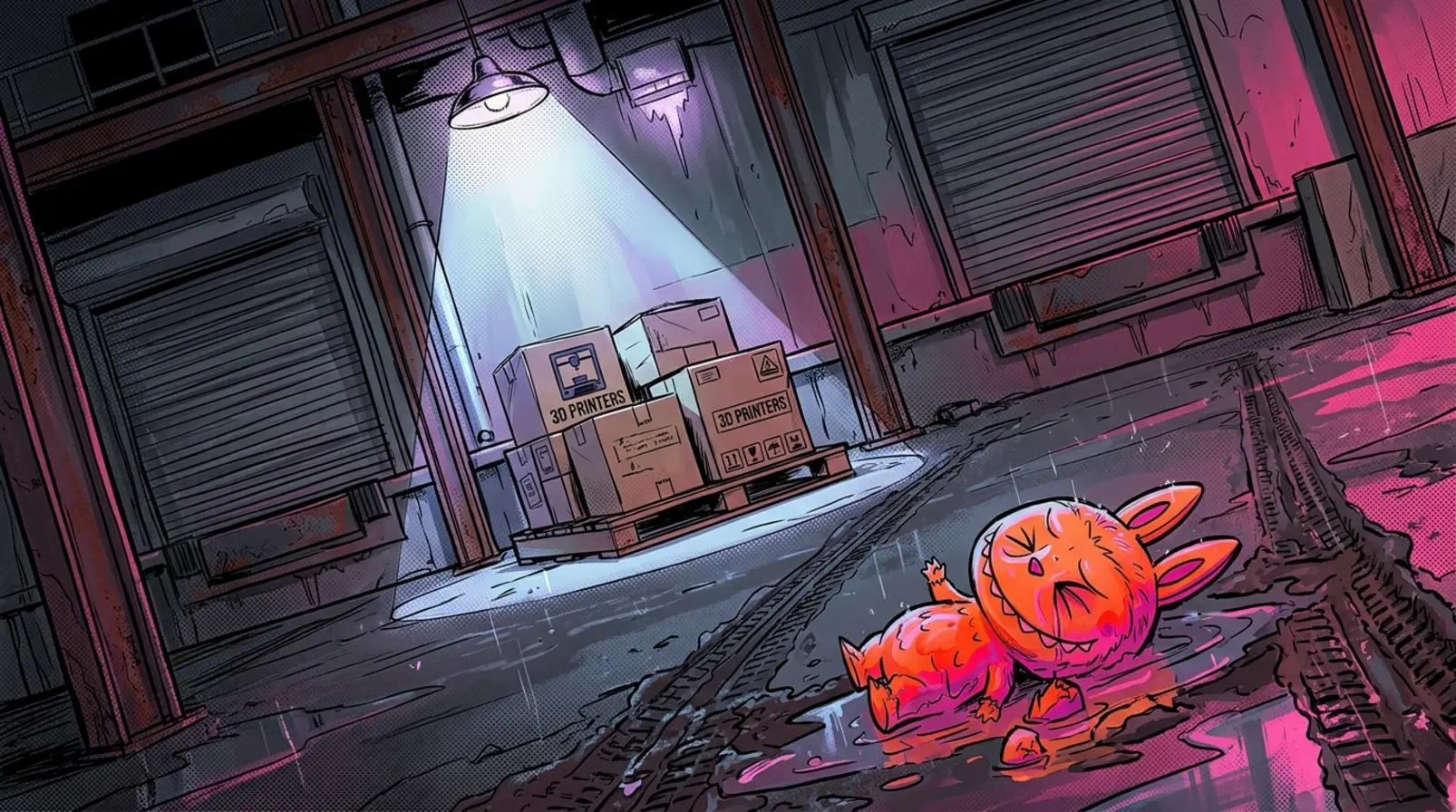

A Shanghai courtroom nearly became the setting for a closely watched test of how Chinese law applies to user-uploaded 3D models. Pop Mart, the Chinese toy company behind the Labubu collectible phenomenon, sued Bambu Lab-related companies over character models uploaded by users to MakerWorld, Bambu Lab’s file-sharing platform. The dispute was scheduled to be heard on April 2, 2026, at the People’s Court of Pudong New Area in Shanghai. Before that hearing arrived, the parties settled, Tuozhu Technology issued an apology under the Bambu Lab name, and the disputed material disappeared from MakerWorld.
The easy interpretation is that a potentially dangerous precedent was avoided. No ruling forced model-sharing platforms to begin inspecting every upload before publication. No court formally decided where a repository’s responsibility ends and an uploader’s begins.
But the settlement did not make the underlying problem disappear. The enforcement surrounding the dispute swept up shelf hardware, cable clips, coasters, tool holders, and other models with no apparent connection to Labubu. The real warning was not only what a judge might have decided. It was what the machinery had already done before anyone entered the courtroom.
The problem is not that platforms remove obvious character copies. The problem begins when the system can no longer distinguish a counterfeit toy from a shelf knob.
What Actually Happened
Pop Mart filed a copyright infringement lawsuit against Shenzhen Tuozhu Technology, Shenzhen Maker World Technology, Shanghai Outline Technology, and related entities over Labubu models shared through MakerWorld. The case was filed at the People’s Court of Pudong New Area, with a hearing scheduled for April 2, 2026, according to 3D Printing Industry.
The disputed files allowed users to print objects resembling Pop Mart characters at home. Bambu Lab did not create or upload the models itself. The companies named in the case operated the platform through which users distributed them. That distinction placed the unresolved question at the center of the dispute: how much responsibility should a 3D-model repository carry for material uploaded by its community?
Pop Mart had understandable reasons to care. Labubu had become one of the company’s most commercially important properties, while consumer 3D printing made physical imitation unusually accessible. Once a printable file existed, users could reproduce character-shaped objects without buying the original collectible.
The case never reached its scheduled hearing. Bambu Lab announced on March 16 that the parties had reached a settlement through what it described as friendly consultations. The company apologized and said the relevant unauthorized material had been removed from MakerWorld, according to 3D Printing Industry.
The Sweep That Swept Too Wide
If the legal dispute felt abstract, the enforcement surrounding it was brutally concrete.
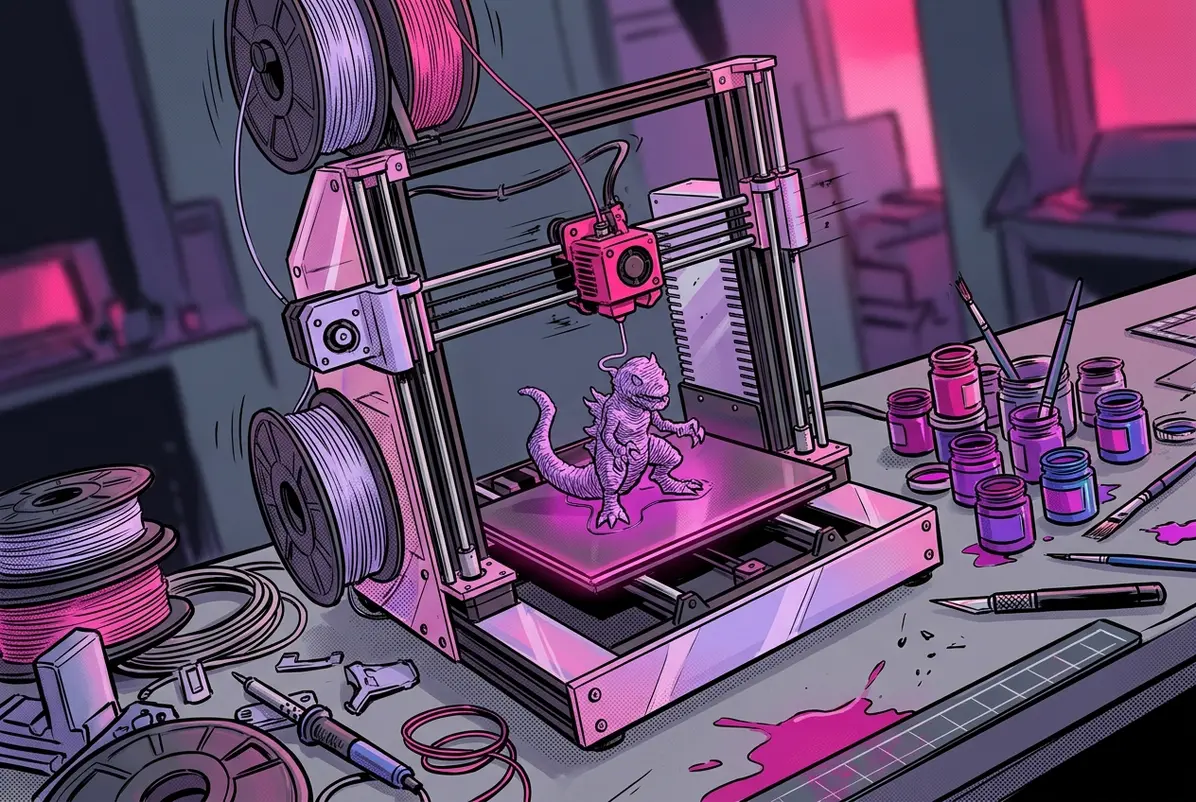
As MakerWorld removed material connected to the complaint, unrelated designs disappeared with it. Reports described printer modifications, cable clips, paintbrush holders, locksmithing tools, vacuum accessories, cupboard brackets, coasters, and a simple shelf-handle knob being caught in the same sweep.
Users documented the confusion on the Bambu Lab community forum. Some received notices identifying Pop Mart as the rights holder even though their uploads appeared to have no meaningful relationship to Pop Mart’s characters. Others struggled to determine what had been removed or how to appeal.
To affected users, the removals appeared broader than the underlying complaint and insufficiently attentive to context. That perception matters even if the error was accidental. A copyright system earns legitimacy partly through precision. When a complaint about a collectible character removes a cupboard bracket, the bracket becomes evidence about the system.
Bambu Lab eventually acknowledged that some models had been accidentally delisted because of an operational error. The company apologized, said most affected models had been restored, and directed remaining users toward support tickets. That response corrected part of the mistake. It did not erase the glimpse users had received of how easily their work could disappear.
The collateral damage was not a side story. It was the clearest demonstration of the conflict.
Rights holders need a practical way to challenge unauthorized copies. Platforms need a practical way to respond. Creators need something equally important: confidence that an allegation involving somebody else’s character will not erase their unrelated work without meaningful review.
The Platform Is Always on Both Sides
The episode became more revealing because MakerWorld had recently been arguing for stronger protection of designs uploaded by its own creators.
In late 2025, MakerWorld alleged that exclusive models from its platform had been reuploaded to competing repositories. Bambu Lab pursued the issue publicly, while Creality disputed claims of widespread infringement and said it had not received legal notice, according to 3D Printing Industry.
It would be easy to frame this as hypocrisy: Bambu Lab demanding protection in one dispute while facing accusations that its own platform hosted unauthorized work in another. That reading is satisfying, but it misses the larger point.
Every major model platform eventually occupies both positions.
It is an archive asking for room to host experimentation, remixing, repair parts, fan objects, and community work. It is also a marketplace asking competitors and users to respect the rights of the creators who supply its value. The same platform wants openness when files arrive and control when files leave.
That is not necessarily a contradiction. It is the structural condition of running a repository built from other people’s ideas.
MakerWorld’s earlier public position recognized that unauthorized redistribution could harm creators. The Pop Mart dispute forced it to confront the same argument from the other side of the upload button.
Settlement Was the Safest Answer, Not a Complete One
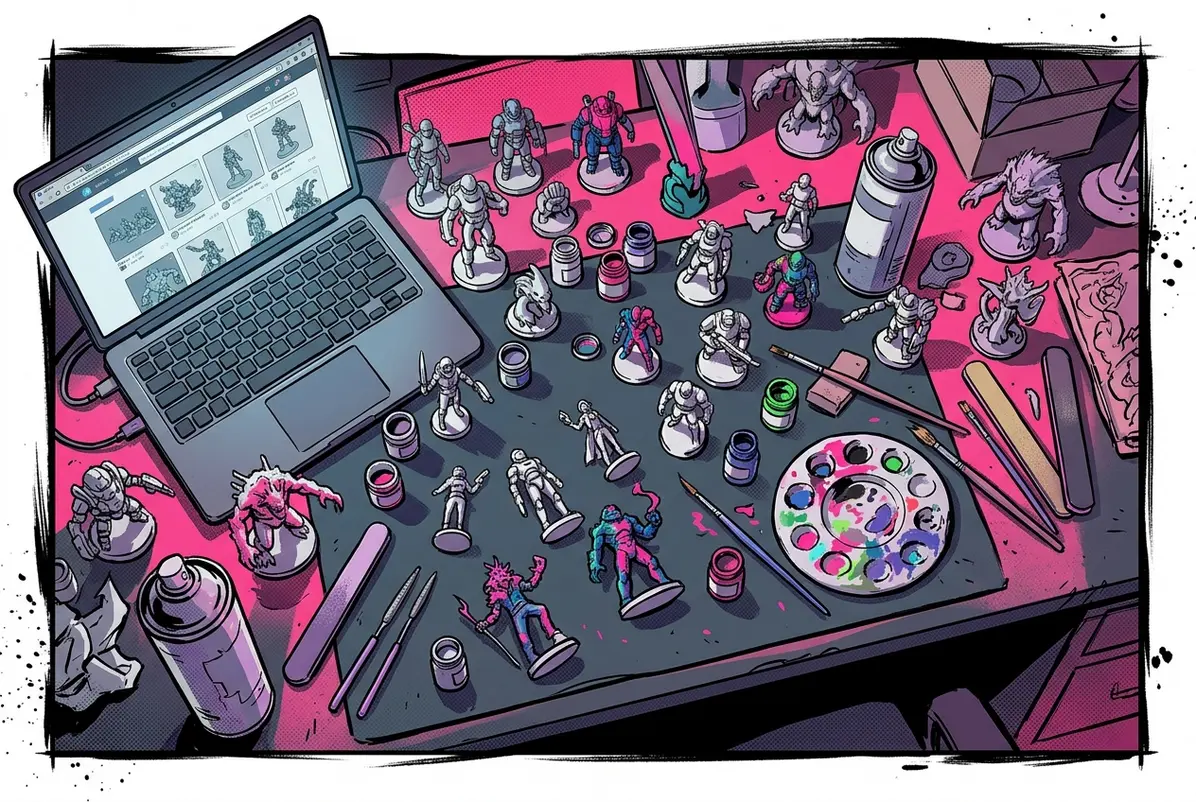
There is a credible argument that settlement was the least damaging outcome available.
A ruling against Bambu Lab might have influenced how Chinese courts and technology companies approached responsibility for user-uploaded manufacturing files. It could also have encouraged repositories to respond with heavier moderation, wider filtering, and more preemptive removal. The case attracted attention precisely because its implications might not have stopped with one grinning toy.
By settling, the parties avoided producing a definitive ruling. That may have spared MakerWorld and similar platforms from an immediate legal shock. It also preserved the ambiguity.
The public still does not know precisely where the line would have been drawn. It does not know what level of knowledge, notice, moderation, or delay would have exposed the platform to liability. It does not know whether the court would have focused narrowly on the Labubu files or articulated a broader duty for repositories hosting printable models.
In that sense, the settlement closed the dispute without resolving the design problem.
At the time the settlement was reported, Labubu-related files could still be found on several Western model repositories. Tom’s Hardware reported that it had not heard of comparable Pop Mart takedown requests directed at those sites. That snapshot did not establish that the files were lawful or immune from later removal. It showed that enforcement remained uneven across platforms and jurisdictions.
For makers familiar with years of complaints about automated copyright enforcement elsewhere online, the trajectory feels ominously familiar. A system begins as a way to remove obvious copies. Then scale arrives. Precision becomes expensive. Platforms learn that deleting too much may be safer than deleting too little.
The result is not necessarily censorship by design. It is over-removal by incentive.
Fan Art Is Not a Magic Phrase
Maker communities sometimes use “fan art” as though it settles the legal question. It does not.
A handmade interpretation, parody, accessory, transformative sculpture, exact character replica, and production-ready copy are not interchangeable merely because none came from the original rights holder. Whether a particular model infringes can depend on the design, jurisdiction, use, licensing, and other facts.
That distinction matters because the strongest version of the maker argument is not that every unofficial Labubu model deserves protection.
Few observers need to defend a near-identical printable replica of a commercial collectible in order to object when unrelated functional models vanish beside it. The principled criticism is narrower and harder to dismiss: enforcement should identify the material connected to the complaint without treating an entire repository as contaminated.
The issue is not whether intellectual property should be enforced. It is whether enforcement can preserve the difference between copying a character and designing a coaster.
This Will Not End With Labubu
Corporate-database records cited by Yicai Global indicated that Beijing-based HMCH Anime had also filed a separate case against Bambu Lab over alleged infringement involving The Legend of Hei. At the time of Yicai’s report, that dispute was listed at the first-instance civil-trial stage.
Nor is conflict between fan modeling and intellectual-property enforcement new. Entertainment, toy, automobile, and construction-brick companies have challenged unofficial files on model-sharing platforms for years. What has changed is the scale and usefulness of the ecosystem.
A downloadable model is no longer merely a curiosity passed among a few specialists. Consumer printers have become faster, easier to operate, and more capable. Model repositories have become integrated directly into printing workflows. A popular file can move from upload to physical object with almost no technical knowledge and little material cost.
That convenience is the triumph of the platform. It is also the source of its exposure.
MakerWorld is not just a message board where people discuss how an object might be reproduced. It is part of a pipeline that can turn a digital design into a manufactured thing. As those pipelines grow, rights holders will demand more control. Platforms will build more filters. Users will discover how much of their creative freedom depends on systems they cannot inspect and decisions they cannot easily appeal.
There is still a version of this future where fan creativity survives, repair culture thrives, designers are protected, and rights holders can challenge actual copies without deleting everything in their vicinity. But that future requires more than aggressive enforcement. It requires enforcement capable of recognizing what it is looking at.
The Pop Mart settlement removed a collection of files and prevented a potentially consequential ruling. It did not resolve the tension underneath. The real test will not be whether repositories can delete a printable Labubu.
It will be whether the tools built to protect the toy can learn to leave the coaster alone.
Frequently Asked Questions
Why did Pop Mart sue Bambu Lab?
Pop Mart sued Bambu Lab-related companies, alleging that user-uploaded 3D models on MakerWorld infringed rights associated with its characters, including Labubu.
Did the Pop Mart lawsuit go to trial?
No. A hearing had been scheduled for April 2, 2026, at the People’s Court of Pudong New Area in Shanghai, but the parties reached a settlement before that date.
What happened to the Labubu models on MakerWorld?
Bambu Lab said the relevant unauthorized content was removed from MakerWorld as part of the resolution with Pop Mart.
Why were unrelated 3D models removed?
Bambu Lab acknowledged that some unrelated models were accidentally delisted because of an operational error. The company said most of those models were later restored.
Is all 3D-printed fan art illegal?
No single rule covers every model. The legal status can depend on the design, how closely it reproduces protected material, whether it is transformative, how it is distributed or sold, and the laws of the relevant jurisdiction. Calling a model “fan art” does not automatically make it lawful.
Did the settlement create a legal precedent?
No public court ruling resolved the dispute, so the settlement did not establish a binding judicial rule defining platform liability for user-uploaded 3D models.
Could other 3D-model platforms face similar disputes?
Yes. Any platform hosting user-uploaded models can receive intellectual-property complaints. Its legal exposure and required response will depend on the jurisdiction, its policies, the notices it receives, and the facts surrounding the disputed files.
'%3e%3cg id='Final-Copy-2_2_' transform='translate(1275.000000, 200.000000)'%3e%3cpath class='st0' d='M7.4,12.8h6.8l3.1-11.6H7.4C4.2,1.2,1.6,3.8,1.6,7S4.2,12.8,7.4,12.8z'/%3e%3c/g%3e%3c/g%3e%3c/g%3e%3cg id='final---dec.11-2020'%3e%3cg id='_x30_208-our-toggle' transform='translate(-1275.000000, -200.000000)'%3e%3cg id='Final-Copy-2' transform='translate(1275.000000, 200.000000)'%3e%3cpath class='st1' d='M22.6,0H7.4c-3.9,0-7,3.1-7,7s3.1,7,7,7h15.2c3.9,0,7-3.1,7-7S26.4,0,22.6,0z M1.6,7c0-3.2,2.6-5.8,5.8-5.8 h9.9l-3.1,11.6H7.4C4.2,12.8,1.6,10.2,1.6,7z'/%3e%3cpath id='x' class='st2' d='M24.6,4c0.2,0.2,0.2,0.6,0,0.8l0,0L22.5,7l2.2,2.2c0.2,0.2,0.2,0.6,0,0.8c-0.2,0.2-0.6,0.2-0.8,0 l0,0l-2.2-2.2L19.5,10c-0.2,0.2-0.6,0.2-0.8,0c-0.2-0.2-0.2-0.6,0-0.8l0,0L20.8,7l-2.2-2.2c-0.2-0.2-0.2-0.6,0-0.8 c0.2-0.2,0.6-0.2,0.8,0l0,0l2.2,2.2L23.8,4C24,3.8,24.4,3.8,24.6,4z'/%3e%3cpath id='y' class='st3' d='M12.7,4.1c0.2,0.2,0.3,0.6,0.1,0.8l0,0L8.6,9.8C8.5,9.9,8.4,10,8.3,10c-0.2,0.1-0.5,0.1-0.7-0.1l0,0 L5.4,7.7c-0.2-0.2-0.2-0.6,0-0.8c0.2-0.2,0.6-0.2,0.8,0l0,0L8,8.6l3.8-4.5C12,3.9,12.4,3.9,12.7,4.1z'/%3e%3c/g%3e%3c/g%3e%3c/g%3e%3c/g%3e%3c/svg%3e) Your Privacy Choices
Your Privacy Choices