

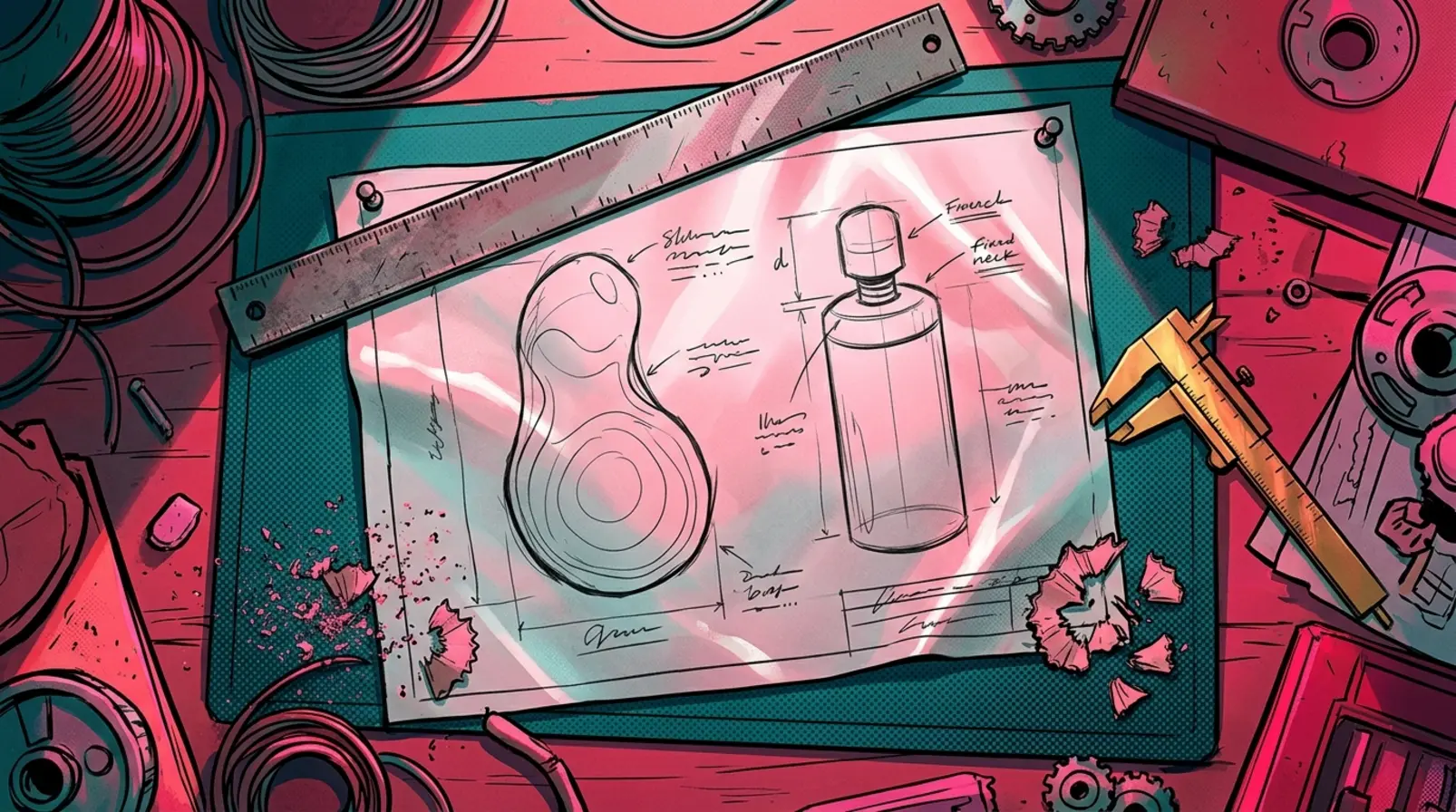

Futurama has spent nearly three decades moving through broadcast television, DVD, cable, streaming, higher resolutions, and widescreen without Fry suddenly becoming too tall or Bender acquiring a functional neck. That continuity comes from rules specific enough to sound less like art direction than engineering tolerances. A Cartoon Brew interview published September 28, 2026, with co-creator David X. Cohen and supervising director Peter Avanzino lays some of them out: Fry stands slightly over four heads tall. Leela stands four and a half. Bender’s neck is fixed, which means he cannot simply look down at his own chest door. The stranger part is that the directors do not treat those specifications as sacred. The rules keep Futurama recognizable; the show stays alive by knowing when to cheat them.
Futurama’s Drawing Rules Are Measurements and Prohibitions
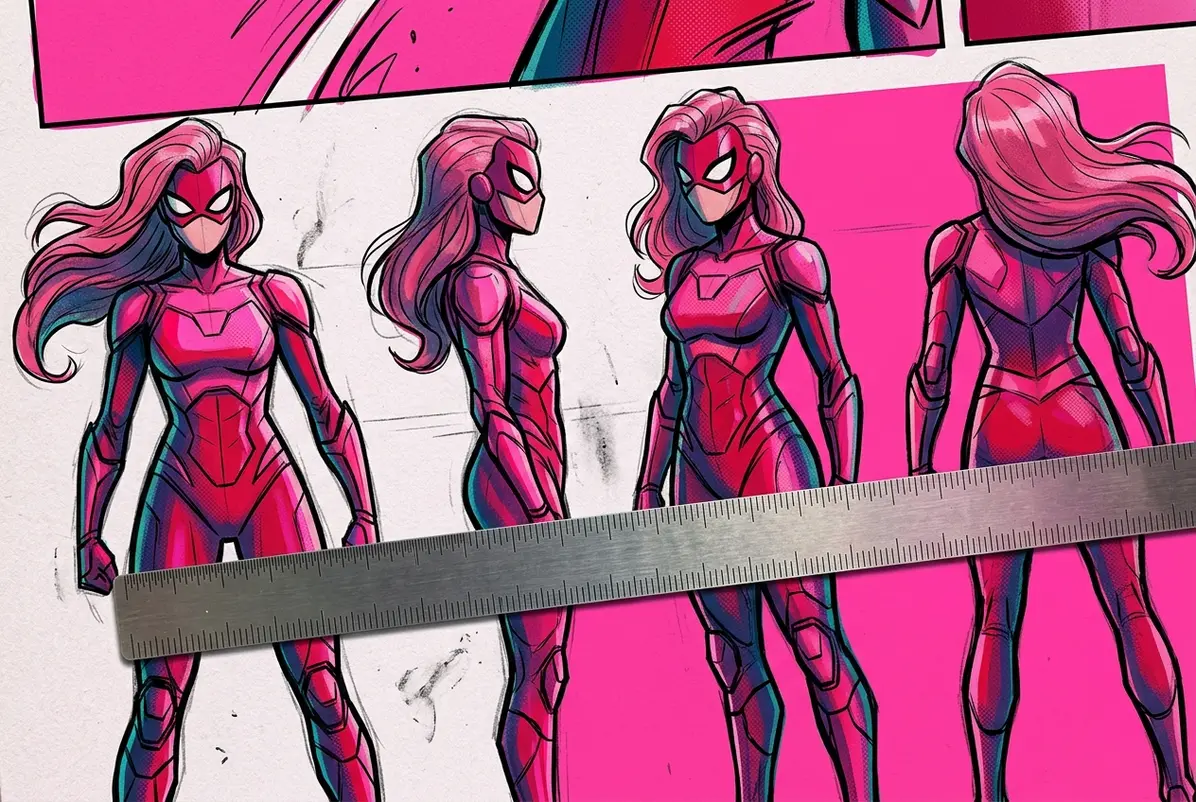
Fry is built around a slumped, peanut-shaped torso with a slight gut. His arms taper between the elbow and wrist, his hands hang around mid-thigh, and even his jacket is supposed to show some thickness. Artists are instructed not to draw a straight horizontal line across his teeth. Leela’s straighter posture carries an S-curve through her back, while her thighs run roughly the same length as her calves. Bender gets his own collection of mechanical constraints: a bullet-shaped head with an overbite, shoulder sockets tucked beneath the shoulder line, a chest door centered on his body, and an interior that generally stays black unless the contents themselves matter to the scene. The guides turn familiar silhouettes into repeatable instructions that different artists can execute without having to reinvent Fry, Leela, or Bender every time they appear.
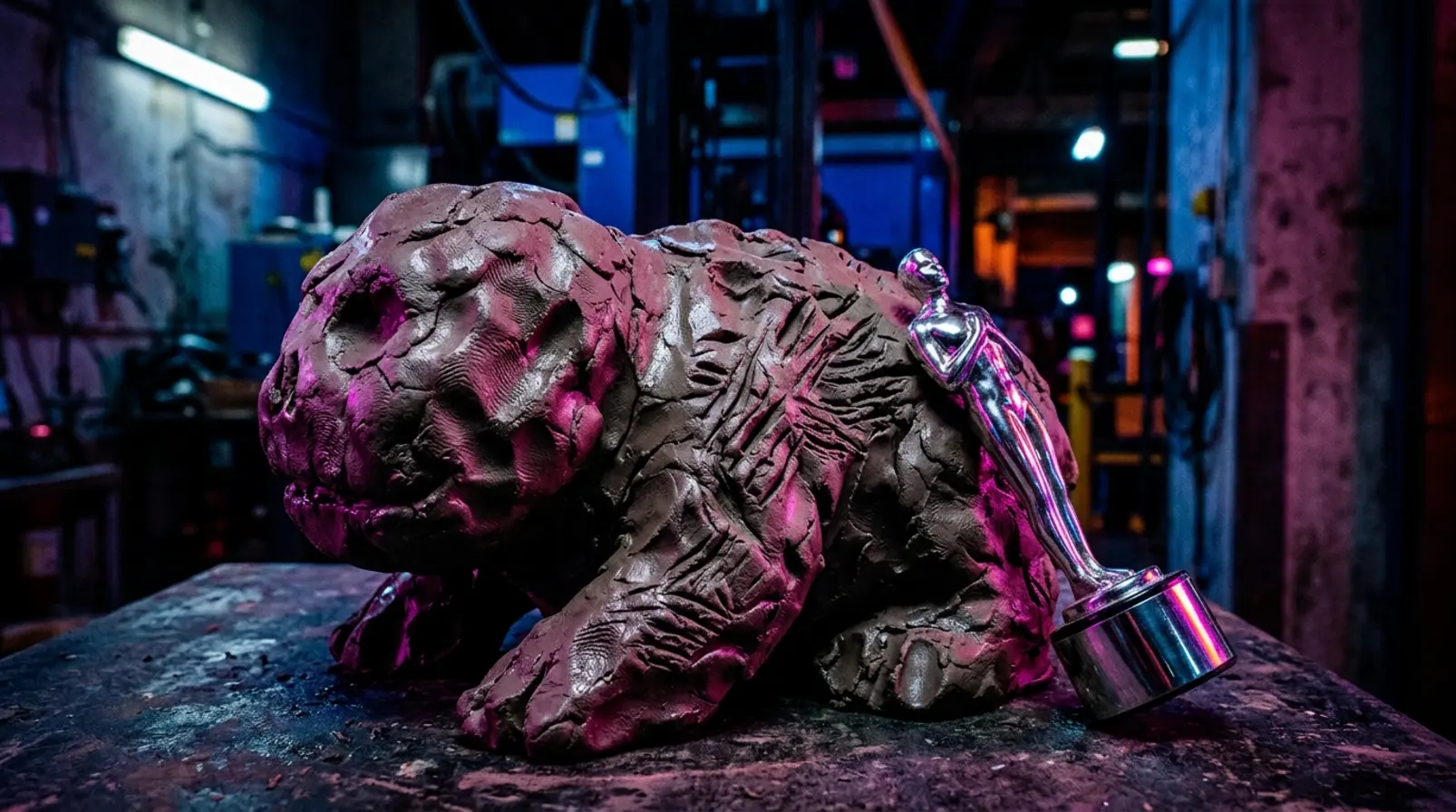
That many-hands problem is much older than Futurama. Disney established a Character Model Department in late 1937 under story artist Joe Grant. The department designed and refined characters and produced three-dimensional reference figures, including Plasticine sculptures cast in plaster. Small runs of the models circulated among animators, and some surviving examples were stamped “RETURN TO CHARACTER MODELING DEPT.” so the studio could track them. The materials are different, but the production problem is recognizable: once dozens of people have to draw the same character, a design has to become something more repeatable than one artist’s instinct.
What Changed Under the Rules
Futurama entered production at an unusually useful technological moment. Cohen recalls that when animation began in 1998 and 1999, digital production was expensive and still near the cutting edge, but the show chose to skip physical cels altogether. That spared it one transition older animated series had to make later. Plenty changed anyway. The show began in standard definition before moving to higher resolutions and widescreen, while its audience followed it from broadcast television through DVD, cable, and eventually streaming.
The pipeline is not simply “hand-drawn then, computer-generated now.” Cohen says the animators still draw, and most character acting remains hand-drawn. CG models exist for most characters and can be brought in for mechanically difficult shots such as rotations. Buildings and the Planet Express ship are also frequently handled in CG, then flattened, outlined, and integrated so they do not announce themselves as a separate visual system. The technology underneath Futurama changed substantially while the drawings on top were supposed to keep feeling like the same show.
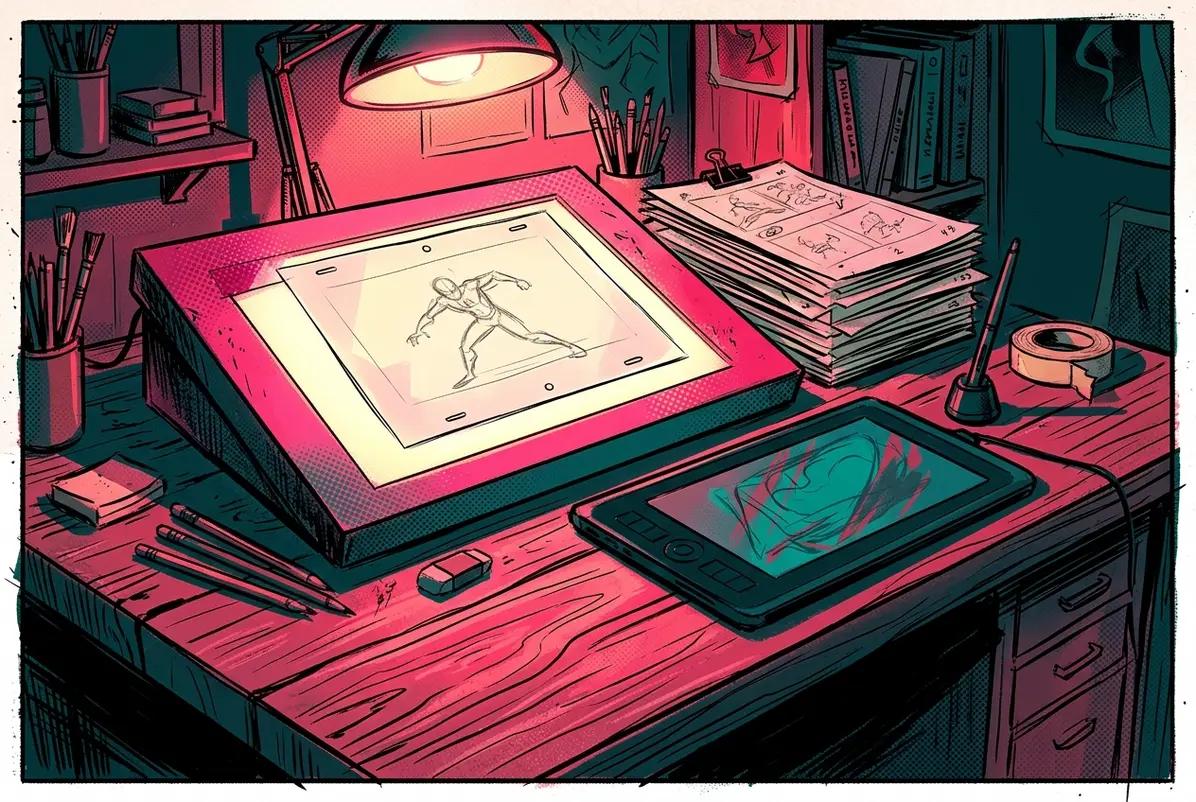
The more revealing friction is not technological. It happens when the script asks a character to do something his design technically prevents. Bender can stretch his arms, twist his head around, fall apart, and reassemble himself, but his neck does not bend. Cohen says the writers nevertheless sometimes write actions that require exactly that. A director may have to point out that Bender physically cannot bend over and look into his own chest.
The solution is not to rewrite Bender’s anatomy. The artists find another shot. Cohen gives the example of cutting to a close-up of Bender’s eyes looking downward. It is a small production workaround, but it explains what these guides actually do. A model sheet does not eliminate creative decisions. Sometimes it creates the problem that forces one.
Where Futurama’s Drawing Rules Give Way
Avanzino explicitly rejects the idea that staying on-model is the highest goal. In the same interview, he says there is room to bend the rules because too much consistency can make a show boring. Writers break them for jokes. Artists are encouraged to try unexpected acting and staging. The television schedule pushes in the opposite direction: Avanzino acknowledges that the volume of work can encourage shortcuts, so part of directing the series is pushing artists beyond the most basic solution when the scene allows it.
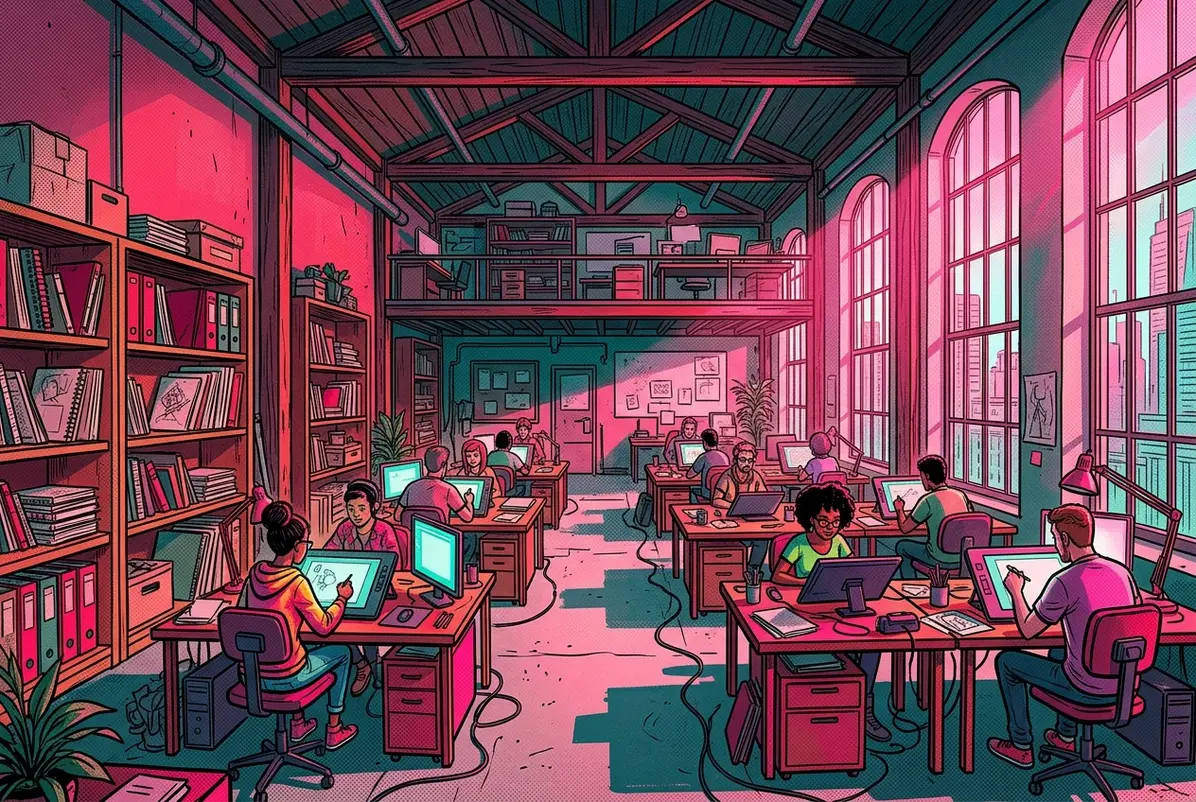
The anthology episodes turn that philosophy inside out. Cohen describes productions in which the crew is asked to redesign essentially the whole cast three times inside a roughly 20-minute episode: once as a Saturday-morning cartoon, once as an old G.I. Joe-style action series, and once as anime. That means rebuilding 10 or 15 characters several ways while still producing the episode around them. Cohen describes the result as an all-hands-on-deck job for the artists.
Those transformations work because the ordinary versions have been policed so carefully. Fry can become an anime character because the audience already knows the slouch, the hair, the proportions, and the face being distorted. Bender can be rebuilt because his normal construction is stable enough to recognize underneath the joke. The model sheet is not the opposite of expressive animation. It establishes the thing the animators are free to push against. After 27 years of new screens, new pipelines, cancellations, revivals, and redesigns, Futurama has kept changing partly because everyone still knows exactly how tall Fry is supposed to be.
'%3e%3cg id='Final-Copy-2_2_' transform='translate(1275.000000, 200.000000)'%3e%3cpath class='st0' d='M7.4,12.8h6.8l3.1-11.6H7.4C4.2,1.2,1.6,3.8,1.6,7S4.2,12.8,7.4,12.8z'/%3e%3c/g%3e%3c/g%3e%3c/g%3e%3cg id='final---dec.11-2020'%3e%3cg id='_x30_208-our-toggle' transform='translate(-1275.000000, -200.000000)'%3e%3cg id='Final-Copy-2' transform='translate(1275.000000, 200.000000)'%3e%3cpath class='st1' d='M22.6,0H7.4c-3.9,0-7,3.1-7,7s3.1,7,7,7h15.2c3.9,0,7-3.1,7-7S26.4,0,22.6,0z M1.6,7c0-3.2,2.6-5.8,5.8-5.8 h9.9l-3.1,11.6H7.4C4.2,12.8,1.6,10.2,1.6,7z'/%3e%3cpath id='x' class='st2' d='M24.6,4c0.2,0.2,0.2,0.6,0,0.8l0,0L22.5,7l2.2,2.2c0.2,0.2,0.2,0.6,0,0.8c-0.2,0.2-0.6,0.2-0.8,0 l0,0l-2.2-2.2L19.5,10c-0.2,0.2-0.6,0.2-0.8,0c-0.2-0.2-0.2-0.6,0-0.8l0,0L20.8,7l-2.2-2.2c-0.2-0.2-0.2-0.6,0-0.8 c0.2-0.2,0.6-0.2,0.8,0l0,0l2.2,2.2L23.8,4C24,3.8,24.4,3.8,24.6,4z'/%3e%3cpath id='y' class='st3' d='M12.7,4.1c0.2,0.2,0.3,0.6,0.1,0.8l0,0L8.6,9.8C8.5,9.9,8.4,10,8.3,10c-0.2,0.1-0.5,0.1-0.7-0.1l0,0 L5.4,7.7c-0.2-0.2-0.2-0.6,0-0.8c0.2-0.2,0.6-0.2,0.8,0l0,0L8,8.6l3.8-4.5C12,3.9,12.4,3.9,12.7,4.1z'/%3e%3c/g%3e%3c/g%3e%3c/g%3e%3c/g%3e%3c/svg%3e) Your Privacy Choices