



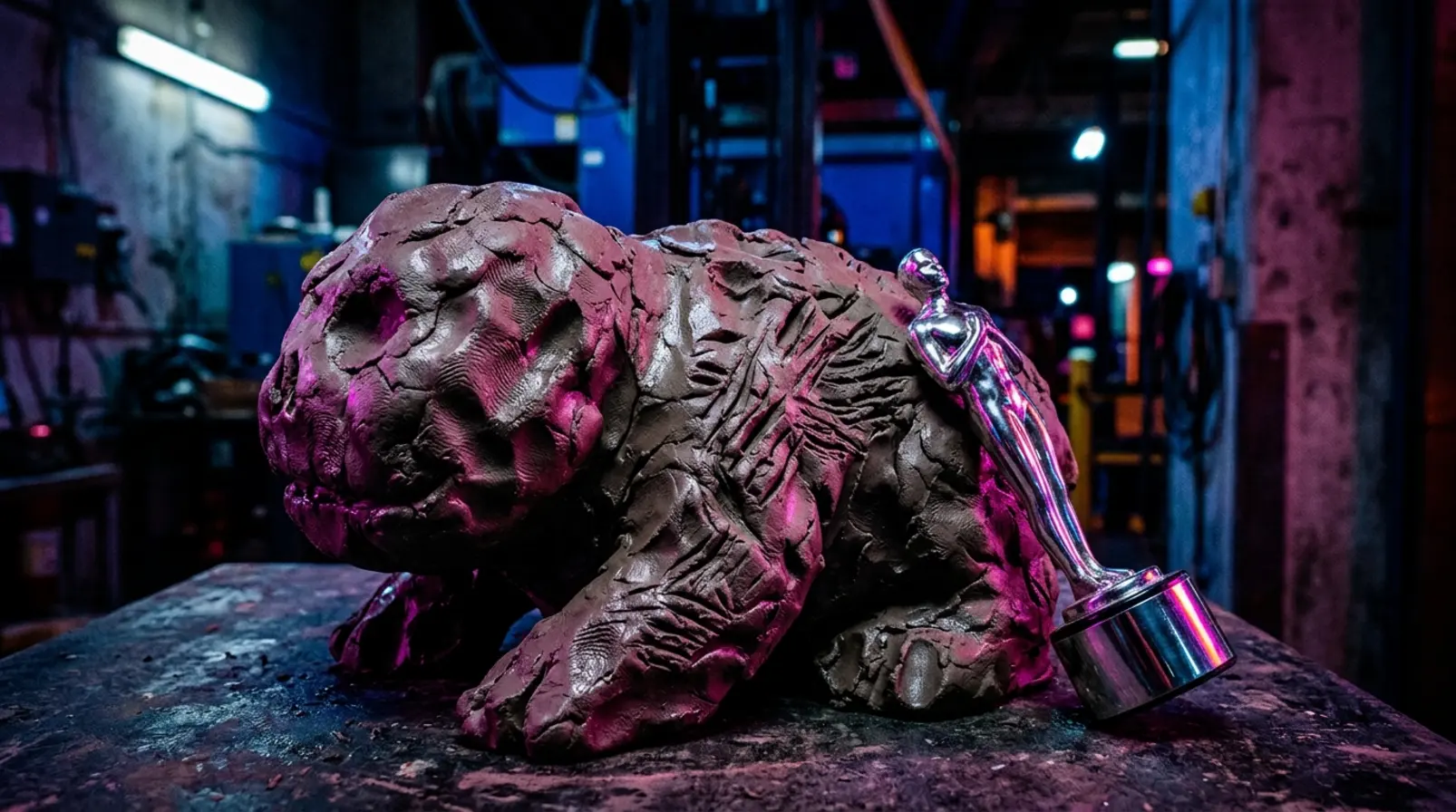
Myco-Plastic Miku refers to a concept at the intersection of mycelium-based bioplastic manufacturing and anime figure collecting: a Hatsune Miku figure produced using biodegradable materials instead of traditional PVC. While no such product has been officially announced by Good Smile Company as of May 2026, the idea has become a flashpoint in collector communities debating whether sustainability and permanence can coexist in a hobby built on keeping things pristine forever.
Good Smile Company and the PVC Empire That Built Miku Fandom
Good Smile Company, Inc. (also known as GSC) is a Japanese hobby product manufacturer headquartered in Chiyoda, Japan, formed in May 2001 as an event management and talent company by corporate executive Takanori Aki. The company’s products include the Nendoroid and Figma product lines, as well as scale figures primarily in PVC. Hatsune Miku, the Crypton Future Media Vocaloid character, has been one of GSC’s most prolific subjects for nearly two decades.
Aki was first employed at Konami, then worked in marketing at Banpresto before establishing Good Smile Company, which later became involved in the production and distribution of sculpted products with its sister company Max Factory. The origin story is charmingly scrappy. To fund the early talent agency, Aki also ran a fishing supply shop. From those beginnings, GSC grew into a company whose Nendoroid line alone has produced well over a thousand variants, with Miku appearing as a perennial anchor across seasonal releases, racing editions, and collaboration figures.
Every one of those figures is made from PVC and ABS plastic. PVC is used to manufacture figures primarily because it’s very cheap when compared to other plastics and it’s somewhat resistant. Good quality PVC is smooth to the touch and has a skin-like appearance which cannot be achieved by using other plastics such as ABS. This material combination has been the industry standard for decades, and it works. But “works” and “lasts forever” are not the same thing.
The Quiet Rot Inside Every Collector’s Detolf
Ask any figure collector what keeps them up at night and the answer is always the same: yellowing. Yellowing of PVC figures mostly happens because of things in the environment like UV light and heat, which cause chemical changes in the plastic that make it change color over time. Plasticizers can cause figures to yellow, become sticky, or oily over time. Plasticizer is a chemical used in all plastic PVC/ABS figures, incorporated into the material to make it flexible and durable.
Most yellowing comes from UV exposure, humidity, or plasticizer evaporation, though proper care keeps PVC looking fine for 5 to 10 years. That sounds reasonable until you realize that many collectors are buying figures they intend to keep for life. The IKEA Detolf display case has become something of a meme in the hobby precisely because it represents the minimum viable environment for long-term preservation: glass doors, limited UV exposure, a sealed-ish space where dust and humidity can be partially managed.
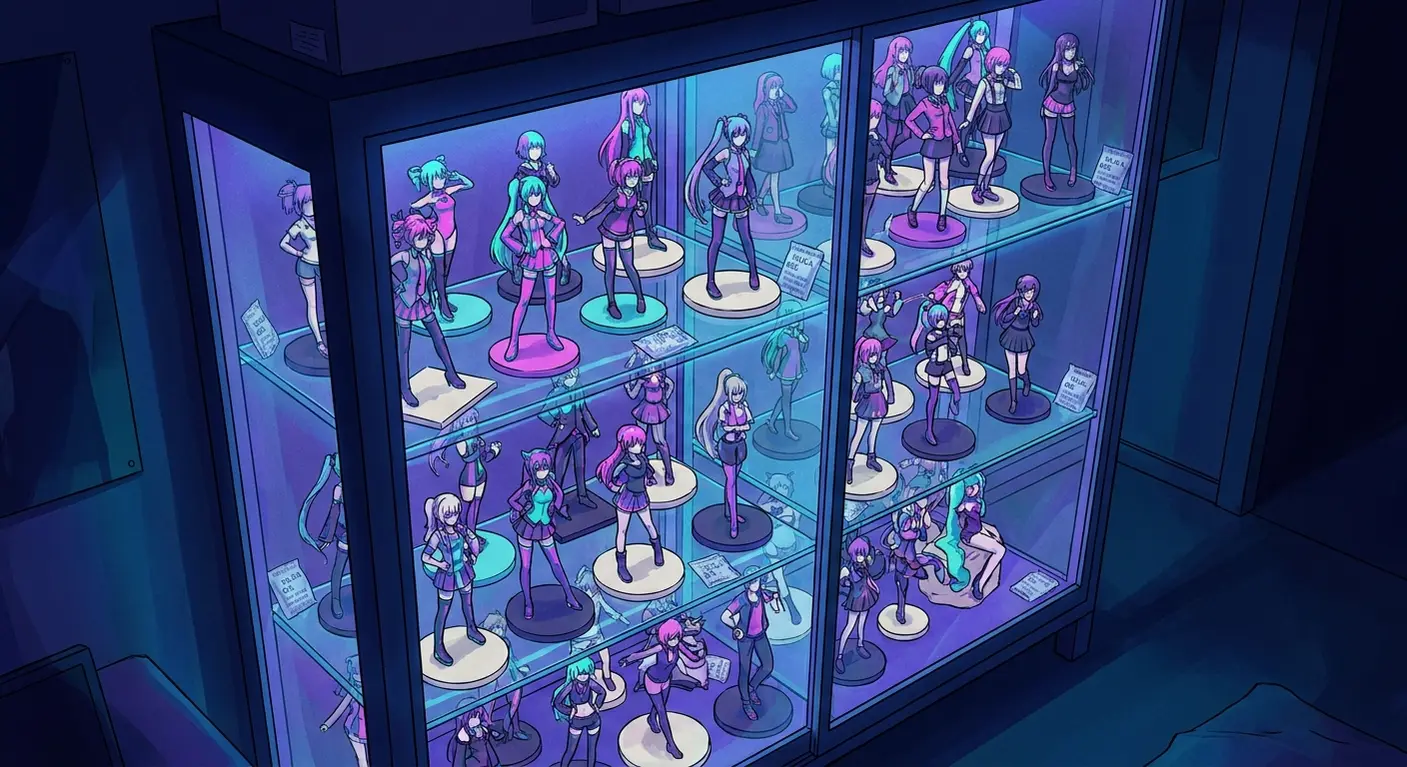
The community discussions around figure degradation are intense and ongoing. In collector forums, people share horror stories about figures stored in closets near attic doors, where temperature fluctuations accelerated the breakdown even without direct sunlight. Others obsessively track which manufacturers and which production runs are most susceptible. The anxiety is real and, to me, entirely understandable. These aren’t cheap objects. A 1/7 scale Miku can run $150 to $300 at retail, and aftermarket prices for discontinued editions climb much higher.
Mycelium Composites and the Biodegradable Materials Revolution
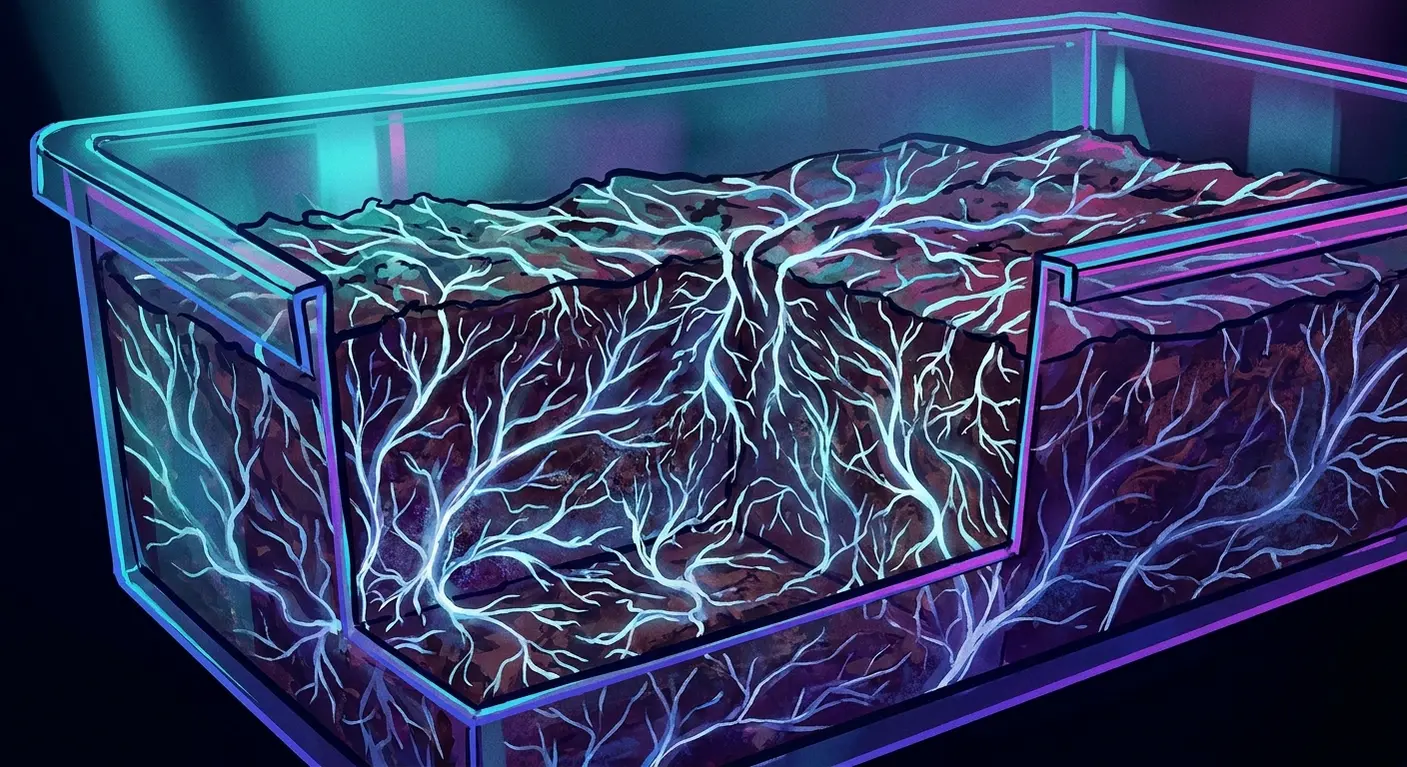
Meanwhile, materials science has been quietly building something interesting. New possibilities are being explored to find alternatives to plastics, and one of them refers to mycelium-composite materials. Mycelium, the root network of fungi, can be grown on agricultural waste substrates to produce composite materials that are lightweight, structurally sound, and fully biodegradable.
In recent years, research efforts have focused on mycelium-based materials due to their unique mechanical properties and biodegradability. Mycelium is the root system of fungi and composed of natural polymers including cellulose, protein, lignin, and chitin. The applications have expanded rapidly. As an alternative environmentally friendly material over synthetic foams, mycelium composite shows its advantage in several engineering applications such as packaging materials, acoustic and thermal insulation boards.
Companies like Green Dot Bioplastics are already producing bioplastic materials certified for use in children’s toys. Green Dot offers plastics made from materials that are compostable and biodegradable, and their compostable bioplastic has been tested and verified by NSF International to meet child product safety standards in the U.S., Canada, Europe, Australia and New Zealand. The toy industry is actively exploring these alternatives. Plastic makes up approximately 90% of toys worldwide.
So the technology exists, or is rapidly maturing, to produce detailed molded objects from biodegradable substrates. The question is whether anyone in the anime figure industry would actually use it. And what strikes me is how completely that question misses the point collectors are actually worried about.
Why Biodegradable Figures Terrify the Collector Market
The entire economic and emotional logic of figure collecting rests on permanence. You buy a figure. You display it. You protect it from UV, heat, humidity, and dust. You keep the box. You keep the box for the box. The aftermarket exists because these objects hold or increase in value over time, and that value depends on condition.
Introduce a biodegradable material into this equation and the whole system short-circuits. In collector forums, the hypothetical has already sparked heated debate. Some see it as a greenwashing gimmick that would destroy resale value. Others worry about the practical implications: if a figure is designed to decompose under specific conditions, what happens when those conditions are accidentally met? What if your apartment gets humid? What if you live in Florida?
There’s a case to be made that the collector anxiety is partly irrational. One study evaluated the effect of various real-world environmental conditions on commercially available mycelium biocomposite, examining extreme conditions such as freezing temperatures, high heat, and high humidity, since past research has shown mycelium to be biodegradable. The results showed that controlled environments can preserve these materials effectively. In my view, a mycelium-based figure kept in a display case at room temperature would likely hold up far better than the panic suggests.
But collector anxiety has never been fully rational. It’s emotional. It’s about the feeling of owning something that will outlast you, that freezes a moment of fandom in three dimensions. My take is that the real crisis isn’t material science. It’s the collision between two incompatible value systems: sustainability, which asks us to accept impermanence, and collecting, which demands we deny it.
The Miku Paradox and What It Reveals About Physical Media
Hatsune Miku is, in some ways, the perfect character to anchor this debate. She doesn’t age. She’s software. Her voice is synthesized, her image infinitely reproducible, her identity perpetually refreshed through new designs and collaborations. Racing Miku’s image is used as the basis for race car livery, figures, and other types of Hatsune Miku merchandise every single year, with a new illustrator and a new design. She is, by design, impermanent.
And yet people spend hundreds of dollars on her PVC incarnations specifically because they want something permanent. It feels like a contradiction worth sitting with. The figure is supposed to be the anchor, the fixed point, the thing that doesn’t change even as the character cycles through infinite variations. A biodegradable Miku would force collectors to confront something they’ve been quietly fighting against with silica gel packets and UV-filtering display cases: nothing lasts.
To me, that tension is what makes this hypothetical so interesting. It’s not really about mycelium. It’s about what we’re buying when we buy a figure. Are we buying an object, or are we buying the idea that our relationship to a character can be made solid and durable? If the object degrades, does the relationship degrade with it? Reasonable people might disagree, but I think the answer is more complicated than the hobby wants to admit.
Where the Industry Actually Stands on Sustainable Figures
As of May 2026, no major anime figure manufacturer has announced a biodegradable product line. In August 2025, Good Smile Company temporarily halted its US shipments, a decision that was part of the fallout of the US government’s executive order to suspend the “de minimis” exemption. The company has been navigating trade logistics, not material science revolutions. Their current catalog remains firmly PVC and ABS.
But the broader toy industry is moving. Toymakers are exploring options for using more sustainable plastics over petroleum-based incumbents, including bio-based plastics like PLA, PHA, and starch polymers made with renewable feedstocks. Biocomposite plastics combine natural fibers or wood flour with recycled, biodegradable, or biobased plastics to create durable weather-resistant toys. It reads like only a matter of time before the figure industry faces pressure to follow.
When that day comes, the collector community will need to decide what it values more: the permanence of the object or the sustainability of the hobby. I think most people will choose permanence. But the conversation itself is worth having, because it forces us to be honest about what collecting really is: a bet against entropy, placed with plastic and love.
FAQ
What is Myco-Plastic Miku?
Myco-Plastic Miku is a concept describing a hypothetical Hatsune Miku figure made from mycelium-based bioplastic rather than traditional PVC. As of May 2026, no such product has been officially announced by Good Smile Company. The idea has become a discussion point in collector communities exploring the tension between sustainability and long-term figure preservation.
What materials are anime figures typically made from?
PVC (Polyvinyl chloride) is the third-most widely produced plastic, after polyethylene and polypropylene. Most anime scale figures use a combination of PVC for the body and detailed parts, and ABS plastic for structural elements like bases and legs. ABS is used primarily for the bases and legs of figures because it is a very sturdy plastic that won’t bend.
Why do PVC figures yellow over time?
A chemical reaction occurs between UV radiation, oxygen, and certain chemicals in the plastic, called photodegradation, along with another process called thermal oxidation. Plasticizers are essential for anime figures as they maintain the figure’s elasticity, but over time, plasticizers can evaporate, causing various issues such as yellowing, stickiness, and an oily surface.
What are mycelium-based composite materials?
Mycelium, the vegetative part of a fungus, can be shaped into pure mycelium materials or composites. Mycelium can grow its network in lignocellulosic material, combining separate pieces into a solid material which results in Mycelium-Based Composites (MBCs), whose attributes are influenced by the fungal species, the growth substrate, and the processing conditions.
Could biodegradable figures actually work for collectors?
In theory, mycelium composites can be preserved under controlled conditions. By applying a suitable coating, the quality and durability of the material can be improved. However, the collector market depends on long-term stability and resale value, which creates a fundamental tension with materials designed to decompose. The technology is advancing, but the culture of collecting may be the harder problem to solve.
When was Good Smile Company founded and who runs it?
Takanori Aki (born January 26, 1971) is a Japanese entrepreneur best known as the founder and chairman of Good Smile Company, a leading global producer of scale figures, statues, and merchandise. In January 2024, Aki transitioned to the position of Chairman, passing the CEO role to Kantaro Iwasa while retaining substantial influence over the company’s strategic direction. The company was founded in May 2001 in Matsudo, Chiba.

'%3e%3cg id='Final-Copy-2_2_' transform='translate(1275.000000, 200.000000)'%3e%3cpath class='st0' d='M7.4,12.8h6.8l3.1-11.6H7.4C4.2,1.2,1.6,3.8,1.6,7S4.2,12.8,7.4,12.8z'/%3e%3c/g%3e%3c/g%3e%3c/g%3e%3cg id='final---dec.11-2020'%3e%3cg id='_x30_208-our-toggle' transform='translate(-1275.000000, -200.000000)'%3e%3cg id='Final-Copy-2' transform='translate(1275.000000, 200.000000)'%3e%3cpath class='st1' d='M22.6,0H7.4c-3.9,0-7,3.1-7,7s3.1,7,7,7h15.2c3.9,0,7-3.1,7-7S26.4,0,22.6,0z M1.6,7c0-3.2,2.6-5.8,5.8-5.8 h9.9l-3.1,11.6H7.4C4.2,12.8,1.6,10.2,1.6,7z'/%3e%3cpath id='x' class='st2' d='M24.6,4c0.2,0.2,0.2,0.6,0,0.8l0,0L22.5,7l2.2,2.2c0.2,0.2,0.2,0.6,0,0.8c-0.2,0.2-0.6,0.2-0.8,0 l0,0l-2.2-2.2L19.5,10c-0.2,0.2-0.6,0.2-0.8,0c-0.2-0.2-0.2-0.6,0-0.8l0,0L20.8,7l-2.2-2.2c-0.2-0.2-0.2-0.6,0-0.8 c0.2-0.2,0.6-0.2,0.8,0l0,0l2.2,2.2L23.8,4C24,3.8,24.4,3.8,24.6,4z'/%3e%3cpath id='y' class='st3' d='M12.7,4.1c0.2,0.2,0.3,0.6,0.1,0.8l0,0L8.6,9.8C8.5,9.9,8.4,10,8.3,10c-0.2,0.1-0.5,0.1-0.7-0.1l0,0 L5.4,7.7c-0.2-0.2-0.2-0.6,0-0.8c0.2-0.2,0.6-0.2,0.8,0l0,0L8,8.6l3.8-4.5C12,3.9,12.4,3.9,12.7,4.1z'/%3e%3c/g%3e%3c/g%3e%3c/g%3e%3c/g%3e%3c/svg%3e) Your Privacy Choices
Your Privacy Choices