

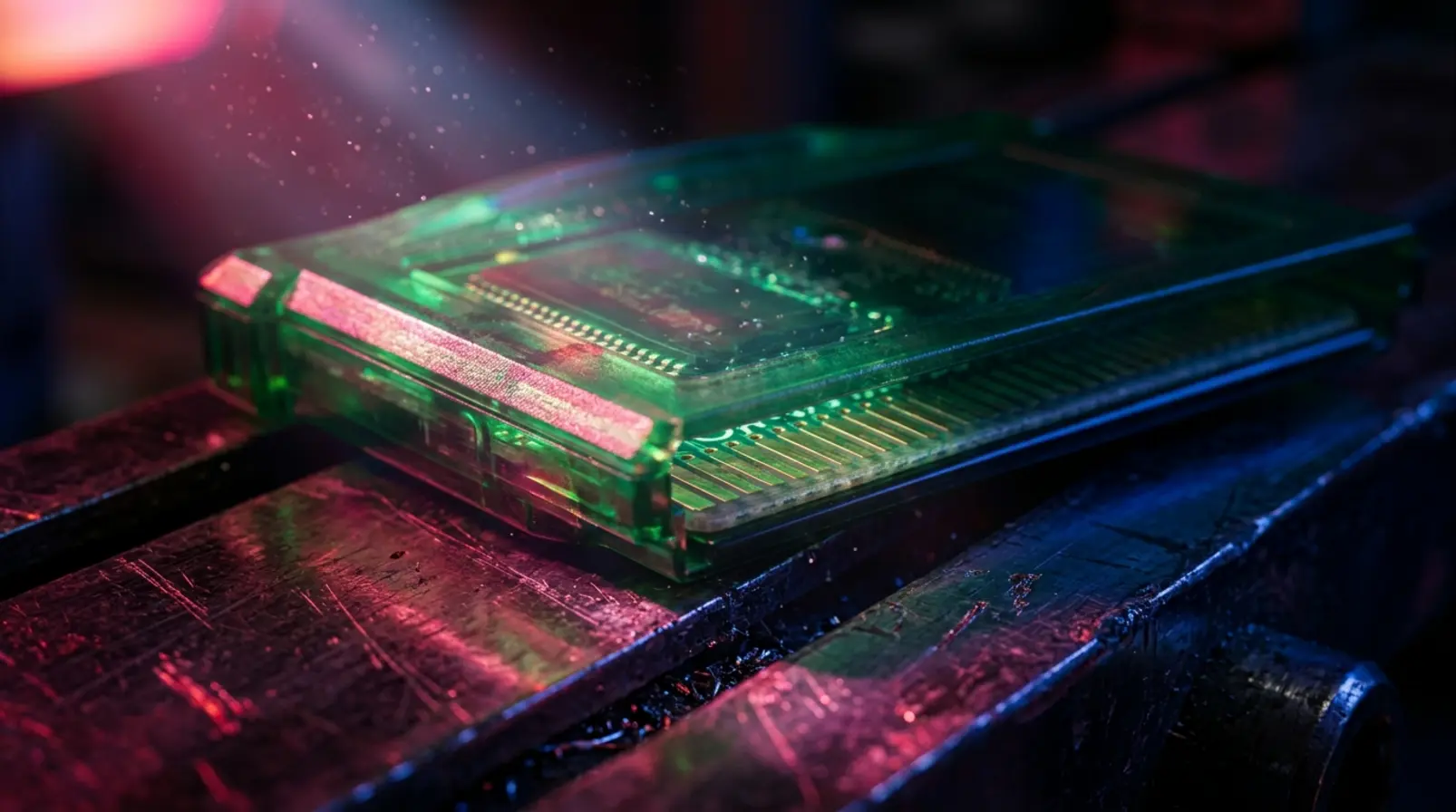


Making a new Game Boy game is no longer the strange part. Getting one onto a modern console is.
itch.io currently lists more than 1,500 games made with GB Studio, an engine whose drag-and-drop editor and visual scripting let creators build games without traditional programming. It can export actual Game Boy ROMs, which means a developer can move from an idea to a file that runs on original-style hardware or an emulator without going through a publisher at all.
That open path now sits beside something much more selective. In early 2026, Italian developer and publisher Caracal Games introduced the GB Archive, a program for choosing homebrew Game Boy games and handling the technical work required to put them on contemporary consoles.
A No-Code Engine Built for Direct Publishing
GB Studio started much smaller. Developer Chris Maltby describes it as a collection of disconnected scripts and tools he used to make Untitled GB Game in a single week for Bored Pixels 3, a pixel-art jam built around a Game Boy theme. After the jam, Maltby reworked those tools into an editor intended to be approachable even for people who had never made a game.
The project kept growing rather than freezing into a nostalgia tool. GB Studio 4.3.2 arrived June 22, 2026, adding new debugger and web-export features among its changes. The engine can produce ROMs for Game Boy hardware, browser builds for direct web distribution and projects complicated enough that developers have built commercial releases around it.
More Than 1,500 Games and No Central Gatekeeper
The result is a catalog that behaves less like a revival campaign than a workshop with the doors left open. itch.io currently returns 1,502 titles tagged as made with GB Studio. There is no requirement that those projects resemble commercial Game Boy releases from the 1990s, and no single publisher deciding which ones belong.
Orlando Mee, a multimedia artist on South Australia’s Yorke Peninsula, used the engine while experimenting with interactive artwork before developing Yakshini Lokam, a strategy game drawing on his Anglo-Indian heritage and the history of tabletop games. He told ABC in March 2026 that GB Studio let him make the sort of games that would have “blown my mind” when he was ten.
Melbourne developer Tom Lockwood, who works as Gumpy Function, represents another route through the same scene. He co-created Unearthed with Ben Jelter, worked on the GB Studio-built Grimace’s Birthday produced for McDonald’s 2023 marketing campaign, and now sells Let’s Build a Platformer!, a course built around GB Studio 4.3.x. The same tool can sit underneath an art project, an itch.io experiment, a branded game or a boxed cartridge.

Cartridges and Switch Ports Came First
Commercial crossover did not begin with the GB Archive. IZMA’s horror game Deadeus, developed in GB Studio, received a physical Game Boy release through Incube8 Games in April 2022. Incube8 still lists the standard edition at $39.99, although the company’s store currently marks it unavailable.

Caracal had also tested the other half of the equation before giving it an archive name. It published 2021: Moon Escape on Nintendo Switch on May 12, 2023. The GB Studio-built dungeon crawler Traumatarium followed on October 13, 2023.
Those releases matter because they make the GB Archive less of a sudden invention than a formalized pipeline. Caracal had already learned how to take games designed around Game Boy constraints and move them through a modern console storefront.
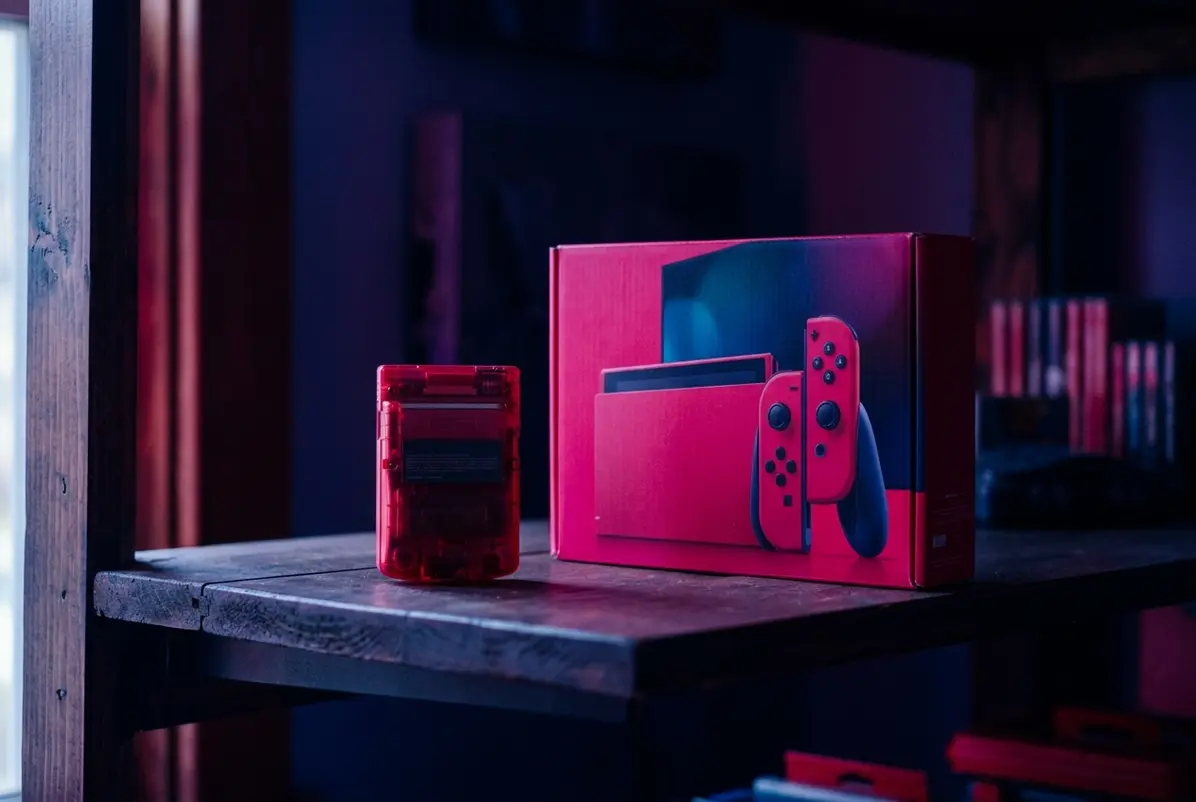
The Publisher Becomes the Filter
GB Studio Central reported that Caracal launched the GB Archive in February 2026; Caracal’s own site announced the service as available on March 5. In a May interview, Caracal head Tommaso Bonanni described it to GB Studio Central as a curated pipeline for moving Game Boy homebrew onto modern platforms.
The distinction is important. GB Studio removed a gate. The GB Archive deliberately adds one back.
Developers can submit their games, but acceptance is not automatic. Caracal says it evaluates projects for qualities including coherent design, technical stability and clear authorial intent. For accepted titles, the company handles porting, quality assurance, platform compliance, certification and storefront distribution. It says it does not redesign the games or take creative control over them.
Caracal frames that work partly as preservation, although the practical service is more specific: adapting selected Game Boy software for contemporary commercial platforms and keeping it accessible beyond original hardware, ROM downloads and small physical runs.
By July, the project had moved beyond a proposal. In The Dark Collection arrived on Nintendo Switch on July 23, 2026, with Nintendo’s regional listings explicitly identifying it as part of the GB Archive. Caracal’s current archive page also lists Traumatarium: Penitent among its catalog.
Two Different Ways Out of the Same Tiny Machine
None of this replaces itch.io. A developer can still build a game in GB Studio, export the ROM and put it online without asking Caracal—or anyone else—whether it belongs in a catalog. More than 1,500 projects on itch.io show what happens when that decision stays with the creator.
The GB Archive offers a different outcome. Its value is not that it makes Game Boy development possible; GB Studio already did that. It deals with the paperwork, porting, certification and distribution machinery that appears once somebody wants a homebrew ROM to live inside an official console ecosystem.
That leaves modern Game Boy development in an unusual place. The hardware belongs to another era, but its software scene now has both the messiness of an open creator platform and the machinery of a small publishing industry. A person can make a Game Boy game without permission. Getting that same game through Nintendo’s front door is where the gate comes back.

'%3e%3cg id='Final-Copy-2_2_' transform='translate(1275.000000, 200.000000)'%3e%3cpath class='st0' d='M7.4,12.8h6.8l3.1-11.6H7.4C4.2,1.2,1.6,3.8,1.6,7S4.2,12.8,7.4,12.8z'/%3e%3c/g%3e%3c/g%3e%3c/g%3e%3cg id='final---dec.11-2020'%3e%3cg id='_x30_208-our-toggle' transform='translate(-1275.000000, -200.000000)'%3e%3cg id='Final-Copy-2' transform='translate(1275.000000, 200.000000)'%3e%3cpath class='st1' d='M22.6,0H7.4c-3.9,0-7,3.1-7,7s3.1,7,7,7h15.2c3.9,0,7-3.1,7-7S26.4,0,22.6,0z M1.6,7c0-3.2,2.6-5.8,5.8-5.8 h9.9l-3.1,11.6H7.4C4.2,12.8,1.6,10.2,1.6,7z'/%3e%3cpath id='x' class='st2' d='M24.6,4c0.2,0.2,0.2,0.6,0,0.8l0,0L22.5,7l2.2,2.2c0.2,0.2,0.2,0.6,0,0.8c-0.2,0.2-0.6,0.2-0.8,0 l0,0l-2.2-2.2L19.5,10c-0.2,0.2-0.6,0.2-0.8,0c-0.2-0.2-0.2-0.6,0-0.8l0,0L20.8,7l-2.2-2.2c-0.2-0.2-0.2-0.6,0-0.8 c0.2-0.2,0.6-0.2,0.8,0l0,0l2.2,2.2L23.8,4C24,3.8,24.4,3.8,24.6,4z'/%3e%3cpath id='y' class='st3' d='M12.7,4.1c0.2,0.2,0.3,0.6,0.1,0.8l0,0L8.6,9.8C8.5,9.9,8.4,10,8.3,10c-0.2,0.1-0.5,0.1-0.7-0.1l0,0 L5.4,7.7c-0.2-0.2-0.2-0.6,0-0.8c0.2-0.2,0.6-0.2,0.8,0l0,0L8,8.6l3.8-4.5C12,3.9,12.4,3.9,12.7,4.1z'/%3e%3c/g%3e%3c/g%3e%3c/g%3e%3c/g%3e%3c/svg%3e) Your Privacy Choices