


Three Machines, One Obsession
Retro hardware used to be an easy joke. A plastic shell, a tiny screen, a few old games, a logo dragged out of storage, and enough nostalgic fog to make the compromise feel charming. That version of the market still exists. But 2026 is making the stranger version harder to ignore.
The past is no longer being sold only as content. It is being sold as interface.
That is what connects three very different products moving through the retro hardware conversation right now: a budget handheld with Banjo-Kazooie baked into its tiny frame, a revived Commodore flip phone designed to block the infinite scroll, and a new Neo Geo console that claims to rebuild SNK’s old luxury machine at the silicon level. These devices do not really compete with one another. They argue with one another. Each one proposes a different answer to the same question: what, exactly, are people trying to recover when they buy old technology in new form?
The answer is not simply “the games.” It is the grip. The delay. The button travel. The cartridge slot. The missing browser. The weird little ritual between wanting something and making the machine do it.
The ghost was never nostalgia alone. The ghost was the workflow.
The Super Pocket Rare Edition: Seventy Dollars for 1998
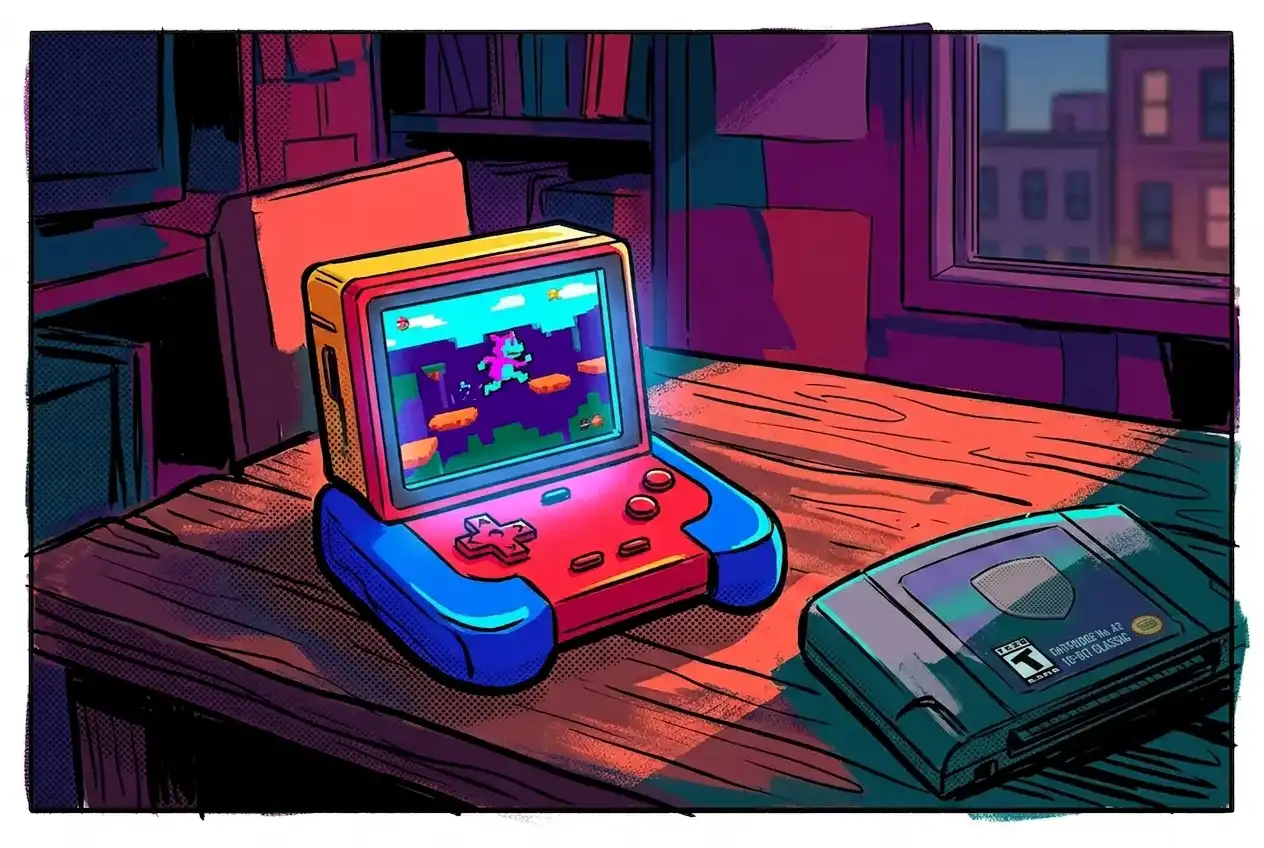
The easiest product to underestimate is also the most charming. The HyperMegaTech Super Pocket Rare Edition is a small vertical handheld built around 14 Rare computer and console games, including Banjo-Kazooie, Battletoads, Conker’s Pocket Tales, Jetpac, Atic Atac, Knight Lore, Snake Rattle ’n’ Roll, and Solar Jetman. HyperMegaTech lists the device with a 2.8-inch 320×240 IPS screen, USB-C charging, a 3.5mm headphone jack, roughly four hours of battery life, and Evercade cartridge compatibility for expansion beyond the built-in library.
The price is part of the argument. GamesRadar listed the Rare Edition at $69.99 ahead of a June 26, 2026 release date. That matters because this is not a boutique FPGA object, a luxury handheld, or a collector-grade replica. It is a cheap pocket machine being asked to carry one of the most tactile 3D platformers of the late 1990s.
That is where the compromise becomes interesting. Banjo-Kazooie was not just an N64 game. It was an N64 controller game. Its feel was tied to the analog stick, the yellow C-buttons, the Z-trigger, and Rare’s particular sense of elastic movement. Cramming that experience into a vertical handheld with a digital pad should be a disaster, or at least a very funny punishment for people who romanticize the past too much.
Instead, the result appears to be stranger than that. Time Extension’s review described the Evercade version of Banjo-Kazooie as an enhanced port built from the original source code, saying it runs at 60Hz, looks sharper on the handheld’s screen, and performs more smoothly than the original N64 release. The same review was clear about the compromise: without analog input, movement becomes more rigid, and the revised controls take adjustment. The workaround is telling. In the default control setup, the R2 button can trigger a tiptoe mode, approximating the effect of lightly touching the N64 analog stick.
That is not purity. It is translation.
The Super Pocket Rare Edition is not trying to recreate a living room in 1998. It is trying to make a version of that memory survive in a coat pocket. The device’s weakness is also its thesis: some retro experiences can be made smaller, cheaper, and more portable only by admitting that the original ritual cannot come along intact. The analog stick is gone. The bear and bird remain.
That makes the Rare Edition more than a licensed trinket. It is a curated museum pamphlet with buttons. It does not preserve the original experience perfectly. It preserves the desire to carry it around.
Commodore’s Bet Against Your Own Attention Span
Then there is the Commodore Callback 8020, which is barely a retro gaming product at all. That is what makes it useful to the larger story.
The revived Commodore brand is not using the past here to sell arcade accuracy or a library of old games. It is using the past as a behavioral fantasy. The official Callback 8020 page pitches the phone around a blunt promise: social media and browsers are blocked, WhatsApp and SMS are preinstalled, and the device is meant to sit somewhere between a smartphone and a dumbphone. Commodore says preorders open on June 30, 2026, and the official page currently lists launch pricing from $399.99 for at least one model, with shipping described as starting in winter.
This is where the draft version of the story needed the most care. The Callback should not be described as a finished, no-touchscreen object. Commodore’s own FAQ says the main display is a touchscreen, but that touch input is disabled by default and can be enabled when an app requires it. The company also notes that it has booting pre-production samples as of June 2026, that compliance testing and software optimization remain, that some product images are renders, that design and specifications are subject to change, and that the device has not yet completed FCC equipment authorization.

That caveat matters because the Callback is not merely hardware. It is a promise about self-control. The Verge described the phone as having a 3.25-inch 480×640 internal display, MediaTek Helio G81 processor, 4GB of RAM, 64GB of storage, a headphone jack, and FM radio. WIRED reported that it also includes a 48-megapixel Sony camera sensor, a removable battery, FiiO in-ear monitors, and a digital-to-analog converter, while running Jolla’s Linux-based Sailfish OS with support for many Android apps.
Those specs are not the real product. The hinge is the product. The blocked browser is the product. The absent feed is the product.
The Callback is retro not because it faithfully recreates a specific old Commodore machine. It is retro because it turns technological limitation into a lifestyle proposition. It takes the early-2000s flip phone silhouette and asks whether a physical close can become a mental close. Snap the phone shut, and the ritual says the world is done asking for you.
That is powerful. It is also suspicious in the right way. A phone designed to save users from their phones is still a product asking to be bought. A device that blocks Instagram but keeps messaging, maps, music, rideshare apps, and selected Android compatibility is not a retreat into the past. It is a negotiated surrender with nicer industrial design.
Still, the Callback understands something many retro products miss. The old appeal was not always speed, capability, or even simplicity. Sometimes the appeal was that machines had edges. They refused certain behaviors by being physically bad at them. Commodore is trying to manufacture that refusal on purpose.
That is not nostalgia as memory. It is nostalgia as boundary.
The NEOGEO AES+: Silicon Reincarnation, With an Asterisk
The NEOGEO AES+ is the most serious of the three because it speaks the language of hardware authenticity. PLAION REPLAI’s U.S. product page lists the standard console at $249.99, with release and shipping scheduled to start on November 12, 2026. The same page says SNK and PLAION REPLAI teamed up on the console for the Neo Geo’s 35th anniversary, and describes it as a hardware-faithful reimplementation of the original Japanese machine with modern quality-of-life features.
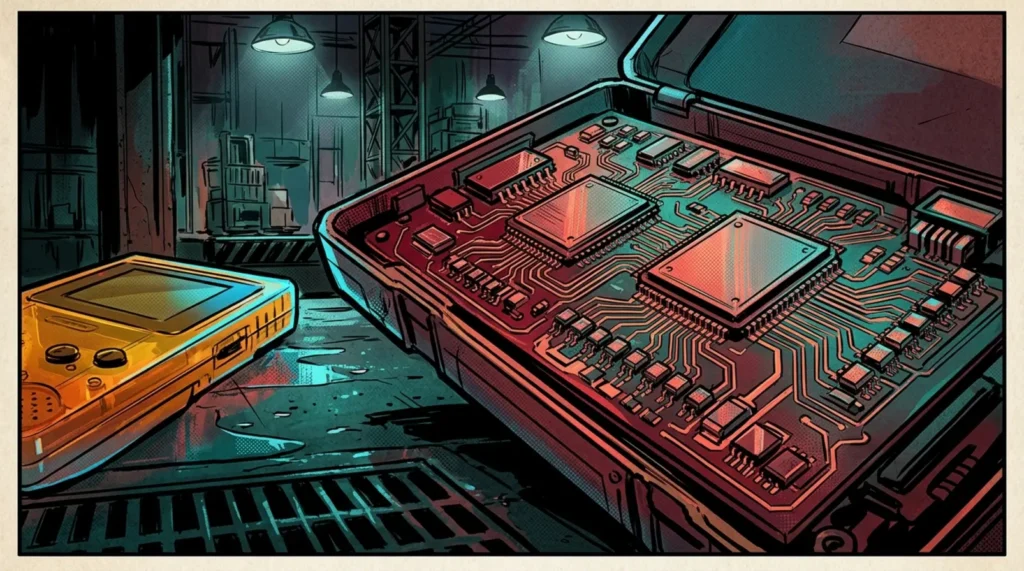
The marketing language is almost theological. PLAION says gameplay on the NEOGEO AES+ is not achieved through emulation, but through legacy ASIC chips re-engineered by modern standards to replicate the original hardware and software. The page also says the system natively plays both new cartridges and original NEOGEO AES cartridges, while adding low-latency HDMI output, original AV output for CRT users, DIP switches, display modes, overclocking options, and high-score storage with a memory card.
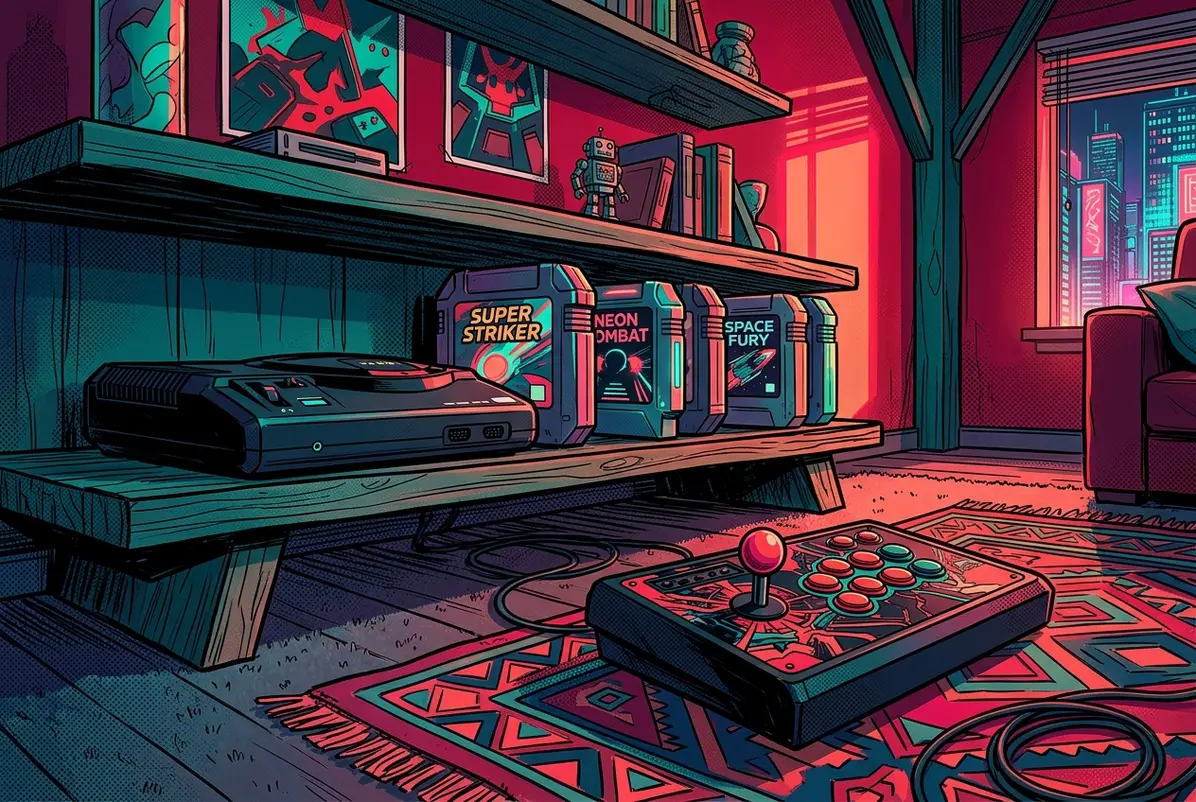
This is a very different use of nostalgia from the Super Pocket or the Callback. The Rare handheld says the past can be compressed. The Commodore phone says the past can discipline the present. The NEOGEO AES+ says the past should be rebuilt as a machine, not merely simulated as a menu.
That claim should be treated as a claim, not a settled verdict. “No emulation” is exactly the sort of phrase that will invite frame-by-frame analysis, audio comparisons, input-lag testing, cartridge-behavior scrutiny, and arguments about what counts as original behavior when original hardware itself had revisions, tolerances, aging components, and display-chain variables. The stronger the authenticity pitch, the more measurement it deserves.
But that scrutiny is part of the product’s cultural meaning. The NEOGEO AES+ is not selling convenience first. It is selling legitimacy. For a platform whose original identity was built around bringing the arcade home with absurd seriousness, the new machine is trying to make fidelity feel newly purchasable.
The old Neo Geo fantasy was that the arcade had moved into the house. The new fantasy is that the archive can be manufactured again.
What This Moment Actually Means
Three devices, three ideologies. The Super Pocket Rare Edition sells curation and portability. The Commodore Callback 8020 sells refusal and self-imposed friction. The NEOGEO AES+ sells fidelity and hardware legitimacy.
That is the more interesting story hiding under the product announcements. Retro hardware is no longer just a way to play old software on new plastic. It has become a set of arguments about what the past is for. Is the point access? Accuracy? Escape? Constraint? Is the old machine valuable because it played certain games, or because it forced certain behaviors?
The mini-console era trained people to think nostalgia meant a small HDMI box, a menu, and a licensed game list. This newer wave is weirder. It is obsessed with the physical contract between user and machine. The D-pad workaround. The T9 text entry. The cartridge slot. The AV output for CRTs. The blocked browser. The promise of re-engineered silicon. The object is no longer just a delivery mechanism for old content. The object is the argument.
That is why the market suddenly feels more serious. Not because every product is perfect. Not because every claim should be swallowed whole. The opposite. It feels serious because the claims have become testable, philosophical, and strange. Retro hardware is moving beyond “remember this?” into “which part of remembering is worth rebuilding?”
Some buyers want the past made portable. Some want the past to protect them from the present. Some want the past rebuilt with courtroom-level precision. All three impulses share a belief that modern convenience lost something, even when it won.
The past is not one product anymore. It is a design language with competing denominations.
The old hardware was never sacred because it was old. It became sacred because it made certain kinds of attention possible. The screen, the stick, the hinge, the cartridge, the cable, the missing browser — these were not decorations. They were rules. And in 2026, retro hardware is discovering that the rules may have been the thing people missed most.
FAQ
What are the three retro hardware products discussed here?
The article focuses on the HyperMegaTech Super Pocket Rare Edition, the Commodore Callback 8020 flip phone, and the NEOGEO AES+ from PLAION REPLAI and SNK.
Is the Super Pocket Rare Edition a Rare-themed handheld?
Yes. HyperMegaTech describes the Super Pocket Rare Edition as a pocket-sized handheld with 14 built-in Rare computer and console games, including Banjo-Kazooie, Battletoads, Conker’s Pocket Tales, and several earlier Rare and Ultimate Play The Game titles.
Does the Commodore Callback 8020 have a touchscreen?
Yes. Commodore says the Callback 8020’s main display is a touchscreen, but that touch input is disabled by default for a keypad-first experience and can be enabled when an app requires it.
Is the Commodore Callback 8020 already final hardware?
No. Commodore says it has booting pre-production samples as of June 2026, with compliance testing and final software optimization still remaining. The company also states that the device has not yet completed FCC equipment authorization, so delivery is conditional on that process being completed.
Is the NEOGEO AES+ an emulator?
PLAION REPLAI says the NEOGEO AES+ is not software emulation or FPGA approximation, but a hardware-faithful reimplementation using re-engineered legacy ASIC chips. Independent testing will still matter once final hardware ships.
What is the larger point of these products?
The larger point is that retro hardware is becoming more than nostalgia packaging. These devices sell different relationships to older technology: portability, intentional restriction, and hardware fidelity.

'%3e%3cg id='Final-Copy-2_2_' transform='translate(1275.000000, 200.000000)'%3e%3cpath class='st0' d='M7.4,12.8h6.8l3.1-11.6H7.4C4.2,1.2,1.6,3.8,1.6,7S4.2,12.8,7.4,12.8z'/%3e%3c/g%3e%3c/g%3e%3c/g%3e%3cg id='final---dec.11-2020'%3e%3cg id='_x30_208-our-toggle' transform='translate(-1275.000000, -200.000000)'%3e%3cg id='Final-Copy-2' transform='translate(1275.000000, 200.000000)'%3e%3cpath class='st1' d='M22.6,0H7.4c-3.9,0-7,3.1-7,7s3.1,7,7,7h15.2c3.9,0,7-3.1,7-7S26.4,0,22.6,0z M1.6,7c0-3.2,2.6-5.8,5.8-5.8 h9.9l-3.1,11.6H7.4C4.2,12.8,1.6,10.2,1.6,7z'/%3e%3cpath id='x' class='st2' d='M24.6,4c0.2,0.2,0.2,0.6,0,0.8l0,0L22.5,7l2.2,2.2c0.2,0.2,0.2,0.6,0,0.8c-0.2,0.2-0.6,0.2-0.8,0 l0,0l-2.2-2.2L19.5,10c-0.2,0.2-0.6,0.2-0.8,0c-0.2-0.2-0.2-0.6,0-0.8l0,0L20.8,7l-2.2-2.2c-0.2-0.2-0.2-0.6,0-0.8 c0.2-0.2,0.6-0.2,0.8,0l0,0l2.2,2.2L23.8,4C24,3.8,24.4,3.8,24.6,4z'/%3e%3cpath id='y' class='st3' d='M12.7,4.1c0.2,0.2,0.3,0.6,0.1,0.8l0,0L8.6,9.8C8.5,9.9,8.4,10,8.3,10c-0.2,0.1-0.5,0.1-0.7-0.1l0,0 L5.4,7.7c-0.2-0.2-0.2-0.6,0-0.8c0.2-0.2,0.6-0.2,0.8,0l0,0L8,8.6l3.8-4.5C12,3.9,12.4,3.9,12.7,4.1z'/%3e%3c/g%3e%3c/g%3e%3c/g%3e%3c/g%3e%3c/svg%3e) Your Privacy Choices
Your Privacy Choices