

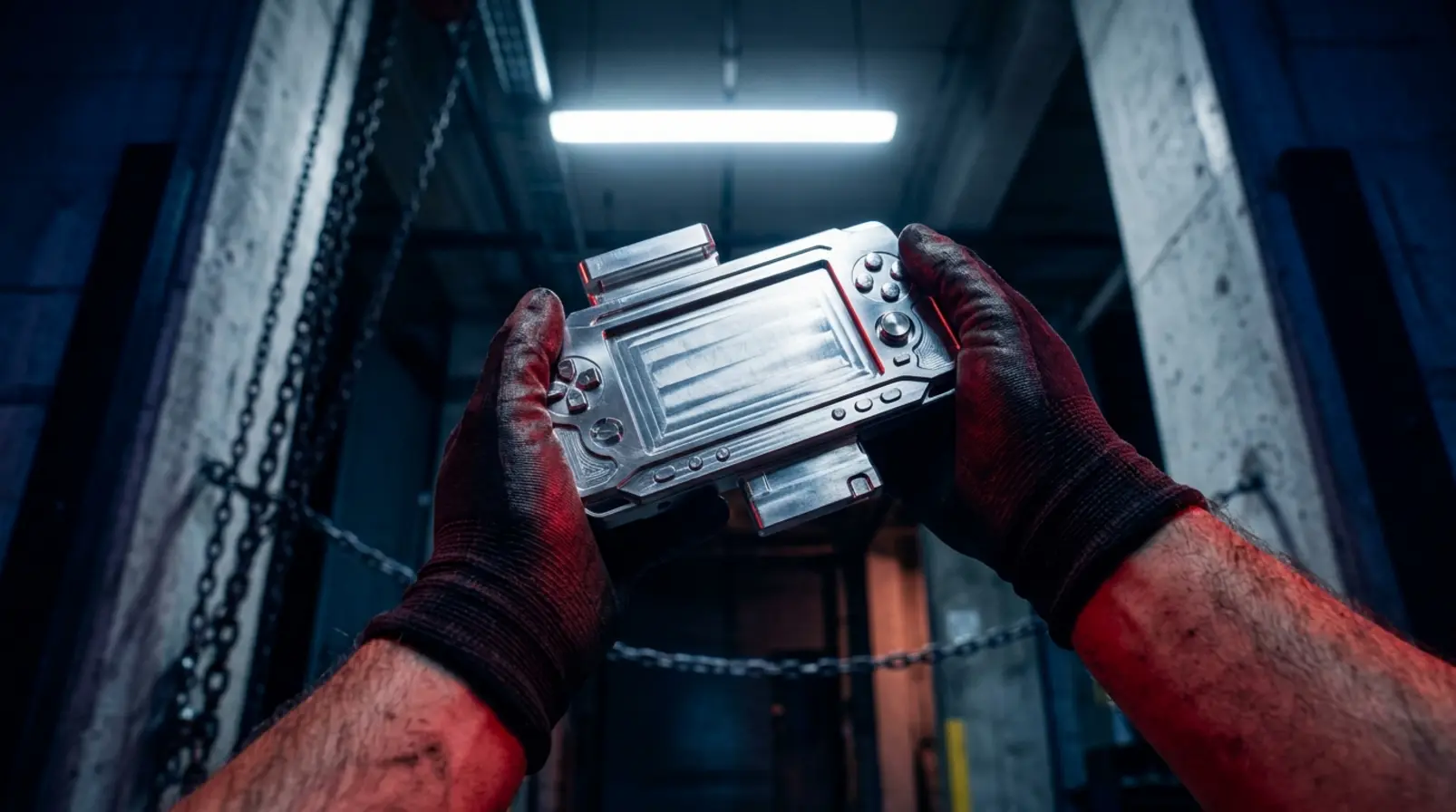


There is a particular gesture that belongs to the luxury object. It is the slow unboxing, the two-handed lift, the moment of weight registering against the palm before anything is switched on. It is the gesture of someone holding a Leica M-series rangefinder for the first time, or turning a Rolex Submariner on its bracelet to catch the light. It has almost nothing to do with function. And it is now, unmistakably, the gesture of picking up the Analogue Pocket Aluminum.
The conventional read on Analogue’s aluminum Pocket is simple: it is a Game Boy for rich people. The company’s limited aluminum edition launched at $499, while the standard black and white Pocket models are currently listed by Analogue at $239.99. Online enthusiast communities have spent months locked in a tidy binary, one camp treating the price as consistent with Analogue’s long-running premium identity, the other seeing it as a brutal markup for a device whose core function does not change. Both sides are correct, which is exactly why neither side is saying anything interesting.
The more useful question is not whether the Aluminum Pocket is worth the money. It is what kind of object it has become, and what that transformation says about where collector culture is dragging retro gaming.
Same Brain, Different Body
Analogue’s Pocket has always been a strange proposition. Out of the box, it plays original Game Boy, Game Boy Color, and Game Boy Advance cartridges, with additional cartridge adapters supporting other handheld libraries, and Analogue describes the device as built around two FPGAs rather than software emulation. That distinction matters enormously to a small audience and almost not at all to everyone else. It is the difference between buying a song and buying the pressing.
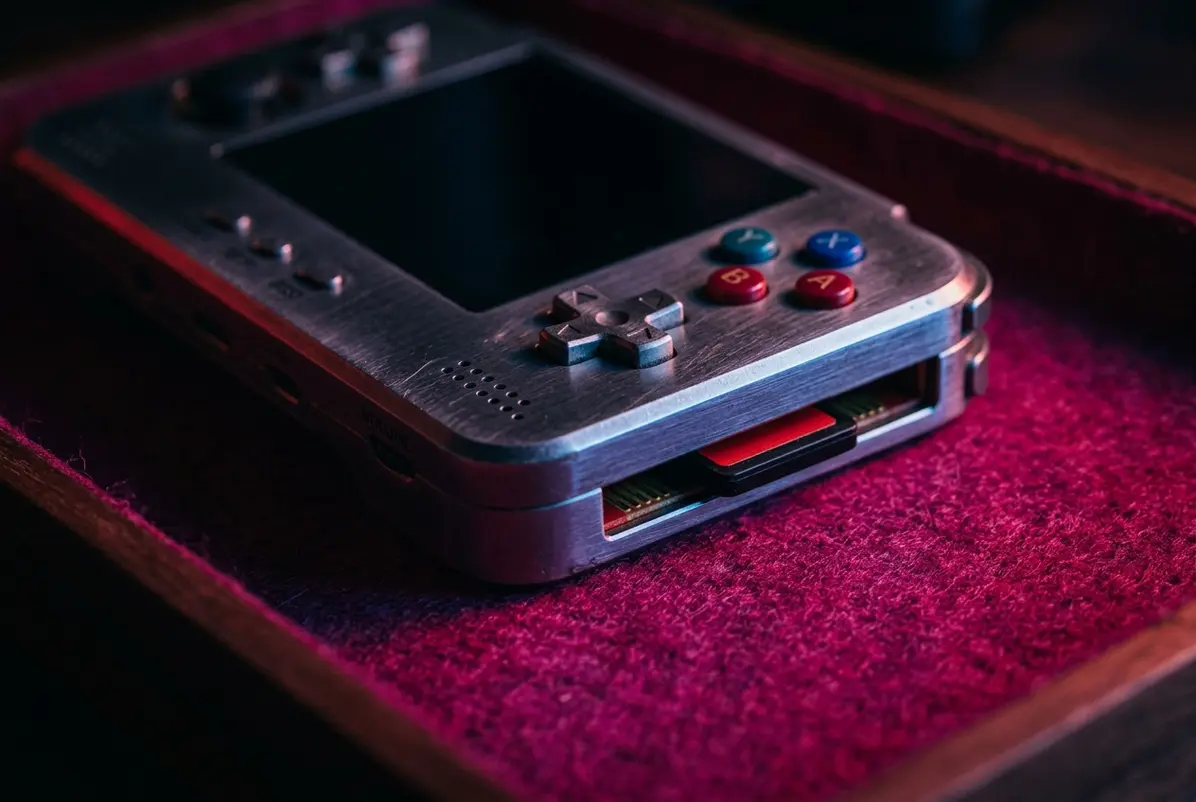
The Aluminum edition does not change the basic proposition. The screen is still the same 3.5-inch, 615 ppi LCD with a 1600×1440 resolution that Analogue advertises for the Pocket. The openFPGA ecosystem is still built around the same developer-facing architecture, with Analogue’s documentation noting that Pocket uses a primary FPGA available to developers and a smaller system FPGA for Analogue OS. What changes is the body. Analogue says the aluminum edition is precision CNC’d in aluminum, with enclosure pieces fabricated from solid billet 6061 aluminum and anodized in four colors: Natural, Noir, Black, and Indigo.
That body is the whole point, and also the whole problem. Weight is not a spec here. It is a mood. It turns the Pocket from a handheld into an object of ceremony, something that asks to be noticed before it asks to be used. The old Game Boy was a toy designed to survive backpacks, batteries, dust, and neglect. The Aluminum Pocket feels like something that wants a microfiber cloth and a quiet room.
That is the inversion. A metal Game Boy should sound more durable, more permanent, more ready for abuse. Instead, it can become too precious to treat casually. The object meant to revive old play starts to inherit the anxieties of jewelry: scratches, finish wear, docking marks, tiny flaws visible only because the owner has been trained to look for them. The game is still there. But the hand hesitates.
The Camera-Watch-Sneaker Pipeline
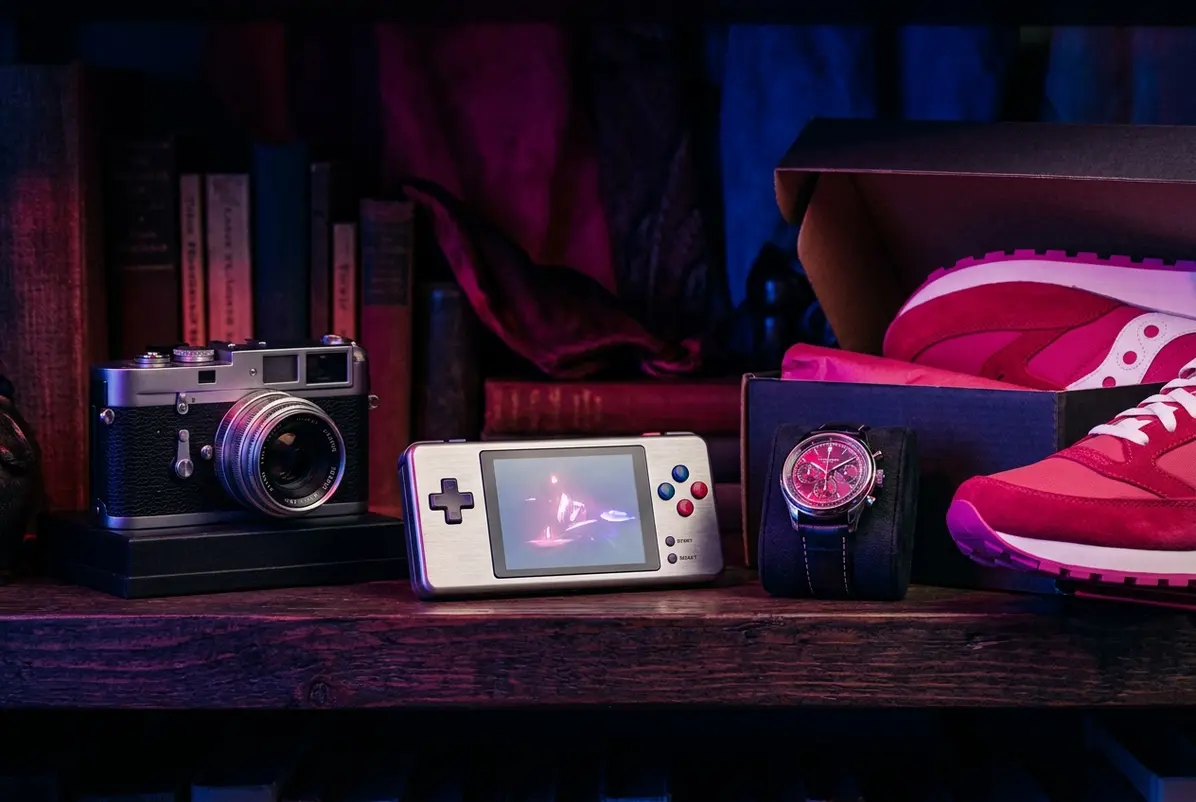
What Analogue has done with the Aluminum Pocket reads less like a normal product refresh than a category migration. The company has moved a video game handheld into the cultural lane occupied by limited-edition cameras, enthusiast watches, boutique keyboards, and sneaker drops. The mechanics are familiar: controlled scarcity, premium material, minimal change to the underlying function, maximum attention to finish, and a resale market waiting just outside the checkout page.
This is the Leica-fication of the Game Boy. The point of the comparison is not that a Pocket is a camera or that every expensive object is secretly the same. It is that certain tools eventually cross a threshold where performance is no longer the whole product. The product becomes the feel, the ritual, the finish, the knowledge that the cheaper version would have done the job but not produced the same private little charge when lifted from the desk.
The Aluminum Pocket runs that play with unusual clarity. It does not play cartridges better in any meaningful way than the standard Pocket. It plays them with more ceremony. In collector culture, that difference can be decisive. The seal is the product. The finish is the product. The game, almost insultingly, is sometimes incidental.
The comparison to modern hardware only sharpens the absurdity. For roughly the same money, shoppers can start looking at mainstream consoles, PC handhelds, or a modded original Game Boy with room left for cartridges. But that comparison misses the point in exactly the way a spec sheet misses a watch. The Aluminum Pocket is not competing with a mass-market console. It exists in a parallel economy where the object’s aura matters as much as its output.
Scarcity as a Feature, Resentment as a Side Effect
The strangest thing about the Aluminum Pocket is that its price may have clarified what Analogue’s limited editions had already been becoming. Analogue has dealt publicly with demand, bots, scalpers, and frustrated customers before; in a 2021 statement, the company said Pocket preorders had sold out quickly and described steps aimed at bot protection and scalper listings. It also defined Limited Editions as single production runs that would never be produced again.
That matters because scarcity is not merely an accident in this market. It is part of the emotional architecture. Analogue’s editions page now lists the Pocket Aluminum Editions as sold out, alongside other sold-out Pocket variants. Once that happens, the product exits the ordinary retail economy and enters the story economy. People are no longer just buying the device. They are buying the fact that the device is gone.
Price-guide data shows the predictable afterlife. PriceCharting’s page for the Black Anodized Aluminum Pocket lists market values based on completed sales rather than unsold listings, with figures above the original $499 launch price. That does not mean every sale clears at a fantasy number, and it does not make every listing meaningful. It does show the machine working: limited run, retail sellout, secondary-market premium, then a new round of desire created by the premium itself.
This is the collector-culture flywheel in miniature. Scarcity creates desire. Desire creates resale value. Resale value retroactively justifies the original price. The object drifts further from its original purpose with every transaction, until a handheld built to play cartridges starts behaving more like a commodity with buttons.
The emotional residue around that drift is conflicted for a reason. The Aluminum Pocket is beautiful. It is also irritating. It gives retro gaming the kind of industrial-design seriousness fans have always wanted, then attaches that seriousness to the exact market dynamics that make the hobby feel less playable. The worry is not simply that one expensive Pocket exists. The worry is that the things people love become things they cannot afford, and the things they can afford become the things nobody wants.

The Object Wins
There is a case to be made that none of this criticism matters, because Analogue is not making an argument. It is making an object. The Aluminum Pocket does not need to justify itself to the person who will never buy it, any more than a mechanical watch needs to justify itself to someone happy checking the time on a phone. Its audience is self-selecting: cartridge owners, FPGA obsessives, design collectors, and people who simply want the most refined version of a thing they already care about. That audience is small, but it is committed, and it is willing to pay.
What registers as genuinely revealing here is not that premium retro hardware exists. That line had already been crossed by boutique consoles, high-end arcade sticks, custom keyboards, modded originals, and metal-shelled emulation handhelds. The Aluminum Pocket is not the first expensive retro device. Its importance is more specific than that. It is one of the clearest cartridge-based retro handhelds to occupy the luxury-object space without embarrassment, without disguise, and without pretending that the material upgrade is secretly about performance.
That honesty makes the object more interesting and more uncomfortable. The Aluminum Pocket is a Game Boy that has become a watch, a camera, a sculpture. Whether that evolution delights or disturbs depends on whether the cartridge collection is understood as a library, a shrine, or a portfolio.
The honest answer is that it can be all three, and that the discomfort is the point. Luxury objects have always lived in the friction between use and display, between the thing someone loves and the thing they are afraid to touch. The Aluminum Pocket just happens to be the one that plays Pokémon.


'%3e%3cg id='Final-Copy-2_2_' transform='translate(1275.000000, 200.000000)'%3e%3cpath class='st0' d='M7.4,12.8h6.8l3.1-11.6H7.4C4.2,1.2,1.6,3.8,1.6,7S4.2,12.8,7.4,12.8z'/%3e%3c/g%3e%3c/g%3e%3c/g%3e%3cg id='final---dec.11-2020'%3e%3cg id='_x30_208-our-toggle' transform='translate(-1275.000000, -200.000000)'%3e%3cg id='Final-Copy-2' transform='translate(1275.000000, 200.000000)'%3e%3cpath class='st1' d='M22.6,0H7.4c-3.9,0-7,3.1-7,7s3.1,7,7,7h15.2c3.9,0,7-3.1,7-7S26.4,0,22.6,0z M1.6,7c0-3.2,2.6-5.8,5.8-5.8 h9.9l-3.1,11.6H7.4C4.2,12.8,1.6,10.2,1.6,7z'/%3e%3cpath id='x' class='st2' d='M24.6,4c0.2,0.2,0.2,0.6,0,0.8l0,0L22.5,7l2.2,2.2c0.2,0.2,0.2,0.6,0,0.8c-0.2,0.2-0.6,0.2-0.8,0 l0,0l-2.2-2.2L19.5,10c-0.2,0.2-0.6,0.2-0.8,0c-0.2-0.2-0.2-0.6,0-0.8l0,0L20.8,7l-2.2-2.2c-0.2-0.2-0.2-0.6,0-0.8 c0.2-0.2,0.6-0.2,0.8,0l0,0l2.2,2.2L23.8,4C24,3.8,24.4,3.8,24.6,4z'/%3e%3cpath id='y' class='st3' d='M12.7,4.1c0.2,0.2,0.3,0.6,0.1,0.8l0,0L8.6,9.8C8.5,9.9,8.4,10,8.3,10c-0.2,0.1-0.5,0.1-0.7-0.1l0,0 L5.4,7.7c-0.2-0.2-0.2-0.6,0-0.8c0.2-0.2,0.6-0.2,0.8,0l0,0L8,8.6l3.8-4.5C12,3.9,12.4,3.9,12.7,4.1z'/%3e%3c/g%3e%3c/g%3e%3c/g%3e%3c/g%3e%3c/svg%3e) Your Privacy Choices
Your Privacy Choices