


The Object on the Shelf
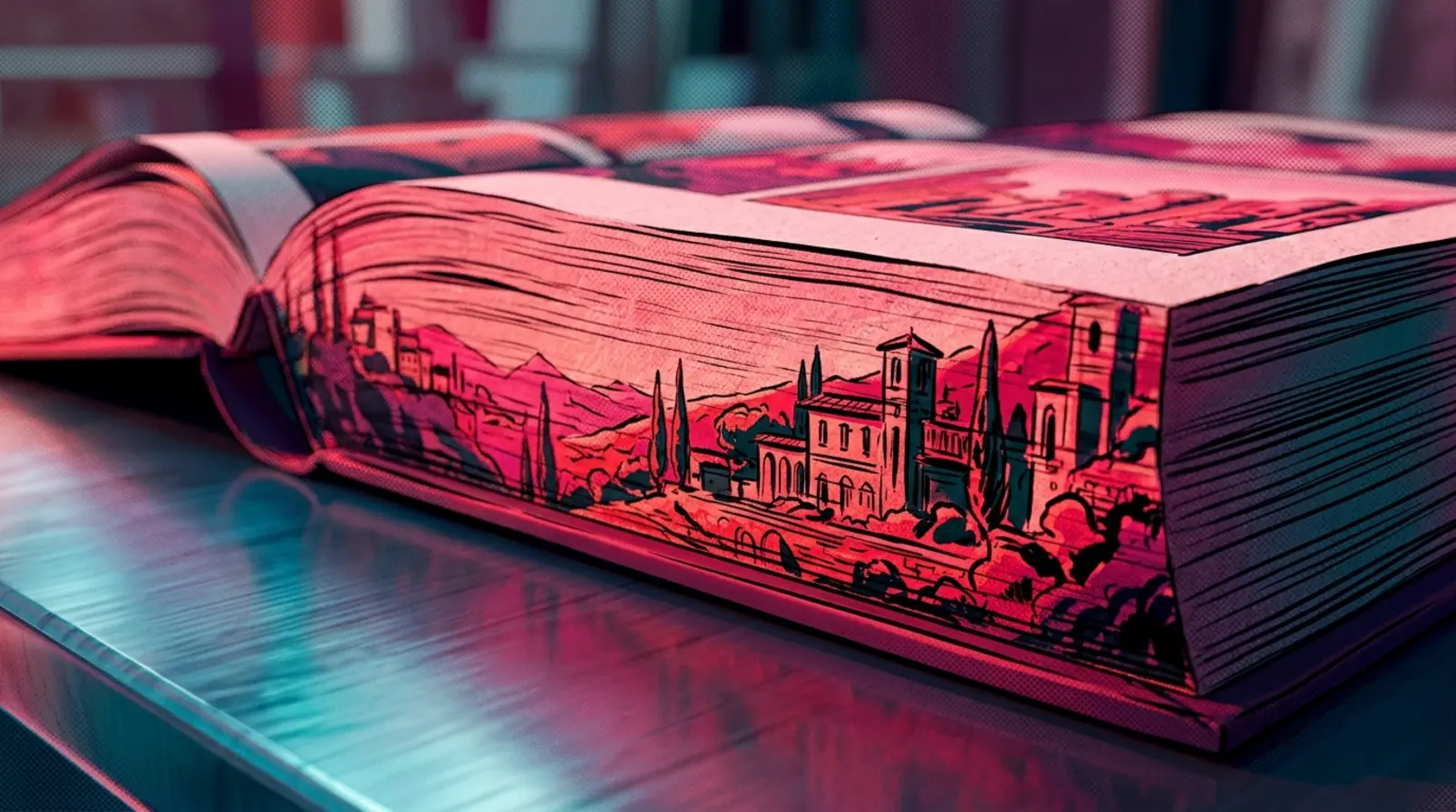
Pick up the Somna hardcover and something happens before a single page turns. The weight registers. The paper has texture. The colors do not behave the way they behave on a screen. They do not even behave like ordinary trade-paperback colors. The object announces itself first, then the story follows.
That is not an accident. DSTLRY is a publisher built around a simple provocation: comics do not have to survive the digital age by becoming frictionless. They can survive by becoming more physical. Co-founded in 2023 by former comiXology executives David Steinberger and Chip Mosher, the company sells creator-owned comics in oversized, premium formats and has framed its model around giving creators a stake in the publisher itself, a structure Publishers Weekly detailed at launch.
Somna is the clearest test case. Becky Cloonan and Tula Lotay’s three-issue erotic folk-horror series, set during witch-hunt panic in a 1600s English village, won the 2024 Eisner Award for Best New Series. It also exists in a small maze of formats: a $30 mass-market hardcover collecting the full series; a $75 Direct Market Exclusive hardcover limited to 700 copies; a $150 Deluxe Hardcover with a signed tip-in plate and bonus material; and a 500-copy oversized Reserve Edition that re-presents the first issue at near-art-board scale on uncoated stock.
That ladder is the whole story. Somna is not just a comic DSTLRY published. It is the publisher’s argument made heavy enough to hold. The question is less whether the book deserves the treatment than what happens when the treatment becomes part of the product.
The Leica Problem
There is a useful analogy in cameras. Leica sells excellent tools, but it also sells a ritual: the dense little body, the manual attention, the old-world aura of looking carefully. The premium is not only optical. It is tactile, historical, and symbolic. The buyer is not purchasing a camera in isolation. The buyer is purchasing a feeling about photography.
DSTLRY’s model reads like that logic applied to sequential art. Its single issues are not designed to vanish into the inherited mechanics of American comic collecting. They are magazine-sized, perfect-bound objects, with DSTLRY describing its newer slate as 48 pages per issue minimum. They do not slip neatly into the old longbox ritual. DSTLRY eventually announced a magazine-size art box for its oversized single issues, which felt like a punchline and a thesis at once: the format had become distinctive enough to need furniture.
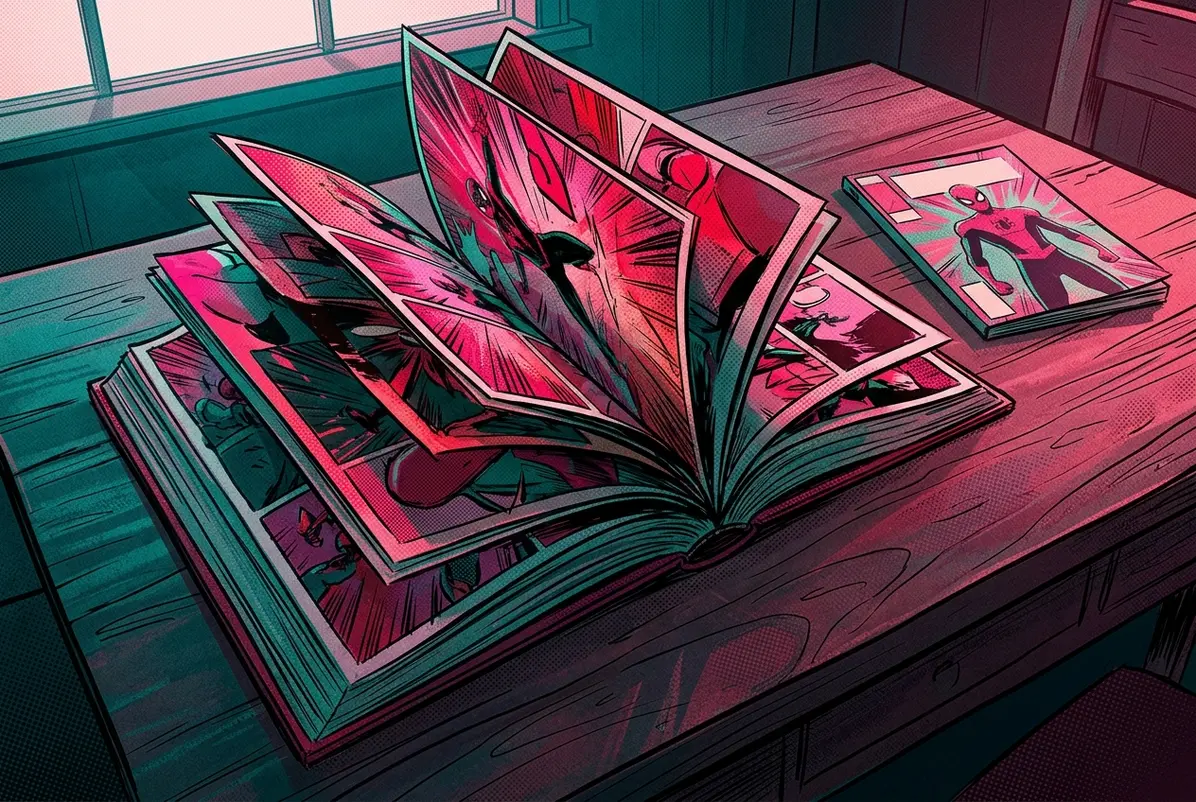
That physical awkwardness is the dividing line. For one reader, it is the point. The book refuses the closet. It demands shelf space. It sits closer to an art book or illustrated novel than a bagged run of superhero issues. For another reader, the same refusal is just friction: harder to store, harder to protect, harder to file into an existing collection. The same design choice creates desire and resistance. This is not a side effect. This is the model.
What the Art Earns
Strip away the packaging debate and Somna stands on unusually strong visual ground. Cloonan drew the waking sequences while Lotay drew the dream sequences, a division Cloonan explained in a Publishers Weekly interview. That split lands as more than a production note. The waking world feels scratched, confined, almost airless. The dream world bleeds and glows. The format rewards the contrast. At a larger size, the reader can track the grammar shifting between artists in a way a phone screen flattens into content.
The oversized Reserve Edition sharpens that argument by making the first issue less like a chapter and more like an exhibition object. DSTLRY’s own interview around the edition notes its 13-by-10.5-inch scale, while Lotay said the uncoated paper gave the color a different contrast, making it feel richer and darker. That matters because Somna is a book of surfaces: skin, smoke, candlelight, shadow, fever. Its power is chromatic and bodily before it is explanatory.
Cloonan also told Publishers Weekly that she and Lotay had been planning Somna for about ten years, with the idea beginning after Cloonan experienced sleep paralysis roughly fifteen years earlier. That slow fermentation shows. The collaboration feels less like one artist passing the baton to another than two systems of perception colliding on the page. Lotay later called it “one of the most electric collaborations” of her career in DSTLRY’s Eisner announcement. The line reads like promotion because it is promotion. It also happens to describe the book accurately.
It is also where the harsher criticism has room to breathe. Somna is brief. Its story is more archetypal than labyrinthine: repression, desire, suspicion, dream logic, punishment. Readers who come looking for narrative sprawl may find that the packaging makes the book feel larger than its plot. But that critique does not kill the argument. It clarifies it. Somna is not a maximalist graphic novel hiding inside a luxury case. It is a fever object. The art is the pressure system. The story is the room getting hotter.
The Collector Tax
The $30 mass-market hardcover is the cleanest version of DSTLRY’s argument. It is premium without feeling punitive: a complete Eisner-winning series in a handsome hardcover at a price that sits close enough to normal graphic-novel buying habits. DSTLRY said the first printing sold out before release, and the explanation is not mysterious. It made sense.
Above that tier, the value becomes stranger. The $75 Direct Market edition adds scarcity, a new cover, extra pages, back matter, a cover gallery, a tip-in plate, and a story from The Devil’s Cut. The Deluxe Hardcover moves further into artifact territory with a signed tip-in plate. The oversized Reserve Edition goes a different direction: not more story, but more surface, more scale, more permission to treat page art as something close to an exhibition object.
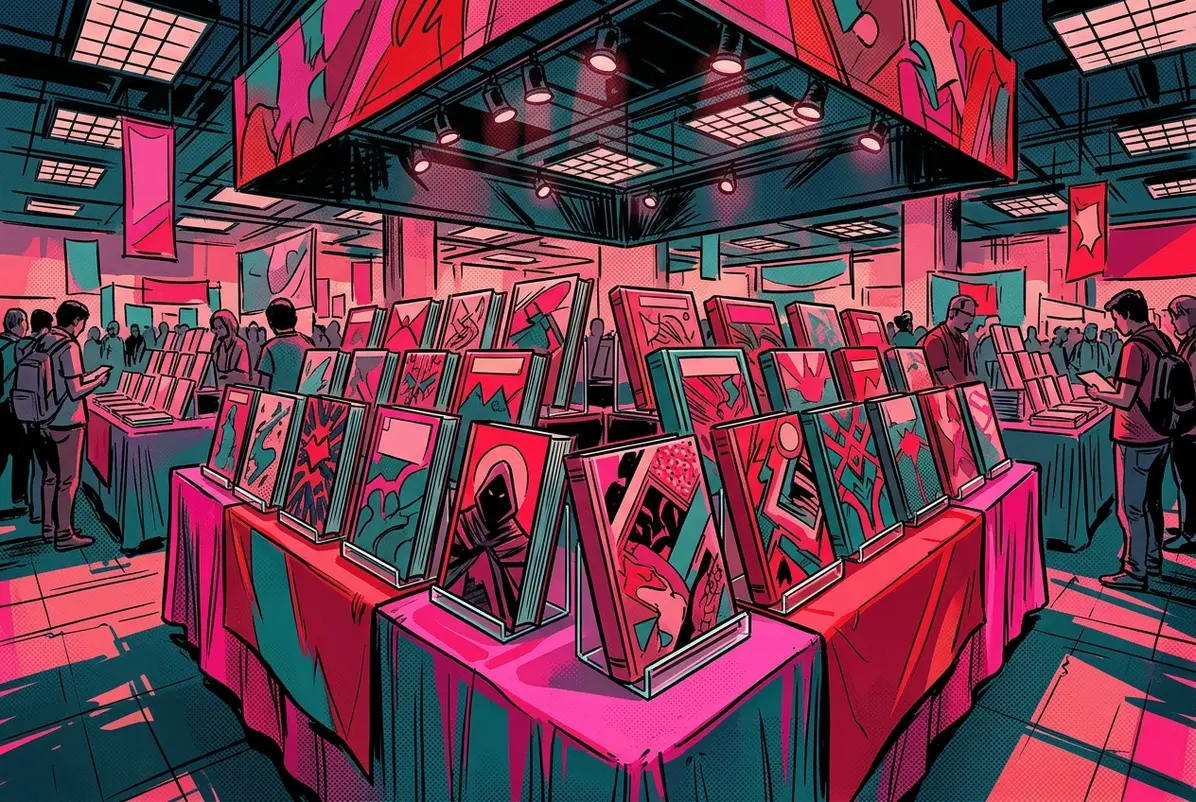
This is where the collector tax appears. Not a scandal, not a trick, but a premium charged for context: limitation, signature, edition logic, event aura, the feeling of having the right version rather than merely the readable one. Comics have always had variants and scarcity games. DSTLRY’s difference is that it makes the objecthood overt. The seal is not hiding behind the story. The seal is part of the pitch.
The creator-equity piece complicates the easy dunk. Publishers Weekly reported at launch that each founding creator held equity in DSTLRY and that the company had set aside another 3% of equity for creators releasing projects in its first three years. If premium editions help move more money toward creators, the calculus changes. The collector tax can become, at least in theory, a creator dividend. But that argument only works if the premium does not eclipse the work. A luxury format can honor art. It can also train readers to evaluate art by the scarcity architecture around it.
The Wager
DSTLRY’s bet is that physical comics can survive, even thrive, by moving upmarket. Not by competing with digital on convenience or price, but by offering something digital cannot replicate: the object itself. That bet has moved beyond the publisher’s own storefront. Penguin Random House Publisher Services announced a multi-year worldwide sales and distribution agreement with DSTLRY beginning in June 2025, a sign that the book trade is at least willing to test the premise.
Somna is the strongest proof of concept the publisher has produced. The art justifies a larger page. The $30 hardcover justifies itself. The upper tiers are harder to universalize: to some readers, a signed plate, an edition limit, or a different cover turns the book into a treasured artifact; to others, it turns reading into version management. Both reactions are rational.
That is why Somna matters beyond its own spell. It shows the path and the trap. Physical comics can still matter when the object does something the file cannot. But the object has to earn its aura. Weight alone is not meaning. Scarcity alone is not culture. The magic happens when the book, the format, and the reader’s hand all make the same argument.
The screen can show Somna. The shelf can haunt with it.
'%3e%3cg id='Final-Copy-2_2_' transform='translate(1275.000000, 200.000000)'%3e%3cpath class='st0' d='M7.4,12.8h6.8l3.1-11.6H7.4C4.2,1.2,1.6,3.8,1.6,7S4.2,12.8,7.4,12.8z'/%3e%3c/g%3e%3c/g%3e%3c/g%3e%3cg id='final---dec.11-2020'%3e%3cg id='_x30_208-our-toggle' transform='translate(-1275.000000, -200.000000)'%3e%3cg id='Final-Copy-2' transform='translate(1275.000000, 200.000000)'%3e%3cpath class='st1' d='M22.6,0H7.4c-3.9,0-7,3.1-7,7s3.1,7,7,7h15.2c3.9,0,7-3.1,7-7S26.4,0,22.6,0z M1.6,7c0-3.2,2.6-5.8,5.8-5.8 h9.9l-3.1,11.6H7.4C4.2,12.8,1.6,10.2,1.6,7z'/%3e%3cpath id='x' class='st2' d='M24.6,4c0.2,0.2,0.2,0.6,0,0.8l0,0L22.5,7l2.2,2.2c0.2,0.2,0.2,0.6,0,0.8c-0.2,0.2-0.6,0.2-0.8,0 l0,0l-2.2-2.2L19.5,10c-0.2,0.2-0.6,0.2-0.8,0c-0.2-0.2-0.2-0.6,0-0.8l0,0L20.8,7l-2.2-2.2c-0.2-0.2-0.2-0.6,0-0.8 c0.2-0.2,0.6-0.2,0.8,0l0,0l2.2,2.2L23.8,4C24,3.8,24.4,3.8,24.6,4z'/%3e%3cpath id='y' class='st3' d='M12.7,4.1c0.2,0.2,0.3,0.6,0.1,0.8l0,0L8.6,9.8C8.5,9.9,8.4,10,8.3,10c-0.2,0.1-0.5,0.1-0.7-0.1l0,0 L5.4,7.7c-0.2-0.2-0.2-0.6,0-0.8c0.2-0.2,0.6-0.2,0.8,0l0,0L8,8.6l3.8-4.5C12,3.9,12.4,3.9,12.7,4.1z'/%3e%3c/g%3e%3c/g%3e%3c/g%3e%3c/g%3e%3c/svg%3e) Your Privacy Choices
Your Privacy Choices