


Thirty Years of Trust, One Update to Test It
Since 1994, Toon Boom Animation has built software for the people who make animation move. The Montreal-based company’s flagship product, Harmony, is not a casual creator app or a gimmick machine. It is studio infrastructure: the kind of tool that disappears into the daily rhythm of boards, rigs, revisions, deadlines, and production calendars. Toon Boom’s own materials describe the company as a global leader in pre-production and 2D animation software, with clients in more than 140 countries and a roster that has included Disney Television Animation, Atomic Cartoons, Bento Box, Fox Television Animation, Toei Animation, Xilam, and Boulder Media.
That history matters because animation software is not just software. It is a pact. Artists build muscle memory around it. Studios build pipelines around it. Schools teach careers through it. A tool like Harmony does not merely sit on a computer; it becomes part of the workflow, and workflow is where trust lives.
So when Toon Boom announced Ember, a suite of AI-powered tools for Harmony and Storyboard Pro, the update landed in a room already full of smoke. The company did not announce a “make animation for me” button. It announced an assistive feature set. But in 2025, “assistive AI” does not arrive as a neutral phrase. It arrives carrying lawsuits, layoffs, bad demos, studio cost-cutting fantasies, and a decade of artists being told that the next efficiency tool is for their benefit right up until it is used to shrink the room.
The issue is not that Toon Boom suddenly became the enemy of artists. The issue is sharper than that. Toon Boom spent three decades becoming one of the places where the craft lives. Ember asks whether that same trust can survive once AI enters the toolbar.
What Ember Actually Does
On March 11, 2025, Toon Boom announced the beta program for Ember, describing it as a suite of AI-powered productivity tools designed to enhance workflows in Storyboard Pro and Harmony. The initial feature set included six tools: script breakdown, mask generation, image eraser, image expansion, resolution upscaling up to 8192 by 8192 pixels, and rough track generation, which can analyze a screenplay and insert blank panels with scratch audio tracks on the timeline.
By Toon Boom’s framing, Ember is not a separate app or a replacement pipeline. The company describes it as an optional add-on built into Storyboard Pro and Harmony, with features developed in collaboration with providers including Bria, Gemini, and ElevenLabs. Toon Boom’s Ember page says the features rely only on service providers that do not store user data and do not use projects to train AI models.
The company has also been careful with the language of respect. CEO Colin Bohm said Toon Boom’s approach to Ember was “grounded in respect” for artists, their intellectual property, and the creative process. Toon Boom’s Help Centre similarly says the goal is to optimize artists’ jobs, not replace artists, and states that Ember’s service providers will not collect or store user data or use projects for training.
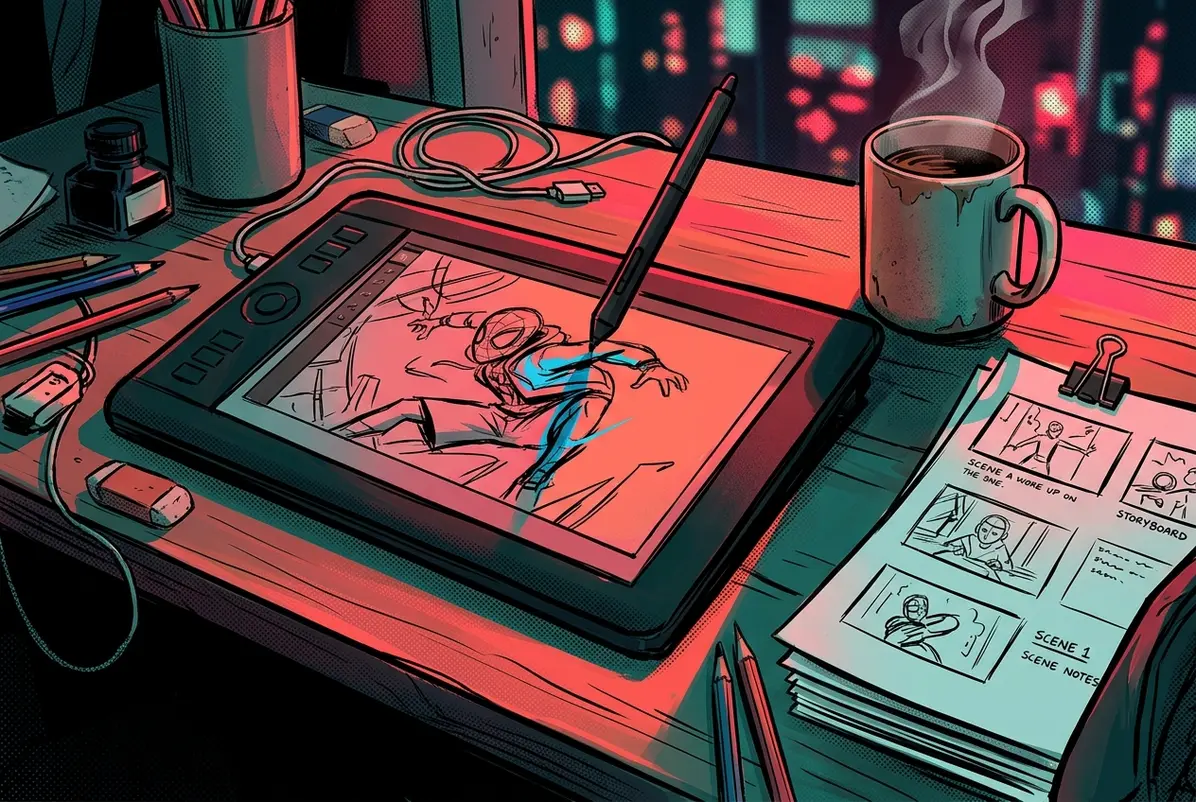
That is the best possible version of the pitch. The tools are integrated. The company says they are assistive. The features can be activated or deactivated. In Harmony 25, Toon Boom’s Help Centre says Ember is disabled by default, though the same page notes that it was enabled by default in Harmony 24.1. That detail matters. The promise is not simply “AI never appears unless summoned.” The promise is more conditional: Ember can be turned on or off, but the default posture has already varied by version.
That kind of nuance is exactly where artist suspicion grows. Not because every software setting is a conspiracy, but because defaults are never just technical. Defaults are policy disguised as convenience.
The corporate timing adds another layer. In 2023, Corus Entertainment agreed to sell Toon Boom to Integrated Media Company, described in the announcement as a TPG platform, for approximately $147.5 million CAD. Later that year, Bohm was named Toon Boom CEO after previously serving as Corus’s EVP of Content and Corporate Strategy. None of that proves bad intent. It does explain the temperature of the room. A trusted animation tool, a new financial owner, a new CEO, and an AI product launch within a short window is the kind of sequence that makes artists listen for what is not being said.
The Line Between Assistance and Invention
Ember’s most revealing tension is not technical. It is philosophical.
Some of the features are easy to defend. Mask generation, image cleanup, and resolution upscaling look like the kind of production assists artists have accepted for years. They remove friction. They do not necessarily remove judgment. In the right context, they are closer to a better lasso tool than an artificial artist.
But other features sit closer to the fault line. Script breakdown is not just cleanup. Image expansion is not just repair. Rough track generation is not just organization. These tools begin touching the early imaginative structure of a scene: what gets identified, what gets extended, what gets timed, what gets roughed in before the human hand has fully arrived.
That does not make them useless. It makes them volatile.
The distinction is the difference between a spell-checker and a ghostwriter. One catches friction after the fact. The other starts making decisions inside the sentence. Toon Boom’s own announcement says Ember is meant to assist rather than replicate the work artists and animators contribute to a project. The problem is that intent and outcome are not the same thing. A company can design a tool as optional. A studio can make it functionally mandatory. A feature can be marketed as a helper and still become a quota machine once budgets tighten.
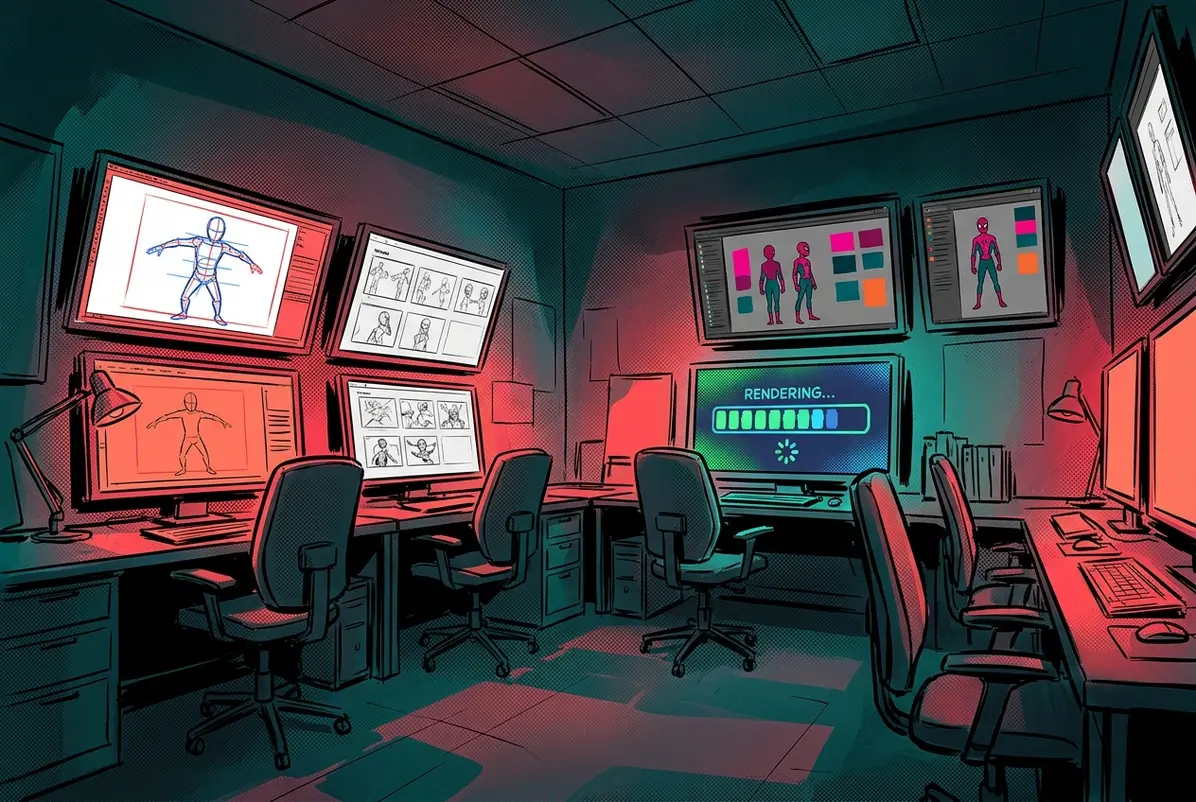
This is why “optional” is not the end of the debate. Optional for the user is not the same as optional for the worker. In a healthy market, a toggle might feel like agency. In a strained market, a toggle can become a test of compliance.
The fear is not abstract. A 2024 report commissioned by groups including the Animation Guild, the Concept Art Association, the Human Artistry Campaign, and the National Cartoonists Society Foundation surveyed 300 entertainment industry leaders and found that three-fourths of respondents said GenAI tools had already supported the elimination, reduction, or consolidation of jobs in their business division. The same reporting noted that the study projected significant disruption across film, television, animation, and games between 2024 and 2026.
That is the climate Ember enters. Not a calm laboratory. Not a neutral software demo. A labor market where artists are being asked to trust that efficiency will not become extraction.
Data, Credits, and the Cloud Question
Toon Boom has clearly tried to answer one of the biggest AI objections: training data. Its Ember page says the features rely on providers that do not store user data and do not train on user projects. The Help Centre repeats that Ember service providers will not collect or store project data or use it to train AI.
That is a meaningful commitment. It is also not the whole concern.
Professional animation work often lives under strict client rules, unreleased IP controls, and studio security policies that are more complicated than “will this train the model?” If an AI feature depends on outside providers, a studio still has to ask where the data goes, how it is processed, what the client contract allows, and whether the workflow meets internal security expectations. “No training” is important. It is not a magic solvent for every production risk.
Then there is the credit system. Toon Boom documentation refers to Ember credits, including a “Show Ember Credits” function that displays available credit balance and consumed AI credits. Toon Boom’s public Ember FAQ currently says Ember is available as an add-on to users of Storyboard Pro 25 and Harmony 25 and tells users to “stay tuned” for further updates on whether it will be an additional paid feature.
That may be ordinary product packaging. It may also become another point of anxiety. Animation workers already understand what metering does to behavior. A credit system turns a tool into a counter. A counter turns experimentation into consumption. Consumption eventually becomes a budget line.
The danger is not merely that Ember could cost money. Professional software costs money. The sharper concern is that the industry may normalize a new layer of AI dependency inside a workflow artists did not ask to renegotiate.
The Bigger Picture
The Ember conversation is not really about whether mask generation is useful. It probably is. It is not even about whether some AI tools can save time. They can. The real question is whether the culture around animation trusts the institutions bringing those tools into the room.
That trust is already damaged across the wider field. After Toon Boom announced Ember, other 2D animation software companies publicly positioned themselves differently. Moho said it did not currently plan to develop AI tools, citing unresolved ethical and legal issues. TVPaint later told users it did not plan to integrate generative AI, saying its goals would remain directed toward hand-drawn animation. Those statements were not only product updates. They were cultural signals.
Toon Boom chose the harder path. Instead of rejecting AI outright, it is trying to domesticate it inside professional animation software. That is not automatically reckless. In fact, the more interesting possibility is that Toon Boom may be attempting a version of AI that is more constrained, more transparent, and more respectful than the chaos outside its walls.
But restraint is not just a feature list. Restraint is a relationship.
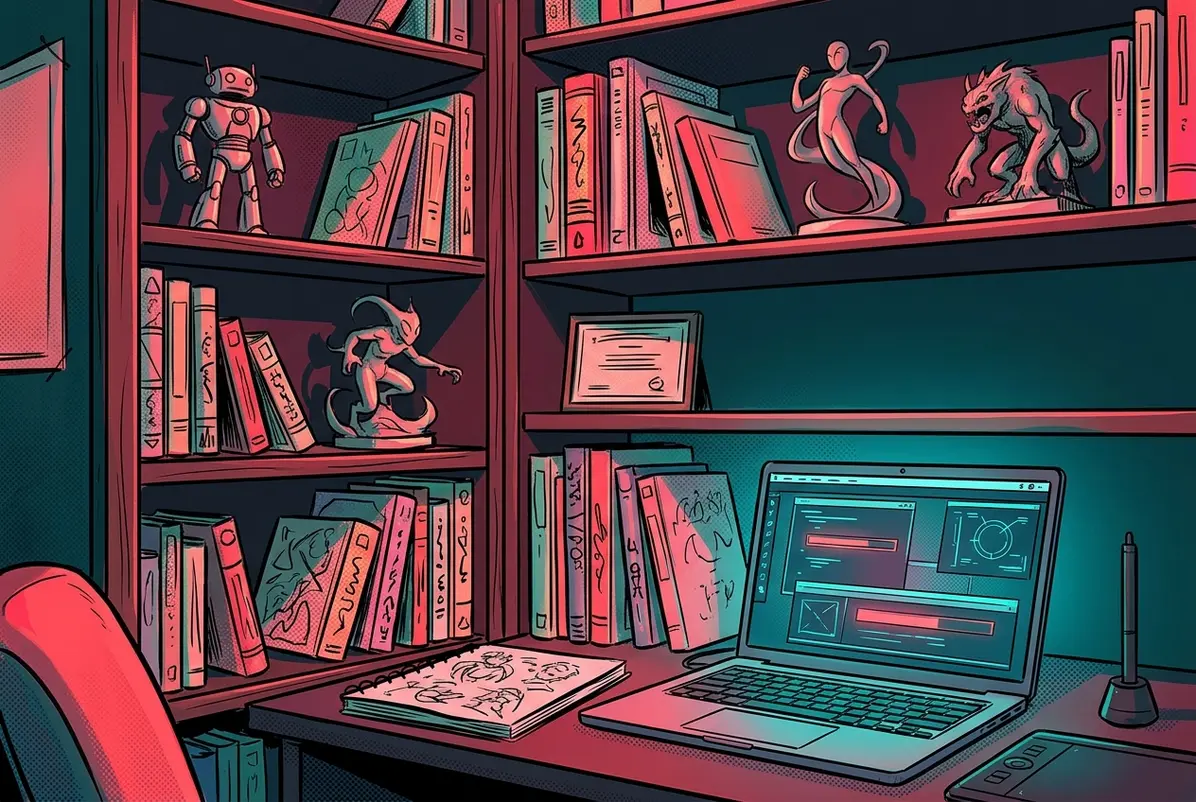
The timing makes that relationship fragile. Animated series orders in the U.S. have dropped since 2022, according to Luminate, with the post-peak-TV contraction hitting streaming, broadcast, and cable animation. The same analysis notes that the industry is also confronting generative AI, with studios and AI companies evaluating ways to integrate the technology into workflows while legal, ethical, practical, and artistic questions remain unresolved.
That is the pressure system around Ember. Toon Boom can promise that the tool is not meant to replace artists. It cannot promise that every studio, client, producer, or budget meeting will honor that spirit. Software companies build capabilities. Markets decide how brutally those capabilities get used.
That is why the most persuasive criticism of Ember is not that every feature is evil. It is that the animation industry has not earned enough trust for “assistive” to sound harmless. Artists are not only reacting to a button. They are reacting to the future that button may invite.
Toon Boom Ember may turn out to be genuinely useful, genuinely restrained, and genuinely better than the worst versions of AI creeping through creative software. But the peace treaty only works if both sides believe the other has the authority to keep it. Right now, one side is a software company trying to frame AI as assistance. The other is a workforce watching assistance become a synonym for fewer people in the room.
The handshake is real. So is the tremor in it.
'%3e%3cg id='Final-Copy-2_2_' transform='translate(1275.000000, 200.000000)'%3e%3cpath class='st0' d='M7.4,12.8h6.8l3.1-11.6H7.4C4.2,1.2,1.6,3.8,1.6,7S4.2,12.8,7.4,12.8z'/%3e%3c/g%3e%3c/g%3e%3c/g%3e%3cg id='final---dec.11-2020'%3e%3cg id='_x30_208-our-toggle' transform='translate(-1275.000000, -200.000000)'%3e%3cg id='Final-Copy-2' transform='translate(1275.000000, 200.000000)'%3e%3cpath class='st1' d='M22.6,0H7.4c-3.9,0-7,3.1-7,7s3.1,7,7,7h15.2c3.9,0,7-3.1,7-7S26.4,0,22.6,0z M1.6,7c0-3.2,2.6-5.8,5.8-5.8 h9.9l-3.1,11.6H7.4C4.2,12.8,1.6,10.2,1.6,7z'/%3e%3cpath id='x' class='st2' d='M24.6,4c0.2,0.2,0.2,0.6,0,0.8l0,0L22.5,7l2.2,2.2c0.2,0.2,0.2,0.6,0,0.8c-0.2,0.2-0.6,0.2-0.8,0 l0,0l-2.2-2.2L19.5,10c-0.2,0.2-0.6,0.2-0.8,0c-0.2-0.2-0.2-0.6,0-0.8l0,0L20.8,7l-2.2-2.2c-0.2-0.2-0.2-0.6,0-0.8 c0.2-0.2,0.6-0.2,0.8,0l0,0l2.2,2.2L23.8,4C24,3.8,24.4,3.8,24.6,4z'/%3e%3cpath id='y' class='st3' d='M12.7,4.1c0.2,0.2,0.3,0.6,0.1,0.8l0,0L8.6,9.8C8.5,9.9,8.4,10,8.3,10c-0.2,0.1-0.5,0.1-0.7-0.1l0,0 L5.4,7.7c-0.2-0.2-0.2-0.6,0-0.8c0.2-0.2,0.6-0.2,0.8,0l0,0L8,8.6l3.8-4.5C12,3.9,12.4,3.9,12.7,4.1z'/%3e%3c/g%3e%3c/g%3e%3c/g%3e%3c/g%3e%3c/svg%3e) Your Privacy Choices
Your Privacy Choices