

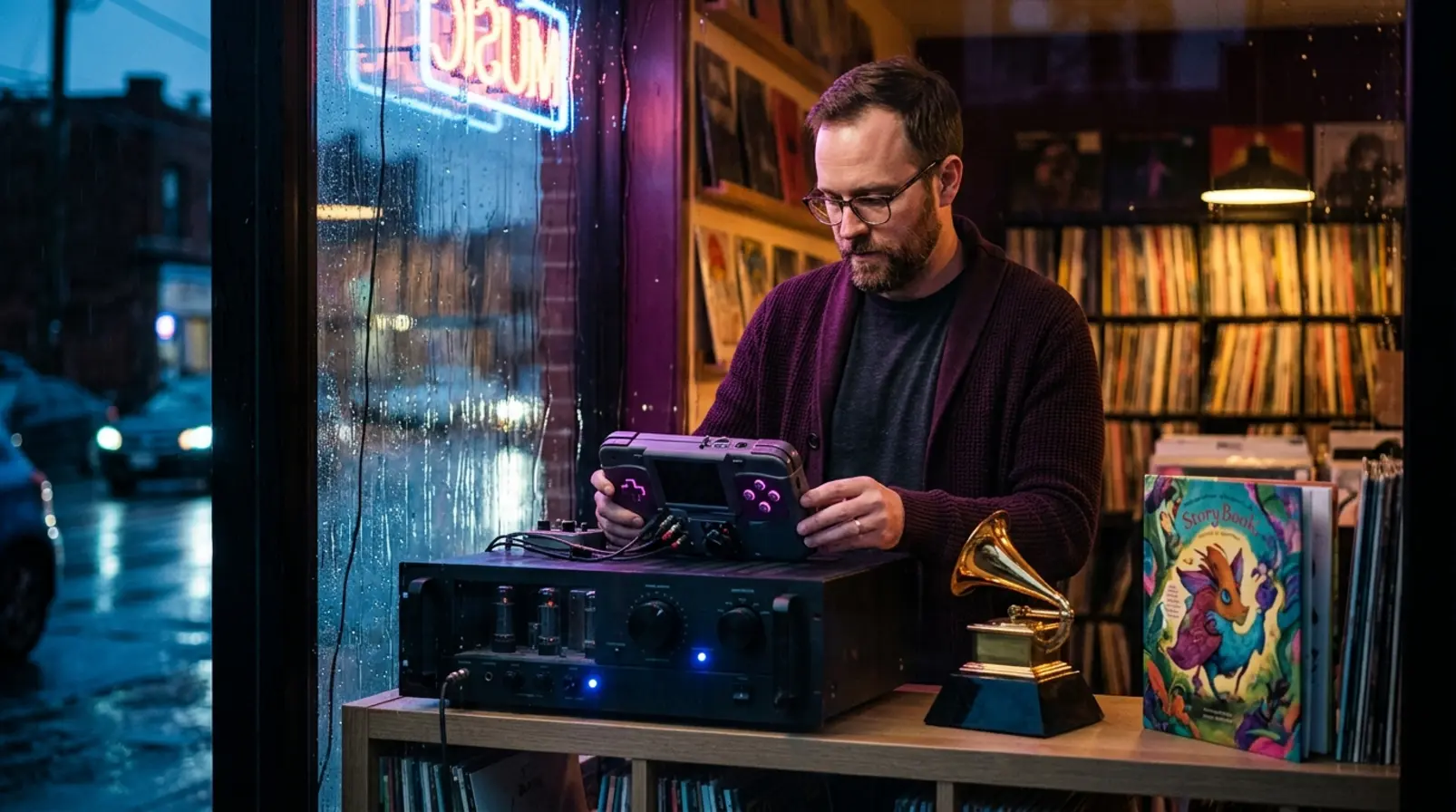

Chiptune learned how to build a music industry without waiting for the music industry. Its musicians turned aging game hardware into instruments, internet forums into scenes, free downloads into record labels, and small gatherings into international festivals. By the time conventional markers of recognition arrived, the genre already had its own.
Boston Bitdown makes that collision unusually visible. Its March 5 to 8, 2026 edition was promoted with roughly 50 performers and visual artists across eight venues in Somerville, Medford, Arlington, and Salem, Massachusetts. The same festival publicity listed sponsors including Newbury Comics, Baby Audio, Judge Amps, and Lonely Ghost Records while prominently featuring nerdcore rapper Mega Ran, who arrived as a 2026 Grammy nominee for Best Children’s Music Album for Buddy’s Magic Tree House. FYÜTCH and Aura V won the category for Harmony.
None of that automatically makes Bitdown more legitimate, less underground, or less authentic. It does something stranger: it puts the scene’s homegrown system of credibility beside the conventional one.
The Game Boy Wasn’t Retro Yet
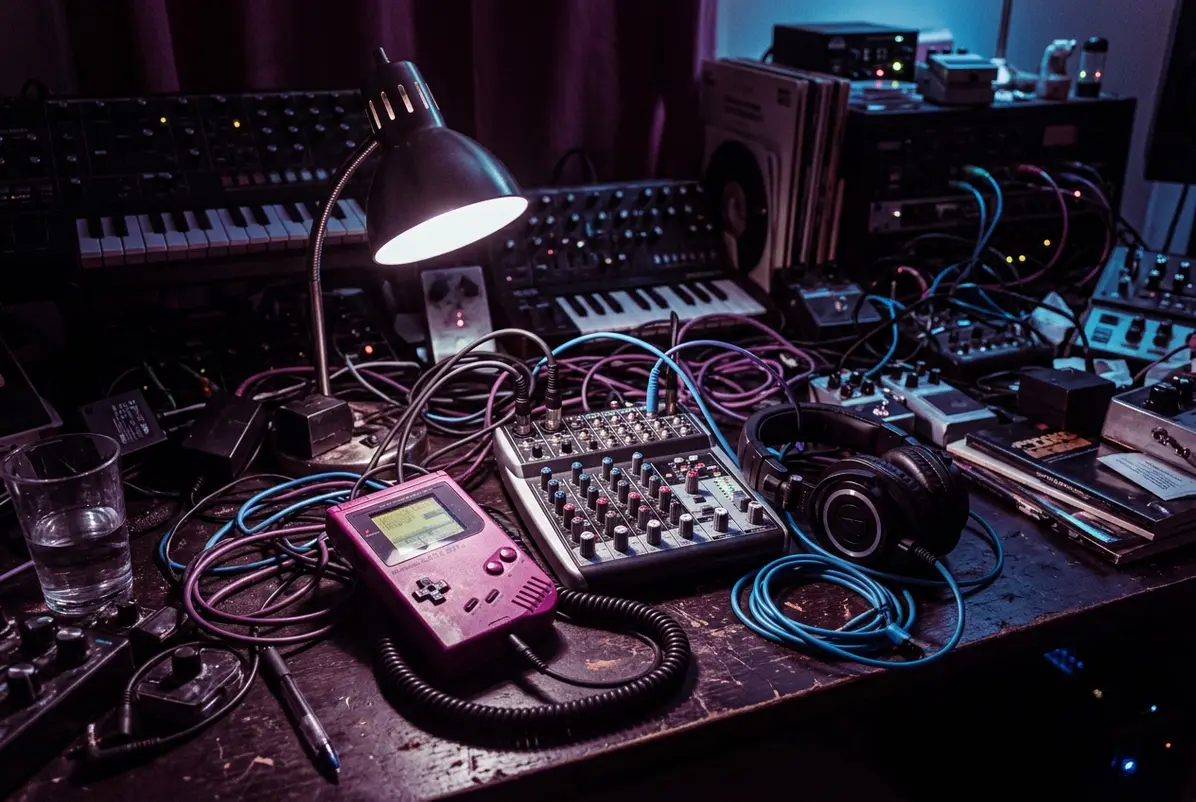
One of chiptune’s defining tools did not begin as an exercise in nostalgia. Around 2000, Swedish programmer Johan Kotlinski started building Little Sound Dj, or LSDj, a sequencer for the Game Boy. Looking back in 2020, Kotlinski pointed out that the Game Boy Color was not particularly retro at the time; it was still a popular handheld, even if its underlying architecture was already old.
That distinction matters. Chiptune’s hardware constraints eventually became an aesthetic, but LSDj emerged from someone trying to make music with the machine in front of him. Kotlinski sold cartridges online and through a local record store, then found other musicians working with similar ideas. He credits micromusic.net and other early internet communities with helping those scattered artists discover one another, exchange knowledge, and organize shows.

The important invention was therefore larger than a cartridge. Software, cheap hardware, online communities, and physical shows formed a workflow through which a niche sound could become a scene without first passing through a label, venue circuit, or established music press.
Chiptune Built Its Own Institutions
8bitpeoples turned that workflow into something resembling an alternative music infrastructure. Jeremiah “Nullsleep” Johnson and Mike Hanlon founded the netlabel in the late 1990s around low-bit computing aesthetics. In a 2007 interview, member Joshua Davis described 8bitpeoples as something that was not formally a business: most releases were available free, the operation ran in its members’ spare time, and they funded it largely out of pocket.
That did not keep it small. Its Blip Festival series ultimately documented 11 festivals across four continents before organizers announced that the October 2012 Tokyo edition would be the final installment for the foreseeable future.
Chiptune was not institutionless. It built different institutions.
Kenneth B. McAlpine’s Bits and Pieces: A History of Chiptunes describes how the chipscene developed infrastructure resembling parts of the established music industry while retaining a noncommercial ethos. Netlabels handled distribution. Festivals created physical gathering points. Reputation moved through what McAlpine describes as an economy of community esteem and authenticity.
That history makes the arrival of sponsorship more complicated than a simple story about an underground genre going commercial. Chiptune already knew how to organize, distribute, promote, curate, and decide what mattered. It simply did much of that work without the institutions that normally perform those functions.
Then the Outside Scoreboard Appeared
Boston Bitdown began inside that tradition of scene-building. Organizers Rob Carballo and David “Biff” Jubinsky launched its first edition in March 2025 with more than 50 musical and visual artists across five venues in Arlington and Somerville. The Boston Globe reported that the organizers had originally imagined something perhaps half that size before available venues and artist connections expanded the plan.
The festival then acquired a different kind of recognition. Later that year, Boston Bitdown was nominated for Music Festival of the Year at the Boston Music Awards. Carballo had already told the Globe that younger listeners increasingly encountered this music simply as music rather than automatically sorting it into “nerd” or video-game categories.
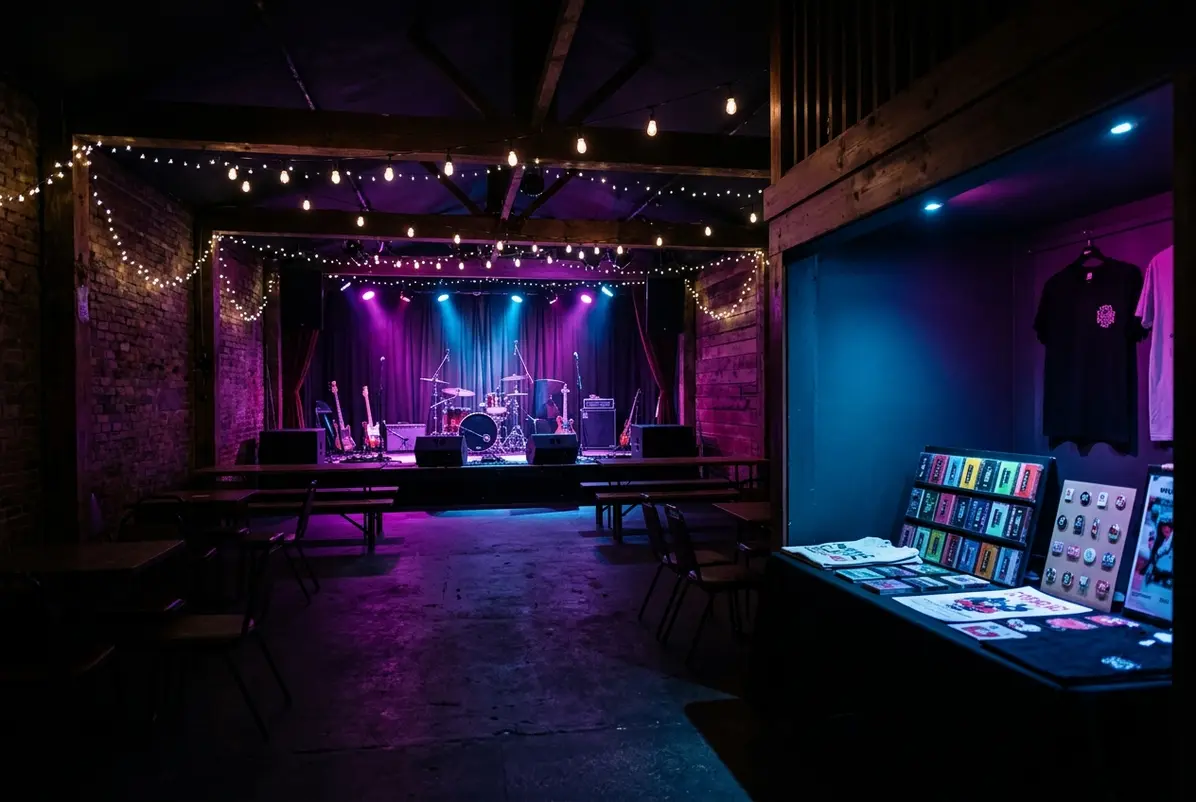
By 2026, the festival had expanded to eight venues and began advertising credentials that would have been foreign to some of chiptune’s early infrastructure. Its promotional materials highlighted sponsors including Baby Audio, Newbury Comics, High Energy Vintage, Lonely Ghost Records, Cuisine En Locale, Hand Held Legend, Judge Amps, Magic Dragon Press, and Together Press. Mega Ran’s Grammy nomination sat near the top of the lineup. Lonely Ghost Records was not merely a sponsor: Jubinsky’s Battlemode appears on the label’s artist roster, and the label hosted a showcase at the festival.
Those connections do not prove that Bitdown has become mainstream, and sponsorship does not establish what artists or fans think authenticity means. More importantly, the strongest claims about Bitdown’s scene credibility come from Bitdown’s own publicity. Jubinsky told the festival’s promotional outlet that someone who loves chiptune would recognize it as “authentically chiptune”. That is a statement of intent, not an independent verdict.
Authenticity Now Has Two Scoreboards
The revealing part of the same publicity comes a few lines later. Jubinsky said Bitdown was booking larger acts that had “claimed some ground in the music industry,” while also booking obscure artists whose recognition might barely extend beyond chiptune specialists.
That is almost a miniature history of the genre. One form of status comes from outside: Grammys, regional awards, recognizable sponsors, record labels, larger acts. The other is legible mainly inside the scene: hardware fluency, strange tools, obscure releases, years of participation, and the approval of people who already know where to look.
The interesting question is therefore not whether sponsorship makes Boston Bitdown less authentic. Chiptune has been negotiating commerce, distribution, visibility, and growth for decades. The harder question is which system of recognition gets to define success once both are available.
Early chiptune communities built a working music culture from cartridges, forums, free downloads, netlabels, and rooms full of people who understood what the noise meant. Boston Bitdown can now point to sponsors, awards nominations, and a Grammy-nominated performer too.
The conventional music industry did not arrive to give chiptune a scoreboard. It arrived to discover that chiptune already had one.
'%3e%3cg id='Final-Copy-2_2_' transform='translate(1275.000000, 200.000000)'%3e%3cpath class='st0' d='M7.4,12.8h6.8l3.1-11.6H7.4C4.2,1.2,1.6,3.8,1.6,7S4.2,12.8,7.4,12.8z'/%3e%3c/g%3e%3c/g%3e%3c/g%3e%3cg id='final---dec.11-2020'%3e%3cg id='_x30_208-our-toggle' transform='translate(-1275.000000, -200.000000)'%3e%3cg id='Final-Copy-2' transform='translate(1275.000000, 200.000000)'%3e%3cpath class='st1' d='M22.6,0H7.4c-3.9,0-7,3.1-7,7s3.1,7,7,7h15.2c3.9,0,7-3.1,7-7S26.4,0,22.6,0z M1.6,7c0-3.2,2.6-5.8,5.8-5.8 h9.9l-3.1,11.6H7.4C4.2,12.8,1.6,10.2,1.6,7z'/%3e%3cpath id='x' class='st2' d='M24.6,4c0.2,0.2,0.2,0.6,0,0.8l0,0L22.5,7l2.2,2.2c0.2,0.2,0.2,0.6,0,0.8c-0.2,0.2-0.6,0.2-0.8,0 l0,0l-2.2-2.2L19.5,10c-0.2,0.2-0.6,0.2-0.8,0c-0.2-0.2-0.2-0.6,0-0.8l0,0L20.8,7l-2.2-2.2c-0.2-0.2-0.2-0.6,0-0.8 c0.2-0.2,0.6-0.2,0.8,0l0,0l2.2,2.2L23.8,4C24,3.8,24.4,3.8,24.6,4z'/%3e%3cpath id='y' class='st3' d='M12.7,4.1c0.2,0.2,0.3,0.6,0.1,0.8l0,0L8.6,9.8C8.5,9.9,8.4,10,8.3,10c-0.2,0.1-0.5,0.1-0.7-0.1l0,0 L5.4,7.7c-0.2-0.2-0.2-0.6,0-0.8c0.2-0.2,0.6-0.2,0.8,0l0,0L8,8.6l3.8-4.5C12,3.9,12.4,3.9,12.7,4.1z'/%3e%3c/g%3e%3c/g%3e%3c/g%3e%3c/g%3e%3c/svg%3e) Your Privacy Choices
Your Privacy Choices