

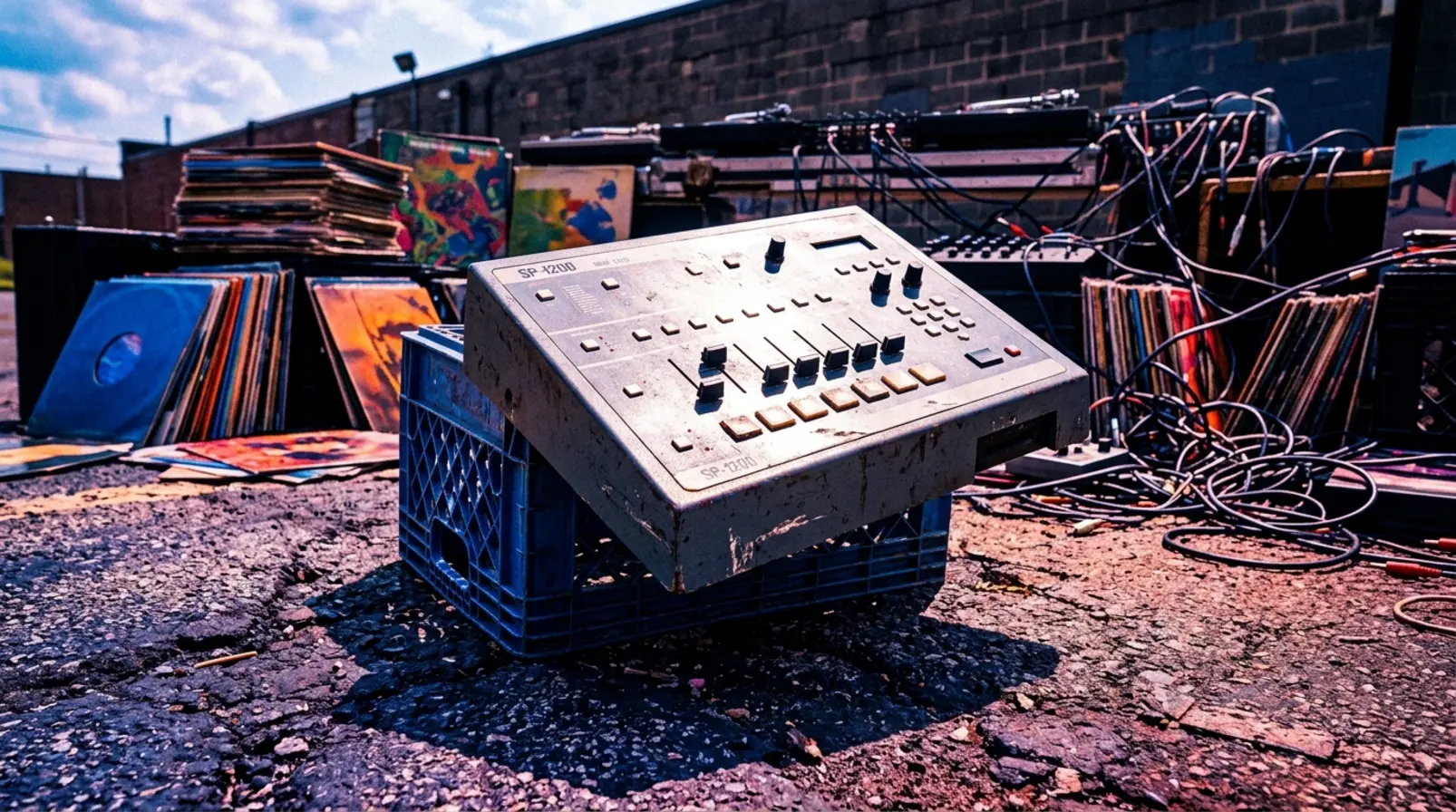

In Sotheby’s July 2023 hip-hop sale, a signed E-mu SP-1200 used by RZA sold for $69,850. The auction catalog identified it as the machine RZA used to produce Wu-Tang Clan’s 1993 debut Enter the Wu-Tang (36 Chambers).
Nearly seventy thousand dollars is an extraordinary price for a sampler famous for not having enough of almost anything. The original SP-1200 offered 12-bit sampling, ten seconds of total sample memory, and no more than 2.5 seconds for any one sound. Those restrictions helped turn fragments into arrangements and workarounds into technique. Nearly four decades later, the argument around its descendants is not simply how faithfully they reproduce the sound. It is whether they preserve the wall that helped produce it.
What Two and a Half Seconds Demanded
The SP-1200 debuted in August 1987 at a $2,995 list price, using 12-bit linear sampling at 26.04 kHz, specifications closely associated with its audible artifacts and character (Universal Audio). But fidelity was only half of the constraint. The original owner’s manual divided its ten seconds of memory into four 2.5-second zones. A sound could not cross from one zone into the next.
That made long, untouched passages difficult to accommodate at their original speed. One common response was to play source material faster before sampling it, then pitch it back down inside the SP-1200. Others chopped source material into smaller pieces and reconstructed it. The limit did not prescribe one style, but it made certain decisions unavoidable: what deserved memory, what could be discarded, and how much music could be rebuilt from a fragment.
Those pressures produced wildly different workflows. DJ Muggs programmed Black Sunday using two SP-1200s, according to Sound on Sound. Easy Mo Bee described developing the idea of turning the SP-1200 itself into a “band,” loading sounds as components he could perform and arrange (MusicTech).
Producer Nick Hook put the appeal more directly: “The limitations are the magic of the machine” (MusicTech). The line matters because the SP-1200’s mythology is often reduced to bit depth and grit. But 2.5 seconds was not a tone. It was a deadline.
A Machine Worth Seventy Thousand Dollars
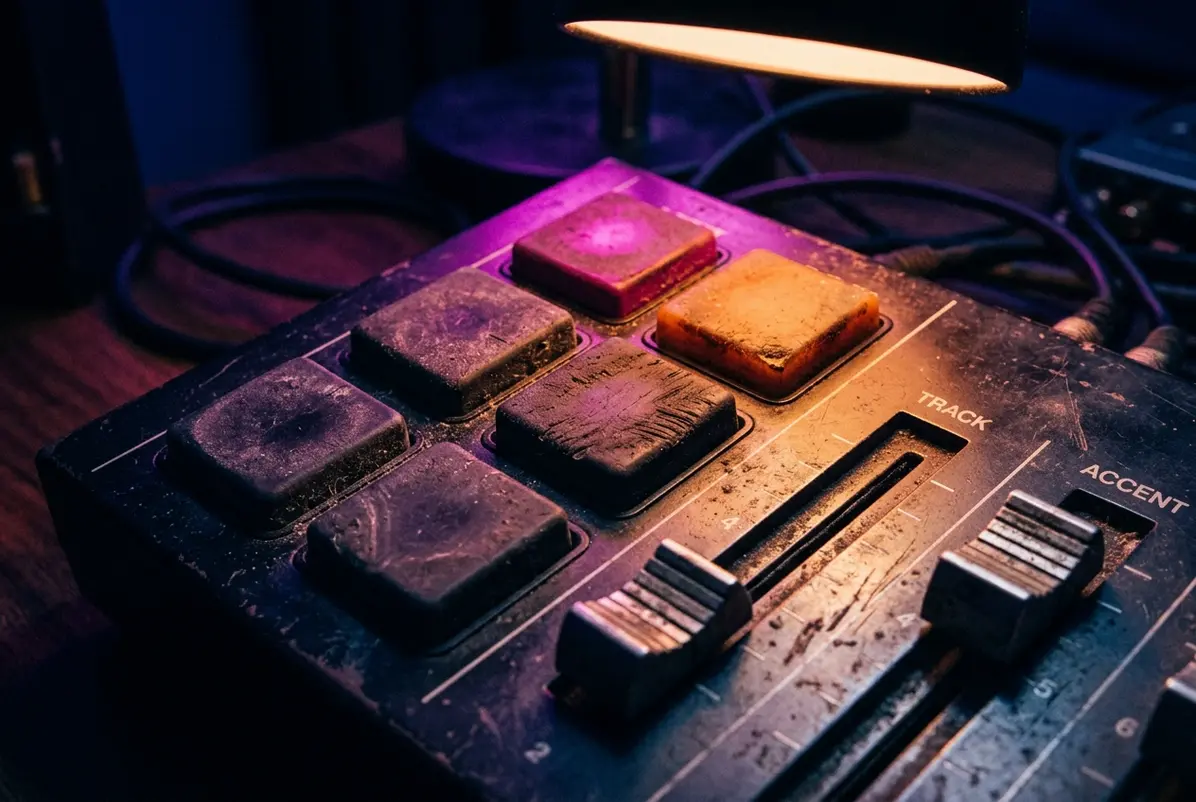
Sotheby’s offered RZA’s signed SP-1200 with a presale estimate of $50,000 to $80,000 as part of its third annual hip-hop sale. RZA called it “the first SP-1200 that I ever owned,” and the auction house tied the machine directly to the production of Enter the Wu-Tang (36 Chambers) (Sotheby’s; MusicTech).
The $69,850 result therefore says little about what an ordinary SP-1200 should cost. This was not merely vintage hardware. It was a documented production object connected to a landmark record, signed by the producer who used it. The circuitry created one kind of scarcity. Provenance created another.
The Reissue That Kept the Wall
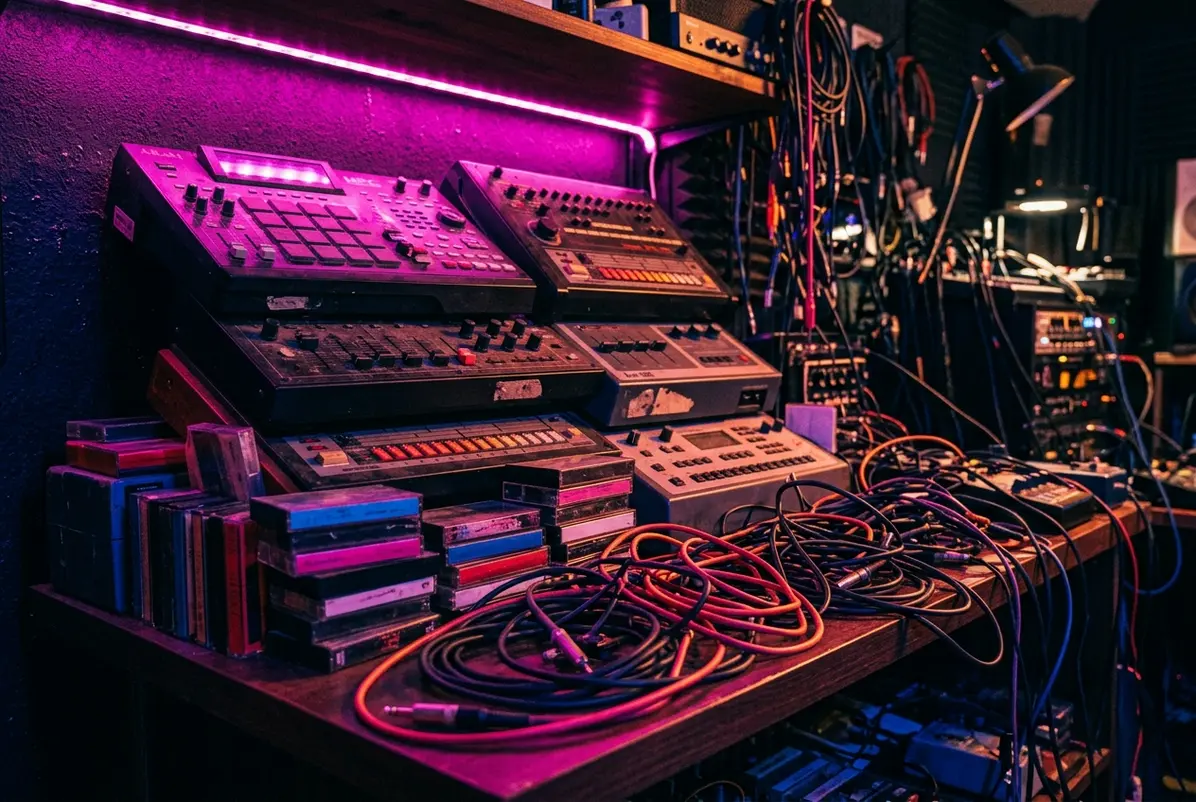
Dave Rossum, the SP-1200’s original designer, eventually returned to the instrument. Rossum Electro-Music’s standard reissue ran from 2021 through 2025 at $3,999. It retained 12-bit, 26.04 kHz sampling and, crucially, the 2.5-second maximum for a single sound. What changed was the total memory: Rossum expanded the original ten seconds to twenty, divided into eight 2.5-second blocks.
That is a revealing compromise. The reissue gave producers twice as much room without abolishing the decision that had structured the original workflow. A project could contain more material, but no individual sound was allowed to sprawl indefinitely.
Rossum followed the standard model with a numbered 100-unit 40th Anniversary Edition priced at $4,999. As of August 8, 2026, both versions are sold out. Rossum says the anniversary edition is the final SP-1200 reissue because required components are no longer obtainable, singling out the discontinued Zilog Z80 CPU. The machine did not end because its limitations had become undesirable. It ended because reproducing them faithfully had itself become a parts problem.
A Wall You Can Switch Off
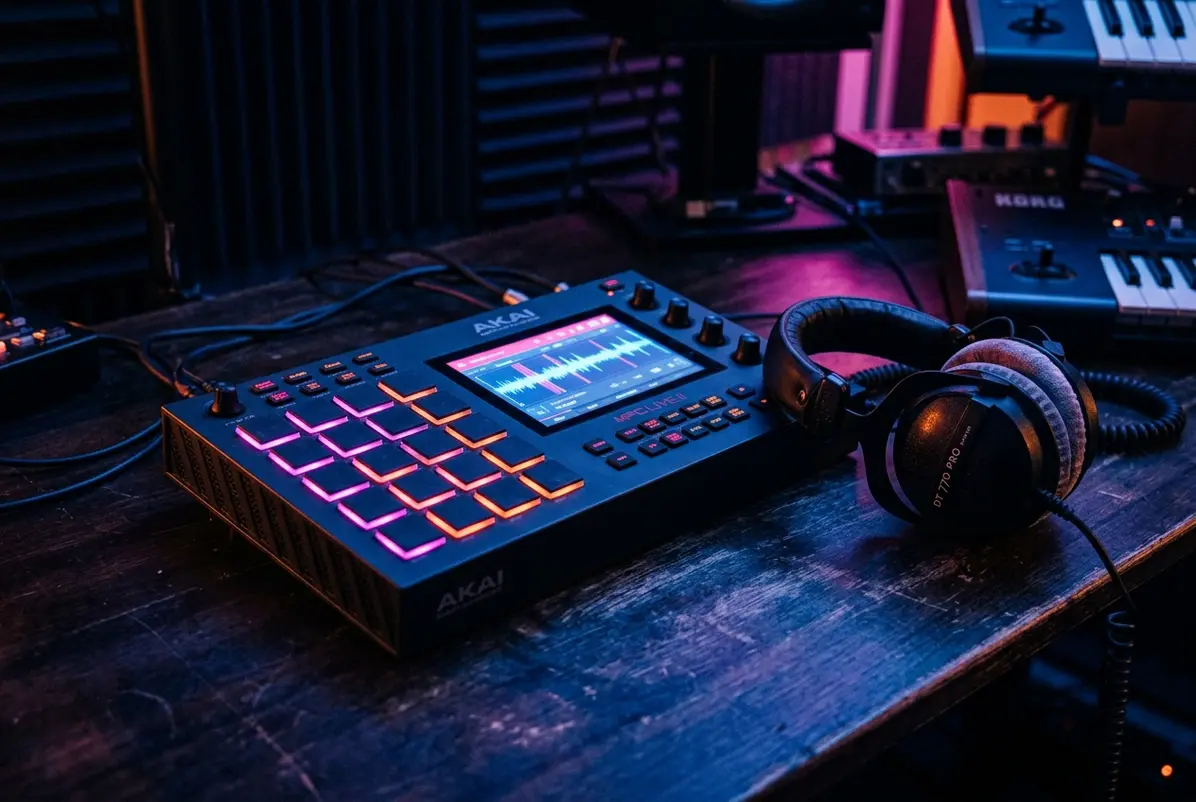
Isla Instruments’ S2400 approaches the inheritance differently. Its per-track audio engine can be switched between HiFi and Classic modes. According to the S2400 user manual, Classic mode uses old-school drop-sample pitch shifting and forces playback to 12 bits. But the machine’s 64 MB of sample RAM can hold roughly 21 minutes and 30 seconds of mono audio at 26 kHz. It can reproduce important parts of the old behavior without reproducing the old shortage.
That is not a defect. For a working producer, longer samples, modern storage, and switchable engines are obvious advantages. The distinction is philosophical rather than hierarchical. A fixed limitation changes behavior before the producer has made a creative decision. An optional limitation waits to be selected.
Behringer has also circled the format. In January 2025, the company asked users what they would want from an SP-1200-inspired sampler and said it believed such a machine could be produced for under $500 (MusicRadar). A May 2026 product listing described an unreleased sampler with both 24-bit and classic-style 12-bit operation plus an analog filter, but supplied no release date (MusicRadar).
The pattern is becoming clearer. Modern machines can preserve the SP-1200’s resolution, pitch behavior, filtering, interface cues, or audible artifacts while removing the conditions that once made those characteristics inseparable from the work.
The original SP-1200 did not ask whether a producer wanted to work within 2.5 seconds. It announced that 2.5 seconds was what existed. Rossum’s reissue preserved that confrontation even while doubling the room around it. Machines like the S2400 preserve more of the sound while making the confrontation optional.
That may be the hardest part of a classic instrument to reissue. Components can be recreated. Algorithms can be modeled. Noise, aliasing, filters, and pitch behavior can be studied until the resemblance becomes extremely convincing. But scarcity is different. Once the wall has a switch, the machine may still remember how the SP-1200 sounded. It no longer forces anyone to remember how it felt to run out of space.
'%3e%3cg id='Final-Copy-2_2_' transform='translate(1275.000000, 200.000000)'%3e%3cpath class='st0' d='M7.4,12.8h6.8l3.1-11.6H7.4C4.2,1.2,1.6,3.8,1.6,7S4.2,12.8,7.4,12.8z'/%3e%3c/g%3e%3c/g%3e%3c/g%3e%3cg id='final---dec.11-2020'%3e%3cg id='_x30_208-our-toggle' transform='translate(-1275.000000, -200.000000)'%3e%3cg id='Final-Copy-2' transform='translate(1275.000000, 200.000000)'%3e%3cpath class='st1' d='M22.6,0H7.4c-3.9,0-7,3.1-7,7s3.1,7,7,7h15.2c3.9,0,7-3.1,7-7S26.4,0,22.6,0z M1.6,7c0-3.2,2.6-5.8,5.8-5.8 h9.9l-3.1,11.6H7.4C4.2,12.8,1.6,10.2,1.6,7z'/%3e%3cpath id='x' class='st2' d='M24.6,4c0.2,0.2,0.2,0.6,0,0.8l0,0L22.5,7l2.2,2.2c0.2,0.2,0.2,0.6,0,0.8c-0.2,0.2-0.6,0.2-0.8,0 l0,0l-2.2-2.2L19.5,10c-0.2,0.2-0.6,0.2-0.8,0c-0.2-0.2-0.2-0.6,0-0.8l0,0L20.8,7l-2.2-2.2c-0.2-0.2-0.2-0.6,0-0.8 c0.2-0.2,0.6-0.2,0.8,0l0,0l2.2,2.2L23.8,4C24,3.8,24.4,3.8,24.6,4z'/%3e%3cpath id='y' class='st3' d='M12.7,4.1c0.2,0.2,0.3,0.6,0.1,0.8l0,0L8.6,9.8C8.5,9.9,8.4,10,8.3,10c-0.2,0.1-0.5,0.1-0.7-0.1l0,0 L5.4,7.7c-0.2-0.2-0.2-0.6,0-0.8c0.2-0.2,0.6-0.2,0.8,0l0,0L8,8.6l3.8-4.5C12,3.9,12.4,3.9,12.7,4.1z'/%3e%3c/g%3e%3c/g%3e%3c/g%3e%3c/g%3e%3c/svg%3e) Your Privacy Choices
Your Privacy Choices