

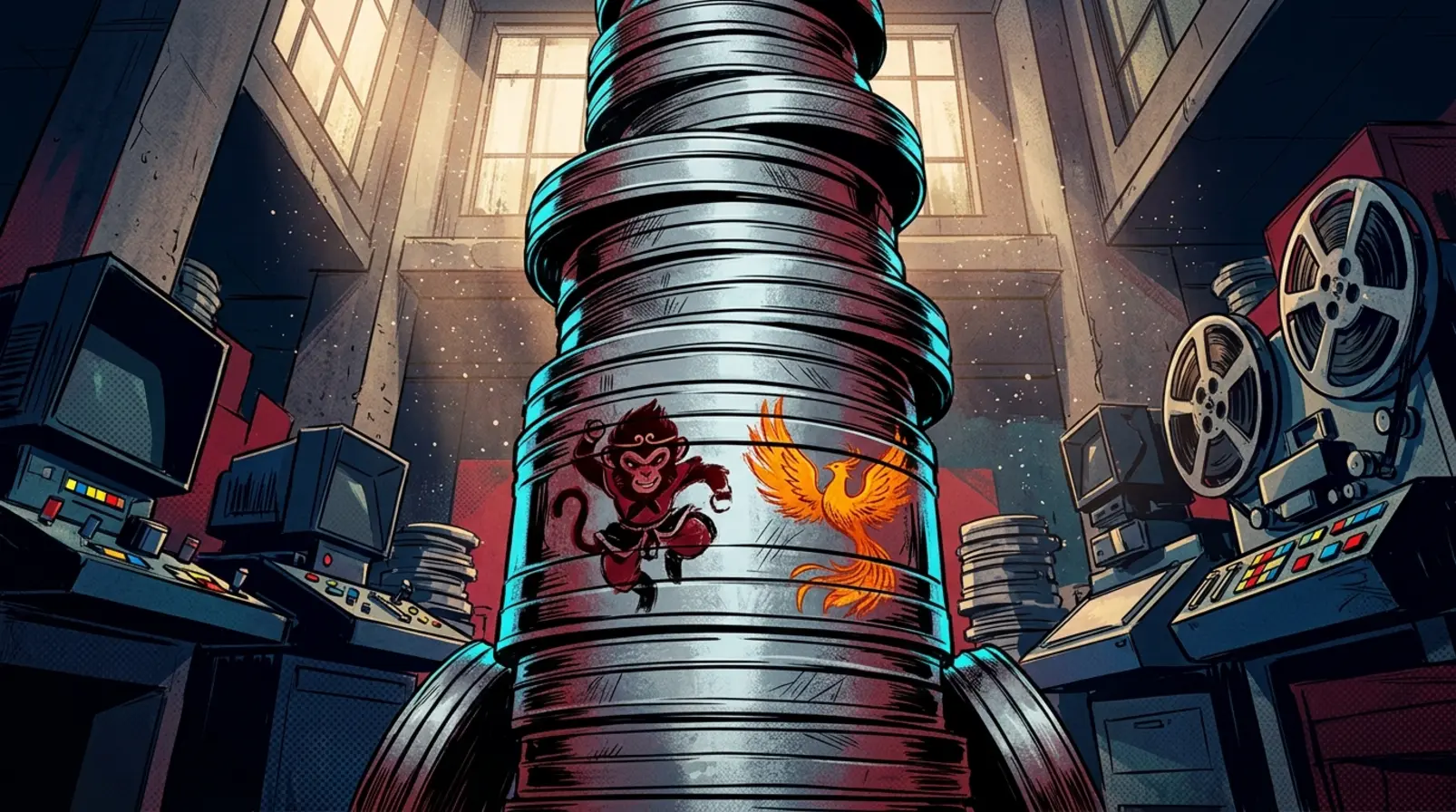

Toei Animation’s 70th-anniversary Blu-ray series begins October 14, 2026, with five films restored from 4K negative scans and released one per month through February 10, 2027. The discs themselves are 1080p, not Ultra HD Blu-rays, but the restoration work starts higher up the chain: original film elements scanned and remastered at 4K before being reduced for the final release, according to Toei Video’s anniversary page.
The lineup runs from Shonen Sarutobi Sasuke through Journey to the West, The Flying Ghost Ship, Animal Treasure Island and Grimm’s Fairy Tales: The Golden Bird. Together, they preserve more than five old movies. They reach back into a studio built around one of the most expensive ideas in early Japanese animation: make theatrical cartoons the Disney way, with a large permanent workforce, specialized departments and enough drawings to keep movement fluid.
That factory trained generations of artists. It also created a problem. Feature films came slowly, hundreds of employees still had to be kept working, and television was about to prove that animation could survive on far fewer drawings. Some of the people trained inside Toei would help build that alternative.
A White-Walled Palace With Air Conditioning
Toei Co. purchased Nichido Film in July 1956 and renamed it Toei Doga. Its production studio moved to Oizumi in January 1957, and the company completed its first full-length theatrical feature, Hakujaden, in October 1958, according to Toei Animation’s corporate history.
The ambition was enormous. A history in the Animation Studies Journal describes Toei’s early strategy as an attempt to rival the labor-intensive feature animation associated with Walt Disney Studios. The BFI recounts an in-house training program that helped expand the operation from 23 people to more than 500.
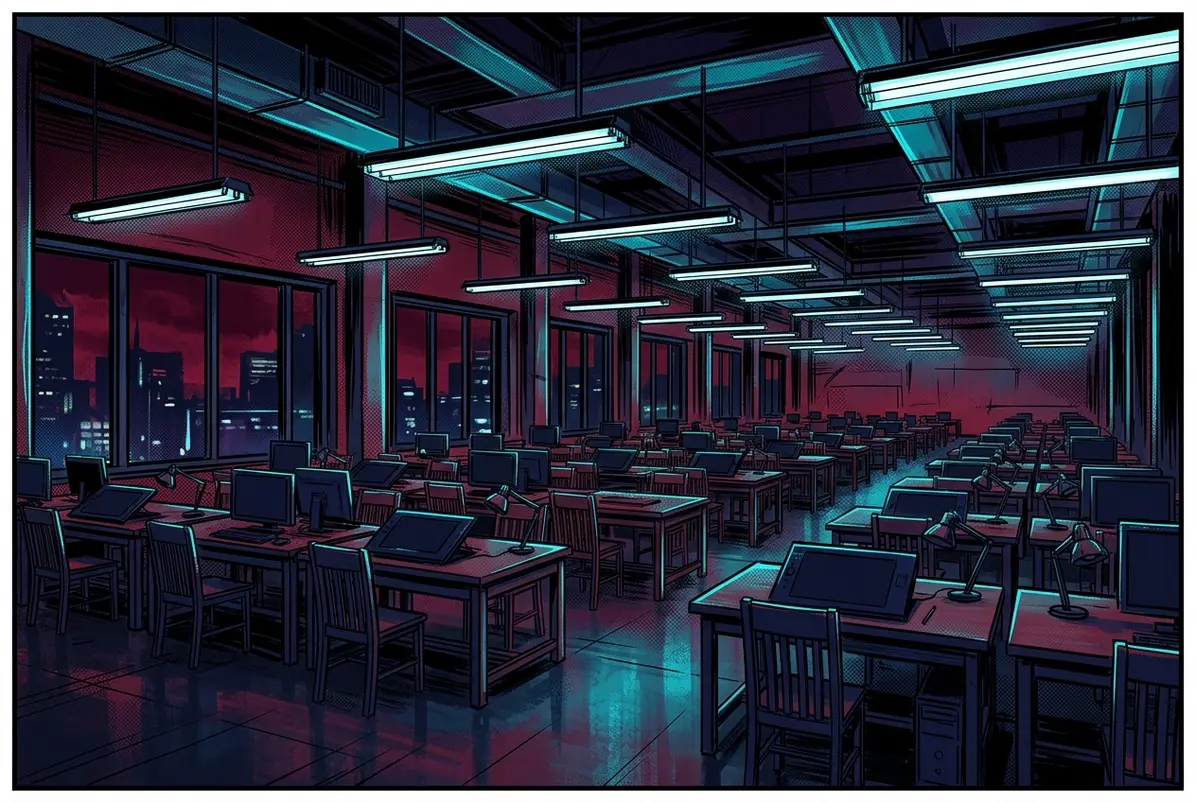
The building became part of the legend. Nippon.com reports that contemporaries nicknamed it a “white-walled palace with air conditioning.” Toei sent a research team to the United States, brought specialists to Japan and adopted an assembly-line production system modeled on Disney’s.
Hakujaden was the first major result. The BFI identifies the 1958 film as Japan’s first feature-length, full-color, widescreen animation. More than 60 years later, restoring it became another laborious production job: for its 2019 Cannes Classics presentation, Toei drew on the original negative, a 35mm print, tape materials and surviving animation cels for a 4K scan and restoration, according to the Festival de Cannes.
The Factory Had a Single-Crop Problem
The same structure that made those films possible created an awkward problem between them. A studio organized around roughly one major feature a year employed specialists whose workloads rose and fell at different points in production. Animator Yasuo Otsuka later called it the “single crop problem,” according to the Animation Studies Journal.
The problem was mundane and expensive. A large permanent staff could not simply disappear when one department was waiting for another to finish. Toei filled gaps with subcontracted television and overseas work. It also hired inexperienced trainees at lower wages while asking senior staff to teach them. The same account describes starting salaries falling as quotas and working hours increased.
The white palace had to keep feeding work through the building.
Labor conflict followed. In 1961 animators staged strikes, and Toei responded with a multi-day lockout. Negotiations eventually restored a measure of stability, but some experienced artists left for smaller studios. Among the destinations was the new operation forming around Osamu Tezuka and Astro Boy.
Miyazaki Arrived After the First Fight
Hayao Miyazaki belongs to Toei’s labor history, but not to the 1961 confrontation. He joined the studio in 1963, after that dispute had already taken place.
The working culture he entered could still be punishing. Animation Obsessive, drawing on historian Jonathan Clements and Miyazaki’s recollections, describes periods of unpaid overtime known as “killer weeks.” Married employees and women might be allowed to catch the last train while unmarried men remained overnight.
Miyazaki had little affection for that arrangement. “My idea was to go home at five o’clock,” he later recalled. He became the union’s general secretary in 1964, with Isao Takahata serving as vice president.
The politics and the art were not separate little boxes. Younger employees watched films, argued over animation and pushed against the conditions under which the work was being made. For artists such as Miyazaki and Takahata, Toei was simultaneously a school, a workplace and something to resist.
Television Needed Fewer Drawings
The sharpest break with Toei’s feature model happened at Mushi Production. Tezuka had worked on Journey to the West before establishing the new studio, and the BFI notes that Mushi recruited a number of its early employees from Toei.
Astro Boy began broadcasting in January 1963. Weekly television had no realistic way to sustain the drawing counts and schedules of a lavish theatrical feature, especially at the fees networks were prepared to pay. Nippon.com describes those low television fees as a major pressure behind Mushi’s stripped-down production methods.
The shortcuts were visible and practical. Fewer new drawings. Simpler lines. Characters held motionless while the camera moved across the artwork. Mouths or arms animated while the rest of the body stayed still. Previously drawn material reused. Editing, sound and composition did work that additional drawings once would have done.
The BFI describes freeze-frames, reused cels and other limited-animation techniques as part of the production language that made weekly television anime possible. Mushi also relied on sponsorship and rights income because broadcast fees alone were inadequate.
This was not the old feature process with corners randomly chopped off. It changed where the labor went. A single held drawing could remain onscreen while dialogue, music, camera movement or editing carried the scene. Movement became something to spend strategically.
Toei entered television that same year. Its first TV series, Ken, the Wild Boy, began in November 1963, according to the company’s official history. The studio built to pursue Disney-style theatrical animation was now working inside a medium whose schedules punished exactly that kind of extravagance.
The People Outlasted the Production Model
That makes the five anniversary Blu-rays more interesting than a routine catalog revival. Shonen Sarutobi Sasuke and Journey to the West belong to the period when Toei was still testing what its giant feature operation could do. The Flying Ghost Ship and Animal Treasure Island arrived after television had already begun changing the economics beneath Japanese animation. Grimm’s Fairy Tales: The Golden Bird, released in 1987 with Madhouse credited for production cooperation, came from a different industry again.
The original Toei model did not win intact. Neither did it simply vanish. Its artists moved into television, rival studios, unions and later productions. The skills learned inside that expensive feature factory traveled farther than the factory’s original economics could.
The new scans preserve five films. They also preserve evidence of the factory that made them possible—and of an industry that learned it could not keep running that factory the same way forever.


'%3e%3cg id='Final-Copy-2_2_' transform='translate(1275.000000, 200.000000)'%3e%3cpath class='st0' d='M7.4,12.8h6.8l3.1-11.6H7.4C4.2,1.2,1.6,3.8,1.6,7S4.2,12.8,7.4,12.8z'/%3e%3c/g%3e%3c/g%3e%3c/g%3e%3cg id='final---dec.11-2020'%3e%3cg id='_x30_208-our-toggle' transform='translate(-1275.000000, -200.000000)'%3e%3cg id='Final-Copy-2' transform='translate(1275.000000, 200.000000)'%3e%3cpath class='st1' d='M22.6,0H7.4c-3.9,0-7,3.1-7,7s3.1,7,7,7h15.2c3.9,0,7-3.1,7-7S26.4,0,22.6,0z M1.6,7c0-3.2,2.6-5.8,5.8-5.8 h9.9l-3.1,11.6H7.4C4.2,12.8,1.6,10.2,1.6,7z'/%3e%3cpath id='x' class='st2' d='M24.6,4c0.2,0.2,0.2,0.6,0,0.8l0,0L22.5,7l2.2,2.2c0.2,0.2,0.2,0.6,0,0.8c-0.2,0.2-0.6,0.2-0.8,0 l0,0l-2.2-2.2L19.5,10c-0.2,0.2-0.6,0.2-0.8,0c-0.2-0.2-0.2-0.6,0-0.8l0,0L20.8,7l-2.2-2.2c-0.2-0.2-0.2-0.6,0-0.8 c0.2-0.2,0.6-0.2,0.8,0l0,0l2.2,2.2L23.8,4C24,3.8,24.4,3.8,24.6,4z'/%3e%3cpath id='y' class='st3' d='M12.7,4.1c0.2,0.2,0.3,0.6,0.1,0.8l0,0L8.6,9.8C8.5,9.9,8.4,10,8.3,10c-0.2,0.1-0.5,0.1-0.7-0.1l0,0 L5.4,7.7c-0.2-0.2-0.2-0.6,0-0.8c0.2-0.2,0.6-0.2,0.8,0l0,0L8,8.6l3.8-4.5C12,3.9,12.4,3.9,12.7,4.1z'/%3e%3c/g%3e%3c/g%3e%3c/g%3e%3c/g%3e%3c/svg%3e) Your Privacy Choices
Your Privacy Choices