


Before it became one of rock’s stranger orchestras, the Mellotron came equipped for a Viennese waltz. Its Mark II model paired prerecorded rhythms and accompaniments with a keyboard of lead instruments, housed in a large wooden cabinet. One player could provide the entertainment.
Rock musicians found uses for that cabinet that went well beyond accompaniment. A flute recording could become the opening atmosphere of a song; a recorded note could be bent into an unsettling swoop. The machinery helped give those borrowed sounds a recognizable character.
How the Chamberlin Reached Birmingham
Harry Chamberlin was already building tape keyboards in California before the British instrument existed. He described their purpose as “to sweeten up the music.” Each key gave the player access to a recording of an instrument, with separate tapes supplying the notes.
In 1962, his salesman Bill Fransen brought two Musicmaster 600 keyboards to England while seeking a supplier of 70 matched playback heads. He found Bradmatic, the Birmingham firm run by brothers Frank, Norman and Leslie Bradley.
According to instrument historian Tony Bacon, Fransen left the Bradleys believing the tape-keyboard idea was his. Chamberlin had not been involved in the British venture; a settlement followed. The Mellotron grew out of the Bradleys’ reworking of his design.
The Mellotron’s Price Tag Promised Polish
The Mark II arrived in 1964 at a £1,000 list price, with two keyboards of 35 notes each. The service manual describes six “stations” along each tape and three tracks across it, giving 18 recorded selections per key.
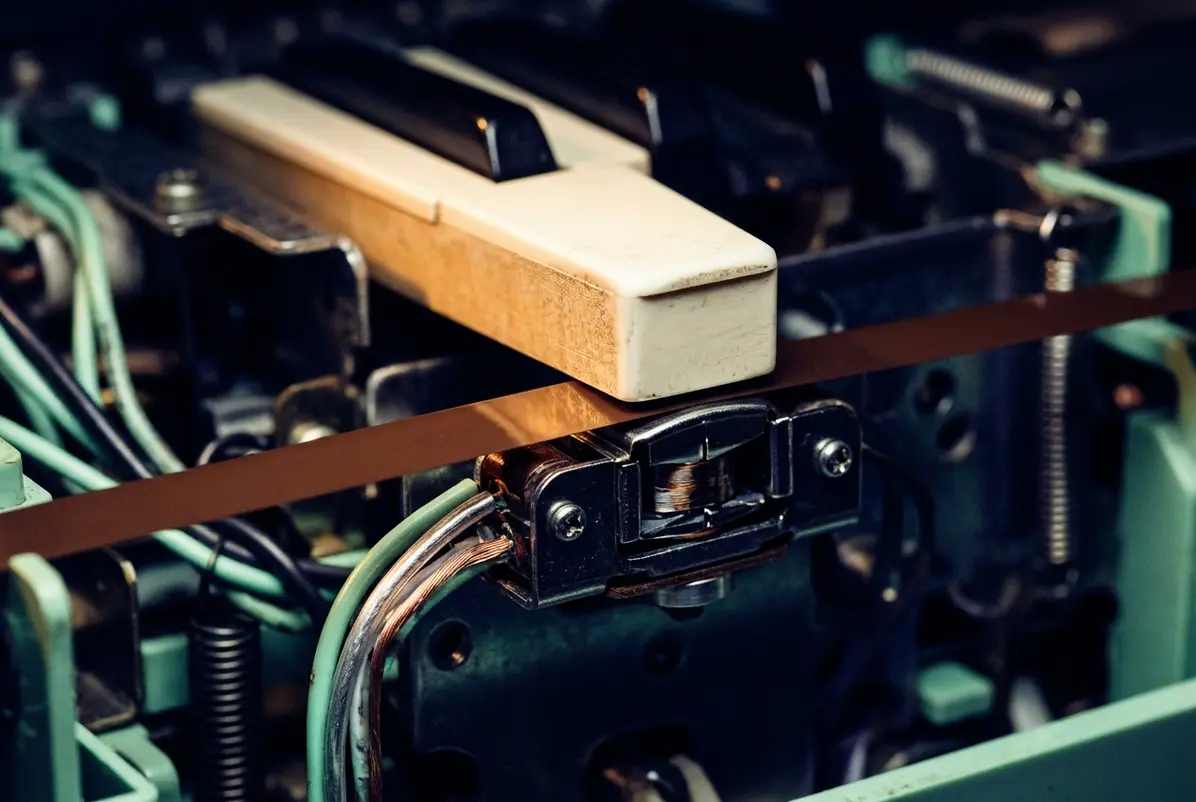
Pressing a key engaged a pressure pad and pinch roller, bringing that key’s tape into contact with its playback head and pulling it along a rotating capstan. Releasing the key let a spring return the tape to its starting position. At normal speed, each press allowed about eight seconds of sound.
The return to the beginning was part of the design’s usefulness: the next press recovered the note’s original attack. It also imposed a limit. A player who wanted a long chord had to release and retrigger its notes before the tapes ran out.

A Flute at the Entrance to Strawberry Fields
The Beatles began recording “Strawberry Fields Forever” in Studio Two at Abbey Road on November 24, 1966, with Paul McCartney playing Mellotron. His Mellotron flute became the song’s opening voice.
On the finished record, the introduction has a soft, slightly clouded edge. The flute is recognizable, but the effect is more elusive than an orchestral color added to a backing track. It establishes the song’s atmosphere before Lennon sings.
Mike Pinder Rearranges the Machine
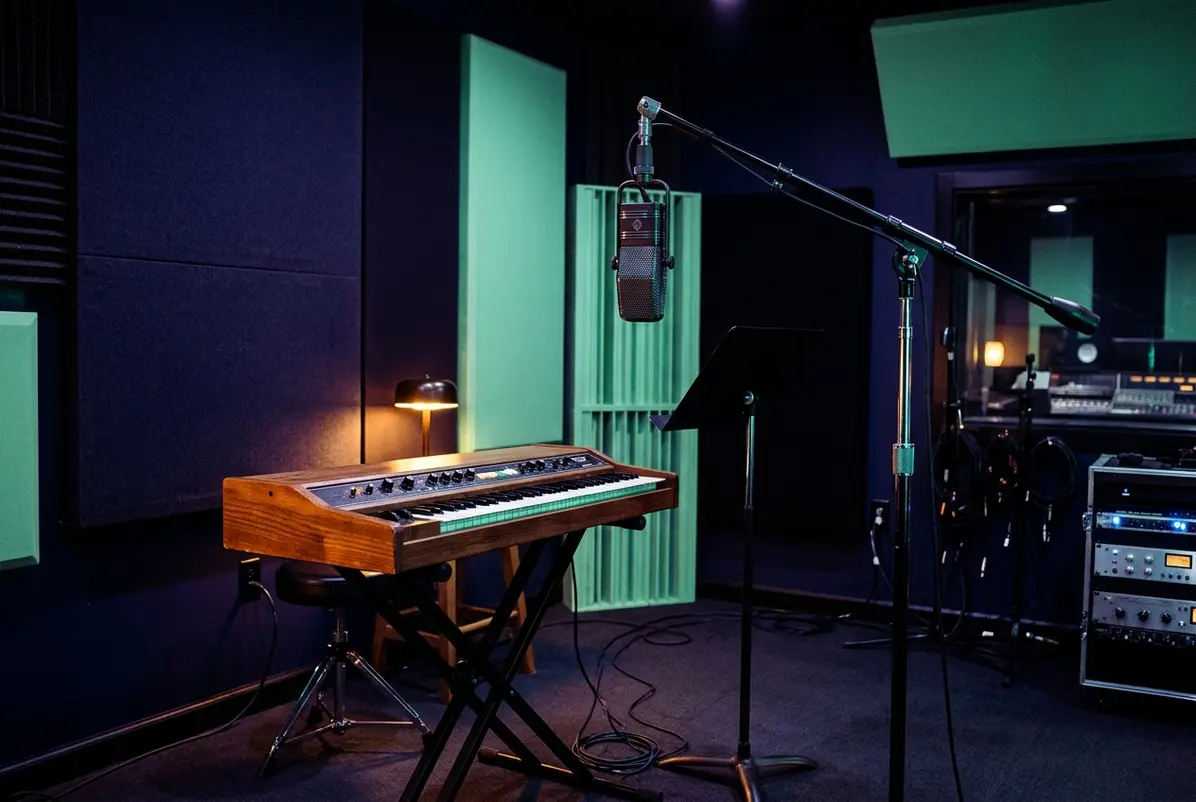
Mike Pinder understood the instrument from inside the cabinet. The Moody Blues keyboardist had worked at the factory in quality control and testing. In his account of modifying his own Mark II, he recalled replacing its rhythm and fill tapes with a second set of lead instruments. He also removed the heavy speakers and connected the instrument to stage amplification.
“I didn’t want to play someone else’s music,” he explained. “I only wanted to play someone else’s instruments.”
Both keyboards could now serve his arrangements. On “Legend of a Mind,” Pinder later told Sound & Vision that he used the speed control to create the Mellotron’s swoops, with stereo movement and reverb extending the effect.
The smaller M400 arrived in 1970 with touring players in mind. Mellotron’s own archive puts production at around 1,800 instruments, plus another 100 made by EMI.
What Survived the Tape
The original British manufacturing operation, by then called Streetly Electronics, entered liquidation in 1986. John Bradley and Martin Smith subsequently revived the business around making and restoring Mellotrons. Their work keeps the physical instruments playing.
A separate line of digital models carries the recorded library forward. The M4000D, introduced in 2010, reproduces original Mellotron and Chamberlin recordings digitally, without requiring the old tape transport.
Pinder had already taken that route. In a 2014 interview with Bill Kopp, he recalled digitizing and looping his favorite Mellotron sounds in the early 1990s for a Roland sampler. He still valued the sounds and his ability to shape them with pitch and volume controls. After years of coaxing music from short strips of tape, he had found a way to let the notes keep going.
Frequently asked questions
Who invented the Mellotron?
The Mellotron was developed by Frank, Norman and Leslie Bradley of Bradmatic in Birmingham, England, but it reworked Harry Chamberlin's earlier California tape keyboard. Chamberlin's salesman Bill Fransen brought the design to England in 1962, and a settlement followed.
What is the difference between a Mellotron and a Chamberlin?
The Chamberlin came first, built by Harry Chamberlin in California to play recorded instruments from a keyboard. The Mellotron was the Bradley brothers' British reworking of that design, launched as the Mark II in 1964.
How does a Mellotron work?
Pressing a key pushes that key's strip of magnetic tape against a playback head and pulls it along a rotating capstan. Releasing the key lets a spring return the tape to its start, so each press restores the note's original attack.
How long can a Mellotron note play?
At normal speed, each key press gives about eight seconds of sound. Players holding long chords must release and retrigger the notes before the tapes run out.
Did the Beatles use a Mellotron on Strawberry Fields Forever?
Yes. Paul McCartney played Mellotron when the Beatles began recording Strawberry Fields Forever at Abbey Road on November 24, 1966, and its flute sound opens the song.
Are Mellotrons still made?
Yes. After Streetly Electronics entered liquidation in 1986, John Bradley and Martin Smith revived the business making and restoring Mellotrons, and the digital M4000D, introduced in 2010, reproduces the original tape recordings.

'%3e%3cg id='Final-Copy-2_2_' transform='translate(1275.000000, 200.000000)'%3e%3cpath class='st0' d='M7.4,12.8h6.8l3.1-11.6H7.4C4.2,1.2,1.6,3.8,1.6,7S4.2,12.8,7.4,12.8z'/%3e%3c/g%3e%3c/g%3e%3c/g%3e%3cg id='final---dec.11-2020'%3e%3cg id='_x30_208-our-toggle' transform='translate(-1275.000000, -200.000000)'%3e%3cg id='Final-Copy-2' transform='translate(1275.000000, 200.000000)'%3e%3cpath class='st1' d='M22.6,0H7.4c-3.9,0-7,3.1-7,7s3.1,7,7,7h15.2c3.9,0,7-3.1,7-7S26.4,0,22.6,0z M1.6,7c0-3.2,2.6-5.8,5.8-5.8 h9.9l-3.1,11.6H7.4C4.2,12.8,1.6,10.2,1.6,7z'/%3e%3cpath id='x' class='st2' d='M24.6,4c0.2,0.2,0.2,0.6,0,0.8l0,0L22.5,7l2.2,2.2c0.2,0.2,0.2,0.6,0,0.8c-0.2,0.2-0.6,0.2-0.8,0 l0,0l-2.2-2.2L19.5,10c-0.2,0.2-0.6,0.2-0.8,0c-0.2-0.2-0.2-0.6,0-0.8l0,0L20.8,7l-2.2-2.2c-0.2-0.2-0.2-0.6,0-0.8 c0.2-0.2,0.6-0.2,0.8,0l0,0l2.2,2.2L23.8,4C24,3.8,24.4,3.8,24.6,4z'/%3e%3cpath id='y' class='st3' d='M12.7,4.1c0.2,0.2,0.3,0.6,0.1,0.8l0,0L8.6,9.8C8.5,9.9,8.4,10,8.3,10c-0.2,0.1-0.5,0.1-0.7-0.1l0,0 L5.4,7.7c-0.2-0.2-0.2-0.6,0-0.8c0.2-0.2,0.6-0.2,0.8,0l0,0L8,8.6l3.8-4.5C12,3.9,12.4,3.9,12.7,4.1z'/%3e%3c/g%3e%3c/g%3e%3c/g%3e%3c/g%3e%3c/svg%3e) Your Privacy Choices