


Comic Market has buyers, sellers, and an official objection to calling anyone a customer. Comiket’s statement of principles treats everyone involved as a participant, from the person selling a self-published comic to the staff keeping the event moving. Money changes hands. The obligation to help make the place work is supposed to travel with it.
That distinction has roots in a disagreement about what a manga convention should offer its fans. Comiket put their own publications at the center of the event. Fifty years later, keeping room for those publications remains a remarkably physical problem.
Comiket Put the Fans’ Work on the Table
Japan’s Nihon Manga Taikai began in 1972 as a fan-organized convention with professional guests, panel discussions, fan awards, and other activities. Doujinshi sales were already gaining ground there. Comiket did not invent fans publishing their own work, or even gathering to sell it.
The change was one of emphasis. Meiji University’s exhibition on Comiket’s origins describes how the manga criticism circle Meikyu developed an event centered on exchanges between fans through the sale of doujinshi. Its account also identifies a prospective attendee’s exclusion from Nihon Manga Taikai as a catalyst for creating a freer gathering place.
Meikyu organized the first Comic Market on December 21, 1975, in Tokyo’s Toranomon district. It drew 32 circles and an estimated 700 attendees. A circle is the publishing unit: a group, or an individual, bringing work to distribute. Yoshihiro Yonezawa, one of the founders, later served as Comiket’s representative from 1980 until 2006 and helped formulate its principles.

Comiket Has No Customers, Only Participants
“There are no ‘customers’ at Comiket,” its official vision states. Circles, general attendees, cosplayers, corporate exhibitors, and staff share the designation of participant. Professionals can participate too; amateur status is not the admission test.
The principle does not make everyone equally famous or give everyone the same job. It establishes a shared responsibility for the gathering. Someone arriving to buy books is part of the culture being sustained, with obligations beyond paying for a purchase.
A Shared Market Still Needs Rules
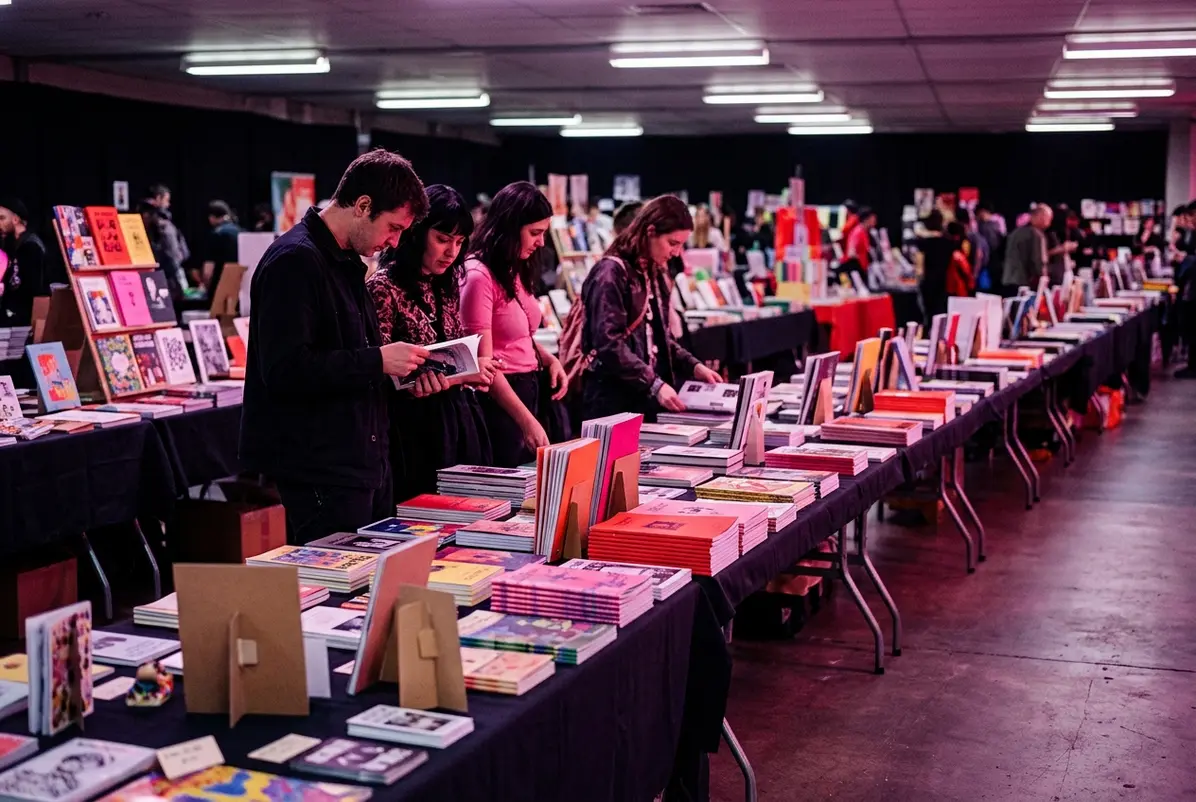
Comiket’s principles ask participants to read the guidance, exercise self-restraint, and consider others. Keeping rules to a minimum depends on people doing some of that work themselves. Equal standing is an ideal of participation, not a claim that an enormous event can run without management.
The practical machinery developed early. Meiji’s exhibition records that table positions were decided by a lottery on the day through Comiket 4. For Comiket 5, organizers produced a hand-drawn floor plan reproduced on diazo copies. The freedom to bring a publication needed an increasingly precise answer to where its publisher would sit.
Comiket 109 Needs Another Day
Comic Market 109 is scheduled for December 29 to 31, 2026, at Tokyo Big Sight. It will be the first Comiket lasting more than two days since the four-day winter event in 2019. East Halls 4 through 6 will be unavailable during renovations.
The committee’s explanation makes the stakes unusually clear. For winter 2025’s C107, organizers added approximately 1,000 circle spaces by expanding into East Hall 8. Even then, nearly 10,000 requested spaces could not be accommodated through the selection lottery. With strong demand and renovation work continuing, the committee chose a third day for C109 to reduce the number of circles it would have to turn away.
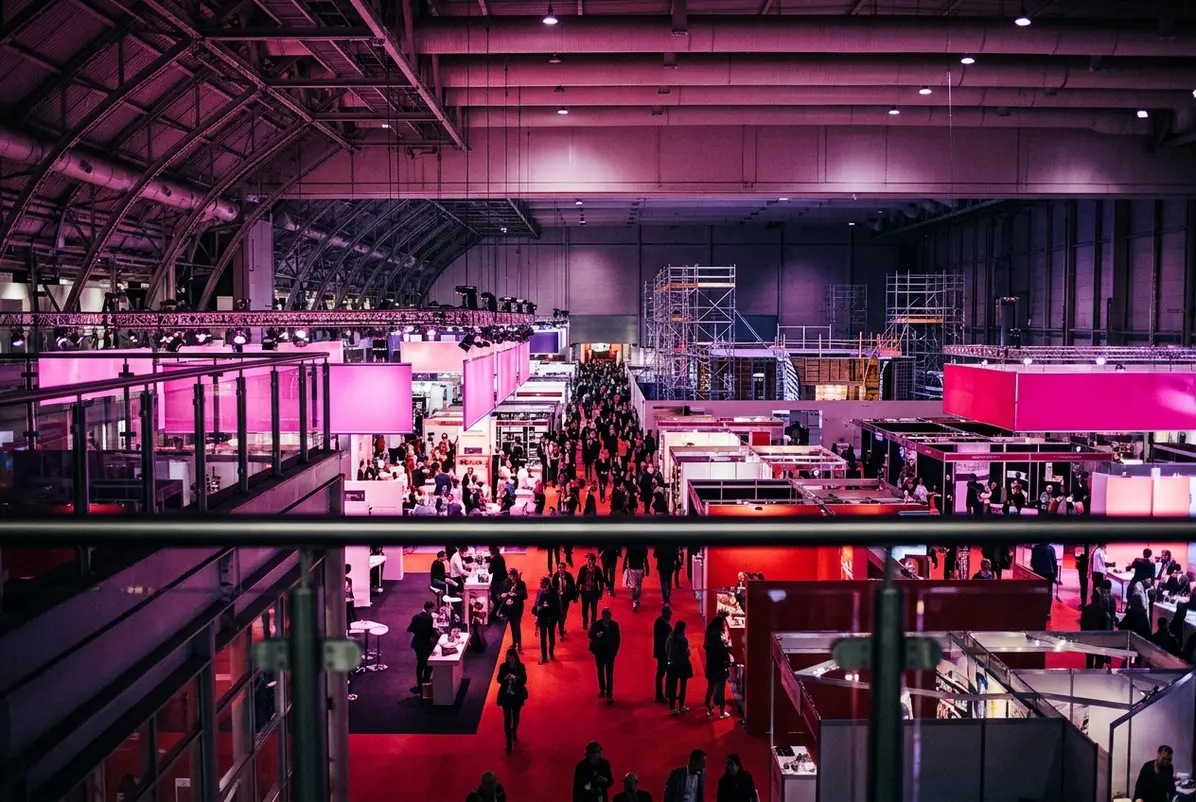
The C109 information page schedules the web catalog’s opening for November 6. The floor plan will give individual publishers their places inside the larger event.
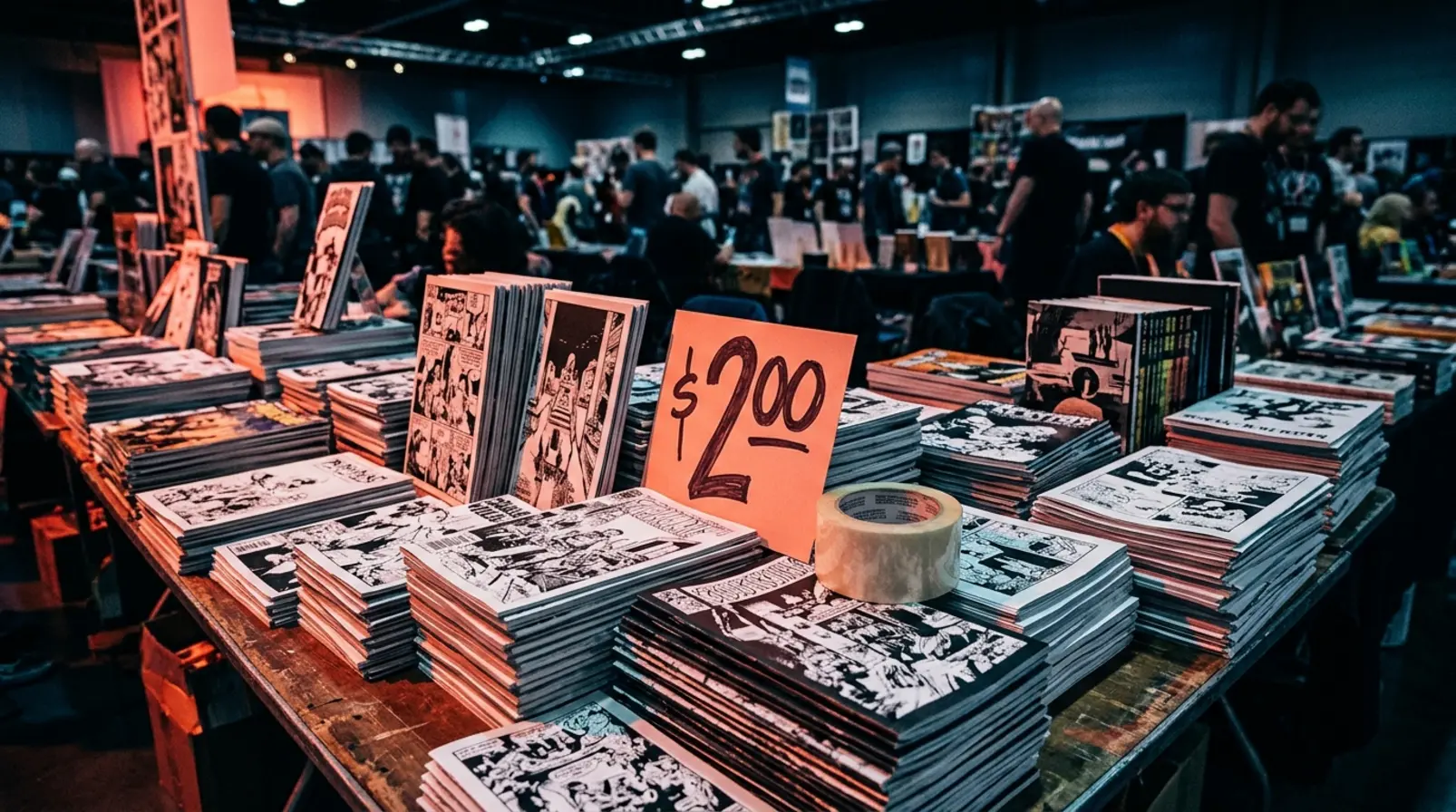
There is something fitting about this anniversary-era problem. A gathering built around fans making and distributing their own work has more would-be publishers than its available halls can hold. This winter, the answer is another day of tables, books, and exchanges—more room for someone’s small publication to find its reader.
Frequently asked questions
When was the first Comiket held?
The first Comic Market took place on December 21, 1975, in Tokyo's Toranomon district. It drew 32 circles and an estimated 700 attendees.
Who founded Comiket?
Comiket was organized by Meikyu, a manga criticism circle. Founder Yoshihiro Yonezawa later served as Comiket's representative from 1980 until 2006 and helped formulate its principles.
Why does Comiket say it has no customers?
Comiket's official vision states there are no customers. Circles, general attendees, cosplayers, corporate exhibitors, and staff are all participants who share responsibility for making the event work, beyond simply buying or selling.
What is a circle at Comiket?
A circle is the publishing unit at Comiket: a group or an individual bringing self-published work, usually doujinshi, to distribute. Professionals can participate too, since amateur status is not required.
When and where is Comic Market 109?
Comic Market 109 is scheduled for December 29 to 31, 2026, at Tokyo Big Sight. It is the first Comiket longer than two days since the four-day winter 2019 event, and the web catalog opens November 6.
Why is Comiket 109 three days long?
East Halls 4 through 6 are closed for renovation, and demand keeps rising. At C107, nearly 10,000 requested spaces could not be accommodated even after adding about 1,000 spaces, so the committee added a third day to turn away fewer circles.

'%3e%3cg id='Final-Copy-2_2_' transform='translate(1275.000000, 200.000000)'%3e%3cpath class='st0' d='M7.4,12.8h6.8l3.1-11.6H7.4C4.2,1.2,1.6,3.8,1.6,7S4.2,12.8,7.4,12.8z'/%3e%3c/g%3e%3c/g%3e%3c/g%3e%3cg id='final---dec.11-2020'%3e%3cg id='_x30_208-our-toggle' transform='translate(-1275.000000, -200.000000)'%3e%3cg id='Final-Copy-2' transform='translate(1275.000000, 200.000000)'%3e%3cpath class='st1' d='M22.6,0H7.4c-3.9,0-7,3.1-7,7s3.1,7,7,7h15.2c3.9,0,7-3.1,7-7S26.4,0,22.6,0z M1.6,7c0-3.2,2.6-5.8,5.8-5.8 h9.9l-3.1,11.6H7.4C4.2,12.8,1.6,10.2,1.6,7z'/%3e%3cpath id='x' class='st2' d='M24.6,4c0.2,0.2,0.2,0.6,0,0.8l0,0L22.5,7l2.2,2.2c0.2,0.2,0.2,0.6,0,0.8c-0.2,0.2-0.6,0.2-0.8,0 l0,0l-2.2-2.2L19.5,10c-0.2,0.2-0.6,0.2-0.8,0c-0.2-0.2-0.2-0.6,0-0.8l0,0L20.8,7l-2.2-2.2c-0.2-0.2-0.2-0.6,0-0.8 c0.2-0.2,0.6-0.2,0.8,0l0,0l2.2,2.2L23.8,4C24,3.8,24.4,3.8,24.6,4z'/%3e%3cpath id='y' class='st3' d='M12.7,4.1c0.2,0.2,0.3,0.6,0.1,0.8l0,0L8.6,9.8C8.5,9.9,8.4,10,8.3,10c-0.2,0.1-0.5,0.1-0.7-0.1l0,0 L5.4,7.7c-0.2-0.2-0.2-0.6,0-0.8c0.2-0.2,0.6-0.2,0.8,0l0,0L8,8.6l3.8-4.5C12,3.9,12.4,3.9,12.7,4.1z'/%3e%3c/g%3e%3c/g%3e%3c/g%3e%3c/g%3e%3c/svg%3e) Your Privacy Choices