

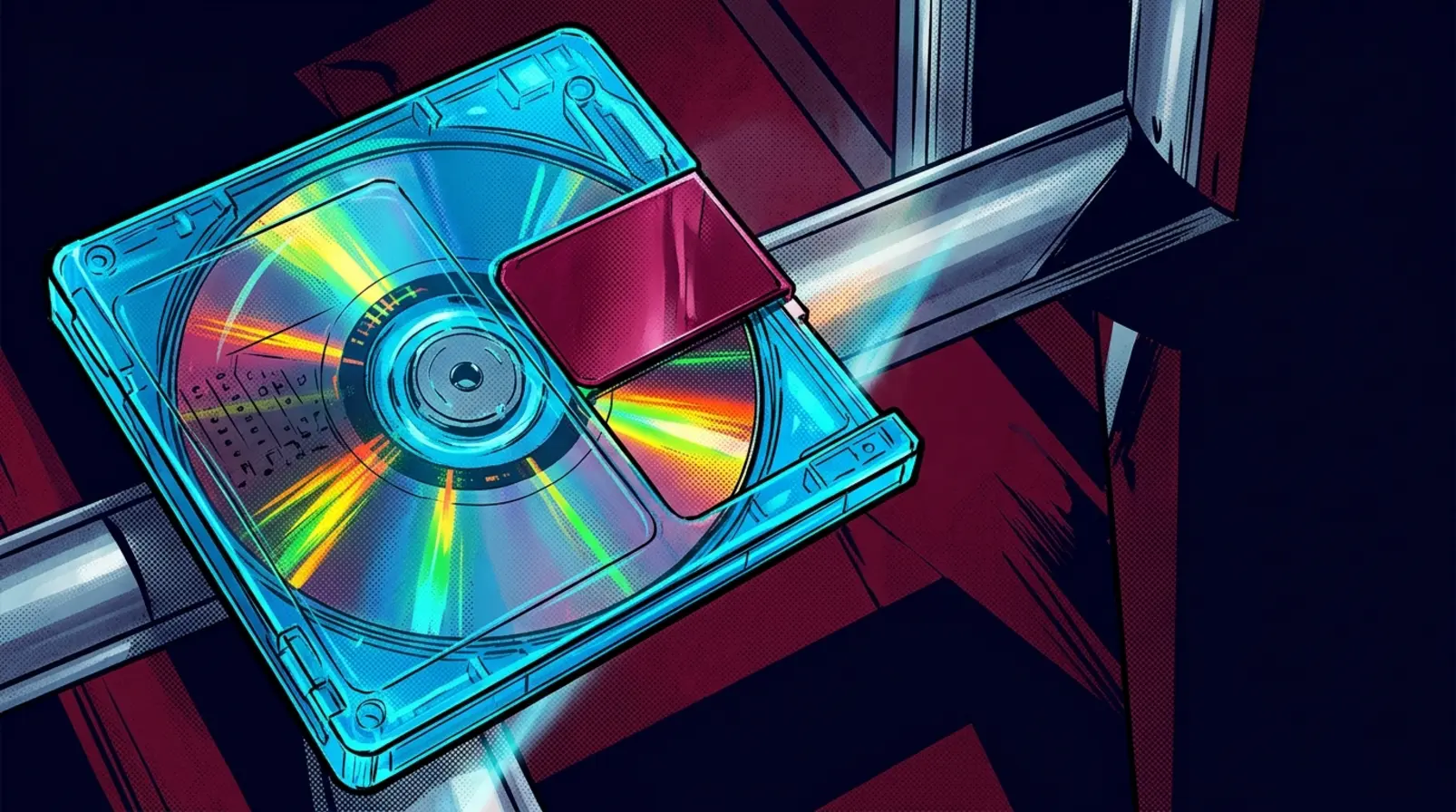

A finished MiniDisc compilation was still open to revision. A recorder’s Move command let its owner put the last track first without recording the music again.
Sony launched MiniDisc in Japan in November 1992, putting a small optical disc inside a cartridge that resembled a miniature floppy. Prerecorded albums arrived alongside blank, recordable discs. The latter offered a particularly appealing combination: a music collection that could be carried around as an object and rearranged after it was made.
How the MiniDisc Format Works
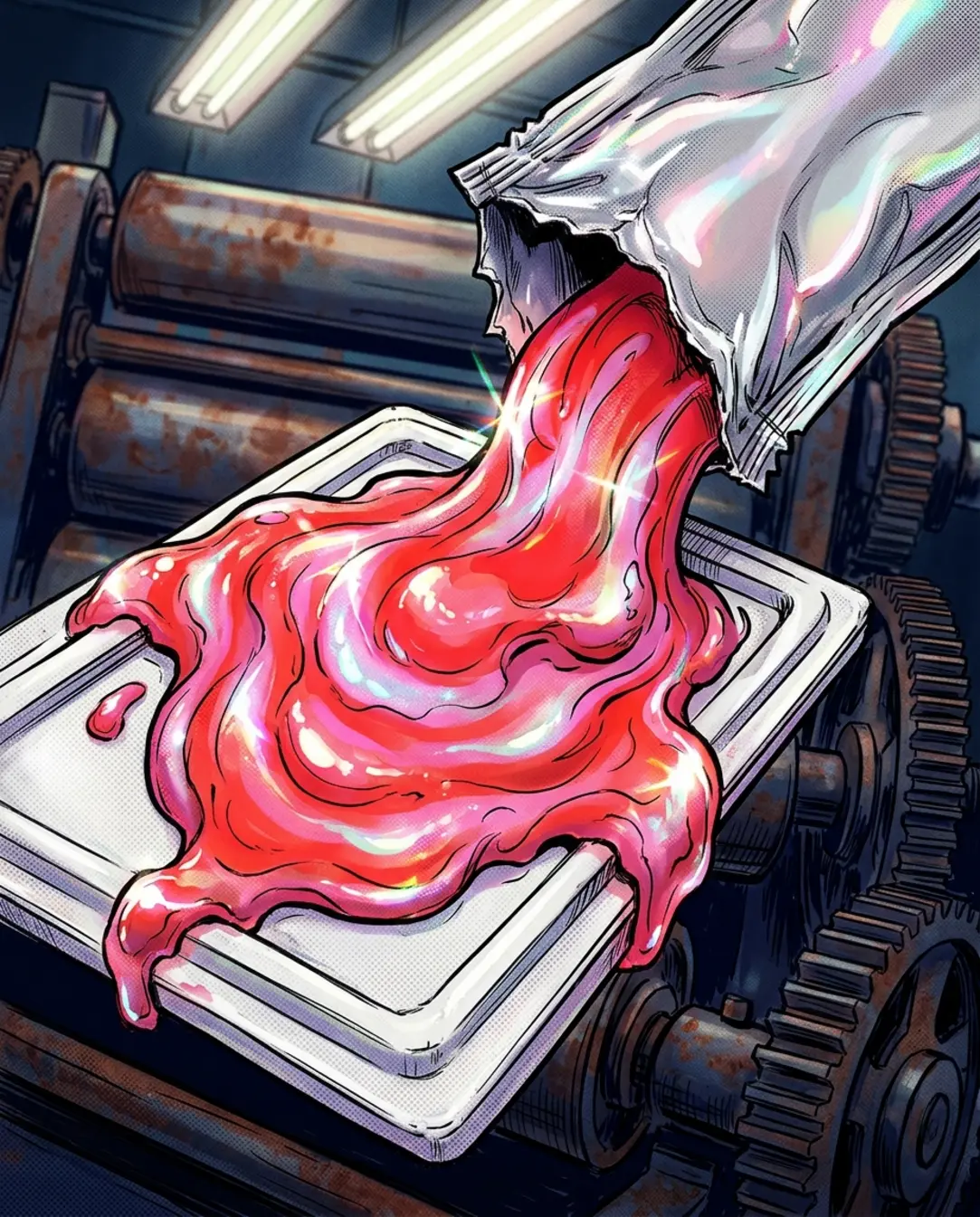
The recordable version used magneto-optical recording: a laser heated a tiny area of the recording layer while a magnetic head set the data. Standard recordings used ATRAC, Sony’s lossy compression system, which reduced the audio data to roughly a fifth of its original size. That reduction helped make album-length recording practical on such a small disc.
Portability also depended on a memory buffer. It held audio ahead of playback, allowing the music to continue through brief interruptions when a jolt knocked the optical pickup off track.
Why MiniDisc Editing Mattered
The clever part was the bookkeeping. A user table of contents stored information about the tracks and their arrangement; Sony compared it to a computer’s disk directory. Editing could change those instructions without rerecording the music. A new recording could even occupy space freed by a deleted song and continue elsewhere on the disc, with the player joining the pieces during playback.
That separated recording from arranging. A long recording could be divided into individual tracks, an unwanted passage removed, and the remaining songs moved into a better sequence. Changing a cassette compilation’s running order generally meant recording it again. On MiniDisc, much of that work happened in a menu.
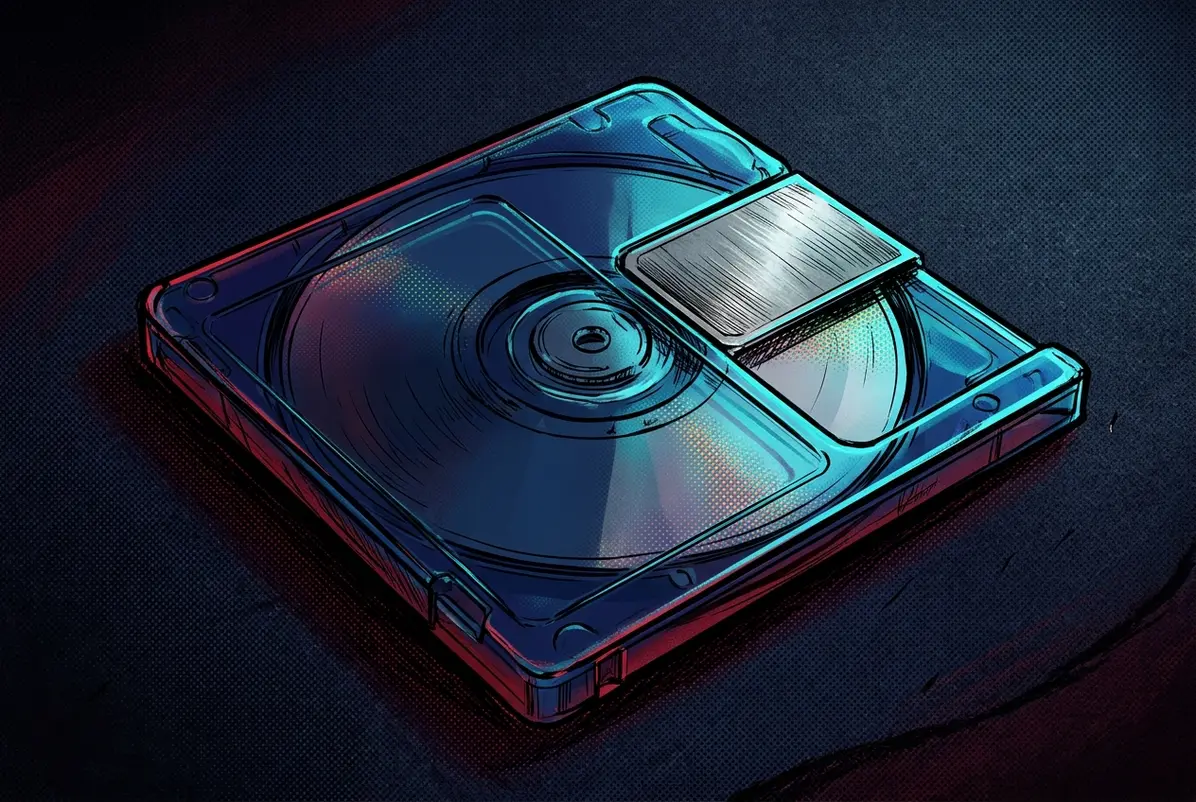
The controls still demanded patience. On Sony’s original MZ-1, naming a track meant repeatedly pressing number keys to select letters. A carefully titled compilation involved a fair amount of button work. The attraction was having those names and edits travel with the disc.
MiniDisc Formats and Sales
Sony kept extending what the cartridge could do. MDLP arrived in 2000, adding longer recording modes. On compatible equipment, an 80-minute disc could hold 160 minutes in LP2 or 320 minutes in LP4, using greater compression.
Net MD followed in late 2001, bringing USB transfers from a computer to the recorder through Sony’s OpenMG Jukebox software. The connection came with restrictions. The MZ-N1’s manual specified that tracks checked out from a computer could not be split or combined on the recorder. The editing freedom depended partly on how the music had arrived.
Hi-MD arrived in 2004 with 1 GB discs, storage for computer files and an uncompressed linear PCM recording option alongside compressed audio.
By the time Sony announced its withdrawal from MD hardware in January 2013, AV Watch reported cumulative Sony sales of about 22 million portable MD products and 5 million MD-equipped stereo systems since the 1992 launch.
When Sony Stopped Making MiniDisc
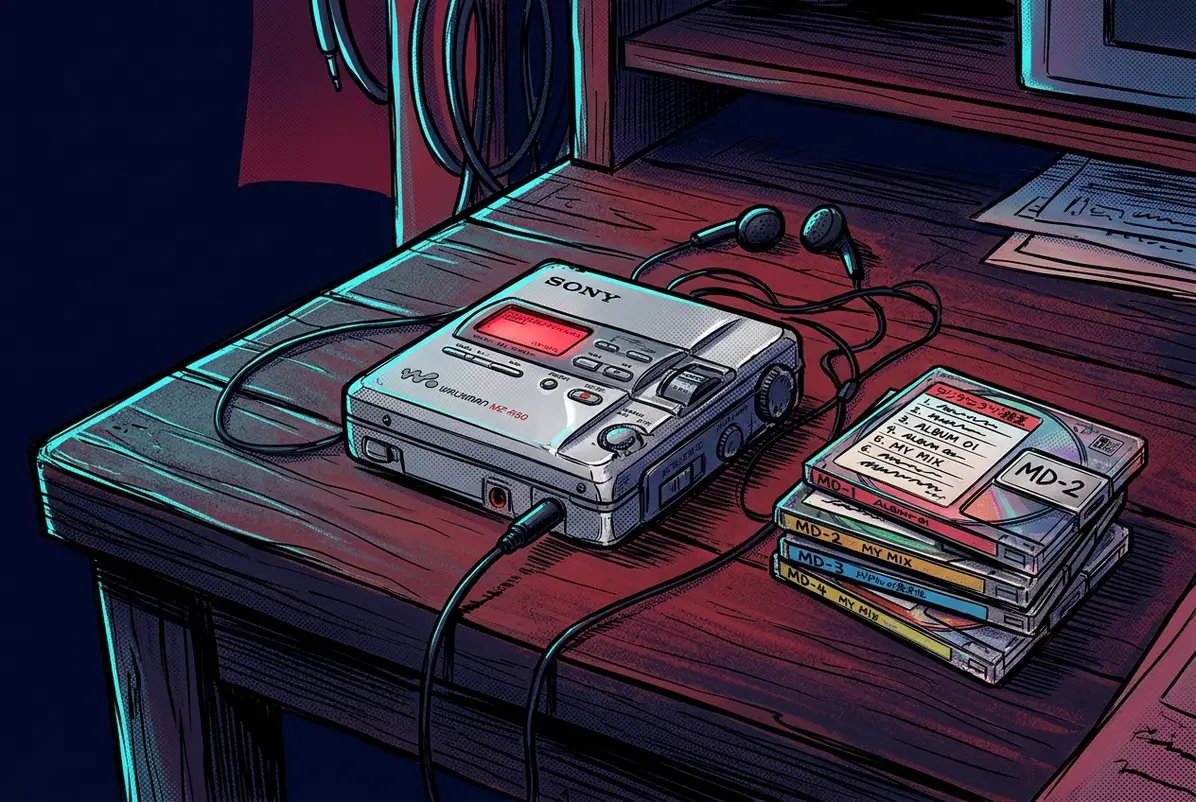
Sony’s departure happened in stages. It announced that shipments of the MZ-RH1 Hi-MD Walkman would end in September 2011. Its remaining MD-equipped stereo system was then scheduled to finish shipping in March 2013, completing Sony’s withdrawal from MD recording and playback hardware.
Sony’s recordable MiniDiscs stayed in production for almost twelve years after its MD hardware withdrawal. On January 23, 2025, Sony announced that production of all its recordable MiniDisc and MD Data models would end that February, with no successor models.
What Keeps MiniDisc in Use
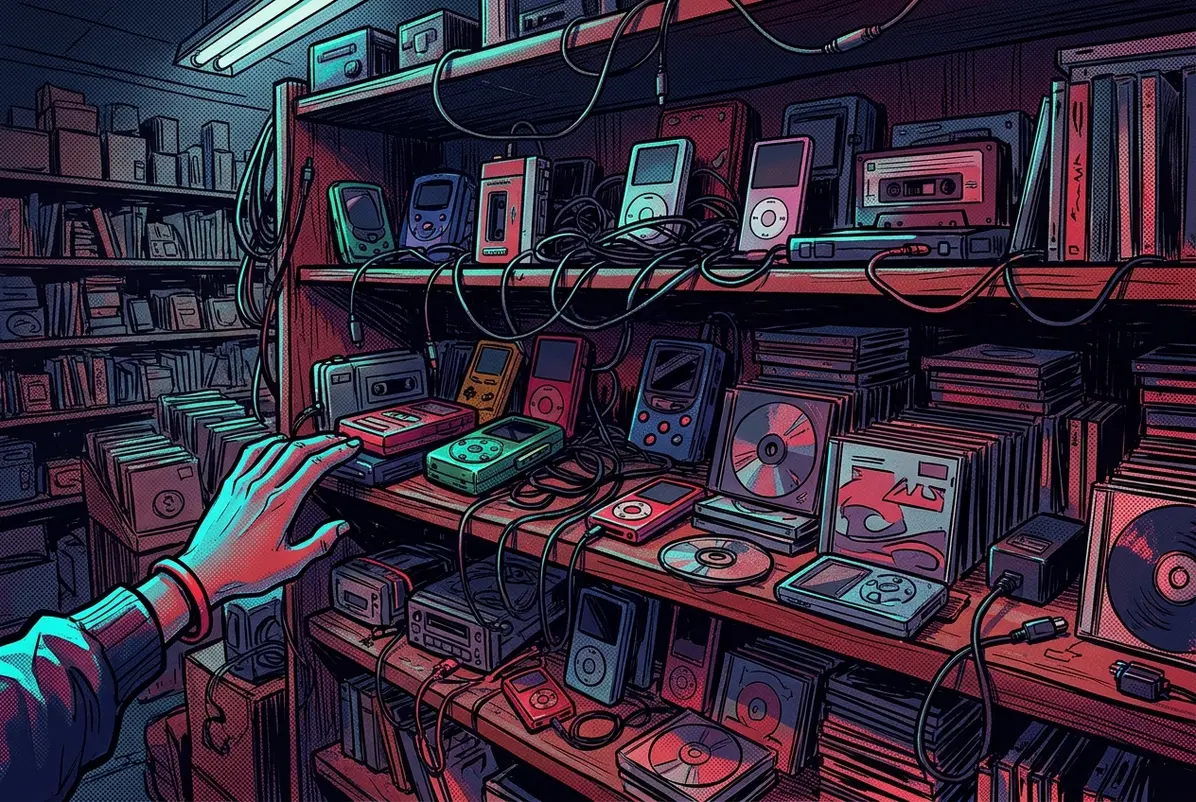
New releases keep giving the old hardware something to do. Sam Fender’s 2025 album People Watching received a MiniDisc edition. In May 2026, electronic producer Remute released MEDIUMRARE on MiniDisc, gathering older tracks and remixes into a new compilation.
The community also maintains tools for using the discs. Web MiniDisc Pro lets owners transfer audio to compatible Net MD equipment over USB through a supported web browser, replacing dependence on Sony’s old transfer software. That gives surviving recorders a useful connection to current computers.
For someone still making compilations, the appeal is tangible: a small cartridge with a name, a chosen set of songs and a sequence that can be revised after the first listen. Even a mix made years ago can still use a better opening track.
MiniDisc FAQ
How long does a MiniDisc hold?
Standard discs hold 60, 74 or 80 minutes in standard stereo mode. On compatible MDLP equipment, an 80-minute disc holds up to 160 minutes in LP2 or 320 minutes in LP4. Those longer modes use greater compression and require MDLP-compatible playback hardware.
Is MiniDisc audio lossless?
Standard MiniDisc audio uses lossy ATRAC compression. Hi-MD added an uncompressed linear PCM recording mode in 2004. Hi-MD recordings made in its compressed ATRAC modes are still lossy.
Does Sony still make MiniDiscs?
No. Sony announced the end of recordable MiniDisc and MD Data production for February 2025, with no successor models. Its withdrawal from MD recording and playback hardware had already been announced in 2013.
Can a MiniDisc be recorded more than once?
Yes. Recordable MiniDiscs can be erased and reused. Sony advertised up to approximately one million recordings; that is a manufacturer’s endurance claim, not a guarantee for an individual disc. Premastered, read-only MiniDiscs cannot be rerecorded.
Frequently asked questions
What is a MiniDisc?
A MiniDisc is a small optical disc housed in a cartridge resembling a miniature floppy, launched by Sony in Japan in November 1992. It came in prerecorded and blank recordable versions, and recordable discs could be edited and rearranged after recording.
How long does a MiniDisc hold?
Standard discs hold 60, 74 or 80 minutes in stereo. On MDLP-compatible equipment, an 80-minute disc holds up to 160 minutes in LP2 or 320 minutes in LP4, using greater compression.
Is MiniDisc audio lossless?
Standard MiniDisc audio uses Sony's lossy ATRAC compression, which reduces audio data to roughly a fifth of its original size. Hi-MD, introduced in 2004, added an uncompressed linear PCM recording mode.
Does Sony still make MiniDiscs?
No. Sony announced in January 2025 that production of all its recordable MiniDisc and MD Data models would end that February, with no successors. Its MD hardware withdrawal was completed in 2013.
How do you edit tracks on a MiniDisc?
MiniDisc recorders store track information in a user table of contents, similar to a computer's disk directory. Commands like Move, divide and erase change that table, so tracks can be reordered, split or deleted without rerecording the music.
Can you still transfer music to a MiniDisc today?
Yes. The community-built Web MiniDisc Pro lets owners transfer audio to compatible Net MD equipment over USB through a supported web browser, replacing Sony's old OpenMG transfer software.
'%3e%3cg id='Final-Copy-2_2_' transform='translate(1275.000000, 200.000000)'%3e%3cpath class='st0' d='M7.4,12.8h6.8l3.1-11.6H7.4C4.2,1.2,1.6,3.8,1.6,7S4.2,12.8,7.4,12.8z'/%3e%3c/g%3e%3c/g%3e%3c/g%3e%3cg id='final---dec.11-2020'%3e%3cg id='_x30_208-our-toggle' transform='translate(-1275.000000, -200.000000)'%3e%3cg id='Final-Copy-2' transform='translate(1275.000000, 200.000000)'%3e%3cpath class='st1' d='M22.6,0H7.4c-3.9,0-7,3.1-7,7s3.1,7,7,7h15.2c3.9,0,7-3.1,7-7S26.4,0,22.6,0z M1.6,7c0-3.2,2.6-5.8,5.8-5.8 h9.9l-3.1,11.6H7.4C4.2,12.8,1.6,10.2,1.6,7z'/%3e%3cpath id='x' class='st2' d='M24.6,4c0.2,0.2,0.2,0.6,0,0.8l0,0L22.5,7l2.2,2.2c0.2,0.2,0.2,0.6,0,0.8c-0.2,0.2-0.6,0.2-0.8,0 l0,0l-2.2-2.2L19.5,10c-0.2,0.2-0.6,0.2-0.8,0c-0.2-0.2-0.2-0.6,0-0.8l0,0L20.8,7l-2.2-2.2c-0.2-0.2-0.2-0.6,0-0.8 c0.2-0.2,0.6-0.2,0.8,0l0,0l2.2,2.2L23.8,4C24,3.8,24.4,3.8,24.6,4z'/%3e%3cpath id='y' class='st3' d='M12.7,4.1c0.2,0.2,0.3,0.6,0.1,0.8l0,0L8.6,9.8C8.5,9.9,8.4,10,8.3,10c-0.2,0.1-0.5,0.1-0.7-0.1l0,0 L5.4,7.7c-0.2-0.2-0.2-0.6,0-0.8c0.2-0.2,0.6-0.2,0.8,0l0,0L8,8.6l3.8-4.5C12,3.9,12.4,3.9,12.7,4.1z'/%3e%3c/g%3e%3c/g%3e%3c/g%3e%3c/g%3e%3c/svg%3e) Your Privacy Choices