

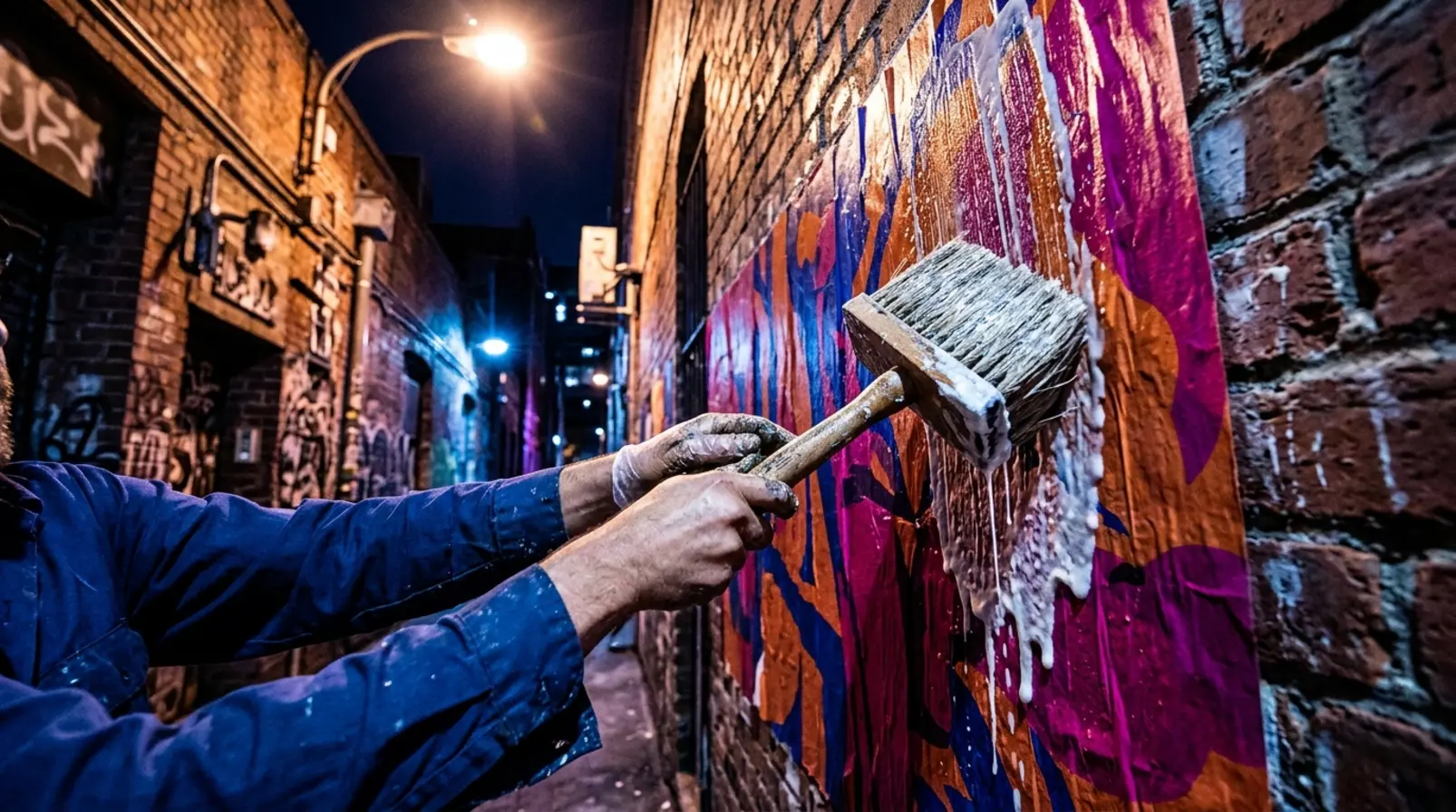


Wheatpaste requires little more than flour, water, paper, and something to stick it to. For generations, variations of that combination have put advertisements, political messages, and artwork on walls.
In street art, a paste-up is a paper image attached to a surface, traditionally with wheat-based adhesive. The Getty Research Institute’s Art & Architecture Thesaurus recognizes wheatpasting as a form of graffiti art involving images, usually on paper, fixed to surfaces using a wheat-flour mixture.
The appeal is partly practical. An artist can print or draw an image in advance, carry it to a location, and attach it without painting directly onto the wall. Multiple copies can be placed across a neighborhood. They can also disappear under new posters, weather, or removal crews.
That uncertain lifespan has become part of the medium’s character. Yet pasted paper has also traveled into galleries, museums, and indoor installations, where a wall may be deliberately preserved, repainted, or gradually covered with more work.
What Wheatpaste Is Actually Made Of
Wheatpaste commonly refers to adhesive prepared by mixing wheat flour or wheat starch with water and heating it until it thickens. The starch gelatinizes during cooking, producing a paste that can bond paper to a surface as it dries.
The ingredients are ordinary, but not every preparation has the same properties.
The Canadian Conservation Institute recommends purified wheat starch paste for repairing and mounting paper artifacts. It describes an adhesive that remains tacky when diluted and forms a strong bond after drying. The institute’s preparation calls for purified starch and distilled water, with careful attention to consistency and storage.
That is not quite the same material as a street artist’s mixture of ordinary flour and tap water.
The activist collective CrimethInc, in its Field Guide to Wheatpasting, describes a recipe using two parts wheat flour to three parts water. The mixture is brought to a boil, then cooked over low heat for at least half an hour while being stirred. The guide also suggests commercial wallpaper adhesive as a quicker alternative.
The Library of Congress notes that highly purified starch paste is water-soluble, allowing certain conservation repairs to be reversed. That property should not be confused with a guarantee that an outdoor wheatpaste poster can be removed without leaving residue or damaging paint, plaster, or other surfaces.
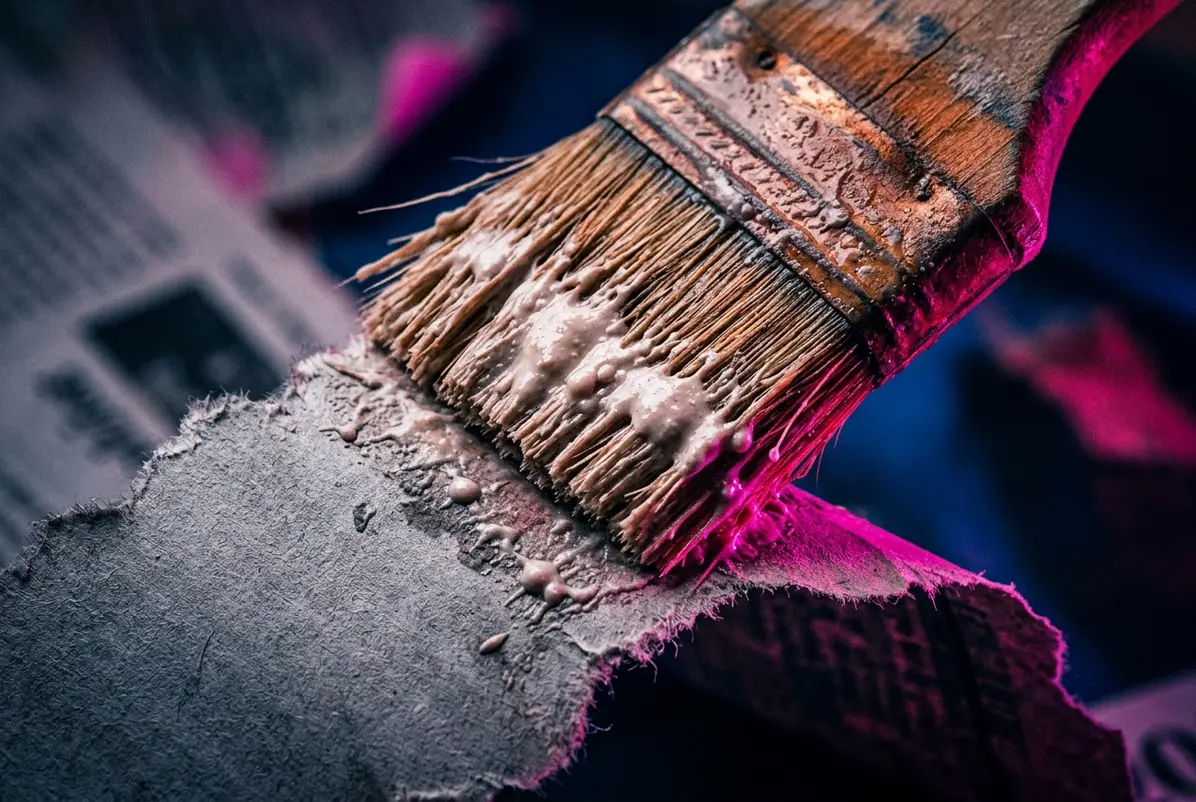
Before Street Art, There Were Posters to Sell
Long before paste-ups became associated with street artists, pasted paper was part of the commercial landscape.
In nineteenth-century Paris, illustrated posters advertised cabarets, performances, consumer products, and entertainment. Advances in color lithography made large printed images more practical to reproduce, while changes to French publishing laws in 1881 helped encourage a flourishing poster industry.
Henri de Toulouse-Lautrec became one of its most recognizable artists. His 1891 poster for the Moulin Rouge depicted dancer Louise Weber, better known as La Goulue. According to Christie’s history of his poster work, approximately 3,000 copies were pasted around Paris overnight.
These were advertisements, produced to attract customers rather than hang in art collections. But their public display created an unexpected market for the paper itself.
People began removing Lautrec posters from walls and taking them home. In 1893, critic Félix Fénéon even published instructions explaining how to remove them effectively, according to the same Christie’s account.
The tension between the public life of a poster and its value as a collectible was already visible. A sheet intended to disappear under the next advertisement could become an object someone wanted to preserve.
Daniel Buren Took Over the Advertising Space
By the late 1960s, artists were using pasted paper to challenge the boundaries between public space, advertising, and art.
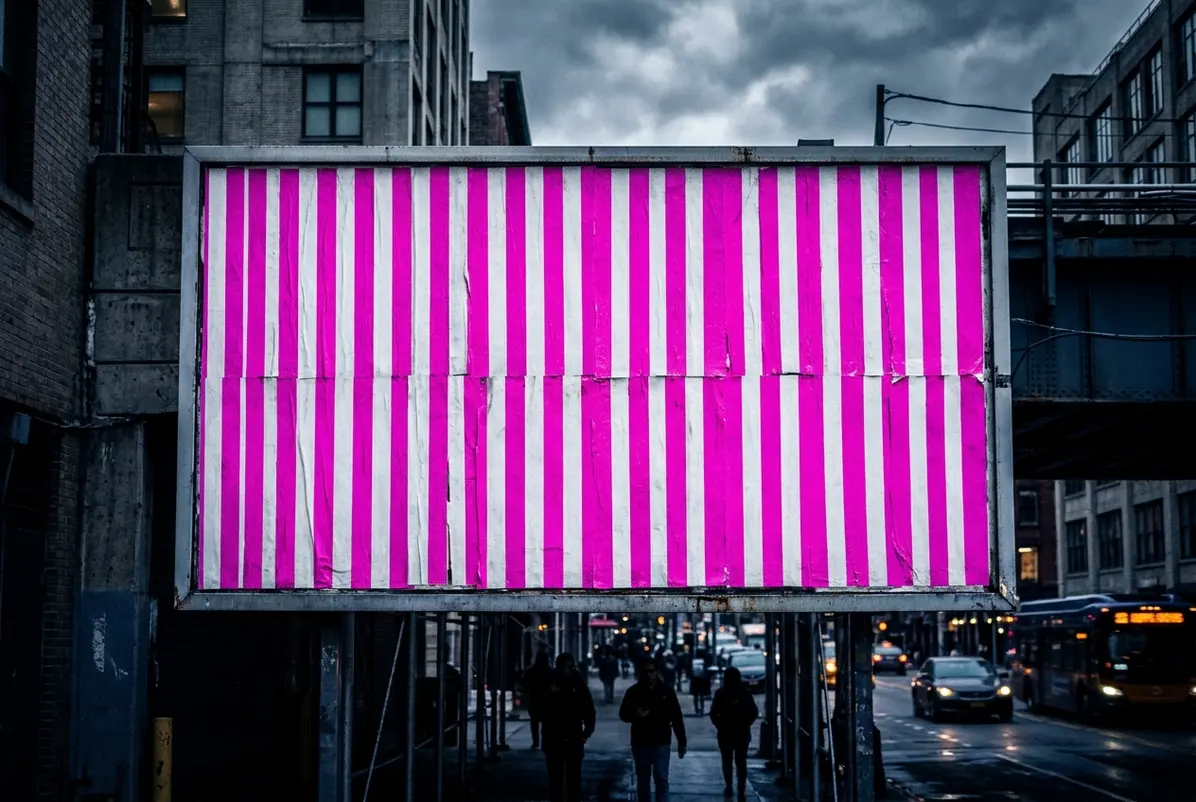
French conceptual artist Daniel Buren developed a vocabulary of alternating colored and white vertical stripes, each measuring 8.7 centimeters wide. He applied the pattern to different surfaces, making the location itself part of how the work was experienced.
In April and May 1968, Buren carried out a project titled 200 Panneaux dans Paris – Affichages sauvages. According to his catalogue raisonné, approximately 200 advertising surfaces in Paris and its surrounding region were covered without authorization using green-and-white striped paper.
The installations appeared on billboards, construction fencing, pillars, and other outdoor surfaces. Instead of adding another product or message to the advertising landscape, Buren covered existing visual information with his repeated stripes.
That same May, he also installed striped paper inside the Musée d’Art Moderne de la Ville de Paris as part of the 24th Salon de Mai. The museum exhibition is documented separately from the unauthorized outdoor campaign.
In May and June 1969, Buren undertook another Paris project, covering five large advertising billboards with vertically striped paper.
These works belonged to the history of pasted public art, although the catalogue identifies paper and paste without establishing that the adhesive used a particular wheat-flour recipe.
The choice of surface mattered. Billboards normally sell attention. Buren’s stripes occupied that space without providing the commercial message viewers were accustomed to finding there.
Artists elsewhere continued using the poster as a public intervention. The Dutch graphic design collective Wild Plakken, founded in 1977, took its name from a phrase meaning wild pasting. The Museum of Modern Art describes its early practice of putting up unauthorized posters around Amsterdam, later developing politically engaged graphic work addressing issues including apartheid.
The connections between commercial printing, public communication, and artistic intervention were not confined to one city or movement. Paper was inexpensive to reproduce, and a wall could reach people who would never visit an exhibition.
Is Wheatpaste Legal?
The legality of posting paper in public depends on permission, property ownership, and local rules. The adhesive itself is not what determines whether an installation is authorized.
Philadelphia’s Good Neighbor Guide warns that defacing public or private property is illegal. Whether a particular posting violates a rule depends on the conduct, location, and applicable law.
Some cities provide designated places for posting. Vancouver, for example, allows posters on street-side poster cylinders but prohibits placing them on other unauthorized areas of city property. The city says improperly placed posters are removed and discarded weekly, while permitted posters may be covered by other notices or periodically cleared by sanitation crews.
The distinction can be striking. The same kind of paper image might be permitted on one surface and removed from another nearby. Its survival depends not only on the adhesive but also on who controls the wall.
Inside Tattooed Mom, the Paper Stays
On Philadelphia’s South Street, Tattooed Mom has turned its upstairs bar into an evolving display of street art. Its walls, ceilings, and other interior surfaces provide space for work that would otherwise be encountered outdoors.
In June 2024, the venue hosted the first edition of Now I Wanna Sniff Some Glue, an international exhibition devoted to wheatpaste art.
According to a Streets Dept photo essay, nearly 200 artists from approximately 15 countries contributed to that first edition. Before installation, much of the second-floor wall space was painted white to provide a fresh surface. The artwork was then intended to remain on view indefinitely, with further additions over time.
The second edition, Now I Wanna Sniff Some Glue 2, was scheduled for October 16 and 17, 2026. In its preview, Billy Penn reported plans for work from more than 200 artists representing 15 countries. The program also included an interactive wall where visitors could create and contribute their own paste-ups.
Owner Robert Perry described the medium’s accessibility simply: “Anybody can do it.”
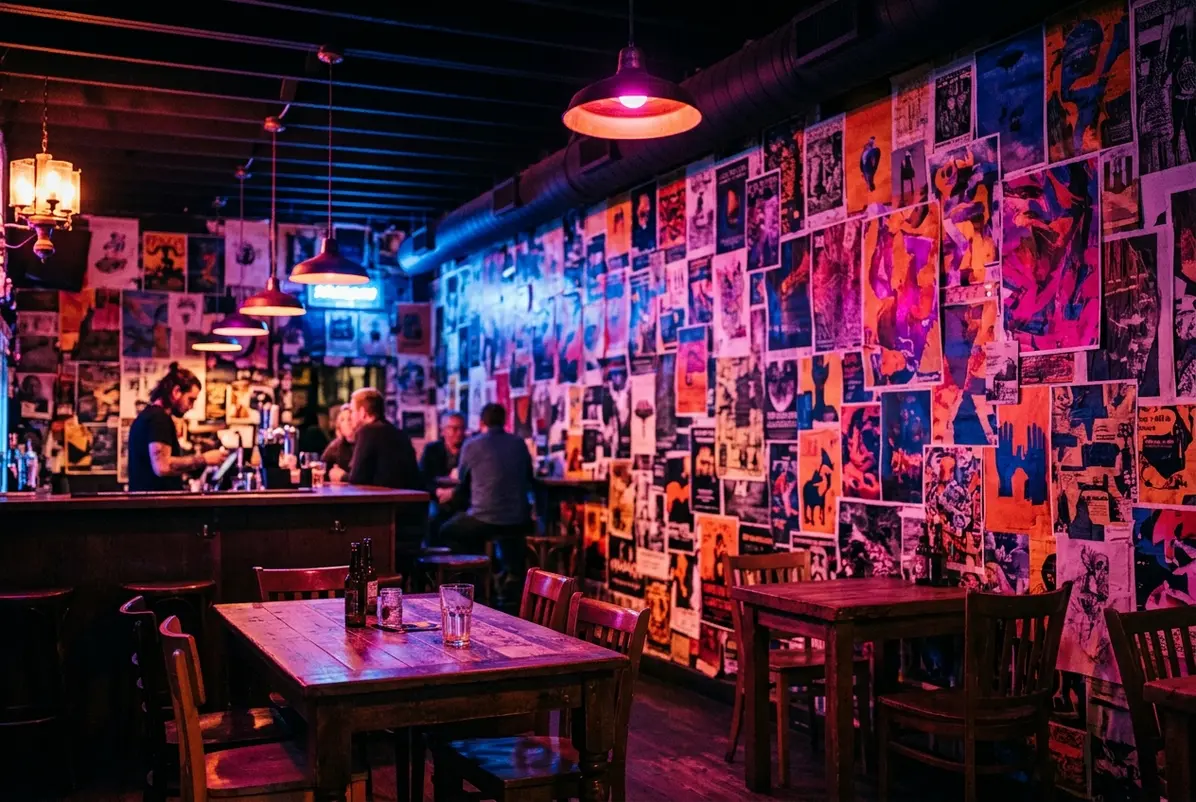
The indoor setting changes the conditions under which the work survives. Rain is no longer a concern, and a municipal removal crew isn’t deciding when the paper comes down. But the walls aren’t necessarily preserved unchanged. New artwork can cover old work, and the venue can repaint or rearrange its surfaces.
That makes Tattooed Mom an interesting counterpart to the street. A poster outdoors competes with advertising, weather, other artists, and the people responsible for maintaining the property. Indoors, those pressures change, but the layering continues.
Wheatpaste has always involved more than getting paper to stick. The wall has its own history, ownership, and competing claims for attention. At Tattooed Mom, each new layer becomes part of that history rather than automatically replacing it.
Wheatpaste FAQ
What is wheatpaste made from?
Wheatpaste is commonly made from wheat flour or wheat starch mixed with water and heated until thickened. Recipes vary. One widely circulated CrimethInc recipe uses two parts flour to three parts water, while conservation-grade formulas use purified wheat starch and carefully controlled preparation methods.
What is the difference between wheatpaste and paste-up?
Wheatpaste refers to the adhesive. A paste-up is the paper artwork or posting method. Although wheat-based adhesives are traditional, paper paste-ups can also be installed using other adhesives, including commercial wallpaper paste.
Is wheatpasting legal?
It depends on the location, property owner’s permission, and applicable laws. Unauthorized posting can violate rules against defacing property or placing signs on public infrastructure. Some cities provide designated poster surfaces. Artists should confirm the requirements for the specific location before installing work.
Can wheatpaste be removed?
Yes, but removal difficulty varies. Purified wheat starch paste used in conservation is water-soluble and designed to support reversible repairs under controlled conditions. Outdoor paste-ups may require more extensive removal depending on the adhesive, paper, surface, weathering, and length of time they have been installed.
Frequently asked questions
What is wheatpaste made from?
Wheatpaste is made from wheat flour or wheat starch mixed with water and heated until it thickens. One widely circulated CrimethInc recipe uses two parts flour to three parts water, cooked over low heat for at least half an hour.
What is the difference between wheatpaste and a paste-up?
Wheatpaste is the adhesive. A paste-up is the paper artwork or the method of posting it. Paste-ups are traditionally installed with wheat-based paste but can also use commercial wallpaper adhesive.
Is wheatpasting legal?
It depends on location, the property owner's permission, and local law. Unauthorized posting can violate rules against defacing property, while some cities, such as Vancouver, provide designated poster surfaces.
Can wheatpaste be removed?
Yes, but difficulty varies. Purified wheat starch paste used in conservation is water-soluble and supports reversible repairs, while outdoor paste-ups may need more extensive removal depending on the paper, surface, weathering, and time installed.
Is conservation wheat starch paste the same as street art wheatpaste?
No. Conservators use purified wheat starch and distilled water with controlled preparation, while street artists typically mix ordinary flour with tap water, which has different properties.


'%3e%3cg id='Final-Copy-2_2_' transform='translate(1275.000000, 200.000000)'%3e%3cpath class='st0' d='M7.4,12.8h6.8l3.1-11.6H7.4C4.2,1.2,1.6,3.8,1.6,7S4.2,12.8,7.4,12.8z'/%3e%3c/g%3e%3c/g%3e%3c/g%3e%3cg id='final---dec.11-2020'%3e%3cg id='_x30_208-our-toggle' transform='translate(-1275.000000, -200.000000)'%3e%3cg id='Final-Copy-2' transform='translate(1275.000000, 200.000000)'%3e%3cpath class='st1' d='M22.6,0H7.4c-3.9,0-7,3.1-7,7s3.1,7,7,7h15.2c3.9,0,7-3.1,7-7S26.4,0,22.6,0z M1.6,7c0-3.2,2.6-5.8,5.8-5.8 h9.9l-3.1,11.6H7.4C4.2,12.8,1.6,10.2,1.6,7z'/%3e%3cpath id='x' class='st2' d='M24.6,4c0.2,0.2,0.2,0.6,0,0.8l0,0L22.5,7l2.2,2.2c0.2,0.2,0.2,0.6,0,0.8c-0.2,0.2-0.6,0.2-0.8,0 l0,0l-2.2-2.2L19.5,10c-0.2,0.2-0.6,0.2-0.8,0c-0.2-0.2-0.2-0.6,0-0.8l0,0L20.8,7l-2.2-2.2c-0.2-0.2-0.2-0.6,0-0.8 c0.2-0.2,0.6-0.2,0.8,0l0,0l2.2,2.2L23.8,4C24,3.8,24.4,3.8,24.6,4z'/%3e%3cpath id='y' class='st3' d='M12.7,4.1c0.2,0.2,0.3,0.6,0.1,0.8l0,0L8.6,9.8C8.5,9.9,8.4,10,8.3,10c-0.2,0.1-0.5,0.1-0.7-0.1l0,0 L5.4,7.7c-0.2-0.2-0.2-0.6,0-0.8c0.2-0.2,0.6-0.2,0.8,0l0,0L8,8.6l3.8-4.5C12,3.9,12.4,3.9,12.7,4.1z'/%3e%3c/g%3e%3c/g%3e%3c/g%3e%3c/g%3e%3c/svg%3e) Your Privacy Choices