



In the summer of 1970, Frank Nasworthy visited a plastics factory in Purcellville, Virginia, and found something that would help restart American skateboarding: a batch of rejected roller-skate wheels.
The wheels were made from polyurethane, a material already finding uses in roller rinks. They were durable and grippy, qualities that made them useful for rental skates but less appealing to competitive rink skaters accustomed to faster-rolling clay wheels. Nasworthy, an East Coast surfer who also skateboarded, saw a different application. On asphalt, grip was precisely what the skateboard needed.
The discovery eventually became Cadillac Wheels, one of the defining products of skateboarding’s 1970s revival. But the story wasn’t simply about substituting one material for another. Nasworthy had to make the wheels fit existing boards, persuade skeptical retailers to sell them, and eventually compete with manufacturers improving on his own design.
The Wheels Roller Skaters Didn’t Want
Early skateboards commonly used steel or clay-composite wheels borrowed from roller skating. According to Craig B. Snyder’s history of the skateboard’s development, the so-called clay composite contained paper, plastic, and crushed walnut shells.
These wheels worked reasonably well on smooth surfaces but were unforgiving on rough pavement. Small stones could stop a board abruptly, while hard wheels offered little traction during sharp turns. Snyder reports that riders regularly using rough asphalt could wear through a set of clay wheels in a week.
In July 1970, Nasworthy accompanied his friend Bill Harward to Creative Urethanes, a factory operated by Vernon Heitfield. The company supplied polyurethane roller-skate wheels to Roller Sports Inc., a business involved in manufacturing skating equipment and operating roller rinks.
As described by the Smithsonian’s Lemelson Center, Nasworthy and Harward encountered rejected wheels that Heitfield was willing to let them take. They fitted the wheels to their old skateboards and began riding around Washington, D.C., and Northern Virginia.
The difference was immediate. The polyurethane wheels absorbed more vibration, lasted longer, and gripped pavement where the older wheels tended to slide.
There was another practical advantage. The wheels used loose-ball bearing assemblies compatible with existing skateboard hardware. Skaters could improve an old board without replacing the entire machine.
The Eight-Dollar Problem
Nasworthy moved to Encinitas, California, in 1971, primarily to surf. He found work waiting tables while considering whether the wheels could become a business.
Creative Urethanes couldn’t simply supply him indefinitely with wheels made for another customer. Nasworthy needed a skateboard-specific design and a production order large enough to justify manufacturing it.
He saved money from his restaurant job and established Cadillac Wheels. In April 1973, according to Snyder’s account, the first shipment of 1,000 wheels arrived from Virginia. Nasworthy also recalled beginning sales in April 1973, initially operating from the back of his Dodge Dart.
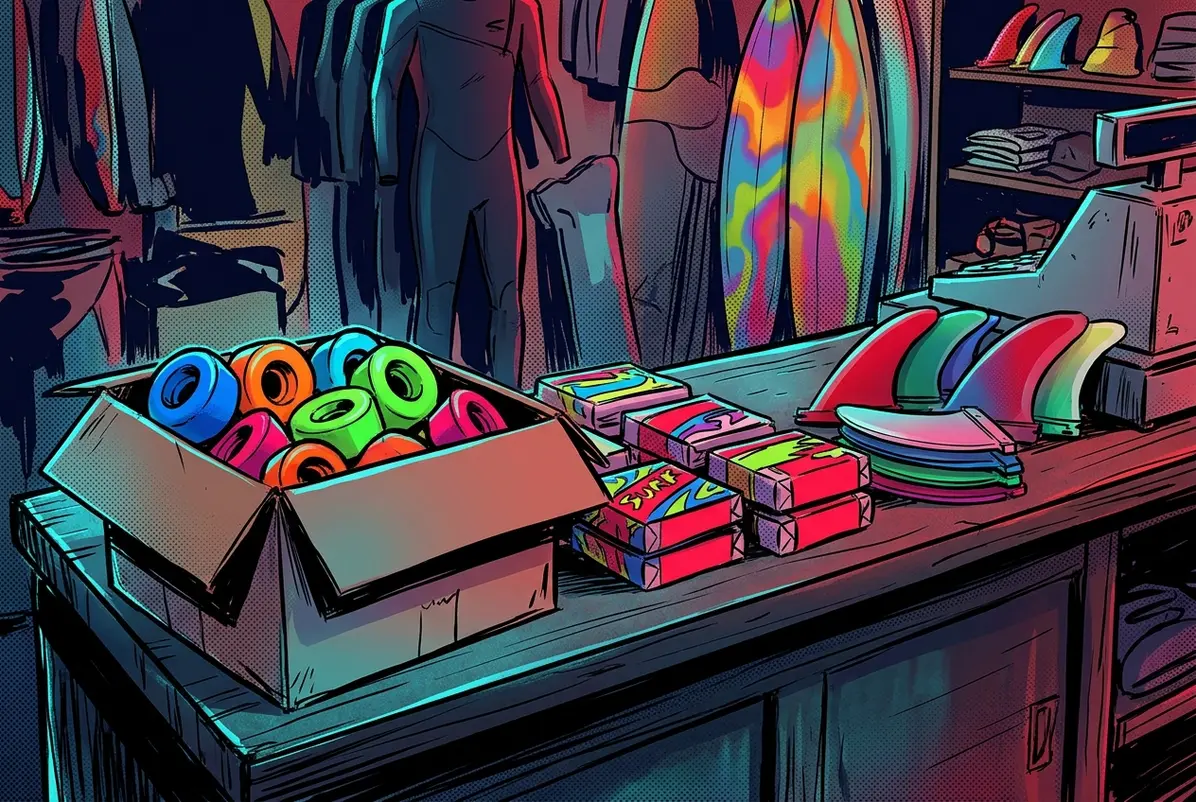
The problem was finding buyers through a retail market that barely existed. Dedicated skateboard shops were scarce, so Nasworthy approached Southern California surf shops, where surfers occasionally bought skateboards to ride when the waves were flat.
Most retailers were skeptical, especially about the price.
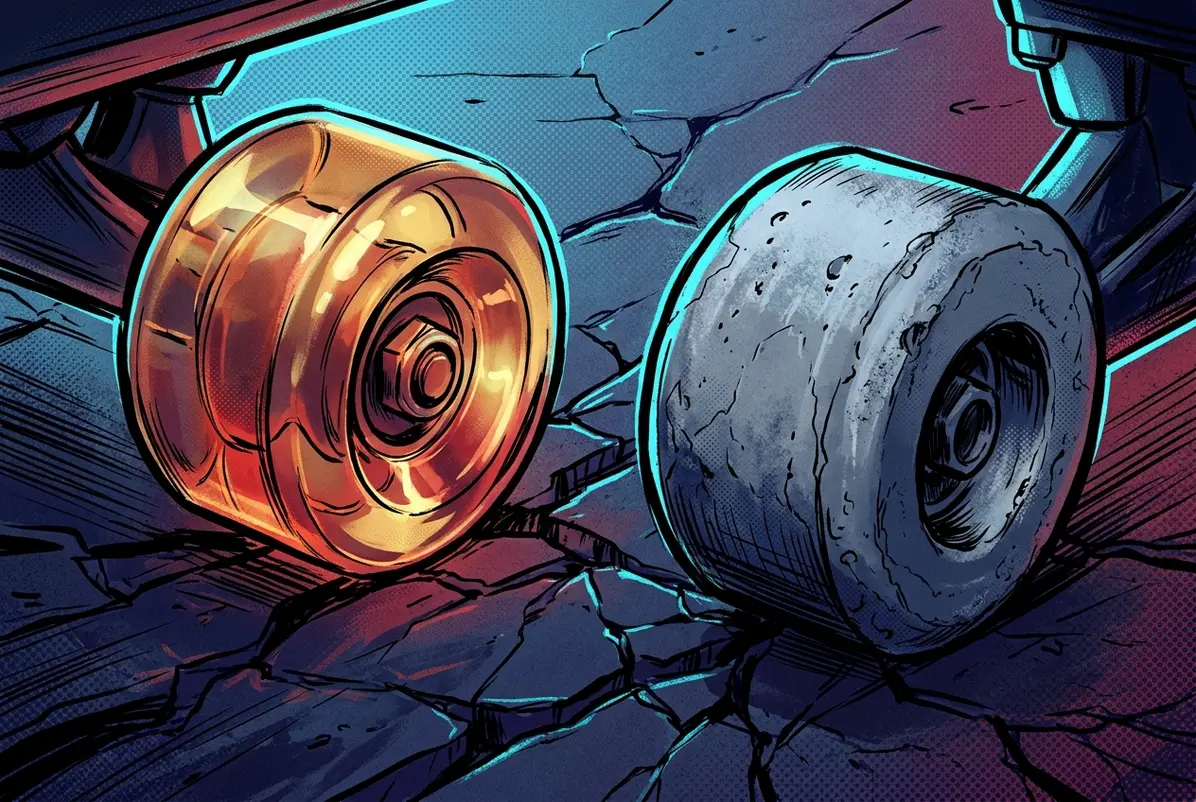
In a 2020 interview with KPBS, Nasworthy recalled a shop owner comparing his $2 urethane wheel against a conventional wheel costing just 50 cents. Four Cadillac wheels represented an $8 purchase. A surviving 1975 Cadillac advertisement confirms that the company subsequently offered a set of four original-model wheels for $8, with larger models costing more.
That was a considerable expense for an activity many retailers still regarded as a fading children’s fad.
Nasworthy began giving wheels away. In the KPBS interview, he estimated that he distributed several hundred from his initial inventory. Once skaters tried them, customers began asking retailers for the product.
Lance Smith of the Leucadia Surf Shop remembered the effect. As quoted in Snyder’s history, “They pretty much sold themselves once you rode them one time.”
The name Cadillac conveyed the smooth ride, although Nasworthy’s account of its inspiration is more eccentric: a television commercial for Cadillac dog food, rather than the luxury automobile, reportedly supplied the original naming idea.
A New Wheel Changed the Terrain
By the summer of 1974, Cadillac Wheels had gained considerable attention through demonstrations, word of mouth, and advertisements in Surfer magazine.
The Smithsonian preserves a photograph used in an early Cadillac advertisement featuring young skateboarder Gregg Weaver riding at La Costa. Weaver would become associated with Cadillac’s promotional efforts and the emerging style of Southern California skateboarding.
Advertising mattered, but the most persuasive demonstration happened on pavement.
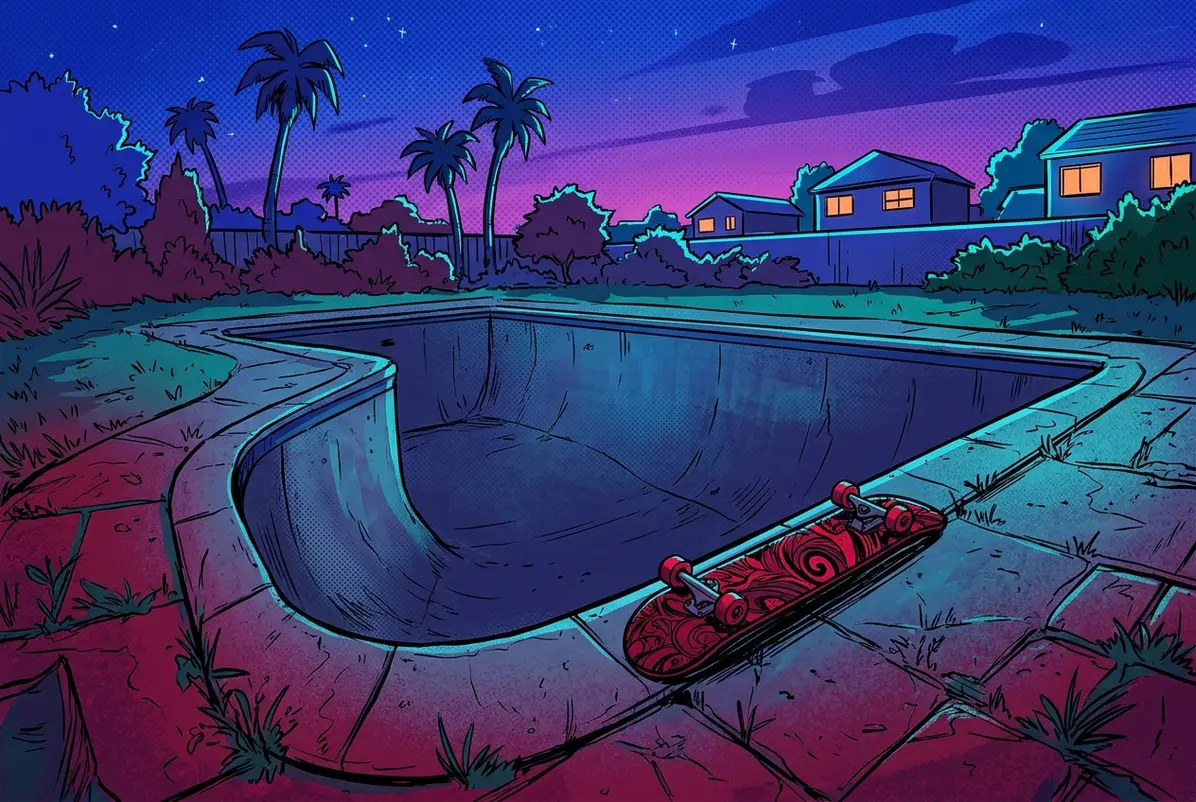
Polyurethane wheels made downhill riding, deep turns, and carving across concrete banks more controllable. Riders increasingly explored drainage ditches, embankments, empty swimming pools, and unfinished suburban roads. These places had existed before Cadillac Wheels, but improved traction made them more usable.
Skateboarding’s equipment continued evolving alongside its terrain. Wider trucks, different deck constructions, and improved bearings helped riders take advantage of the wheels. As participants describe in the PBS documentary Skate SD, the new equipment encouraged more aggressive riding and experimentation with obstacles that had previously been difficult to navigate.
Cadillac didn’t single-handedly invent modern skateboarding. It supplied a missing piece of equipment at a moment when surfers, skateboard manufacturers, and young riders were beginning to discover what more capable boards could do.
Road Rider Found Cadillac’s Weakness
Success brought a different set of problems. As demand increased, Nasworthy joined forces with Bahne, the Encinitas company known for surfboards and increasingly involved in skateboard manufacturing. Bahne skateboards were sold with Cadillac Wheels, giving Nasworthy access to a larger manufacturing and distribution operation.
Yet the original Cadillac design had limitations. Its loose-ball bearings required maintenance and could lose their bearing components. Wheel softness also presented a manufacturing problem: softer urethane offered traction, but securing the bearing races without sacrificing ride quality proved difficult.
The Bahne-Cadillac partnership experimented with new constructions, including molded hubs and injection-molded urethane. Nasworthy later acknowledged that some of those choices compromised performance.
Road Rider emerged with a competing urethane wheel incorporating precision bearings. Its premium wheels cost more, but offered another substantial improvement in how a skateboard rolled and handled.
Nasworthy’s retrospective assessment was unsparing. Speaking about the manufacturing decisions and Road Rider’s competing product, he was quoted as saying, “Our wheels were dogs compared to Road Rider.”
The irony was familiar. Nasworthy had persuaded skaters to pay more for a better wheel. Now another manufacturer was offering an improved version of the category he had helped create.
Road Rider, Kryptonics, Sims, and other manufacturers expanded the possibilities of polyurethane wheels while improving bearings, compounds, and construction. Cadillac’s early advantage became harder to maintain.
Nasworthy hadn’t invented polyurethane, and he wasn’t the last person to improve the skateboard wheel. He recognized that material already being used in roller rinks could solve a problem skateboarders had tolerated for years. His competitors kept the urethane and changed the engineering around it. The discarded roller-skate wheels had revealed the breakthrough; Cadillac’s successors showed how much more there was to develop.
Frequently asked questions
Who invented urethane skateboard wheels?
Frank Nasworthy is credited with introducing polyurethane wheels to skateboarding. He did not invent polyurethane, but in 1970 he recognized that rejected urethane roller-skate wheels solved skateboarding's traction problem, and he launched Cadillac Wheels in 1973.
When did Cadillac Wheels come out?
Cadillac Wheels began selling in April 1973, when Nasworthy's first shipment of 1,000 wheels arrived from Virginia. He initially sold them out of the back of his Dodge Dart to Southern California surf shops.
What were skateboard wheels made of before urethane?
Early skateboards used steel or clay-composite wheels borrowed from roller skating. The clay composite contained paper, plastic and crushed walnut shells, gripped poorly, stopped abruptly on small stones and could wear out in a week on rough asphalt.
How much did Cadillac Wheels cost?
A set of four original-model Cadillac Wheels cost $8, with larger models costing more. Each urethane wheel was about $2, compared with roughly 50 cents for a conventional wheel, which made retailers skeptical at first.
Why are they called Cadillac Wheels?
The name suggested a smooth, luxurious ride, but Nasworthy said the original idea reportedly came from a television commercial for Cadillac dog food rather than the car.
Why did Road Rider wheels beat Cadillac?
Road Rider paired urethane with precision bearings, while Cadillac's original wheel used loose-ball bearings that needed maintenance. Nasworthy later admitted, "Our wheels were dogs compared to Road Rider."



'%3e%3cg id='Final-Copy-2_2_' transform='translate(1275.000000, 200.000000)'%3e%3cpath class='st0' d='M7.4,12.8h6.8l3.1-11.6H7.4C4.2,1.2,1.6,3.8,1.6,7S4.2,12.8,7.4,12.8z'/%3e%3c/g%3e%3c/g%3e%3c/g%3e%3cg id='final---dec.11-2020'%3e%3cg id='_x30_208-our-toggle' transform='translate(-1275.000000, -200.000000)'%3e%3cg id='Final-Copy-2' transform='translate(1275.000000, 200.000000)'%3e%3cpath class='st1' d='M22.6,0H7.4c-3.9,0-7,3.1-7,7s3.1,7,7,7h15.2c3.9,0,7-3.1,7-7S26.4,0,22.6,0z M1.6,7c0-3.2,2.6-5.8,5.8-5.8 h9.9l-3.1,11.6H7.4C4.2,12.8,1.6,10.2,1.6,7z'/%3e%3cpath id='x' class='st2' d='M24.6,4c0.2,0.2,0.2,0.6,0,0.8l0,0L22.5,7l2.2,2.2c0.2,0.2,0.2,0.6,0,0.8c-0.2,0.2-0.6,0.2-0.8,0 l0,0l-2.2-2.2L19.5,10c-0.2,0.2-0.6,0.2-0.8,0c-0.2-0.2-0.2-0.6,0-0.8l0,0L20.8,7l-2.2-2.2c-0.2-0.2-0.2-0.6,0-0.8 c0.2-0.2,0.6-0.2,0.8,0l0,0l2.2,2.2L23.8,4C24,3.8,24.4,3.8,24.6,4z'/%3e%3cpath id='y' class='st3' d='M12.7,4.1c0.2,0.2,0.3,0.6,0.1,0.8l0,0L8.6,9.8C8.5,9.9,8.4,10,8.3,10c-0.2,0.1-0.5,0.1-0.7-0.1l0,0 L5.4,7.7c-0.2-0.2-0.2-0.6,0-0.8c0.2-0.2,0.6-0.2,0.8,0l0,0L8,8.6l3.8-4.5C12,3.9,12.4,3.9,12.7,4.1z'/%3e%3c/g%3e%3c/g%3e%3c/g%3e%3c/g%3e%3c/svg%3e) Your Privacy Choices