


The best shorts don’t ask for your attention; they crawl inside your brain and rattle around a while.
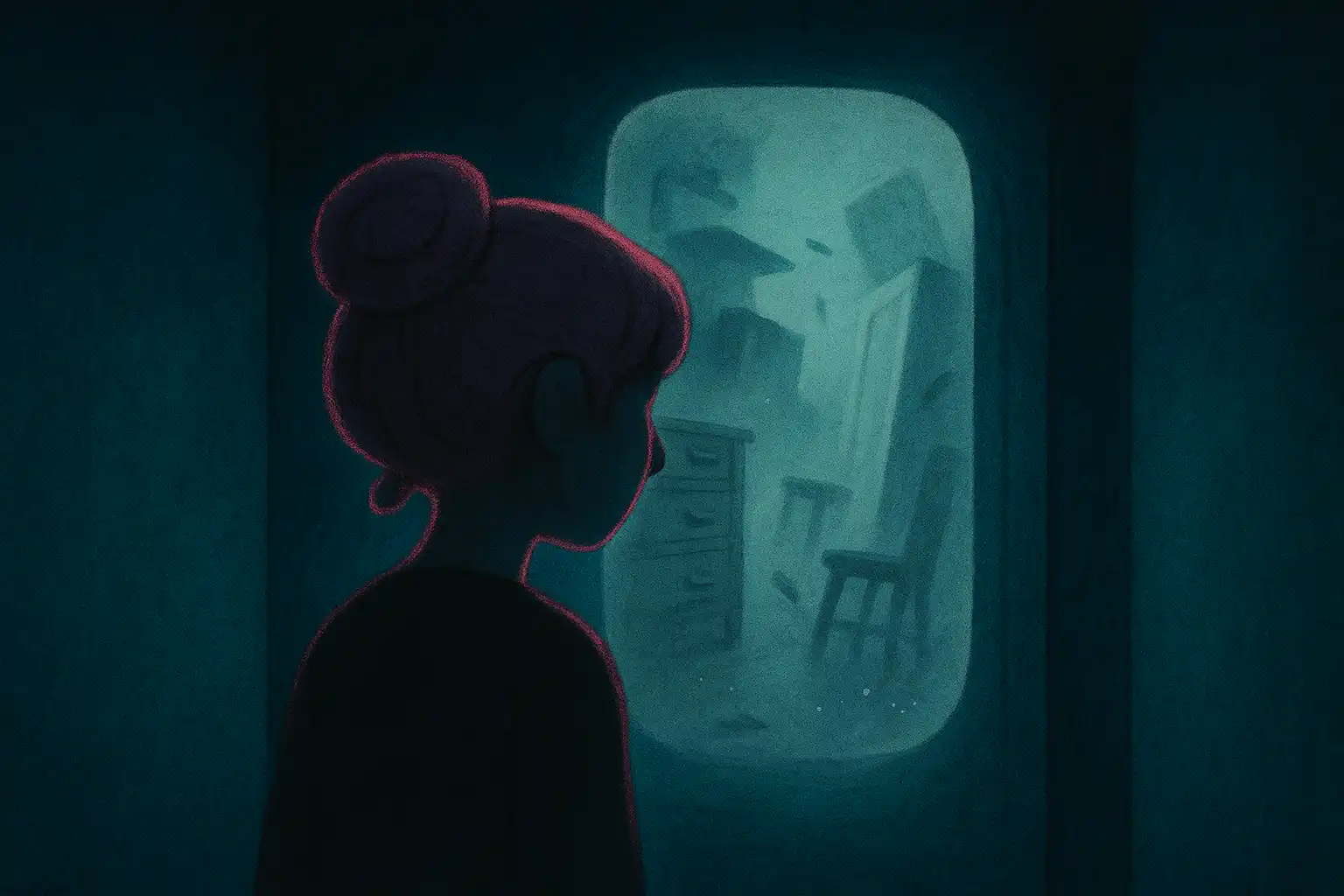
Tessa Moult-Milewska’s Curiosa begins with a premise so delightfully grotesque it feels like it was scrawled in a dream journal left at a puppet-maker’s funeral: a girl climbs into her boyfriend’s head. What follows is a tactile, gorgeously deranged stop-motion fairytale that feels equal parts Being John Malkovich, Švankmajer fever dream, and breakup-fueled psycho-drama, wrapped in a dollhouse built from papier-mâché and retroactive regret.
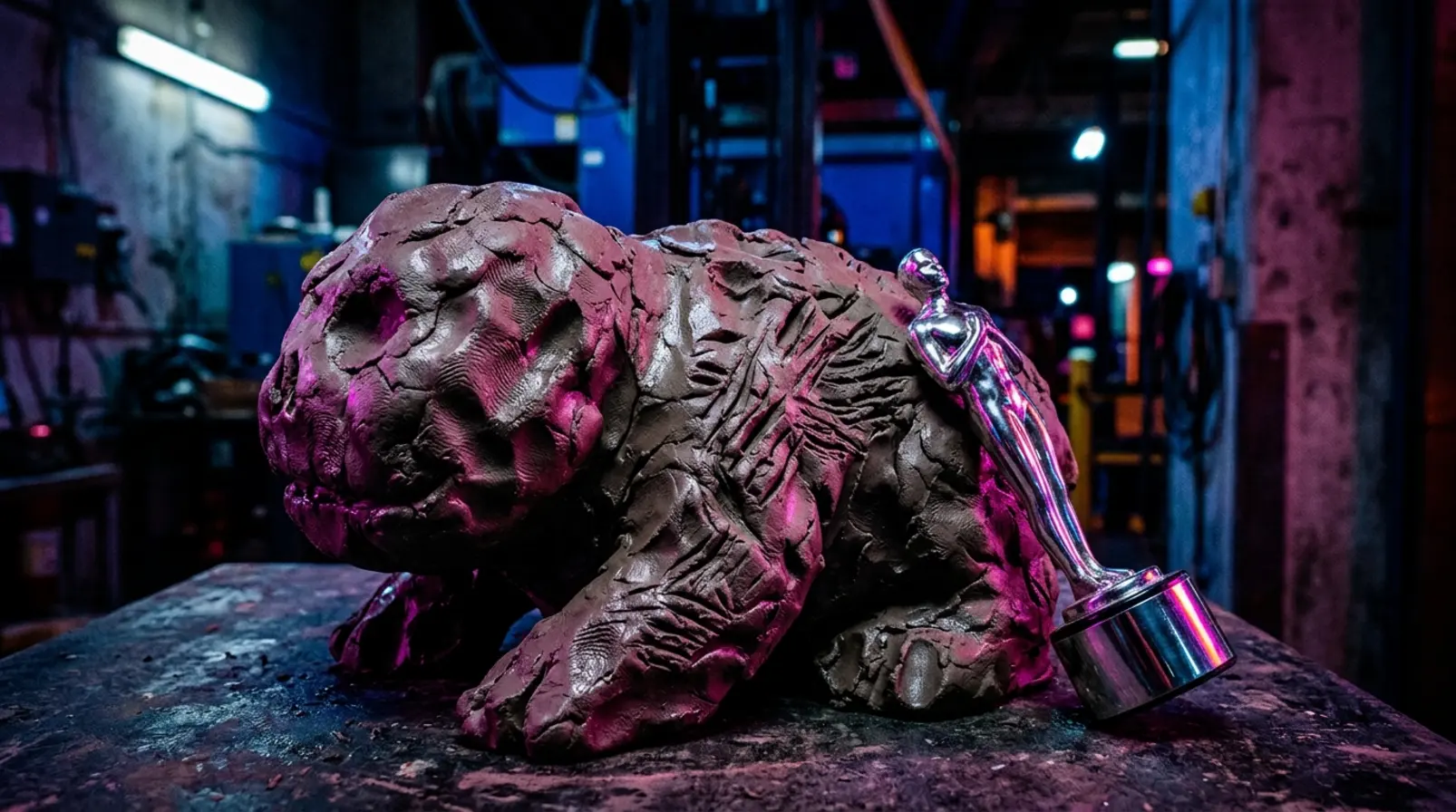
It’s easy to see why this short is tearing through the festival circuit like a pixilation-powered buzzsaw. On the surface, Curiosa is a quirky curiosity box, built with hand-carved puppets, life-sized masks, and resin maquettes that give its world a toy-like gloss. But beneath the whimsical frames beats a gnawing anxiety — the kind you only recognize when you're deep in someone else's mess and can't quite find the exit.
Inside the Mind of Another… Literally
Moult-Milewska doesn’t just play with scale; she weaponizes it. The contrast between the doll-sized puppets and the oversized masks lends the whole film a sense of disorientation that mirrors its protagonist’s descent. This isn't just a metaphor for retroactive jealousy — it’s a full-blown tactile representation of what it feels like to excavate someone else’s memories and get stuck in the crawlspace between their thoughts.
That the story was born from the simple logline “An overly curious girl climbs into her boyfriend’s head” is telling. Every scene unspools with the confidence of someone who knows exactly how to weaponize curiosity: it’s charming, then awkward, then invasive, then deeply, deeply uncomfortable.
The animation style is deliberately imperfect in the best way possible. Working with actors in a pixilation format — where humans mimic frame-by-frame puppet movement — is already a bold swing. Doing so during a post-COVID shoot window with a cast of students and volunteers? That's the kind of unhinged ambition we love. Moult-Milewska acknowledges the technical imperfections, but they only heighten the surreal atmosphere. These aren't flaws; they're fingerprints.
What makes Curiosa shine is its awareness of tone. It’s funny when it needs to be, unnerving when it has to be, and never drifts too far into art-school abstraction. It knows the rules of magical realism and breaks them with glee. Think The Shivering Truth, but in a Wes Anderson palette with a Polish accent.
The Takeaway: Curiosa is what happens when you give a heartbreak to a craftsperson with access to a model shop and ten departments worth of creative co-conspirators. The film is deeply personal, undeniably weird, and wholly entertaining — a rare triangle of qualities in short-form animation.
For those of us raised on Coraline, Mad God, or even Toolbox Murders with a side of Kieślowski, Curiosa scratches a very specific itch: the need for animated storytelling that doesn't infantilize the medium or wrap its themes in plastic optimism. This short hurts a little. And that’s what makes it worth watching.
Catch it while it’s haunting your local festival. Or better yet — let it climb inside your head.
Tessa Moult-Milewska’s Curiosa begins with a premise so delightfully grotesque it feels like it was scrawled in a dream journal left at a puppet-maker’s funeral: a girl climbs into her boyfriend’s head. What follows is a tactile, gorgeously deranged stop-motion fairytale that feels equal parts Being John Malkovich, Švankmajer fever dream, and breakup-fueled psycho-drama, wrapped in a dollhouse built from papier-mâché and retroactive regret.
It’s easy to see why this short is tearing through the festival circuit like a pixilation-powered buzzsaw. On the surface, Curiosa is a quirky curiosity box, built with hand-carved puppets, life-sized masks, and resin maquettes that give its world a toy-like gloss. But beneath the whimsical frames beats a gnawing anxiety — the kind you only recognize when you're deep in someone else's mess and can't quite find the exit.
Inside the Mind of Another… Literally
Moult-Milewska doesn’t just play with scale; she weaponizes it. The contrast between the doll-sized puppets and the oversized masks lends the whole film a sense of disorientation that mirrors its protagonist’s descent. This isn't just a metaphor for retroactive jealousy — it’s a full-blown tactile representation of what it feels like to excavate someone else’s memories and get stuck in the crawlspace between their thoughts.
That the story was born from the simple logline “An overly curious girl climbs into her boyfriend’s head” is telling. Every scene unspools with the confidence of someone who knows exactly how to weaponize curiosity: it’s charming, then awkward, then invasive, then deeply, deeply uncomfortable.
The animation style is deliberately imperfect in the best way possible. Working with actors in a pixilation format — where humans mimic frame-by-frame puppet movement — is already a bold swing. Doing so during a post-COVID shoot window with a cast of students and volunteers? That's the kind of unhinged ambition we love. Moult-Milewska acknowledges the technical imperfections, but they only heighten the surreal atmosphere. These aren't flaws; they're fingerprints.
What makes Curiosa shine is its awareness of tone. It’s funny when it needs to be, unnerving when it has to be, and never drifts too far into art-school abstraction. It knows the rules of magical realism and breaks them with glee. Think The Shivering Truth, but in a Wes Anderson palette with a Polish accent.
The Takeaway: Curiosa is what happens when you give a heartbreak to a craftsperson with access to a model shop and ten departments worth of creative co-conspirators. The film is deeply personal, undeniably weird, and wholly entertaining — a rare triangle of qualities in short-form animation.
For those of us raised on Coraline, Mad God, or even Toolbox Murders with a side of Kieślowski, Curiosa scratches a very specific itch: the need for animated storytelling that doesn't infantilize the medium or wrap its themes in plastic optimism. This short hurts a little. And that’s what makes it worth watching.
Catch it while it’s haunting your local festival. Or better yet — let it climb inside your head.
'%3e%3cg id='Final-Copy-2_2_' transform='translate(1275.000000, 200.000000)'%3e%3cpath class='st0' d='M7.4,12.8h6.8l3.1-11.6H7.4C4.2,1.2,1.6,3.8,1.6,7S4.2,12.8,7.4,12.8z'/%3e%3c/g%3e%3c/g%3e%3c/g%3e%3cg id='final---dec.11-2020'%3e%3cg id='_x30_208-our-toggle' transform='translate(-1275.000000, -200.000000)'%3e%3cg id='Final-Copy-2' transform='translate(1275.000000, 200.000000)'%3e%3cpath class='st1' d='M22.6,0H7.4c-3.9,0-7,3.1-7,7s3.1,7,7,7h15.2c3.9,0,7-3.1,7-7S26.4,0,22.6,0z M1.6,7c0-3.2,2.6-5.8,5.8-5.8 h9.9l-3.1,11.6H7.4C4.2,12.8,1.6,10.2,1.6,7z'/%3e%3cpath id='x' class='st2' d='M24.6,4c0.2,0.2,0.2,0.6,0,0.8l0,0L22.5,7l2.2,2.2c0.2,0.2,0.2,0.6,0,0.8c-0.2,0.2-0.6,0.2-0.8,0 l0,0l-2.2-2.2L19.5,10c-0.2,0.2-0.6,0.2-0.8,0c-0.2-0.2-0.2-0.6,0-0.8l0,0L20.8,7l-2.2-2.2c-0.2-0.2-0.2-0.6,0-0.8 c0.2-0.2,0.6-0.2,0.8,0l0,0l2.2,2.2L23.8,4C24,3.8,24.4,3.8,24.6,4z'/%3e%3cpath id='y' class='st3' d='M12.7,4.1c0.2,0.2,0.3,0.6,0.1,0.8l0,0L8.6,9.8C8.5,9.9,8.4,10,8.3,10c-0.2,0.1-0.5,0.1-0.7-0.1l0,0 L5.4,7.7c-0.2-0.2-0.2-0.6,0-0.8c0.2-0.2,0.6-0.2,0.8,0l0,0L8,8.6l3.8-4.5C12,3.9,12.4,3.9,12.7,4.1z'/%3e%3c/g%3e%3c/g%3e%3c/g%3e%3c/g%3e%3c/svg%3e) Your Privacy Choices
Your Privacy Choices